Two (masked) Euro surprises

2010 Donnafugata Passito di Pantelleria Ben Rye 14.5%
Sicily, Zibbibo (muscat) and 195g/l residual sugar; partly air-dried to concentrate the sugars.

Deep orange/gold colour, and first impressions ran “muscat, floral, apricot, ripe and vital; super-sweet, loads of spice and length”. Apricot dominates with a mix of jam, tinned fruit and juicy ripe fresh apricots. Engaging viscous texture, with honey and vanilla bean. Having had this style once before, this was instantly identifiable. My guess was around ten years old.

This is not the most complex sweet white wine I have ever encountered, but it possesses intensity and memorability. Clearly it can take some bottle age, but won’t really change, so get stuck in.

Drink to 2028, 93 points.

2006 Ch Filhot 13.5%
Sauternes, 60% semillon, 36% sav blanc, 4% muscadelle. At least 2 years in barrel, 1/3 new

Deep gold colour, with an array of apricot, citrus, vanilla and tropicals. Obviously Sauternes style, and also absolutely at its peak, with a winning mix of fruit, freshness, and mouthfeel. I guessed it was around fifteen years old. I was surprised that it was Ch Filhot, which I generally describe as lighter, affordable but less complex and age-worthy. This was very smart from an average vintage, and outperformed my prejudices!

Drink to 2028, and 91 points

One dinner – four from Europe

First up, Australian winemaker John Vickery died recently. He was a gentleman, an expert winemaker and had huge influence on winemakers here. Riesling was his forte, with many memorable wines made at Leo Buring,  Richmond Grove and the eponymous Vickery label. He kickstarted my interest in wine, and my early tribute is here.

A recent dinner I attended had a plethora of interesting wines (all served blind), and I will try to describe a few.

1993 christoffel EP

1993 Christoffel-Berres Erdener Pralat Riesling Auslese*** 8.5%
Mosel. Light gold colour- petrol, tropical fruits, blackcurrant. Creamy palate, fresh with terrific balance. Lovely wine from a great site in Mosel. Wines are no longer produced, but there is (or was) a fair stock of wines from 1987-97. This was apparently an auction wine, and the *** indicates greater richness in the style.

Drink to 2033, and 93 points

2011 2013 sauternes

2011 Ch Haut-bergeron 13.5%
Sauternes. Really Interesting to see this after the 2001 tasted recently.

Gold colour, bursting with vanilla, apricot, pineapple rind, Palate is slinky with vanilla bean, marzipan nuttiness and cumquat. Ripe, fresh, dense and dramatic. At least a decade in front of it. Oak plays an important structural role here, but the fruit is winning.

Drink to 2035, and 93 points

2013 Ch Raymond-lafon 13.5%
From half bottles – Slightly duller colour, with nettle and herbal elements. More savoury than the previous wine, palate showing guava, pineapple and passionfruit. Several winemakers present suggested some ignoble rot (aspergillus/penicillium) but in the amount involved won’t affect really enjoyment except for the truly ultra-fastidious.

Drink to 2030, 91 points

2000 Fonseca Vintage Port
Portugal

Sketchy notes made under time pressure “deep ruby colour, almond, spirit a bit hot; red and dark fruits, mellow – Portuguese – early 2000s”. A second bottle was not as good, and the third bottle had vanished before I could assess.

A bit disappointing for Fonseca on the night– drink to 2033, and 90 points

Stoney Goose Ridge triumphs again

Direct from CEO Hector Lannible “Recently Stoney Goose Ridge launched several epic, iconic releases sourced from Italy.

The 2020 Stoney Goose Ridge NFI went ballistic, selling like gang-buster hot cakes. Made from Nero d’avola, Freisa and Inzolia, this innovative non-DOC IGT is a fitting tribute to honourable Italianate society traditions. With my first foray into the assemblage of these varieties, the winemaking team was amazed by my incisive insights. They respectfully saluted “the Godfather.”

Its non-identical wine sibling – the 2020 Stoney Goose Ridge NFT (Nebbiolo, Frappato, Teroldego) was another complete triumph for my vinous blending mastery, which naturally translated into a barnstorming sales impact. Don is good! With my timely stimuli, our marketing turbo-charged the customer buzz into a torrential crescendo.

Due to market forces – and export incentivisation – both wines have very limited distribution inside the EU. The raging success of these two new wines presents a further management conundrum to source raw materials for the inevitable follow-ups in greater quantity.

Meanwhile, our CAGR improves, our omni-multiverse channel brand footprint resonates with our fanatical supporter base, activity-based rostering exerts downstream pressure on costs, and our group optimisation initiatives are applauded by analysts. Our JIT fulfilment logistics platform is world-class. I accept the numerous awards and deliver keynote addresses without being diverted from my brand growth mission.

I am astounded at the incompetent antics of our rivals, and their boundless capacity for wealth destruction. Their various initiatives need serious rebranding- I suggest Bottomless Pit, Fiasco, FUBAR, Never-never, White Elephant, and WOTAM. In fact, efficiency would dictate using these names at the start of their “strategic pillar-building customer focussed projects.” Truly, these deserve
“how not to” case studies not just at MBA level, but tertiary and secondary levels. Abysmal and appalling are the relevant tags.

Just recall the company that lusted after the success of Aperol. They created a suitable concoction, label, bottle, campaign and so on. Any misgivings about branding during development were crushed by their ruthless, clueless leaders. Chimperol had TV, press and billboard advertising showing the glamourous actors cheerfully saying “chim chim.” Assorted lawsuits and public opprobrium swiftly followed, with immediate disappearance of the product. But did any heads roll? Anyone fall on their sword? Lessons learned?

Participants in similar debacles were blind to the ticking timebombs that were water under the bridge, afterwards seeking the smoking gun of the karma bus that derailed and sank the projects. I wait for our competition to experience a cyber-attack, their negligible precautions exposed as they fixate efforts on PR bloatware to pump up their tyres.

Our tone-deaf competition seeks Stoney Goose Ridge’s secret success sauce, but their half-baked emulations rebound in an avalanche of epidemic proportions. Whitewash is their sole forte when rewarding their inept Boards and executives with unmerited fiscal largesse for their progress backwards.

The Stoney Goose Ridge range including beers, wines, spirits, mixers, and spritzers are all grist to our mill, delighting customers worldwide with their core quality and value attributes. Our customers spread the gospel of our staples, and are anxious to sample our new offerings. They are never disappointed, thanks to the hand-chosen talent that conveys my heroic inspirational leadership.

Very little surprises me; the greed, vanity and stupidity of our rivals; the bleating of vested interests, widespread nepotism, wasteful, bloated Government contracts, ineffective, pointless and innumerable conflicting laws, plus media attention on trivia.

One recent example is the agenda to stop the “misleading and deceptive” advertising and sale of plant-based “meats,” and almond and soy “milk.” What next – ban peanut butter? Are there any other urgent and important issues?

At Stoney Goose Ridge, challenges are confronted, and resolved. There is the ongoing quest for talent, battling oppressive taxation regimes and wowsers with “health” crusades, finessing bizarre ever-changing labelling requirements, and the numbing legal slowness preventing collection of the massive damages we anticipate winning through multitudinous cases across numerous jurisdictions. Add the usual attention around staff development, mentoring and performance reviews. Plus, the monster problem of sourcing high-grade material – at the right price – to meet ongoing demand throughout our beverage portfolio, while continuing the uber-innovative program of stunning new releases. We all put our shoulders to the grindstone.

Stoney Goose Ridge – under my sublime stewardship – drives to another record-breaking half-year, steamrolling the opposition, with bonanza bonuses for the deserving. Our unofficial theme song is “we are the champions!”

Your renowned CEO, Hector Lannible”

Three styles, three countries

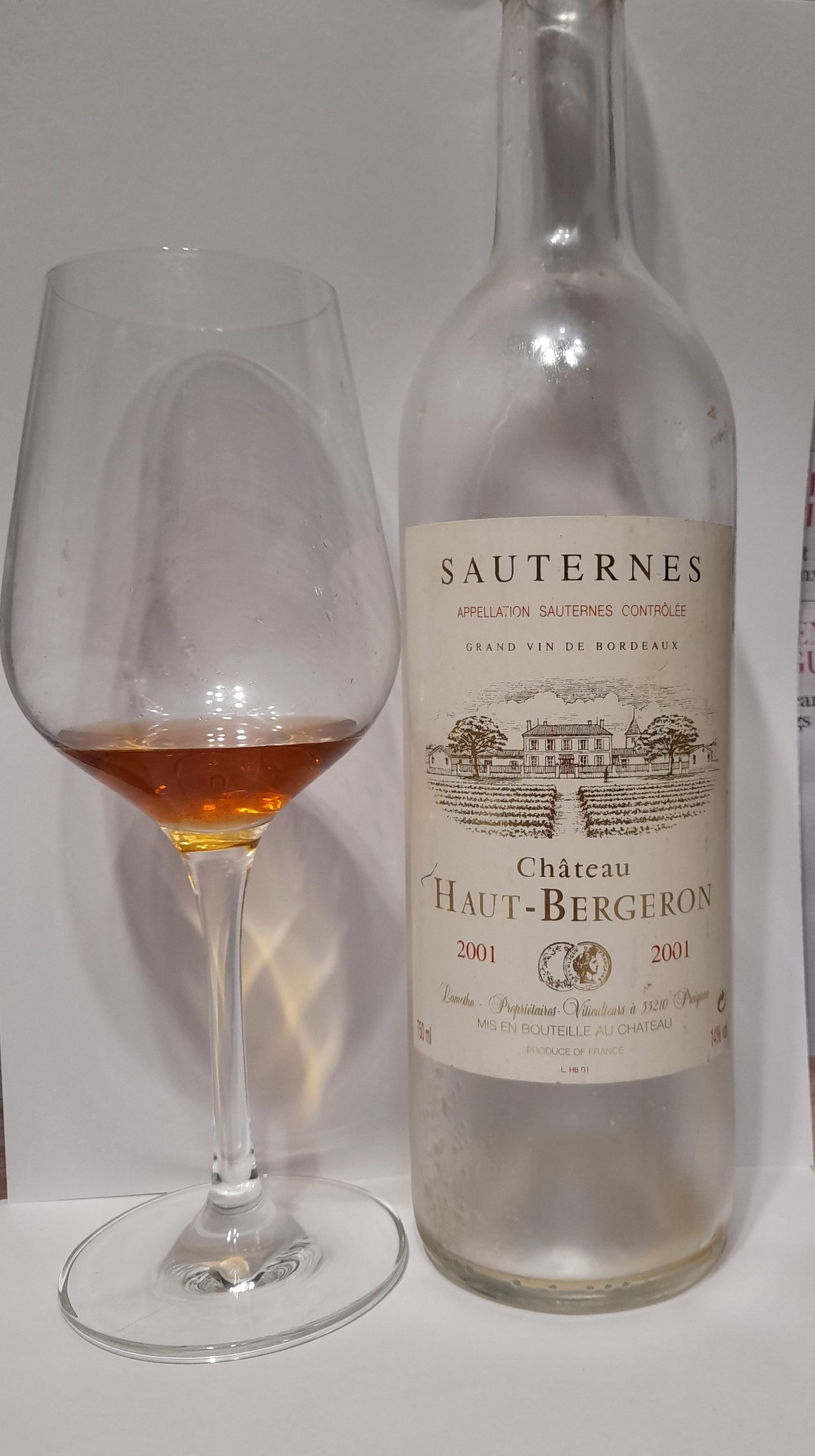
2001 ch haut-bergeron

2001 Chateau Haut-bergeron 14%
Sauternes

Deep gold colour with some foxy/copper notes– and some harmless sediment; no mistaking the origin – marmalade, creme brulee, mixed tropical and dried fruits, VA but no dramas for this style; the palate Is packed with citrus and honey, certainly some integrated oak and with abundant acidity that left most of us reaching for a refill.

Haut-bergeron is not classified, but this wine (from an excellent sauternes vintage) provided great value, longevity and pleasure.

Drink to 2030, and 91 points

2014 Konrad Noble Riesling 11.5%
Marlborough, New Zealand

Half bottle, masked, 221 g/l residual sugar. Deep gold colour, this was packed with floral, dusty, spicy botrytis notes, mixed citrus and marmalade. Botrytis has overwhelmed varietal character, but Riesling was deduced by the absence of oak, The palate was very dense and weighty, rich dark honey and citrus.

This wine is drying out, so drink up. 88 points

2007 Taylor Late-bottled vintage port 20%
Portugal

Served blind – Ruby colour with some browning on the rim. Blueberry fruits, some nuttiness and spice but also some detracting rubber/tar. Palate is better, with blue, then a range of red fruits. Good spirit and fine but low tannins. When unmasked, it seemed older than the actual vintage. Sound but unexciting.

Drink sooner, but before 2030, 87 points

One younger Stanton & Killeen Fortified

2010 S&K vp

2010 Stanton & Killeen Vintage fortified (port) 18.9%
Rutherglen, Victoria
Varietal composition not known, but includes a significant amount of Portuguese port varieties.

Served masked – Ruby colour; camphor, fruitcake, lavender, spice, cherry, clove, cough syrup – full of interest! Palate is sweet(ish), with dominant dark fruits, and not chocolate/mocha! Complex bouquet but somewhat disappointing thereafter. Very decent spirit, and my guess on age was circa fifteen to twenty years, so 2005-2010. Didn’t look structural enough to be Portuguese (although a LBVP crossed my mind), yet also lacked the honest, brutal power of most Australian vintage fortifieds. A noted winemaker present stated with logic “Portuguese, LBVP”. Just not enough structural “stuffing” for a higher score.

Drink to 2030, and 90 points.

Two continents, two styles

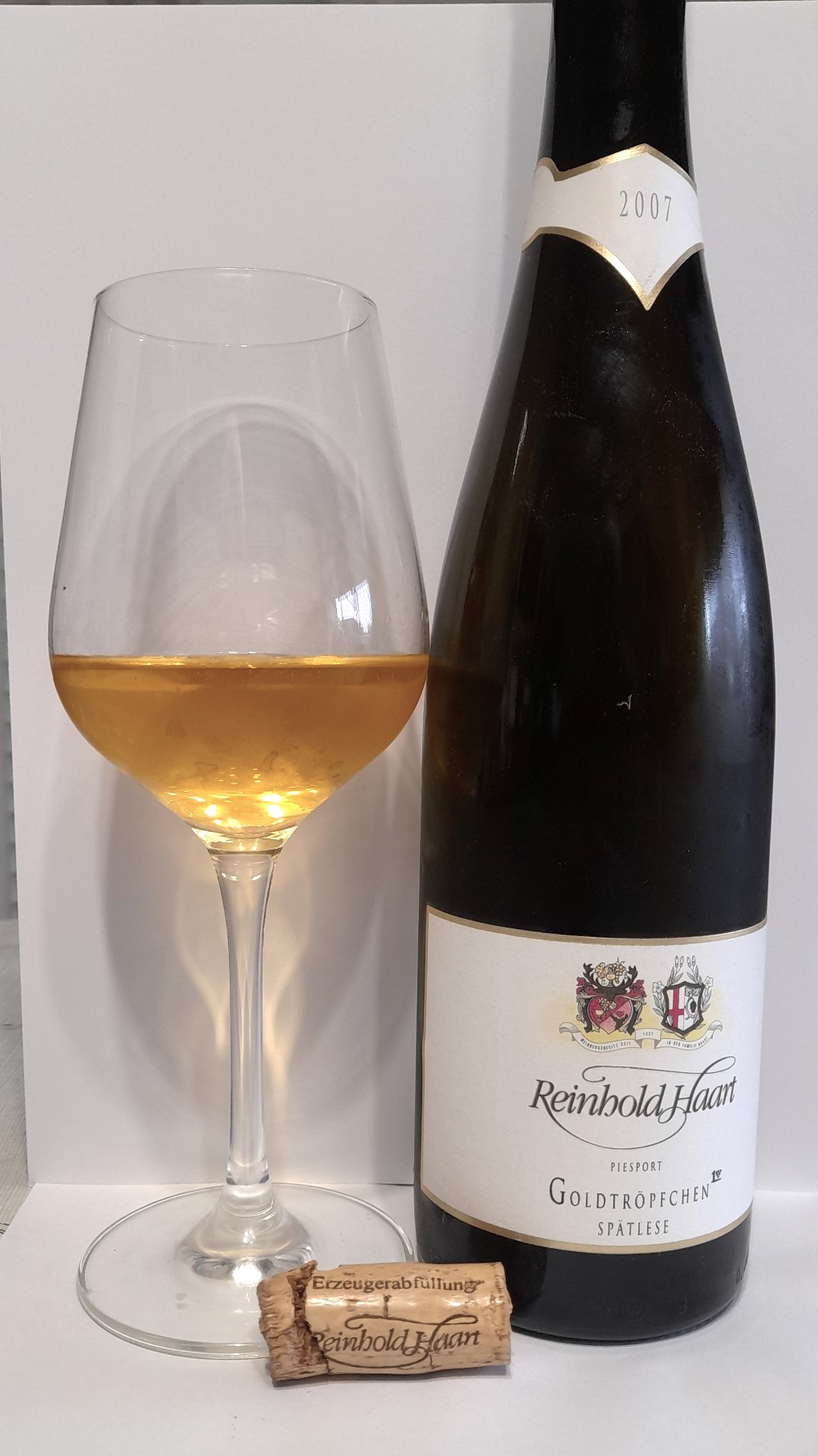
2007 haart gt spatlese

2007 Reinhold Haart Goldtropfchen Riesling Spatlese AP#15 8%
Piesport, Mosel 85 g/l rs.

Bright gold colour, this wine struts out with red apple, nectarine, a melange of mixed tropical fruits and the distinctive regional tell-tale petroleum, smoke and mineral signs.

The rich and viscous palate reflects the fruits above; everything is poised to demand more sampling; it’s a beauty – the apparent sweetness hints that it’s drying out, but in reality it’s just seamlessly and gracefully melded into the acidity. Delicious and so easy to indulge. I have not tried a Haart wine since early 2017, so this is immensely encouraging about quality and cellaring longevity!

Drink to 2030, 93 points

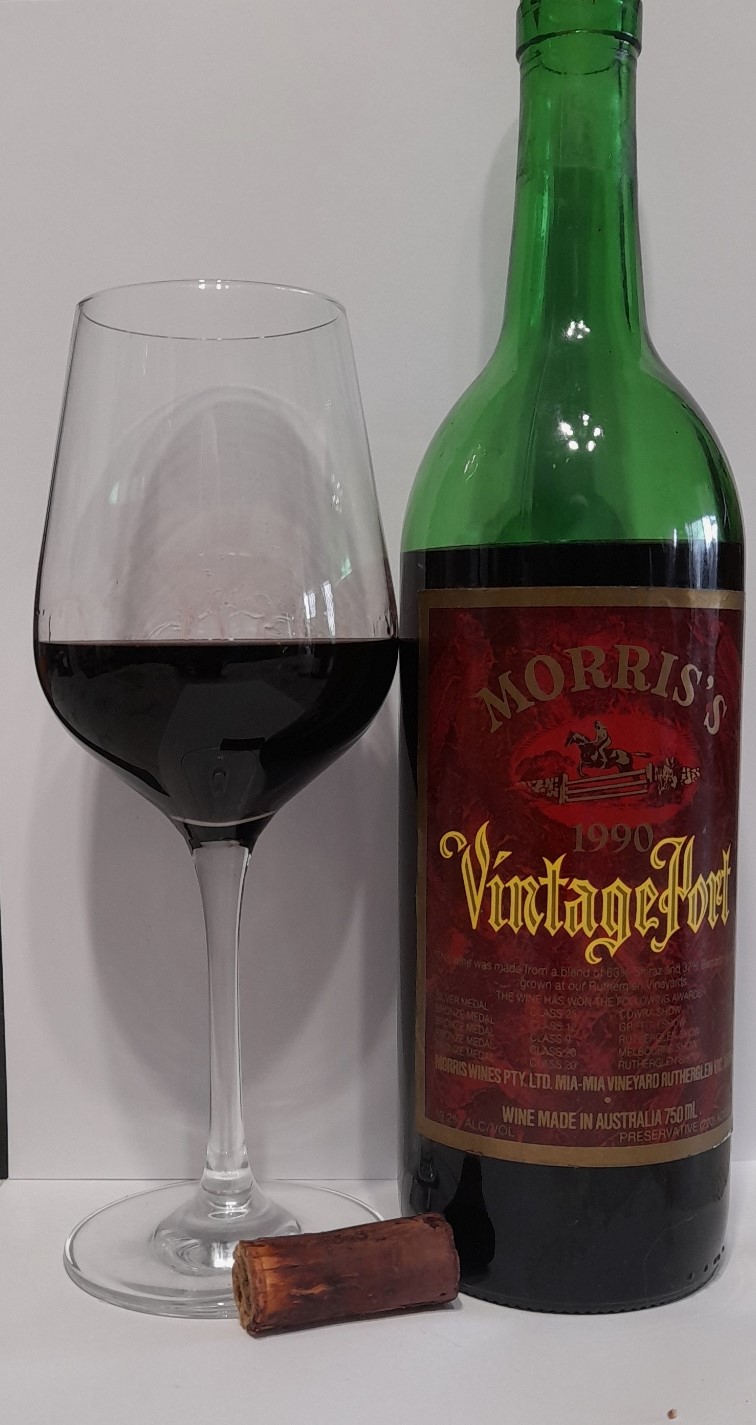
1990 morris vp

1990 Morris Vintage Port 19.2%
Rutherglen, Victoria

73% Shiraz, 37% Bastardo (Google suggests Trousseau, but more likely Touriga).
A recent auction purchase, the cork has done its job- just – so there will be better bottles held by enthusiasts. Deep dense ruby with some bricking but no browning; Lots of mocha, crema, marzipan, dark fruits; the palate is sweet, still with significant tannic grip, amiable high quality spirit, with cleansing acidity, this is very good drinking. But it just doesn’t provide enough real thrills or highlights to take it to the next level. Mind, its 33 years old, and in really good shape for an Oz fortified of that age.

Drink to 2028, 88 points

Two countries, two styles

1986 chambers VP

1986 Chambers Vintage Port 18.5%
Rutherglen, Victoria.

This wine had substantial sediment, so decant very, very carefully. The colour is aged and bricky, but solid. Red liquorice, cherry, mocha, malt and beautiful spirit. The palate is very sweet, but such is life. The rest of the package is the spirit integration, the freshness and tannin elegance. Made by the legendary Bill Chambers, likely Shiraz – but who knows? – a terrific tribute to a winery renowned for its ancient muscats and topaques, but akos with a monster range of reliably underpriced table wines.

Drink to 2033, and 93 points

2008 fonseca crusted

2008 Fonseca Crusted Port 20%
Portugal.

Similar in style to a late-bottled vintage Port, this fortified wine spent four years in large oak, and was bottled unfiltered, thus having a (heavy) crust and demanding decanting.

Deep in colour – and served masked- I instantly leapt to Portugal as its origin, the florals including roses, blueberry and violets. The palate was savoury, laden with cherry, plum plus fruitcake spices and super-supple, an elegant, youthful fresh and lively style with delicious spirit integration. My only question was whether the wine was a VP (did it have enough “stuffing”) or an LBVP, or a single quinta? I wrongly settled on a young VP, perhaps 2007. Regardless, a lovely drink with many years ahead.

Drink to 2033, 94 points

Two styles, two hemispheres

1990 Marc Bredif Grande Annee 12%
Vouvray, Chenin Blanc

The Grand Annee is the selection destined for aging. With their high natural acidity, Loire Chenin Blanc can age a long time. Domaine Huet, and Marc Bredif are particularly well known for their range of Vouvray wines. Australia has been less successful with Chenin Blanc – although I had a soft spot for some of the age-worthy Houghton “white burgundies” of the 1980s, and a thrilling botrytised 1981 St Leonards! I have tasted some startling South African Chenins across several styles too.

Presented blind, this wine was pale gold, but had some distracting cheesy/waxy notes. Fortunately,  this dissipated and the wine motored along improving with each taste showing honey, plenty of acidity and some residual sugar (50 g/l?) melded with spices made this wine a terrific, showstopping adventure. Just a marvel. When revealed, the freshness for its age was dramatic.

Drink to 2035, and 95 points

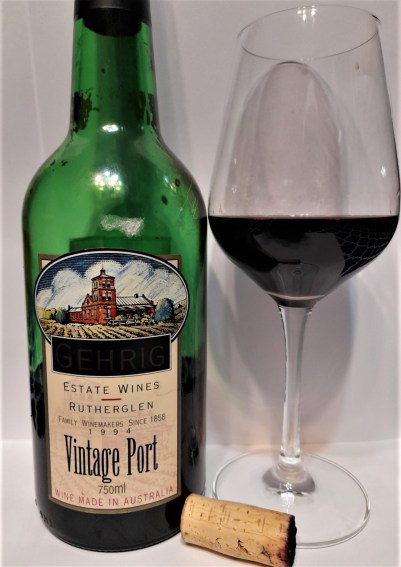
1994 Stanton and Killeen Vintage Port 19%
Rutherglen, est 95% Shiraz, 5% Touriga

“Will mature in the bottle for up to 20 years” claims the back label, but truly there is no need to rush, despite this being rated an “average” vintage with only a few silver medals listed.

Syrupy, almost jammy, dark-fruited, huge sweetness, dark cherry, plum, liquorice, chewy and still bright-tasting. A powerful flavour-bomb that doesn’t quite scale the heights of some other vintages. It’s in an enjoyable holding pattern. But that’s the vagaries and mysteries of the season, and this wine was heartily appreciated.

Drink to 2030, and 91 points.

Old and unusual

1996 Boll and Cie Champagne de Ratafia 18%
From Reims, Champagne. Pinot Noir, fortified.

Served masked, and I was baffled. Amber colour. Scents of camphor, nettle, marmalade, furniture polish and oranges. Very likely French, but not sauternes, not Loire, not vin de paille. Not Banyuls/Maury/Rivesaltes. I correctly estimated the residual sugar at around 120 g/l. It seemed to have relatively high alcohol (but not guessed as high as the label), and obvious age. Eventually I stabbed at a botrytised Alsace (historically in, and out of France), excluding Riesling or Gewurztraminer because of the lack of florals, so a Pinot Gris VT or SGN. Wrong!

I thought I had never tasted a Ratafia, but turns out I had tried one before. It was no consolation when someone pointed out the wine was stylistically like a pineau de Cognac (never tasted that wine either). This wine style is made by adding brandy or high strength spirit to unfermented, or barely fermented grapes, ending up with a wine both strong and sweet.

Drink now, but this is a curio rather than a wine of real merit, so 87 points just out of interest.

1973 Kaiser Stuhl Vintage Port
Barossa, Shiraz

Mocha, almond/marzipan, headsy spirit. Less tannic than expected and more sweetness than expected. Australian, and with time ahead. Very pleasant, albeit straightforward, After the unmasking, it’s always special to have a 50-year old wine that is drinking well. The company was swallowed and eventually shuttered by corporate manoeuvres but that wine certainly triggered memories.

Drink to 2030, 87 points

Hector’s Stoney Goose Ridge annual report

Stoney Goose Ridge EOY round-up 2022-23
Another year is over, with another well-deserved bonus for me. In fact, several employees also received small remuneration supplements after my distribution dwindled the incentive pool. I welcome several recent hires who bring outstanding investment management pedigrees, client orientation and result perspectives. This will supplement the vision of my own hardcore lens across the mercantile business entities.

Apart from the contributions of remaining staff, I particularly thank my supporting team – personal trainer, stylist, PA’s, chauffeur and biographer. Stoney Goose Ridge could not have completed its most successful year ever without their capacity to broadcast my inspirations and motivations down and across the organisation.

Our liquidity covenant headroom holds us in good stead. This enabled us to gather distressed assets (and alternative assets) of our suppliers and competitors. When opportunity knocks – however faintly – I swoop to conquer.

Meanwhile recent wine vintages have been difficult.  But the tide has gone out and we can see the finish line downstream. As ever, our competitors are awash in financial morasses, ethical scandals and gropethink. But their ongoing incompetence is astonishing. Whenever a new executive embarks on a myopic “listening tour”, I am amazed at this cavalier waste of time and money (WOTAM), bleeding their budgets while merely pumping the spurious hubristic tyres of their egos, while they seek glittering baubles of adoration. Caught in a web of their vacuous hyperbole, sponsoring their fancied hobby-horses so they can “network” in corporate boxes and mingle with A-Z grade rent-a-celebrities. Conflict of interest is an unknown concept, as they swim in related-party interest-free loans and outrageous share incentives. Stoney Goose Ridge is comprehensively vigorously vigilant in highlighting these numerous disgraceful shortcomings to media, courts, and Governments – any inaction concerning their overt transgressions is clearly due to nepotism and corruption.

While it’s difficult to make predictions – especially about the future – the inane blathering and forecasts about industry trends by the so-called leadership teams of my so-called peers truly makes astrology seem respectable. Their SNAFU strategies seem to consist of convoluted 360-degree U-turns, supported by inane puff-pieces propagated by “journalists” swilling in the trough of junkets on the gravy train.

Meanwhile at Stoney Goose Ridge, cashflow, customers and margins remain king! My team is wheeling and dealing 24/7, augmented by my magisterial managerial and marketing mentorship.

Our innovative legal section continues to thrash its way gathering punitive exemplary damages and colossal compensation, with selective use of no win-no fee, its caseload bulging with success. Add their sterling work on exploiting tax minimisation loopholes and extracting grants, subsidies etc and they fully deserve their incentivised remuneration packages.

Our rolling recruitment program (Project Android) continues to progress filling inevitable vacancies due to wastage, attrition and footprint expansion in our high-talent pool. We are ready to head-hunt in all glamour areas – taxation minimisation, legals, accounting and financial analysis, data mining, sales motivation, social media freneticism – even mundane beverage fabrication and nurturement. Project Medusa has had significant impacts in successfully tarnishing the image of “celebrity brands”, exposing their shameful peccadilloes, legal battles and infamous photos, videos, tweets and cover-ups. Project Klingon continues to bear fruit, seeding new markets in preparation for Stoney Goose Ridge by establishing beachheads in hostile markets. We take no prisoners, and fully enjoy routing the opposing forces and smashing the fragile force-fields shielding their mediocre, subsidized, overpriced alcoholic confections.

I refuse to allow regulatory straightjackets or ludicrous “sin” taxes to stifle our trajectory momentum. I am busy with full-frontal head-high evidence-based persuasive tackles on impediments, forensically renowned for woking up bureaucrats and legislators for the benefit of their stakeholders – which incidentally includes Stoney Goose Ridge.

New releases
We continue to extend our fully trademarked DRC (Decisive Real Champions) range. This is – yet another – of my passion projects, my inspirations assisted by a team of researchers (interns, work experience, trainees, juniors, etc), using atypical standard beverage industry data-mining tools of property and tax records, electoral rolls, local landmarks, genealogy and so on. In short, years of collaborative toil following the discovery process, all purposed to vindicate the evident connection to the wines’ inherent nomenclature.

These are very serious wines not akin to the well-known Randall Grahm’s Bonny Doon whimsies (Cardinal Zin, Big House Red, Old Telegram, Le Cigare Volant, Il Fiasco, Clos de Gilroy etc etc) and absolutely not droll copycats like Fairview’s Goats do Roam and Goat Rotie.

We have stringent lease/buyback/profit-sharing arrangements for new plantings and winemaking allied with my profound involvement in the assessment and triage. The following wines will be progressively released over the coming twelve months when I deem marketing conditions are apposite.

  • Clos de la Rocks
  • Clos de Lampreys
  • Clos de Tar
  • Clos du Marky
  • Chateau Cannon
  • Chateau Fig-axed
  • Chateau Hugh Bryan
  • Chateau la lagoon
  • Chateau Left feet
  • Chateau Leo’s Villa las Casa
  • Chateau Mountain rockslide
  • Chateau Oz-owned
  • Domaine D Jack
  • Maison Lee Royal
  • Paul Rodger (only col fondo at this stage)
  • Quinta do Novel
  • Coast gorse
  • Seeming Legal
  • Vega sans Silica
  • Blass Phillip
  • Hill of grass
  • Mount Marty

What a sublime collection! Labels have been embossed with respectful and entirely legal homage to what might have accidentally inspired them, by the celebrated artiste Binksy. Sublime quality is certain. Mega award-winning presentation, individually numbered, with a personally hand-signed certificate of authenticity. In some examples there are only three barrels; at best only ten barrels, with the wines truly expressing their natural micro and macro sub-terroir characters, under fully sustainable biogeneric principles.

These DRC wines are all made in minuscule quantities and destined for our extreme high-rolling net worth whale collectors – financiers, oligarchs and so forth; members of our exclusive 88 club.

Branding and diversity update
Adventure afar (AA), celebrates our retargeted strategic global premiumisation thematic, with omnichannel touchpoints including packaging, POS, OOH, digital, experiential, social and events across key live markets. Media partners and our global customer audience adore this refreshed conceptual vitality framework plus its adjacency synergies defined across the metaverse.

Stoney Goose Ridge is exclusively disruptive and inclusive, expanding our respected x-culture generational power brand, transcending beverage categories, catering for the rising value category of the Luxuriant culture pioneer. The halo of our premium luxury icons brandlines transcendently cascades through other fully balanced price-point ecosystem categories.

Our social media impact is gargantuan, almost as stunningly impressive as our carbon-neutral green offset aspirational framework principles.

I am proud of our diversity; it’s not a matter of numbers and categories- we have a startling range across full-time, part-time and casual employees, and (where permitted) commission-only – with wide-spread age-ranges.  We have direct employees, contractors, agents and consultants. We have a range of academic qualifications, varying from rudimentary to those bursting with multiple tertiary degrees (such as myself). Salaries, wages, entitlements and bonuses are extremely disparate. Personnel are based in a (growing) number of countries, with varied ethnic, demographic, linguistic and supplementary characteristics. We respect that staff have private, personal lives that we support to the extent that they never interfere with their agreed committed contractual KPI obligations.

We only lack diversity in talent. We recruit with mutually understood expectations that all levels entirely execute their deliverables. This requires attitude and unrelenting application. Staff are fully supported through our appropriately infamous up-skilling in-house development programs. Further, all personnel know they have access to my Holmesian problem-solving skills, experiential omnipotence, communication excellence and unfailing intuition.

Conclusion
My favourite question? How quickly can you increase my allocation of Stoney Goose Ridge?

Your revered hyper-aggressive leader, Hector Lannible