A crowdfunded, indent wine from Stoney Goose Ridge

CEO Hector Lannible introduces the whole concept of an indent wine that is crowdfunded.

“The Australian wine industry is going through hard times. The bushfires over summer destroyed several vineyards, and smoke taint ensured that some producers will not make wines in 2020. Of course, Stoney Goose Ridge is immune to these issues- our grape sourcing arrangements and visionary contracts ensure zero exposure to these misfortunes.

“However, coronavirus has now led to the closure of hotels, cafes and restaurants, with obvious job losses and directly reduced alcohol sales transactions. Many wine companies are offering free freight and discounts to generate some cash-flow.

“Even Stoney Goose Ridge has been affected by this pandemic. My extensive essential overseas goodwill travel commitments have been curtailed; the executive team has suffered a remuneration buzzcut, and a portion of my own well-deserved lavish bonus will be anonymously donated to charity. Selected staff have been redeployed to non-compensated external positions. Stoney Goose Ridge continues its industry assistance with comps, FOC and contra, plus wily exploitation of all assistance schemes.

“But Stoney Goose Ridge has a solid trajectory of growth across core product groups. As a trusted premium international brand with transparent supply chain visibility, we continue intensifying total transactional value despite the revenue headwinds others are experiencing. Our overarching liquidity architecture remains intact, with fundamental ubiquity across the vector.

“We sometimes feel sorry for our competitors – their ham-fisted efforts mirror lambs in the headlights unable to talk turkey.  I celebrate a stunning, and timely wine release. Once more, we leapfrog our opponents and snooker them into zugzwang, seizing the window of opportunity with open arms.

“Black wines are again fashionable. Once again Stoney Goose Ridge is at the bleeding edge vanguard with our futuristic foray into this exciting field. It wasn’t a kneejerk reaction to make this wine on the run.  I applied pressure to turn the heat up on my junior subordinate minions, and with my enduring inspirational stimulation, they crafted this iconic superstar.

“You may recall Spinal Tap’s famous black album – “none more black”. Or Prince’s black album? What a concept! Can you set a wine to heavy, with the volume turned up to eleven? Sure!

“We’ve joined the dots to put our best foot forward, so this wine is all natural, with no black arts involved.  We used deeply coloured and flavoured varieties- Zinfandel, Saperavi, Mataro, Durif and Tannat, picked when very ripe, pressed hard with some juice run off. With perfectly legal tannin additions, and matured in highly charred barrels, this is one hefty, solid inky black wine.

“The wine is of course very deeply dark-fruited, a black hole, blacker than the ace of spades, blacker than coal – you may get the idea. It’s dark – very dark. Well technically it’s a red wine but don’t let that fool you.

“It weighs in at a substantial – but balanced, 16% alcohol. It tastes confronting- this is a full-on wine with monumental tannins that demands high-octane food to attempt to tame it; something substantial. Power to the max. Pedal to the metal. Not for wimps. You have been warned. We’re focussed at the cutting edge of the slipstream here, putting the hammer down to jump through hoops.

“There were no problems with the nomenclature for this startling eponymous addition to the active brandline portfolio of Stoney Goose Ridge. I proudly debut The Black.

“A burly, bruising wine for heroes, it won’t suffer the ravages of time. Not for moderates, this wine is crafted for hardcore wild extremist thrillseekers living on the brink. Drink it now with the benefit of a day’s decant, or wait as many decades as possible before opening. Age shall not weary them. The challenge awaits. Who dares, wins.

“A serious, glass-staining, teeth-staining wine, with a truly bargain price for the delivery of the mega impactful volume of flavonoids.

“The RRP was intended to be released for a value-packed meagre $28, but what a bang-for-buck! We’ve done it again with “the Black”.

“But we’re not releasing this wine to the general public through our usual retail or on-premise outlets. Stoney Goose Ridge will market this wine exclusively, directly to customers in a stylish totally unique crowdfunding indent exercise for only $20 per bottle, a totally awesome saving.

“Pay now, and delivery occurs in one year’s time, on 1 April 2021*. This allows the wine to shed some of its youthful excess energy and gain even greater complex intricacies.

“A release party was planned with celebrity invitees including Sam Neill, Nicole Kidman, Kylie Minogue, Shane Warne, Scott Cam, Delta Goodrem, Adam Goodes and many others. While this festive event has been postponed, all purchasers of “the Black” are welcome to attend, when the gala gathering is rescheduled.

“Order now- our operatives at the Stoney Goose Ridge multi-award-winning website can accept your order- no FOMO, but get in quick – you’ll be so glad you did”

*Conditions apply- delivery will never occur. Purchasers agree that they are over 5 years old. Purchasers agree that if not completely satisfied they have no legal or moral rights.

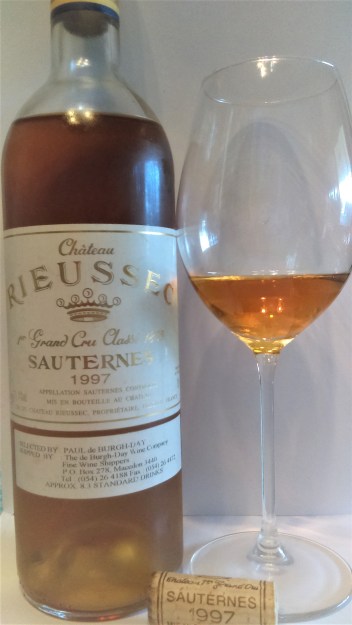
1997 Ch Rieussec 14%

It’s startling to recognise the abundant fruit power this wine style can possess. From the website, its composition is around 95% Semillon, 4% Muscadelle, and a squiggle of Sauvignon Blanc. The typical treatment is 18-26 months in oak (approx. 50% new). And the wine has just soaked up this oak, and is bursting with fruit vitality.

1997 ch rieussec

The cork has performed its task.

This wine is drinking superbly. Deep, bright gold in colour, one can luxuriate in apricot, citrus peel, lime, quince, vanilla, and light honey and almond. Apple and raisin appear on the viscous palate, joined by barley sugar, sweet spices and lime.  The wine is resoundingly fresh, obviously complex, and lingers effortlessly. Sweetness and acidity are highly harmonious here.

Drink to 2030 (but why wait?) and 96 points.

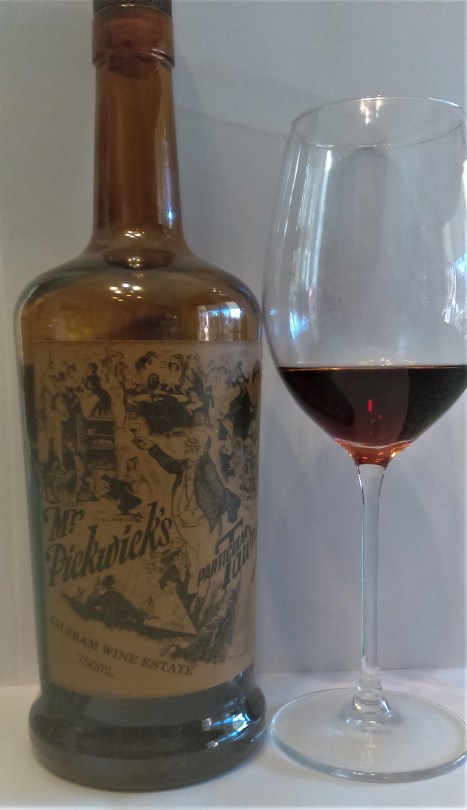
NV Saltram Mr Pickwicks Particular Tawny 19.5%

The label looks fussy and old-fashioned with its portraits of old men in the period costume of the 1830’s. The back label alludes to Charles Dicken’s (first novel) character the Mr Pickwick, founder of the Pickwick Club and his (light) adventures.

Dickens always has memorable characters (albeit often “flat”) Here’s a nice quote…
“’I assure you, my good friend, I have more money than I can ever need; far more than a man at my age can ever live to spend,” said Mr. Pickwick.
“No man knows how much he can spend, till he tries,’ observed Mr. Weller.

There’s a conflict between this homage, and the need to find a market, not easy with a fortified, and becoming even more difficult. I can’t believe I’m begging for label tweak, since this wine is readily available, retailing around $60, and represents such very good value for its quality.

nv saltram mr pickwick tawny

With an average age somewhere between 21 and 25 years (internet searches vary), this is old material – assume its Shiraz-based and from the Barossa Valley.

Amber colour with a khaki rim, its packed full of all the Christmas cake dried fruits, nuts and peel imaginable; fig, citrus, toffee, spices. Exquisite brandy spirit plays its part, and it ends with vanilla and lusciousness. There is obviously old material here, but it’s but amazingly fresh, smooth and decadent.

Oak, and vanilla presence makes a greater contribution than I would prefer in a perfect world, but there is no denying the concentration, power and grace that make it difficult to resist reaching for more.

Drink now (it will happily last a few weeks after the cork is removed), and 93 points.

Two local drinks

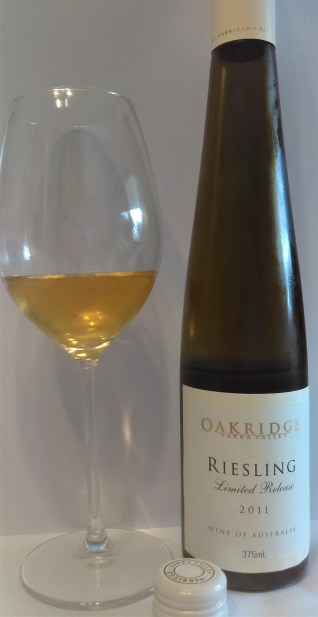
2011 Oakridge Limited release yarrawood Riesling 8.0%
Oakridge in the Yarra Valley has excelled with its Chardonnays- struck-match galore but with increasing fruit presence; winemaker David Bicknell has access and the capability to preserve special sites – this one still in the Yarra Valley but from from Yarra Glen.

2011 was a particularly challenging year in Victoria, with widespread rain and humidity wreaking havoc on most of the red wines; whites fared much better.

2011 oakridge botrytis riesling

It’s a bright light gold colour, and delivers botrytis dustiness and slightly bitter almond, along with an array of apricot, yellow peach and twangy acid to hold interest. This is a crazily sweet wine (around 180 g/l) but has the bracing acidity that delivers forgiveness (and a bit more). Its absurdly easy to consume; cumquat and citrus marmalade are highlights on the palate, with varietal ripe apple flavours joining the party

When botrytis takes hold, the yield diminishes; pressing and fermentation involve significant challenges, and marketing is another conundrum.  This is a winemaker’s small-volume indulgence.

A touch of furniture polish scents, plus a suspicion of caramel and toffee holds my score back. For my taste, drink soon (to 2023); and 90 points

1982 Chateau Reynella Vintage Port 20%
Made from McLaren Vale Shiraz, this 38-year-old wine still has plenty to offer.

Bottle 4155 had a dense red colour, expressing liquorice, raspberry, chalk and almond meal. Luxuriant brandy integration. Sweetness correctly led to an evaluation of Australian origin, and more likely South Australia. The red-fruit impacts made me incorrectly dismiss Reynella and Hardys where I associate stern blackberry notes.  Not this time!

Youthful and very enjoyable.

Drink to 2030,  91 points.

Five years on – part two (the humour)

My blog has also been a channel for humour with Hector (and others) every few months. Hector is a composite character, (not based on political leaders, but with elements of Zapp Branigan and Russell Coight extant). He is inflicted with self-aggrandizement, contempt for competitors and their efforts, and replete with uber-fashionable marketing and business cult buzzwords in extremis. Assorted literary references, tautologies, alliteration, mixed metaphors and cliché add to the colour (perhaps). A blog entry around April 1 has been obligatory.

A roll-call of the fictional pieces is listed below if anyone wants a refresh.

March 2016 – a wine with a ridiculously long name
March 2016 – Australia’s most expensive wine – Ecstasy One®
May 2016 – Lawyer’s Picnic
August 2016- Hipster’s Reward®
October 2016 – Films about wines (fictional synopses)

Jan 2017- Hectors EOY motivational address to staff
Feb 2017 – Chamsecco®
April 2017 – Brosé
Jun 2017 – Emoh Ruo
Sept 2017 – Craft beers (One tasty blonde, Brett’s ale, Bullant Lager, Seasonal Smashable)
October 2017 -Two Fingers (Gin), the Old Wood Duck (Vodka)

April 2018 – Prof. Albert Pedant’s “facts behind wine labels” (Clonakilla, Hill of Grace, Para Port and Grange)
July 2018 – Hector Lannible’s TED speech “the China syndrome”
October 2018 – Terra Nullius
Dec 2018 Hector Lannible’s stimulating EOY statement to staff

March 2019 “the Unicorn”
July 2019 – Hector Lannible’s inspirational EOFY proclamation to staff
October 2019 Miraculus Maximus Technoplex
Dec 2019 Hector Lannible’s EOY rousing report to staff, and release of TCA

Further examples of Hector’s verbiage are in progress. They are alarmingly easy to compose, and some people have expressed appreciation,

Five years on – part one

It’s been – nearly-  five years since I started this blog.

It’s a selfish outlet for keeping some tasting and writing discipline. It’s a vehicle to describe some of the wines I’ve been fortunate to taste (focusing on strong and sweet wines – a severe minority of the wines I own, and drink), rather than random wines. Dodgy photographs, erratic fonts and links to other websites may sometimes help.

My preferred style is to taste the wine, then write some notes. Ideally I repeat this process at intervals (a few hours later, the next day, and sometimes again one day later). I sort through these independent notes and see which threads, conclusions and descriptions linger. I check for any of my earlier tasting notes to test if there is alignment (just for fun). A quick internet hunt follows to locate any technical information on sugar levels, oak regime etc.  Then it’s time to publish! I may try to combine a few of my recent notes where sometimes a theme has arisen.

There are certainly occasions when I do not have all these luxuries – when tasting wines, there may be little opportunity for leisurely contemplation, and lighting may be imperfect. In those cases I scribble impressions.

A few bonus pieces based on my meagre learnings have been inserted, along with some reminiscing. Cork problems have been noted – they continue to track at excessive levels, spoil enjoyment and hurt the wallet.

Hopefully my blog has been of some use- perhaps in retrieving wines deemed ready or finding a few producers to explore.

For hunters of the wines I’ve written about that scored at 96 points or above, here goes…There’s plenty more not on my blog. I’ve had plenty of pleasure from wines I’ve given merely 90. Read the note, not just the score! Anyway, I’m happy with the list below. Links are too troublesome – use the search function.

  • 1927 Dow’s Vintage Port
  • 2013 Ch D’yquem
  • 2005 Ch D’yquem
  • 2002 Anderson sparkling Shiraz
  • 1991 Seppelt Show Sparkling Shiraz
  • 2004 Seppelt sparkling Shiraz
  • NV Chambers rare tokay (Muscadelle)
  • 1990 Craiglee Shiraz
  • 1997 Hugel Sporen Gewurztraminer SGN
  • 1998 Ch de Fargues
  • 2007 Dirler Speigel Gewurtztraminer SGN
  • 2001 Zind-humbrecht Pinot Gris Clos Jebsal SGN
  • 2002 Joh Jos Prum Graacher Himmelreich Riesling Eiswein
  • 1986 Morris rare muscat
  • 2002 Bollinger RD
  • 1990 Trimbach Clos St Hune Riesling
  • 1990 Jaboulet Hermitage la Chapelle
  • 2006 Joh Jos Prum Wehlener Sonneuhr Riesling auslese Goldkap

I’d like to post notes more regularly, but other life events keep intervening. Its worth mentioning that apart from a few trade tastings that I’ve weaseled my way into, there are no donated wines in my blog, or any commercial push.

I’m entirely unconcerned about monetising – but wider readership and comments would be appreciated.

2006 Joh Jos Prum Wehlener Sonnenuhr Auslese Riesling Goldkap AP#17 7.5%

The gold capsule indicates “more” than an auslese category; greater ripeness, and complexity. This category from JJ Prum retails for around twice the price of the auslese. The combination of very special site, the experienced team that have mastered this style, the opulent botrytis-laden vintage, and the Goldkap combine to make a remarkable wine.

This is an outstanding Mosel Riesling. Bright gold in colour, it exudes a mesh of floral citrus, light smoke, petroleum jelly (decidedly not kerosene), mango, red apple, and furriness. The palate hums along with acidity and the most seductive and utterly compelling texture and length. Honey, plus citrus, with the affluent residual sugar entirely wrapped up with acidity; it oozes pleasure and decadence.

My brief note from May 2010 is similar “complex, penetrating with plenty of acidity, petroleum jelly, red apple and red fruits, amazing length 19/20)”

No harm to drink now, but anytime to 2035 with comfort. I wavered but it deserves 97 points.

Don’t hesitate if you can find it.

Henriques and Henriques 15 y/o twins from Madeira

These wines proved much more of a success than the 20-yo Terrantez I described  in January 2019.

Madeira (a Spanish island) is essentially a lost cause in Australia; there is little readily available; tastings are rare, and presumably its only imported to cater for the (well-heeled) minority that love the style. I have been to precisely one tasting – it didn’t take long to realise that 5 and 10 year old examples didn’t provide excitement or distinction. Don’t bother!

Like many other regions producing fortified wines, there is a cachet (and price premium) for vintage (colheita) examples. Madeira is renowned for its acidity; they will last for decades and provide pleasure over weeks even when opened. The better examples are matured in old large oak, with its inherent slow oxidation and evaporative losses delivering further complexity as the wine mature.

Bibendum and TSA (the Spanish Acquisition – love that name!) import; but good luck finding retail distribution; bits of Blandy’s, and Barbeito also seem available in Australia with a decent Google search.

Here is another website which includes a wealth of information about Henriques and Henriques wines.

pair 15 yo madeira

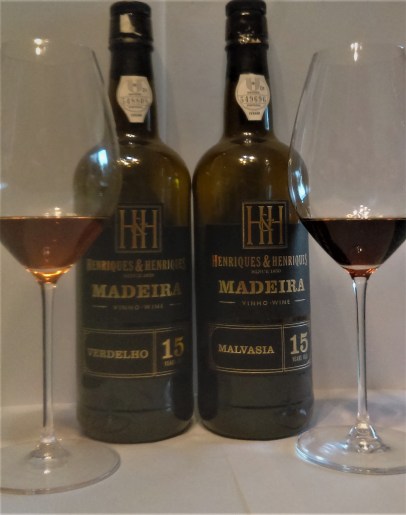
Henriques and Henriques 15 yo Verdelho Madeira 20%
Amber colour; it exudes a mix of dried pear, roast coffee bean and fruitcake spices, with a pleasing touch of floor polish. Its relatively dry (72 g/l rs) for the style, and presents somewhat as a cross between a tawny style and an amontillado sherry; hazelnut, date and caramels make a winning presence. It’s not straightforward to suggest food matches, but a charcuterie platter or a French onion soup will work.

Drink now, and 91 points

Henriques and Henriques 15 yo Malvasia Madeira 20%
Teak and mahogany colour; iodine, fig, orange peel. The palate (110 g/l rs) is entirely balanced; bitter dark chocolates, salted pecan and peanuts; this chewy wine has enormous presence and style. The acidity cuts a swathe through the richness. Very smart! Match with a stiff coffee or an aged cheese- perhaps a cheddar or Comte?

Drink now, and 93 points for this wine of intrigue.

Catch-up with some European sweet wines

2007 willi, grun

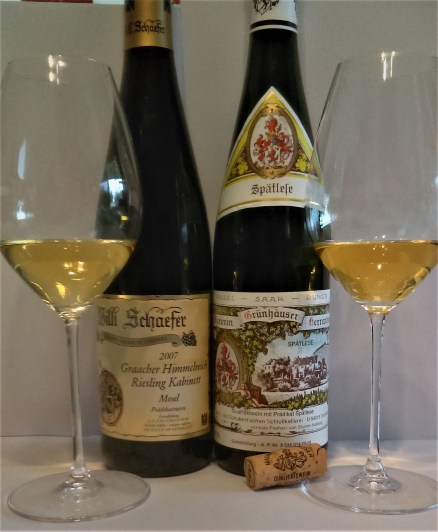
2007 Willi Schaefer Graacher Himmelreich Riesling Kabinett AP#9 8%
One of my favourite Mosel producers. 57g/l residual sugar. A bright pale gold, red apple, touch of barely ripe pineapple. Crunchy, fresh, melons and lime, with a rich fresh mouthfeel, Comforting, comfortable, refreshing.

To 2030, 91 points.

2007 Maximin Grunhaus herrenberg Riesling spatlese 8%
Mosel. Deeper gold, Aromatically less pure than the previous wine; candle-wax, red grapefruit, spiced pears. The palate displays more dried and glace fruits; acidity does not seem as vibrant and a bit of hardness is evident. No trouble drinking this wine over several days, but early consumption is suggested.

The label is “old-school”.

To 2025 and 89 points

2006 Ch Coutet 14%
Barsac, 75% Semillon, 23% sav blanc 2% muscadelle; 149 g/l rs. A good but not brilliant vintage for Sauternes, but the wine (half bottle) has held well. There is abundant information on their website.

Light toffee colour, showing pristine vanilla, icing sugar, stewed apricot, and orange peel. The palate is very ripe and sweet, with some marmalade characters and almond (oak). Racy acid makes helps; there is tension between the exotic fruit sweetness, acidity and mouthfilling texture.

From a half-bottle, this wine was a wonderful result for the vintage and seems on a long plateau. Drink to 2025 (conservative, but the wine presents so well now), and 93 points

2010 Mader Pinot Gris Schlossberg Grand cru (sweet)
Hunawihr,  Alsace. Light gold colour, Sultana, pears, dried apple, dried apricot. The grapey palate retains just enough acidity to keep interest.

Drying out, with possibly some oxidation. There is still drinking enjoyment, but it’s on the decline

Drink now, and 87 points

Two long-lived vintage fortifieds

1975 baileys vp

1975 Baileys Vintage Port
The label states Bundarra, with Baileys in smaller print, but it’s the same mob. I extracted a pretty ordinary cork, which however had faithfully performed its duty for 45 years,

Made before I was even interested in wine, it was a recent auction purchase for a surreal  price just over $20. Insane value! The Baileys red wines from 1975 (and 1977, and 1979) are somewhat rustic but the depth of ripe fruit flavour is extraordinary, and they continue to surprise,

Baileys (Glenrowan, Victoria) were renowned for their monumental red wines where vigour trumped finesse; plus their luscious fortifieds (muscat and topaque). Back then, vintage fortifieds were less of a winemaker indulgence than now.

Likely to be made entirely from Shiraz, it’s still a vibrant black/red colour albeit some bricking on the rim; it’s an unashamed old-fashioned inky Oz style – a meal in a glass- with ripe fresh sweet blackberry and raspberry jam, a touch of mocha/cocoa and aromatic brandy spirit. It’s lush, rich, sweet, and endless.

I reviewed this wine on this site in November 2015, and descriptions and conclusions are (thankfully) consistent.

The wine is a tribute to the area, its maker Harry Tinson, and is completely compelling. I cannot see improvement, but its longevity is astounding.

Drink to 2035, and 92 points

1986 Graham’s Quinta dos Malvedos 20%
(Served blind). The wine had a very deep red/black colour, with red liquorice and milk chocolate, plus a touch of tar. The palate was supple, showing rose-hip, cherry and red berry flavours with slightly grainy tannins. I suspected the wine was a Portuguese VP, mainly with the mixed fruit flavours, perhaps from the mid-1990’s. Other drinkers confidently stated it was Australian, and perhaps 15-20 years old.

When unveiled, the first surprise (to most) was its Portuguese origin; the next surprise its actual age (33 years); the last surprise was that it wasn’t from a widely declared year. My speculation was that the houses were dealing with (generally) declared years of 1980, 1883 and 1985 – and may have met some market resistance to another release. It was less of a surprise that the wine was from Grahams – generally characterised as making a slightly richer and sweeter style than many other houses.

Anyway, drink to 2030, and 94 points as a pleasurable educational experience.

I have negligible experience with this style, so some homework within the Graham’s website and elsewhere was needed. For Graham’s, the Malvedos site provides the main component when vintages are declared, but it’s also generally bottled in non-declared years. Its main varieties are Touriga National and Touriga Franca, plus others. The wines clearly can have great longevity (the last tranche of the 1965 Quinta dos Malvedos was re-released as a 50-year old wine).

A vertical tasting of the Quinta dos Malvedos with notes from Andy Velebil is on the For the love of port site.

And I will be slower to dismiss wines from non-declared years!