One VP and a loss

1963 Warre’s vintage Port
Served masked. Pale faded rose colour; and determinedly Portuguese; blue and red plum fruit with some Turkish delight, mocha, cocoa, valrhona choc. Completely mellow with just a touch of nuttiness. The spirit is essentially holding this wine together, and my guess for age was around 1970. Great fun as I am rarely fortunate enough to try sixty-year-old VPs, and this wine isn’t yet decrepit. Its donor advised that there was monster sediment that was filtered off.

Drink now (until 2033 and 93 points

Bill Chambers died recently – terrific links are here, and here but I will add a few reminiscences, as I visited Chambers’ winery many times over the years.

Curiously, my (late) father Frank worked at the vineyard for a brief period labouring in the 1940s.  He also took the family to Rutherglen on many occasions, where we usually stayed at Wahgunyah’s Riverside motel, with Buller’s bird park an essential stop. These visits continued with my partner and children.

On one occasion, Bill met us on the tasting verandah letting us know “wines are all in the fridge- help yourselves”. We usually made a point of wandering off to admire the ornate “exhibition” barrel. I also remember finding Bill rebottling some 1958 muscat, which was very reluctant to pour, just slowly trickling. Known for the age and complexity of the muscats and topaques, we could usually also find a well-priced red wine or two to buy. I have many more memories of Bill’s friendliness and generosity.

Finally, one remarkable talent of Bill’s was not well known to the public although wine show judges and winemakers would be aware of his prodigious wine spitting technique.

Bill could effortlessly direct a stream of wine with exceptional pace and accuracy into a bucket several metres away, while we watched in awe and envy – my own efforts shorter, less precise, and with occasional random dribbles. Vale Bill!

Three masked Euro wines from a dinner

2015 Ch Suduiraut 14%
Sauternes – 94% semillon, 6% sav blanc. Picked in 5 batches, matured for eighteen months in 50% new and 50% one-year old oak, 138g/l residual sugar.

Bright yellow colour, vivid tropical fruits – pineapple, mango, cumquat. Slinky texture with oak sunk into the background, and spices. Fresh, and welcoming, but more pleasure awaits

Drink to 2035, 94 points

2015 Ch Rayne Vigneau 13.5%
Sauternes – 74% semillon, 24% sav blanc, 2% muscadelle

Deep yellow/gold colour; dark honey and citrus, and botrytis dustiness; viscous, intense palate – ripe, rich and ready with a touch of orange/tangelo. I can’t recall trying a wine from this producer before.

Drink to 2030, 91 points

2001 Fonseca quinta do Panascal Vintage Port 20%
Portugal.

Not a generally declared vintage, but this is a very good site – and single quinta wines can often offer exceptional QPR. Deep red colour, showing blueberry, blackberry, “putty”, mocha and nuttiness. Vibrant and rich mouthfeel. Clearly Portuguese, and around 15-20 years old, I wavered between VP and LBVP. My notes thankfully very similar to my previous tasting on June 2021.

Drink to 2033, and 92 points

Two (masked) Euro surprises

2010 Donnafugata Passito di Pantelleria Ben Rye 14.5%
Sicily, Zibbibo (muscat) and 195g/l residual sugar; partly air-dried to concentrate the sugars.

Deep orange/gold colour, and first impressions ran “muscat, floral, apricot, ripe and vital; super-sweet, loads of spice and length”. Apricot dominates with a mix of jam, tinned fruit and juicy ripe fresh apricots. Engaging viscous texture, with honey and vanilla bean. Having had this style once before, this was instantly identifiable. My guess was around ten years old.

This is not the most complex sweet white wine I have ever encountered, but it possesses intensity and memorability. Clearly it can take some bottle age, but won’t really change, so get stuck in.

Drink to 2028, 93 points.

2006 Ch Filhot 13.5%
Sauternes, 60% semillon, 36% sav blanc, 4% muscadelle. At least 2 years in barrel, 1/3 new

Deep gold colour, with an array of apricot, citrus, vanilla and tropicals. Obviously Sauternes style, and also absolutely at its peak, with a winning mix of fruit, freshness, and mouthfeel. I guessed it was around fifteen years old. I was surprised that it was Ch Filhot, which I generally describe as lighter, affordable but less complex and age-worthy. This was very smart from an average vintage, and outperformed my prejudices!

Drink to 2028, and 91 points

One dinner – four from Europe

First up, Australian winemaker John Vickery died recently. He was a gentleman, an expert winemaker and had huge influence on winemakers here. Riesling was his forte, with many memorable wines made at Leo Buring,  Richmond Grove and the eponymous Vickery label. He kickstarted my interest in wine, and my early tribute is here.

A recent dinner I attended had a plethora of interesting wines (all served blind), and I will try to describe a few.

1993 christoffel EP

1993 Christoffel-Berres Erdener Pralat Riesling Auslese*** 8.5%
Mosel. Light gold colour- petrol, tropical fruits, blackcurrant. Creamy palate, fresh with terrific balance. Lovely wine from a great site in Mosel. Wines are no longer produced, but there is (or was) a fair stock of wines from 1987-97. This was apparently an auction wine, and the *** indicates greater richness in the style.

Drink to 2033, and 93 points

2011 2013 sauternes

2011 Ch Haut-bergeron 13.5%
Sauternes. Really Interesting to see this after the 2001 tasted recently.

Gold colour, bursting with vanilla, apricot, pineapple rind, Palate is slinky with vanilla bean, marzipan nuttiness and cumquat. Ripe, fresh, dense and dramatic. At least a decade in front of it. Oak plays an important structural role here, but the fruit is winning.

Drink to 2035, and 93 points

2013 Ch Raymond-lafon 13.5%
From half bottles – Slightly duller colour, with nettle and herbal elements. More savoury than the previous wine, palate showing guava, pineapple and passionfruit. Several winemakers present suggested some ignoble rot (aspergillus/penicillium) but in the amount involved won’t affect really enjoyment except for the truly ultra-fastidious.

Drink to 2030, 91 points

2000 Fonseca Vintage Port
Portugal

Sketchy notes made under time pressure “deep ruby colour, almond, spirit a bit hot; red and dark fruits, mellow – Portuguese – early 2000s”. A second bottle was not as good, and the third bottle had vanished before I could assess.

A bit disappointing for Fonseca on the night– drink to 2033, and 90 points

Stoney Goose Ridge triumphs again

Direct from CEO Hector Lannible “Recently Stoney Goose Ridge launched several epic, iconic releases sourced from Italy.

The 2020 Stoney Goose Ridge NFI went ballistic, selling like gang-buster hot cakes. Made from Nero d’avola, Freisa and Inzolia, this innovative non-DOC IGT is a fitting tribute to honourable Italianate society traditions. With my first foray into the assemblage of these varieties, the winemaking team was amazed by my incisive insights. They respectfully saluted “the Godfather.”

Its non-identical wine sibling – the 2020 Stoney Goose Ridge NFT (Nebbiolo, Frappato, Teroldego) was another complete triumph for my vinous blending mastery, which naturally translated into a barnstorming sales impact. Don is good! With my timely stimuli, our marketing turbo-charged the customer buzz into a torrential crescendo.

Due to market forces – and export incentivisation – both wines have very limited distribution inside the EU. The raging success of these two new wines presents a further management conundrum to source raw materials for the inevitable follow-ups in greater quantity.

Meanwhile, our CAGR improves, our omni-multiverse channel brand footprint resonates with our fanatical supporter base, activity-based rostering exerts downstream pressure on costs, and our group optimisation initiatives are applauded by analysts. Our JIT fulfilment logistics platform is world-class. I accept the numerous awards and deliver keynote addresses without being diverted from my brand growth mission.

I am astounded at the incompetent antics of our rivals, and their boundless capacity for wealth destruction. Their various initiatives need serious rebranding- I suggest Bottomless Pit, Fiasco, FUBAR, Never-never, White Elephant, and WOTAM. In fact, efficiency would dictate using these names at the start of their “strategic pillar-building customer focussed projects.” Truly, these deserve
“how not to” case studies not just at MBA level, but tertiary and secondary levels. Abysmal and appalling are the relevant tags.

Just recall the company that lusted after the success of Aperol. They created a suitable concoction, label, bottle, campaign and so on. Any misgivings about branding during development were crushed by their ruthless, clueless leaders. Chimperol had TV, press and billboard advertising showing the glamourous actors cheerfully saying “chim chim.” Assorted lawsuits and public opprobrium swiftly followed, with immediate disappearance of the product. But did any heads roll? Anyone fall on their sword? Lessons learned?

Participants in similar debacles were blind to the ticking timebombs that were water under the bridge, afterwards seeking the smoking gun of the karma bus that derailed and sank the projects. I wait for our competition to experience a cyber-attack, their negligible precautions exposed as they fixate efforts on PR bloatware to pump up their tyres.

Our tone-deaf competition seeks Stoney Goose Ridge’s secret success sauce, but their half-baked emulations rebound in an avalanche of epidemic proportions. Whitewash is their sole forte when rewarding their inept Boards and executives with unmerited fiscal largesse for their progress backwards.

The Stoney Goose Ridge range including beers, wines, spirits, mixers, and spritzers are all grist to our mill, delighting customers worldwide with their core quality and value attributes. Our customers spread the gospel of our staples, and are anxious to sample our new offerings. They are never disappointed, thanks to the hand-chosen talent that conveys my heroic inspirational leadership.

Very little surprises me; the greed, vanity and stupidity of our rivals; the bleating of vested interests, widespread nepotism, wasteful, bloated Government contracts, ineffective, pointless and innumerable conflicting laws, plus media attention on trivia.

One recent example is the agenda to stop the “misleading and deceptive” advertising and sale of plant-based “meats,” and almond and soy “milk.” What next – ban peanut butter? Are there any other urgent and important issues?

At Stoney Goose Ridge, challenges are confronted, and resolved. There is the ongoing quest for talent, battling oppressive taxation regimes and wowsers with “health” crusades, finessing bizarre ever-changing labelling requirements, and the numbing legal slowness preventing collection of the massive damages we anticipate winning through multitudinous cases across numerous jurisdictions. Add the usual attention around staff development, mentoring and performance reviews. Plus, the monster problem of sourcing high-grade material – at the right price – to meet ongoing demand throughout our beverage portfolio, while continuing the uber-innovative program of stunning new releases. We all put our shoulders to the grindstone.

Stoney Goose Ridge – under my sublime stewardship – drives to another record-breaking half-year, steamrolling the opposition, with bonanza bonuses for the deserving. Our unofficial theme song is “we are the champions!”

Your renowned CEO, Hector Lannible”

Three styles, three countries

2001 ch haut-bergeron

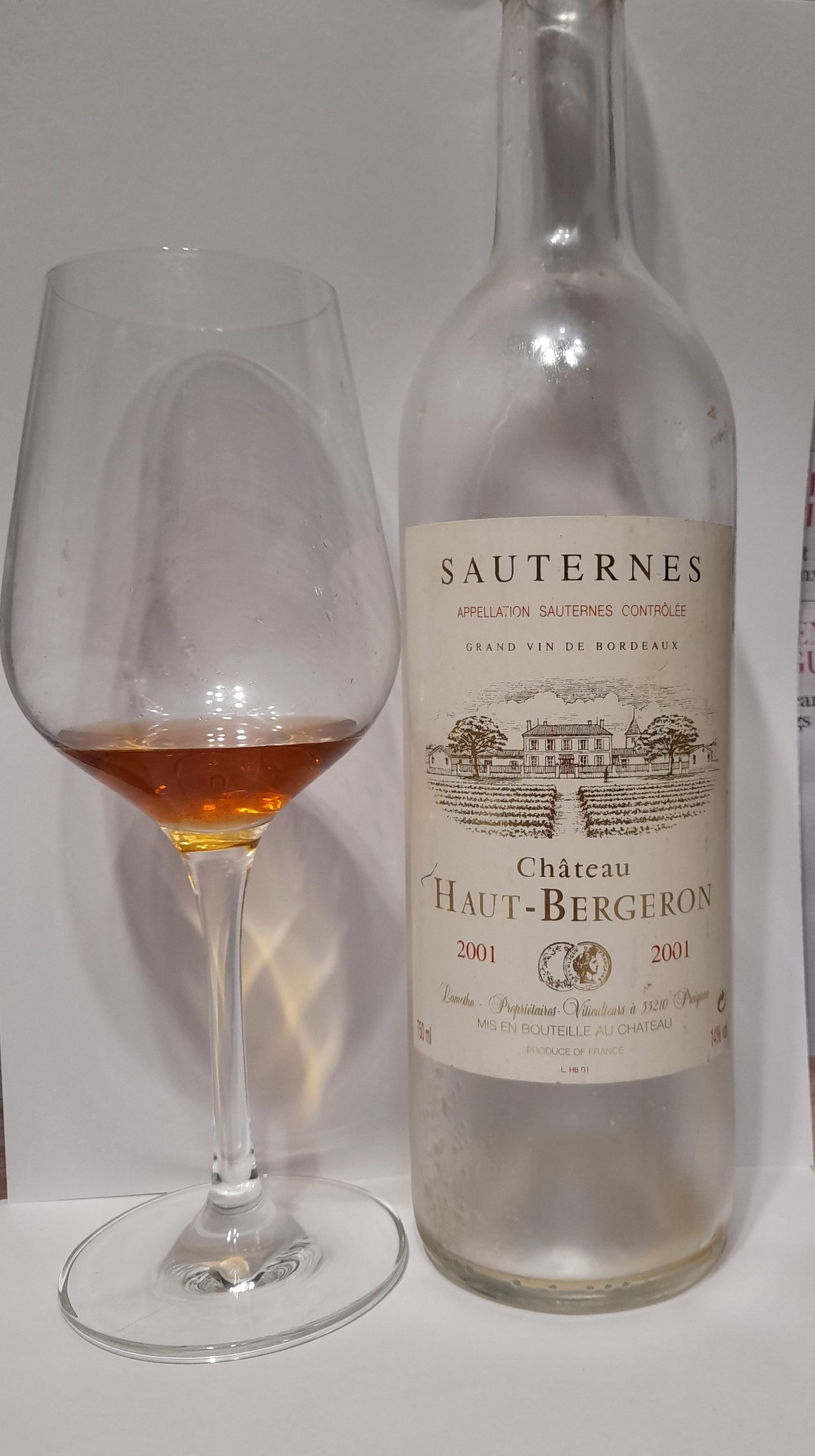
2001 Chateau Haut-bergeron 14%
Sauternes

Deep gold colour with some foxy/copper notes– and some harmless sediment; no mistaking the origin – marmalade, creme brulee, mixed tropical and dried fruits, VA but no dramas for this style; the palate Is packed with citrus and honey, certainly some integrated oak and with abundant acidity that left most of us reaching for a refill.

Haut-bergeron is not classified, but this wine (from an excellent sauternes vintage) provided great value, longevity and pleasure.

Drink to 2030, and 91 points

2014 Konrad Noble Riesling 11.5%
Marlborough, New Zealand

Half bottle, masked, 221 g/l residual sugar. Deep gold colour, this was packed with floral, dusty, spicy botrytis notes, mixed citrus and marmalade. Botrytis has overwhelmed varietal character, but Riesling was deduced by the absence of oak, The palate was very dense and weighty, rich dark honey and citrus.

This wine is drying out, so drink up. 88 points

2007 Taylor Late-bottled vintage port 20%
Portugal

Served blind – Ruby colour with some browning on the rim. Blueberry fruits, some nuttiness and spice but also some detracting rubber/tar. Palate is better, with blue, then a range of red fruits. Good spirit and fine but low tannins. When unmasked, it seemed older than the actual vintage. Sound but unexciting.

Drink sooner, but before 2030, 87 points

One younger Stanton & Killeen Fortified

2010 S&K vp

2010 Stanton & Killeen Vintage fortified (port) 18.9%
Rutherglen, Victoria
Varietal composition not known, but includes a significant amount of Portuguese port varieties.

Served masked – Ruby colour; camphor, fruitcake, lavender, spice, cherry, clove, cough syrup – full of interest! Palate is sweet(ish), with dominant dark fruits, and not chocolate/mocha! Complex bouquet but somewhat disappointing thereafter. Very decent spirit, and my guess on age was circa fifteen to twenty years, so 2005-2010. Didn’t look structural enough to be Portuguese (although a LBVP crossed my mind), yet also lacked the honest, brutal power of most Australian vintage fortifieds. A noted winemaker present stated with logic “Portuguese, LBVP”. Just not enough structural “stuffing” for a higher score.

Drink to 2030, and 90 points.

Two continents, two styles

2007 haart gt spatlese

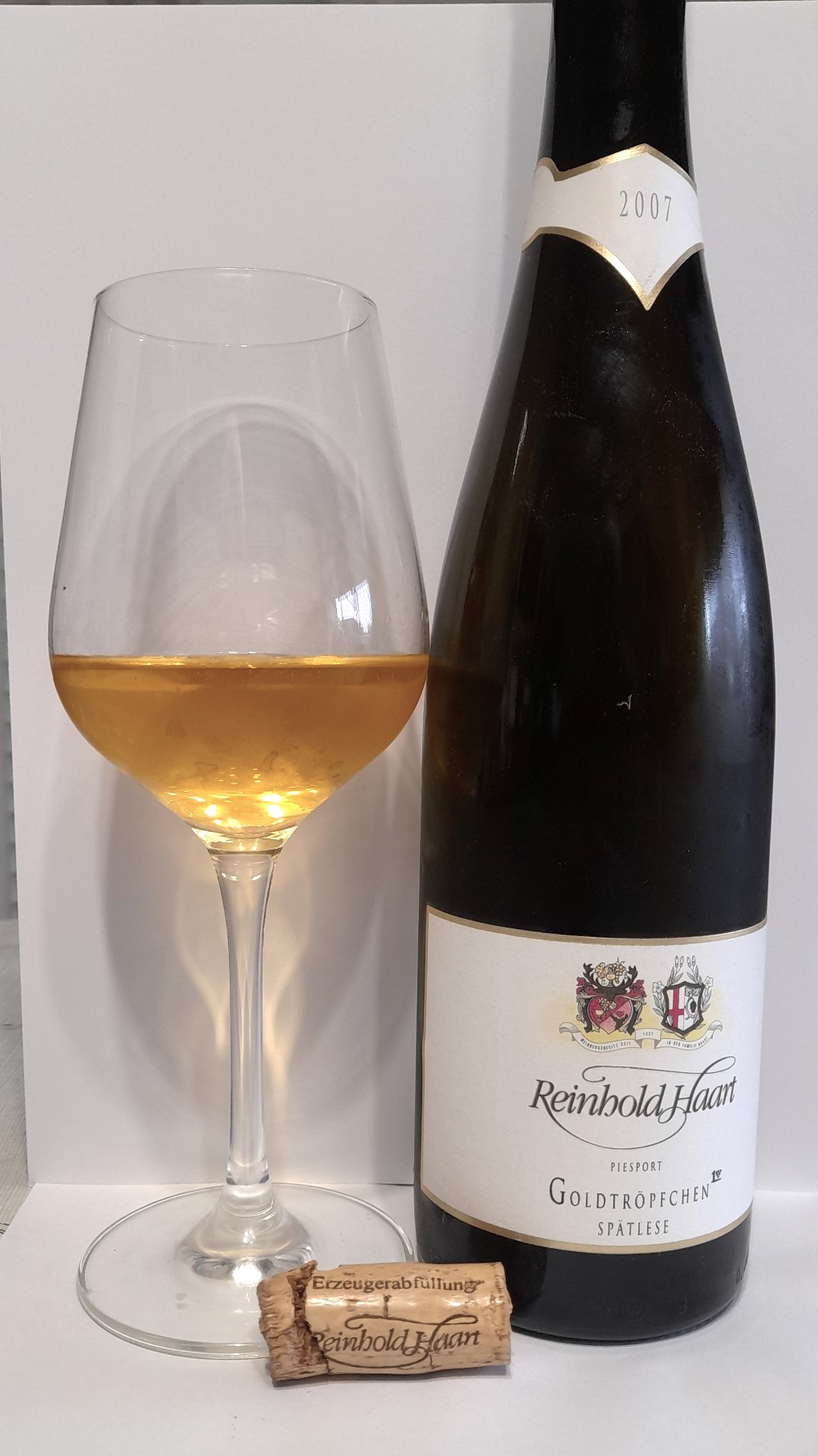
2007 Reinhold Haart Goldtropfchen Riesling Spatlese AP#15 8%
Piesport, Mosel 85 g/l rs.

Bright gold colour, this wine struts out with red apple, nectarine, a melange of mixed tropical fruits and the distinctive regional tell-tale petroleum, smoke and mineral signs.

The rich and viscous palate reflects the fruits above; everything is poised to demand more sampling; it’s a beauty – the apparent sweetness hints that it’s drying out, but in reality it’s just seamlessly and gracefully melded into the acidity. Delicious and so easy to indulge. I have not tried a Haart wine since early 2017, so this is immensely encouraging about quality and cellaring longevity!

Drink to 2030, 93 points

1990 morris vp

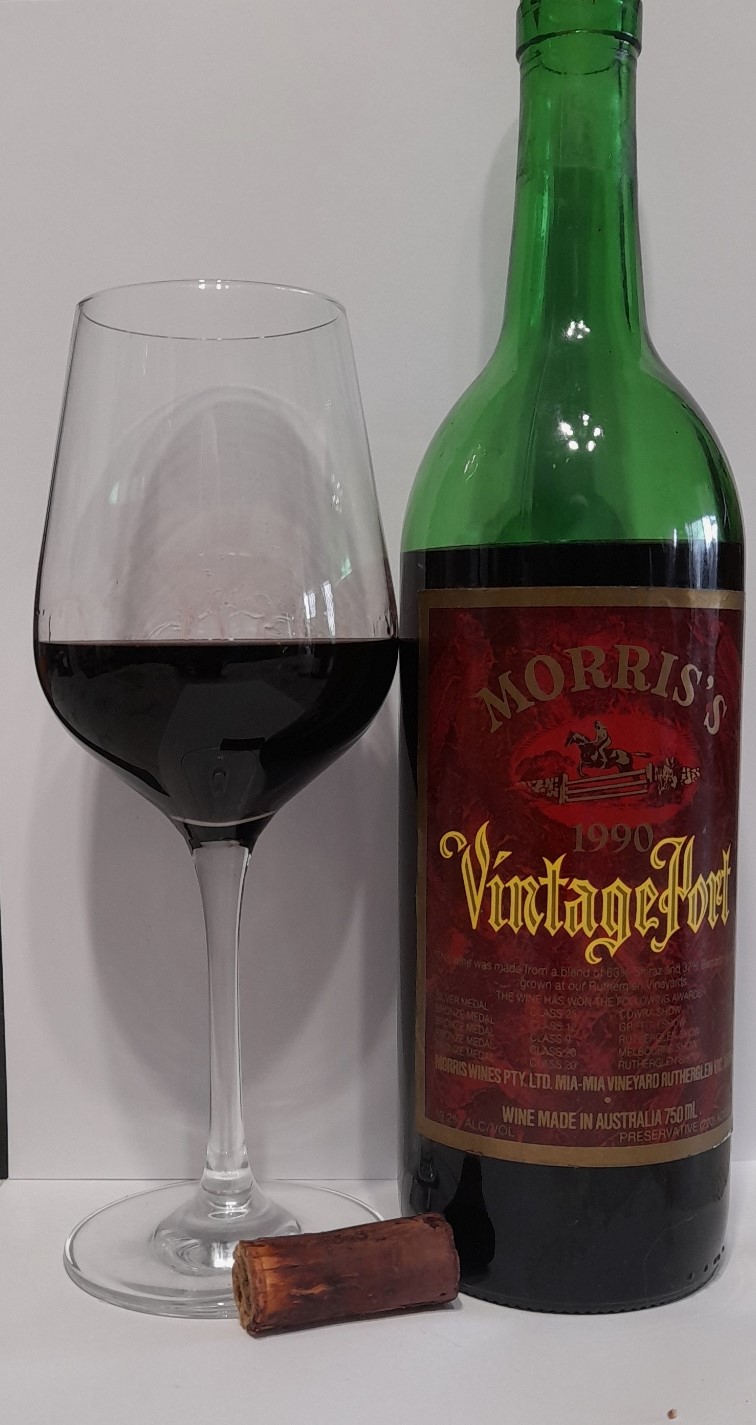
1990 Morris Vintage Port 19.2%
Rutherglen, Victoria

73% Shiraz, 37% Bastardo (Google suggests Trousseau, but more likely Touriga).
A recent auction purchase, the cork has done its job- just – so there will be better bottles held by enthusiasts. Deep dense ruby with some bricking but no browning; Lots of mocha, crema, marzipan, dark fruits; the palate is sweet, still with significant tannic grip, amiable high quality spirit, with cleansing acidity, this is very good drinking. But it just doesn’t provide enough real thrills or highlights to take it to the next level. Mind, its 33 years old, and in really good shape for an Oz fortified of that age.

Drink to 2028, 88 points

Two countries, two styles

1986 chambers VP

1986 Chambers Vintage Port 18.5%
Rutherglen, Victoria.

This wine had substantial sediment, so decant very, very carefully. The colour is aged and bricky, but solid. Red liquorice, cherry, mocha, malt and beautiful spirit. The palate is very sweet, but such is life. The rest of the package is the spirit integration, the freshness and tannin elegance. Made by the legendary Bill Chambers, likely Shiraz – but who knows? – a terrific tribute to a winery renowned for its ancient muscats and topaques, but akos with a monster range of reliably underpriced table wines.

Drink to 2033, and 93 points

2008 fonseca crusted

2008 Fonseca Crusted Port 20%
Portugal.

Similar in style to a late-bottled vintage Port, this fortified wine spent four years in large oak, and was bottled unfiltered, thus having a (heavy) crust and demanding decanting.

Deep in colour – and served masked- I instantly leapt to Portugal as its origin, the florals including roses, blueberry and violets. The palate was savoury, laden with cherry, plum plus fruitcake spices and super-supple, an elegant, youthful fresh and lively style with delicious spirit integration. My only question was whether the wine was a VP (did it have enough “stuffing”) or an LBVP, or a single quinta? I wrongly settled on a young VP, perhaps 2007. Regardless, a lovely drink with many years ahead.

Drink to 2033, 94 points

Two styles, two hemispheres

1990 Marc Bredif Grande Annee 12%
Vouvray, Chenin Blanc

The Grand Annee is the selection destined for aging. With their high natural acidity, Loire Chenin Blanc can age a long time. Domaine Huet, and Marc Bredif are particularly well known for their range of Vouvray wines. Australia has been less successful with Chenin Blanc – although I had a soft spot for some of the age-worthy Houghton “white burgundies” of the 1980s, and a thrilling botrytised 1981 St Leonards! I have tasted some startling South African Chenins across several styles too.

Presented blind, this wine was pale gold, but had some distracting cheesy/waxy notes. Fortunately,  this dissipated and the wine motored along improving with each taste showing honey, plenty of acidity and some residual sugar (50 g/l?) melded with spices made this wine a terrific, showstopping adventure. Just a marvel. When revealed, the freshness for its age was dramatic.

Drink to 2035, and 95 points

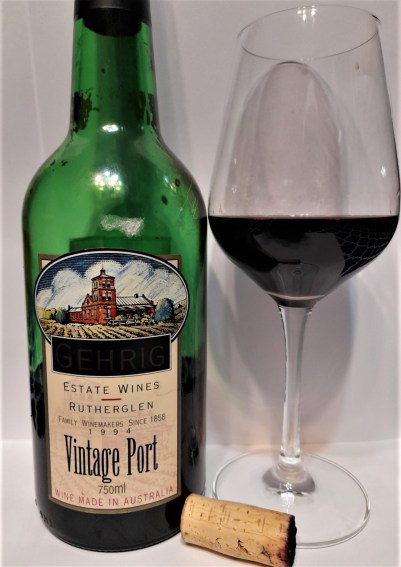
1994 Stanton and Killeen Vintage Port 19%
Rutherglen, est 95% Shiraz, 5% Touriga

“Will mature in the bottle for up to 20 years” claims the back label, but truly there is no need to rush, despite this being rated an “average” vintage with only a few silver medals listed.

Syrupy, almost jammy, dark-fruited, huge sweetness, dark cherry, plum, liquorice, chewy and still bright-tasting. A powerful flavour-bomb that doesn’t quite scale the heights of some other vintages. It’s in an enjoyable holding pattern. But that’s the vagaries and mysteries of the season, and this wine was heartily appreciated.

Drink to 2030, and 91 points.