Two South Australian vintage fortifieds

2002 d'arenberg vp

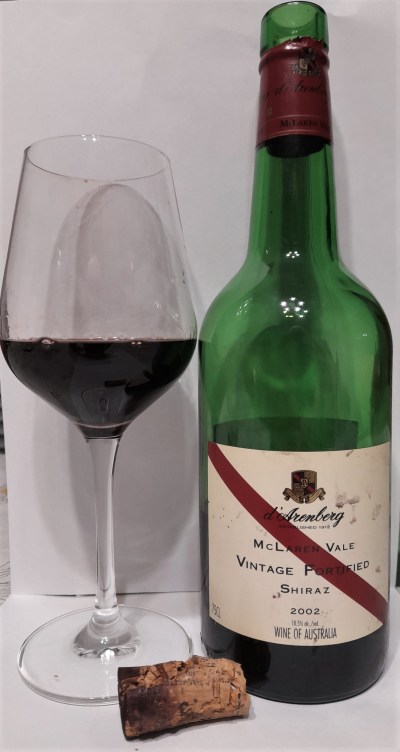
2002 d’arenberg Vintage fortified Shiraz 18.5%
McLaren Vale.

Last year I tried to visit D’arenberg to see the notorious cube, plus try some of their gigantic range of eclectically-named wines.  Their baffling website defeated my booking attempts, and the door-keeper was reluctant, and then in fact unable to assist. Who needs usability when the website looks attractive?? My conclusion was “never again”. But here is one of their wines…

This bottle was purchased a few months ago at auction for a meagre $23, so another bargain (and bonus points for being a cool vintage).

Battered cork, but the wine has survived 21 years. Loads of sediment.
Deep black colour, bricking but Ok; Dark fruits, red liquorice, fine brandy, plentiful spices. The palate has ripe, sweet dark fruits, fruit-peel characters and very refined “milk chocolate” tannins – altogether a memorable little package. Time ahead too, cork permitting.

Drink to 2030, 92 points, and 92 points.

1972 seppelt vp

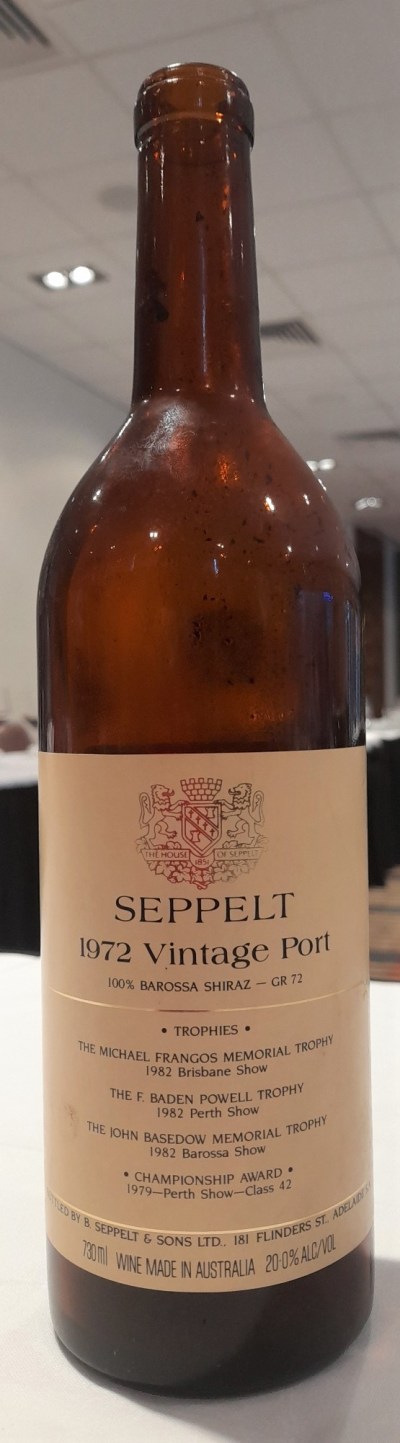
1972 Seppelt Barossa Vintage Port GR72 20%
Shiraz, Barossa Valley

Served blind. Ruby with some bricking and evidently significant age.
Ripe, sweet, old-fashioned, cuddly, delicious. Australian, brandy spirit (although one winemaker thought neutral SVR). Very, very fine and lingering. Creamy and just some complexing hints of oloroso sherry.

A different bottle showed as slightly more youthful. I guessed mid-1970s, and from North-east Victoria, but when unveiled -a terrific treat as a 50 y/o with great wine show results.

Drink to 2035, and 94 points

Another batch of rushed (mostly blind) impressions

2007 jjchristoffel uw spatlese

2007 JJ Christoffel Erben Urziger Wurzgarten Riesling spatlese Ap#5 7.5%
Mosel.

Deep gold colour- wax, lime, lanolin, assorted sweet spices. Texture. A dash more acidity would have been welcome, but no mistaking its origin or variety, and merrily consumed over several days. But drink up!
90 points, drink to 2025

2011 Zilliken Saarburger Rieling Kabinett 8% AP#6
Mosel, from two half-bottles, one better than the other, but not by much.

59.9 g/l residual sugar (no wonder I assumed spatlese). Great colour for age; minerals, limes, texture and rampant tropical fruits.

91 points, drink to 2027

1995 Ch Coutet
Barsac. Deep gold colour; orange blossom, dusty botrytis notes, icing sugar and patisserie. Apricot and cumquat flavours. Altogether lovely, and absolutely ready to drink

93 points, drink to 2027

NV Campbells Merchant Prince Muscat
Rutherglen. An old bottling, suspected late 1970s.

Deep dense khaki colour with an olive rim. Rum ‘n raisins and the pungency of age. Very viscous, very ripe, and very sweet. Muscat certainly, Rutherglen probably. Maker??? There is no doubt the material was old, but I kept thinking that a tweak of freshening would have raised enjoyment to another level. But that’s what happens when the wine has been busy resting in bottle for forty years,

Drink now, 92 points

2004 grahams malvedos vp

2004 Graham’s quinta dos malvedos 20%
Cork very hard to extract (I broke it) – and plentiful sediment – decanting recommended. Malvedos provides the core when Graham’s declares a vintage port, so hopes were high. This wine has a ridiculously youthful dense crimson/black colour; blueberry, blackberry, minerals, spices and pepper. Palate is dark cherry and other dark fruits; good intensity but ultimately less complex than the initial promise. But a good advertisement for the quality of single quinta styles,

92 points; wait three years, then drink to 2030

1951 hardy's show port

1951 Hardy’s reserve bin show port bin M127
McLaren Vale, Shiraz.

Rancio, vanilla, superior brandy spirit. Tawny style, no doubt. 20yo? Mellow, lingering, satisfying. Label states aged in oak for over twenty years. Curiously bottled under screwcap, likely in the mid-late 1970s, so this is another curio that has been resting in bottle for nearly fifty years.

Drink now, 92 points.

Rushed impressions – recent blind tastings

1998 Ch Coutet 14%
2000 Ch Coutet 14%
(Semillon 90%, Sav Blanc 9% muscadelle 1%)
Neither are from a “top” year, yet Coutet seems to have a knack of over-delivering for its price. Both these wines are in the drink soon category.

Barsac, both swerved blind- I had to beg a small sample of the second, as our table’s bottle was TCA affected. These were stylistically similar, both showing obvious development of colour and aromatics; the older wine slightly flatter, with orange marmalade and icing sugar notes; the second wine with vanilla, light pineapple, camphor – and certainly some forgivable floor polish VA – cinnamon notes, and altogether a better wine than its components indicate.

89 and 91 points respectively

2003 Taylors Vintage Port
Portugal. Our table’s bottle was again TCA affected, but remnants from another bottle arrived.

Cherries and other red fruits, almond meal, liquorice and light tannin- pleasant but slightly skinny; my guess was an LBVP or a quinta wine. After the “reveal”, this was a disappointment from this maker and looked more advanced than expected. Maybe a lesser bottle?

Drink to 2027, 88 points

1980 warres vp 2

1980 Warre’s Vintage Port 20%
Portugal. This was a much more vibrant and youthful bottle than the one I described a few months ago.

Developed but still ruby; blue fruits abound (a pointer to Portugal), roses, mixed spices; a soft but hauntingly persistent palate – mocha, fine dark creamy chocolate, integrated spirit, mixed red and dark berries.

Drink to 2032, and 94 points

One spectacular (Oz) fortified

1992 S&K Vp

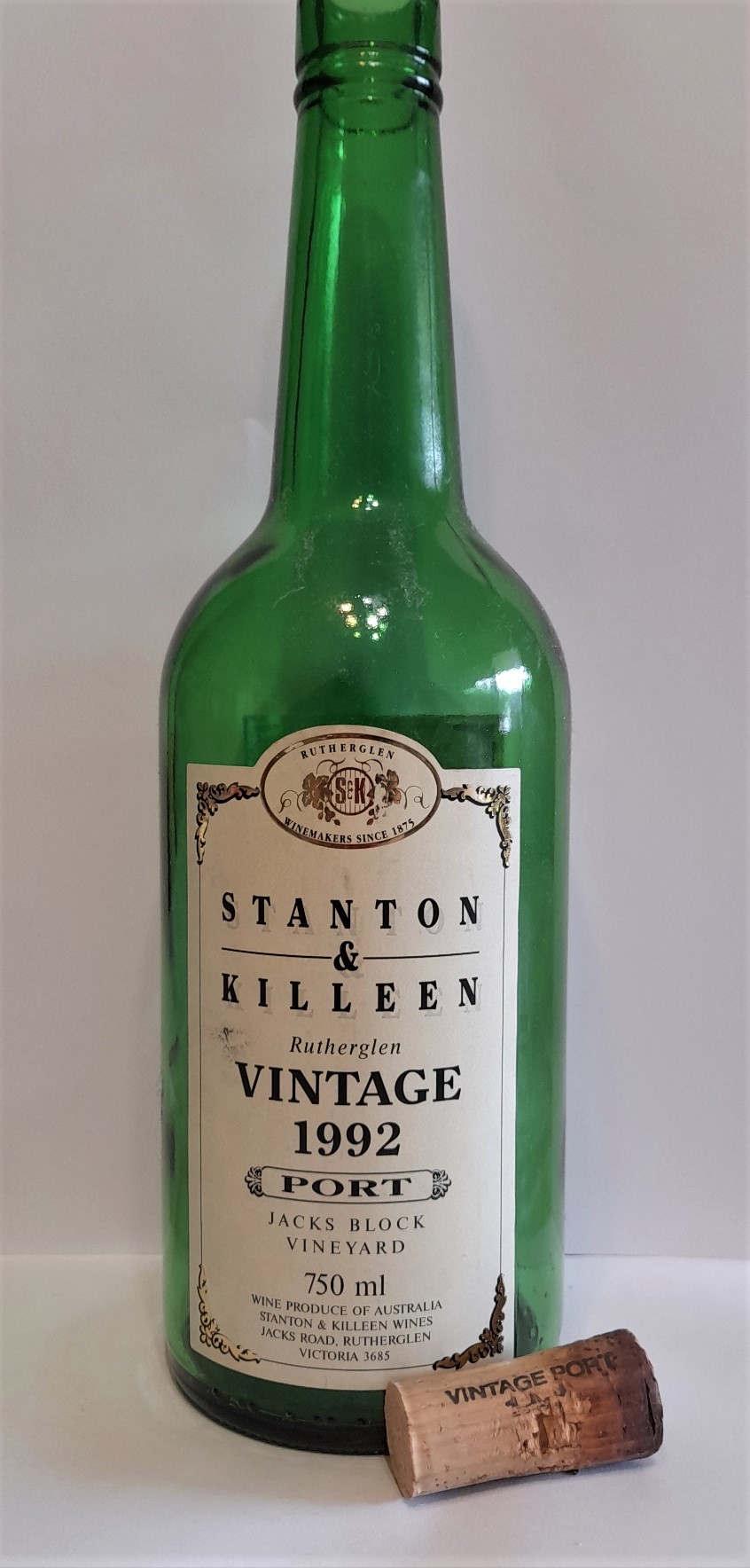
1992 Stanton and Killeen Jacks block Vintage Port 19%
Rutherglen; 90% Shiraz, 5% Durif, 5% Touriga

From a special year in North-east Victoria, the back label shows 3 trophies and 12 Gold medals from credible wine shows. The (late) winemaker Chris Killeen rated that year’s vintage fortified wine as 10/10.

This wine is amazingly fresh for its age, and beautifully balanced. Cork and level in terrific form. It absolutely deserved its decant to remove the plentiful sediment. Very floral – dark cherry and some blackberry, red berry, toffee apple, lavender, mocha, fruitcake nut and spices are all present. The palate is dry (for Australia) and the persistence is exemplary. An absolute treasure, drinking amazingly well, but with power in reserve. Skimpy notes, as the group (and myself) tucked in, leaving nothing for a next-day retaste!

Drink to 2037, 96 points (I was very tempted to give 97 points)

Two less common Australian fortifieds

1976 seppelt para

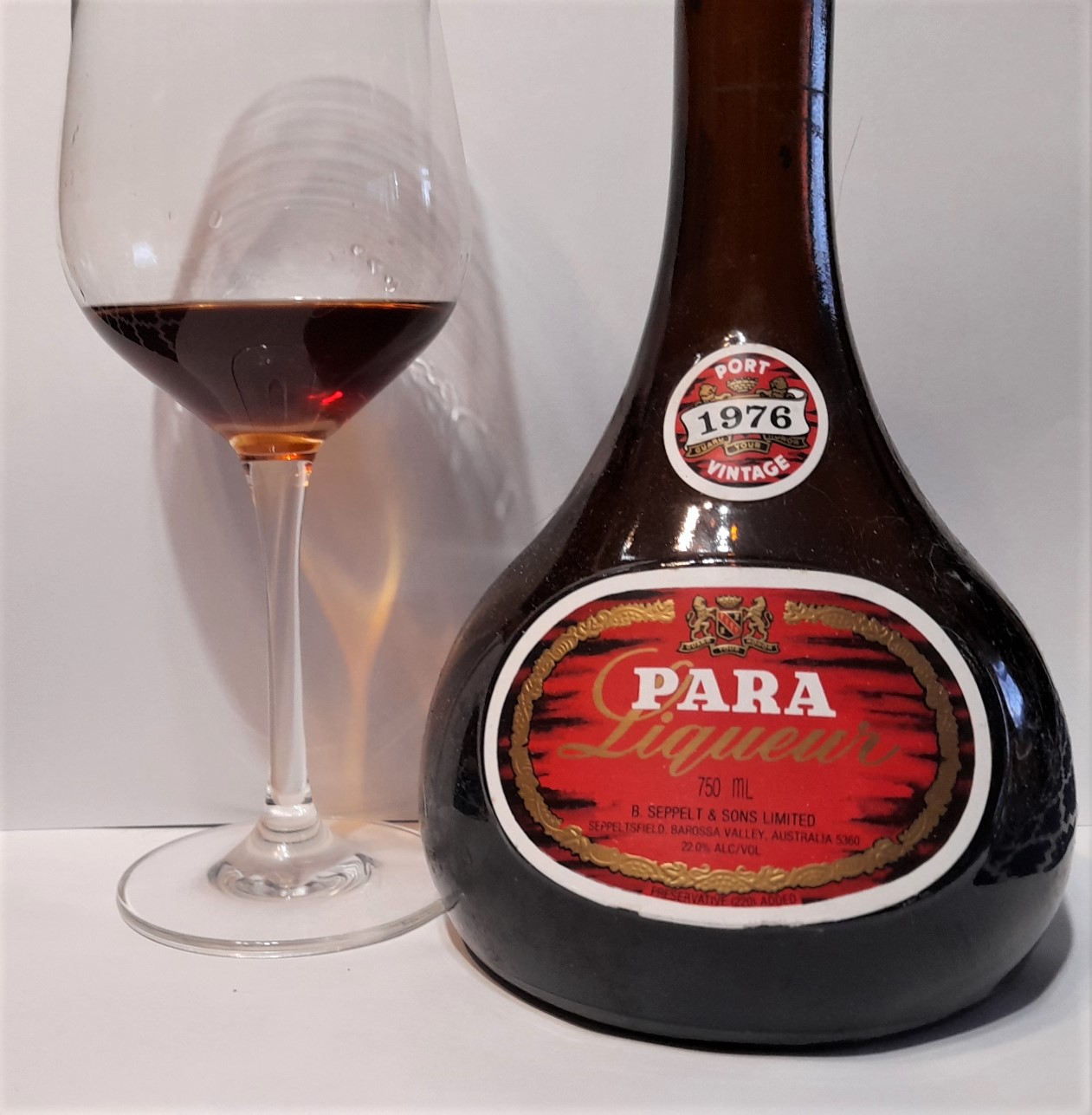
1976 Seppelt Para Liqueur 22%
Barossa, predominantly grenache with some Shiraz and Mataro.

Most of these Seppelt tawny styles have a lovely amber/khaki colour with an olive green rim – the handbell/lantern shaped bottle is distinctive, but a minor storage hazard- though most will be kept on their original cardboard boxes.

This is not a 46 year old wine! Vintage Paras were released in 1922, 1925, 1927, 1930, 1933, 1939, 1944 and 1947. Labelling laws and imperfect records meant the year referred to the oldest component. The “101” was released in 1975, with an average age around 28 years. The numbered series continued up to “126”, but the releases were slightly more often than annually. This 1976 vintage wine was released in 2004, (aged in oak perhaps 28 years) and has been resting in bottle – and not improving- for nearly 20 years.

It smells ripe with citrus peel, mixed roasted nuts, fine caramel, fruitcake spices and quality brandy spirit. It’s lush on the palate, with some mocha creaminess, and a warm and decadent finish. The style is under-rated, and the quality is exemplary.

There will be some vintage variation with varying degrees of ripeness, minor spirit tweaks, and the usual artful blending from barrels of different sizes, and heights in the stacks. There are plenty of variables to keep across. The current release (from Seppelts) is the 2001, available for $95.

Match with sparkling conversation, contemplative music or a witty movie.

Drink now, 94 points.

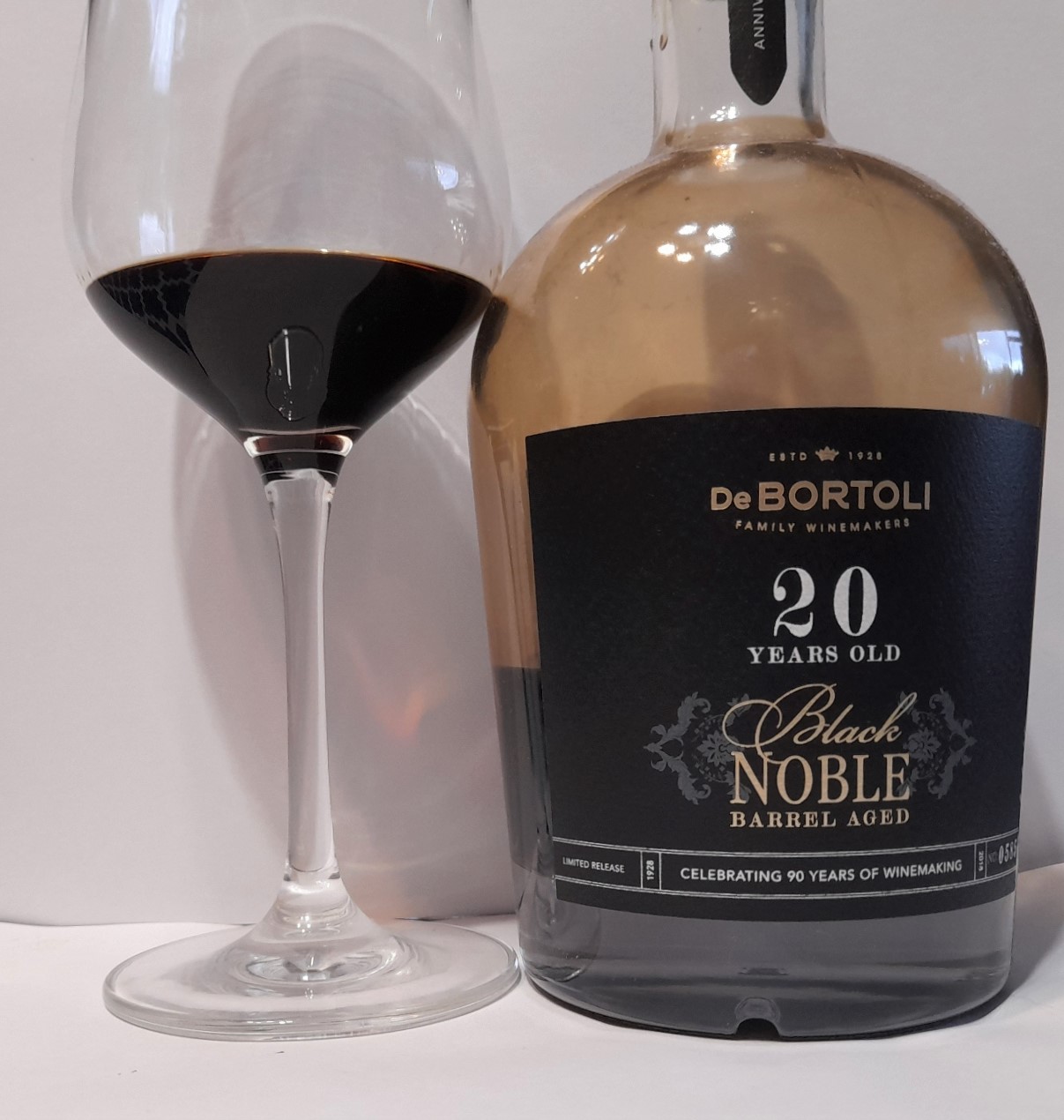
20 yo de bortoli black noble

De Bortoli 20 years old Black Noble 18.5%
Bottle #585. Released in mid-2018 ($90) to celebrate 90 years of de Bortoli winemaking. Average age 20 years, and made from incredibly ripe botrytised Semillon,  fortified and barrel -aged. Botrytis is often accompanied by volatile acidity, which makes its presence felt strongly here.

It’s a very dark treacly/espresso colour (indicating barrel age), with citrus and espresso, dried fruits and dusty fruitcake spices.

The palate has the nuttiness, an extra mocha shot and abundant spices, It’s turbo-charged with sweetness, acidy and power. It’s a monster step up from the widely available 10 y/o black noble. There is no getting away from the VA, but when there is so much intensity, flavour, lusciousness, and pleasure that I become a convert.

Drink now, 94 points.

Three more vintage ports

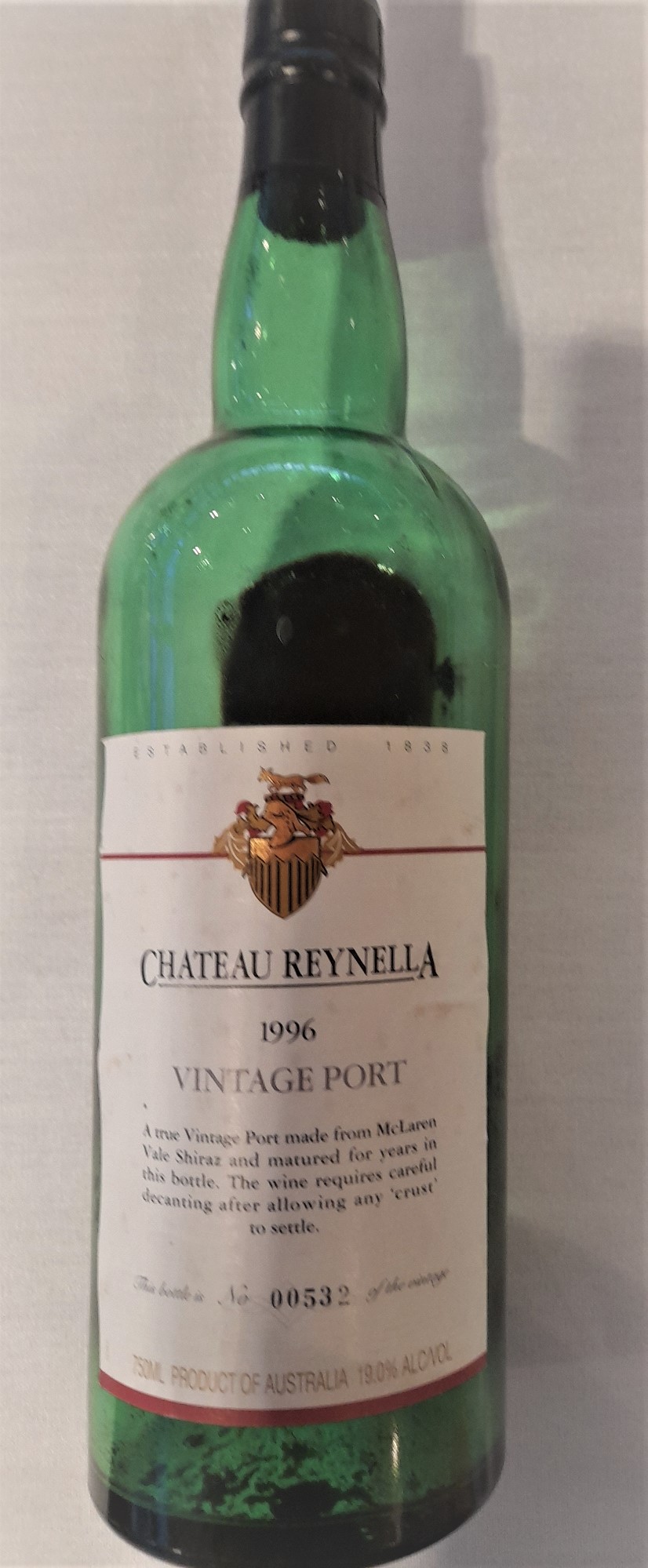
1996 ch reynella vp again

1996 Chateau Reynella Vintage port 19%
Shiraz, McLaren Vale, bottle #532. Served blind.
Ruby with some bricking, dark berries, mint and camphor. Sweet dark berry flavours, mocha, liquorice, sweet spices, ample tannin but absolutely ready to drink.
Drink to 2030, 92 points. (an uncanny similar description to my post from March this year)

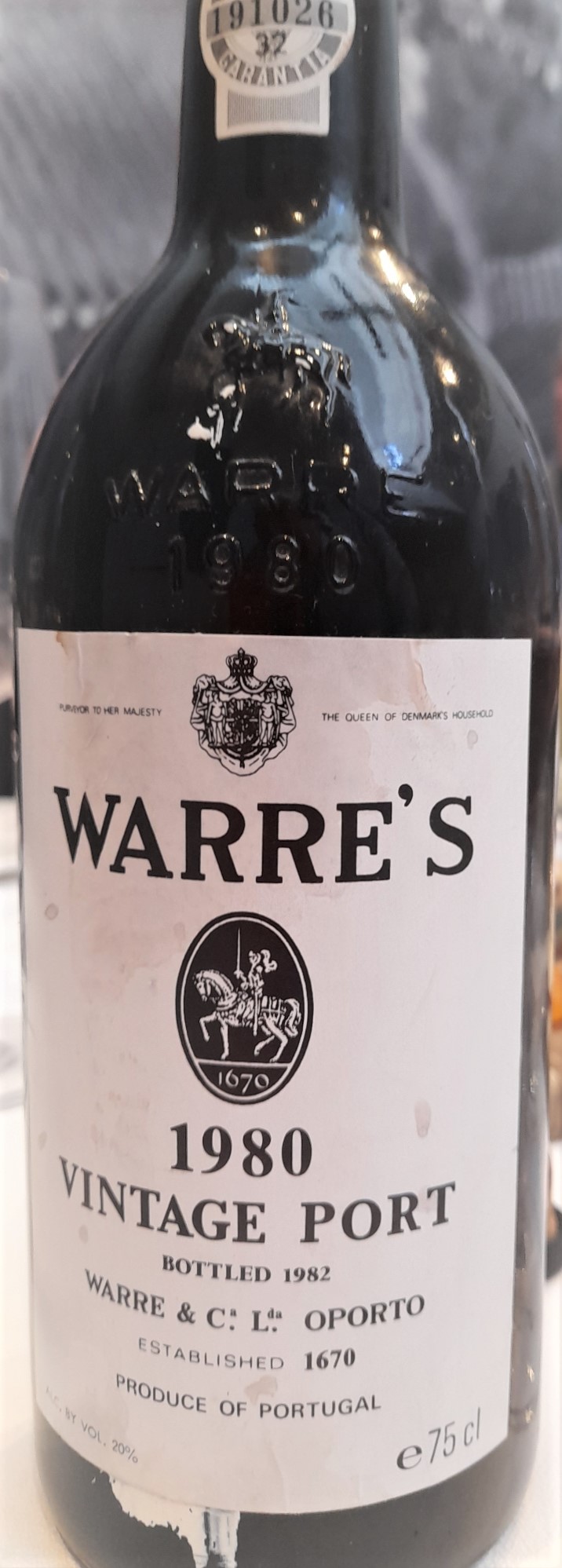
1980 warre's vp

1980 Warre’s Vintage Port 20%
Portugal. Served blind.
Ruby colour, camphor, cardamon, wax, putty. I was suspicious that there was a faint whisp of TCA, but it was invisible on the palate, so I relented. Palate is soft, with mocha and some figgy character with headsy spirit. This is a wine where the fruit was playing second fiddle to the spirit, but the whole seemed better than its components
Drink to 2030, 92 points (and there may be better bottles around)

1980 taylors vp

1980 Taylor’s Vintage Port  
Portugal. Served blind.
Ruby colour, with some browning. Putty, cherry and almond. Palate drier than Australian, with marzipan and cherry; spirit slightly sharp, but a winner on the flavour persistence stakes.
My initial age range was 1975-1985, and when options came up as 77/80/83 I correctly selected 1980. (However, I got the house wrong- I don’t drink enough Portuguese VPs!)
Drink to 2035, 94 points

Three from Europe

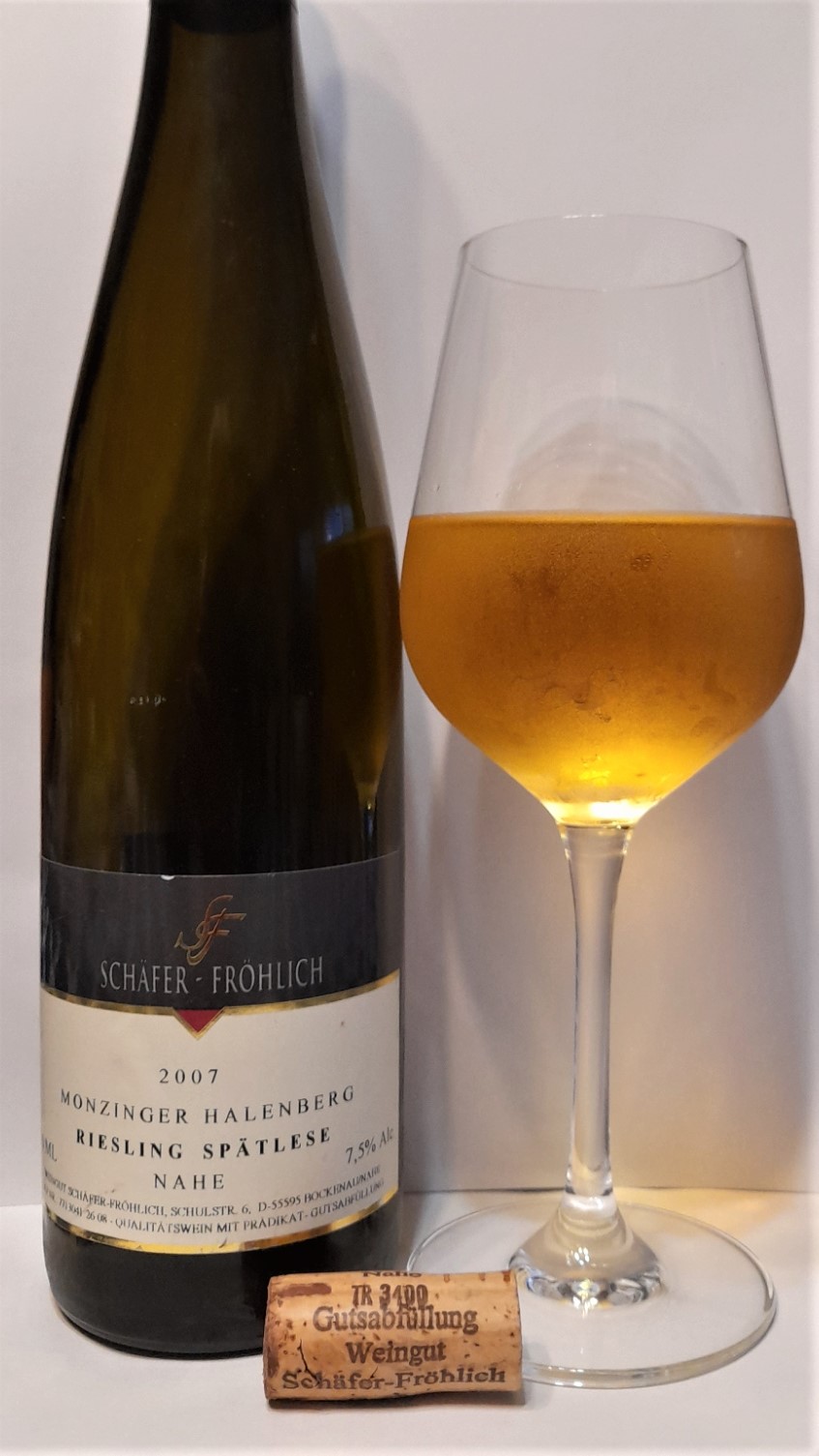
2007 schafer-frohlich

2007 Schafer-frohlich Monzinger Halenberg Riesling Spatlese AP#26 7.5%
Nahe (near Mosel), with its cork in good condition.

Golden colour, vibrant redcurrant, musk, spices, marzipan and tropical scents. The palate is viscous and leans into red apple notes, mandarine, honey and is still crisp. Guessing around 75g/l residual sugar, and balanced. Peak drinking now, and is yet another instance of “double-barreled or not-easy-to-pronounce name = bargain price”.

Drink to 2027 and 93 points.

2011 Ch Haut Bergeron (Sauternes) 13.5%
Not in the 1855 classification, but produces some terrific, and underpriced wines. 80-90% Semillon and 10-20% sauvignon blanc, the wine swallows the oak.

Pear, honey, marmalade; obvious, authentic and excellent Sauternes. This is a “power” style, but irresistibly delicious.

Drink to 2030, 93 points

2014 Ch Coutet (Barsac) 14%
75% semillon, 23% sav blanc, and 2% muscadelle. 162 g/l residual sugar! 18 months in French oak barrels

From the ripe 2014, and this is just beginning to give glimpses of its future. It was served as a masked pair with the previous wine, and showed more honeyed notes and finesse on the palate. It seemed less ripe, but showed more lemon blossom. Finer, but at this stage more reticent

Drink to 2035, 92 points now, but more in the future.

Australia’s move to a Republic

Professor Albert Pedant (MA Hons- Lagos, PhD – American Samoa) – emeritus adjunct professor at the online university of Woolloomooloo, has diligently researched the history of numerous Australian wine brands and labels. His treatise (2018) on Clonakilla, Hill of Grace, Para Port, and Grange Hermitage was acclaimed with international renown, numerous awards and academic prizes.

A recent lecture is reprinted with kind permission.

“It may surprise that I welcome the Republican movement in Australia, and its inevitable success.

Some imagine that historians seek merely to preserve the past, wallowing in its nostalgic fascinations. But time’s arrow moves only forwards. Australia demands a citizen of its own as Head of State. But apart from the formalities and constitutional minutiae, there are consequential effects.

The necessary changes will be profound, and this will be a challenge to historians to ensure that heritage is properly preserved, documented, and archived; not neglected, discarded, or destroyed.

Let me run through some instances.

Thankfully, Australian coins will be updated and lose the unwelcome effigy of a foreign monarch on one side; perhaps we can see the return of animals depicted on the superseded one and two cent coins – the feather-tailed glider and the frilled-neck lizard- there will be many others that can fill the spaces on higher-denomination coins. It is of course a convenient and blatant falsehood that existing coinage currency will become worthless within the Republic because of the existence of the monarchs effigy. Of course, the disappearance of the effigy will bring confusion over the traditional coin toss call of “heads or tails?”, and make basic student studies of probability more troublesome. “Two-up” will disappear.

References to the King (and the former Kings and Queens) will be removed. This applies to buildings, institutions, societies and charities. For example, The Royal Childrens’ Hospitals (several in Australia), Her Majesty’s Theatre, the Princess Theatre, Prince’s Park, Sovereign Hill, Royal Australian College of Surgeons (and many more medical specialties), The Royal Mint, the Royal Australian Army, Navy, and Air Force, the Royal Flying Doctor Service, The Royal Automobile Club of Victoria, and the RSPCA. There will be no more Royal Commissions, no more Kings and Queens of Moomba.

Any hotels etc with Royal, King, Queen, Prince, Princess, Knight, Duke, Duchess, Baron, Lord, Earl, Countess, Viscount – or similar, including Crown Casino- will need new names and demand follow-on actions.

Next, there is a plethora of affected streets, towns and place names – Royal Parade, Queens Parade, the Princes Highway, Kingsway, Queenscliff, Queenstown, even Queensland (hopefully replaced with a memorable first nations name). Clearly, Victoria and Adelaide also stand on shaky ground.

Many parks, clubs – particularly Golf, Tennis, and Yachting – plus assorted University residential colleges will be affected, losing their “royal” connections.

The Holden Kingswood will be banned (although possibly permitted as a veteran vehicle) and Kingswood Country series streaming, DVD, blu-rays etc will be withdrawn. Crown Lager will be rebadged. Imports of Royal Doulton and Royal Albert tableware will cease. The beloved biscuit the Chocolate Royal will need a new moniker.

Danaus plexippus,  (the Monarch butterfly), Alisterus scapularis (the King parrot), and Aptenodytes patagonicus (King penguin), will require new common names.

Portraits of the royal family will be removed from public venues, providing opportunities for replacement local artworks to be displayed. Private displays in houses will be allowed, though naturally discouraged.

All citizens with affected family names will be required to alter these, and have passports, drivers’ licences, Medicare, credit cards and so on re-issued. The deceased are exempt, and gravestones and memorials will not need an update.

Clearly the overall cost will be substantial, with special benefits to the legal fraternity. Most wills, trusts, and corporate entities will require scrutiny, and numerous trademark, domain names, email addresses will be altered. Logos, signage, advertising, stationary, business cards, and much more. Legislative and statutory references to “the Crown” will be substituted.

What a boon for the economy! What a gift for my profession, as well as genealogy; with alas unwelcome opportunities for scammers, identity fraud and theft.

My own connection to wine and its intricacies is substantive. Immediate ramifications loom for the King Valley, McLaren Vale’s Bushing King, the Barons of Barossa, Ross Duke, Bruce Dukes, Narelle King, Llew Knight, Prince Albert, Tony Royal, Yangarra Kings’ Wood Shiraz. And many more!

Will the mooted transition period of two years suffice? There will not be so-called grandfathering, so speed is of the essence. I congratulate the foresight of leading barristers who became SC’s instead of clinging to the now-superseded QC (Queen’s Counsel) title.

I welcome the transformational challenges of the Republic of Australia, and am comforted that my companies (and those of my colleagues and peers) have consulting rates that are reasonable considering the monumental complexities involved.

In summary, the changes caused by the move to a Republic will make the introduction of decimal currency, the metric system, Y2K preparations and the introduction of the GST look elementary. Eventually, the Australian flag will change too, becoming something more authentic, presenting a boon to manufacturers, and a facelift for places where flags are flown.

In this brief lecture, I have only touched on a few of the essential considerations, and there are many more examples I could have provided, if my emolument tonight was greater.

My study tour of former monarchies that became Republics is only scheduled to last for three years; I hope this will be sufficient; my funding is guaranteed- curiously by institutions and benefactors on both sides of the debate, a testament to my diligence and foresight.

Lastly, there will be a pressing need for an official organisation to provide clarity and guidance before, and throughout the transition, issuing definitive judgements in case of disputes. My anticipated appointment as head of the Institute of Republic Arbitration (IRA), is an honour, and certainly not an imperial honour.”

Two lovely sweet Rieslings

2016 pressong matters r139

2016 Pressing Matters R139 Riesling 9.4%
Tasmania- Coal River valley, screwcap (half bottle, a recent auction purchase)

Pressing Matters are known for their Rieslings (R0, R9, R69, R139), and Pinot Noir, with amazing records in Australian wine shows. Limited distribution, so I’m absolutely, shamefully behind tasting across their range. The current release 2019 R139 is $37 for a half-bottle.

Bright gold colour, ripe red Apple and beurre bosc pear, with a frame of spices. Hooray, there’s enough acidity to balance the high residual sugar level, and this is pretty hard to resist. There’s varietal lime and citrus, and a long, and truly satisfying fresh textural finish. Exceptional value here too. The usual caveats with food matches- fresh fruits work; fruit pies will work if gentle on the sugar side, some cheeses will succeed, and some won’t; but the bottle contents will seemingly evaporate regardless. A find!

Drink to 2028, and 93 points.

2007 schloss bjs spat

2007 Schloss Lieser Brauneberger Juffer-Sonnenuhr Riesling Spatlese AP#8, 9%
Mosel, 94 g/l residual sugar

Light lemon colour, and then the marvels come. Cinnamon, icing sugar, pear, nectarine. Crunchy apple, flint, creamed honey and beautiful balance between fruit depth, acidity and sweetness. (I wrote about this wine in April 2020, with similar descriptors, scores etc).

This is an absolutely delightful spatlese (from a distinguished site), and my patience has been truly rewarded.
Drink to 2030, 94 points

Two enjoyable sweeties

2009 ch raymond lafon

2009 Ch Raymond-Lafon 13.5%
Sauternes, 136 g/l residual sugar. Half bottle

80% Semillon and 20% Sauvignon Blanc, aged in new barrels for three years. Bright deep gold colour, pear-juice meets apricots, white peach and marmalade, backed up with a solid citrus line. Honey and spices resound on the opulent palate with some almond and marzipan. Voluptuous, fresh and morish. A reliable bargain VFM producer. Authentic.

93 points, and drink to 2027 while its fresh. Full bottles will have a longer life span.

2016 tim adams botrytis

2016 Tim Adams botrytis Riesling 11%
Clare Valley. 87 g/l residual sugar. Snapped up this half bottle recently from my local DM for $13.

Light bright clear gold colour; apricot and yellow peach, dusted with cinnamon and ginger; palate is syrupy/viscous but beautifully fresh with a zingy citrus finish. Good mix of botrytis while retaining varietal character. Really doesn’t need more time and will match up a treat with a fresh fruit platter.

Drink to 2027, and 90 points