Two less-common styles

NV Seppeltsfield Paramount aged dry apera DP 898 23.7%
Bottle 13-119, South Australia

100% Palomino, with an average age of 49 years, in a lavish package (500ml, and $550 ex-winery). Made by a solera system, and with neutral spirit.

Sherry (apera in Australia) was what our older winemakers grew up with; now it’s a style that few persist with – hard to make, and harder to sell.

A glowing amber/yellow colour with some green tints; and this is a “sherry” style – not bone dry, but rippling with seaspray, salinity, walnut, honey and vanilla; the palate is viscous and lively, with white peach and amaro herbs. Its warming, with effortless length and freshness. It’s a marvel that combines (extreme) aged material with freshness – a marvel of construction. This is a wine made to share, and not much is needed as the flavours dwell fantastically. Then you want to reward your senses again with a further sample.

Drink now, and 97 points.
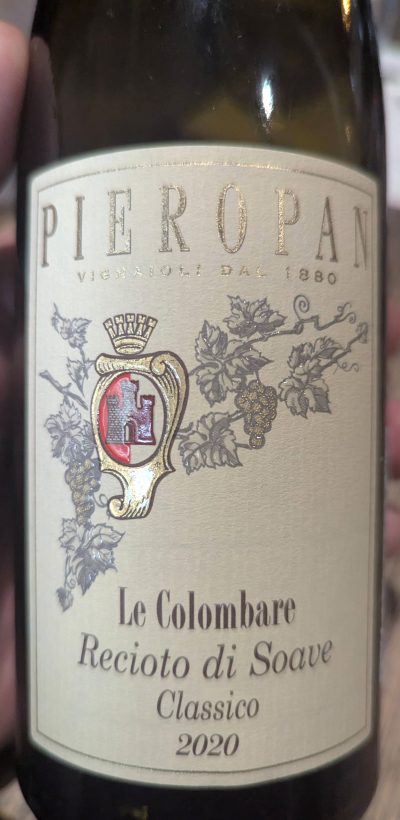
2020 Pieropan Le Columbare Recioto di Soave Classico 13%
Garganega, Veneto, Italy 500ml

Air-dried grapes on mats, so they shrivel, and can develop botrytis, then pressed and aged in large oak barrels. Gold colour, with tropical aromas – banana, pineapple, guava, apple, raisins, camphor, wood spices and honey. It’s sweet (120 g/l residual) but refreshing and complex. Lots going on, with lots of wrong guesses with options questions! Outside my usual experience so its lifespan is a bit of a guess. Very pleased to have tasted this too.

Drink to 2030, 93 points

Two Seppeltsfield aperas

Here in Melbourne, in light lockdown, we’re unable to meet at restaurants or share wines with friends. It’s especially difficult to open the strong and/or sweet wines I usually write about – because these styles in particular – are meant to be shared. Instead, I have been spending more time on other pleasures – the movies and documentaries on Kanopy, and a set of music videos on bluescluster. A few Zoom meetings about wine, and on guitar have been diverting. I had just one morning picking Shiraz and another day driving collecting buckets of Shiraz.

Anyway, some impressions of a few recent drinks.

Seppeltsfield DP 116 Aged Flor apera 23%
Seppeltsfield DP38 Vera Viola Rich rare oloroso 21.7%
Australia has a long tradition of making sherry styles (now called apera), with notable exponents Seppeltsfield (based in the Barossa Valley), and a group clustered around Rutherglen – Chambers, Morris, Pfeiffer and others. The style is doomed to be niche, but when cellar-doors re-open, the wines will enliven your taste-buds. In the meantime, check out the bottle shops, and buy one!

These two wines were made by the solera method (based on the Palomino grape, and neutral spirit) , with an average minimum age of 15 and 18 years respectively. Bravo to Seppeltsfield chief winemaker Fiona Donald, and all the crew involved over the many years to sustain this style.

The style thrives as a pre-dinner aperitif, yet has the substance to stand up to a charcuterie platter, a rich soup, or tapas – sardines, whitebait or calamari instantly come to mind; the price for these 500ml bottles – retailing around $30 – is a travesty – jump in! I think the style should be served cool, but I see no need to keep them in the fridge for more than a few minutes. Once opened, they will merrily keep for a few weeks without losing appeal.

seppeltsfield aperas

The aged flor is a bright pale orange/amber colour; it exudes candied orange peel, light honey, cashew, incense and salinity. The palate is concentrated, bracingly fresh, and mouthfilling.
Drink now, 91 points.

The oloroso style is similar in colour, slightly darker amber. More dark honey. Mixed dried fruitcake, mixed nuts, sweet spices, darker fruits, more twang. The palate shows greater vanilla, cream and concentration, with even better length than its sibling. Irresistable!
Drink now, 93 points

For some learning, Ruben Luyten has an amazing site at Sherry Notes; there is a wealth of information about flor yeast, biological aging, the classifications, and digressions to the “en ramas”, almacenistas, and lots more! Highly recommended.