Just one masked wine

2001 Peter Lehmann “the king” AD 2022 Vintage Port 18.5%
Barossa Valley, 63% Cab sav, 37% Touriga

Youthful colour; absolutely bursts from the glass- musk, raspberry, blueberry, dark cherry and red liquorice. Floral with clove notes, high quality spirit. Palate is deep and sweet with some attractive mocha notes. 2005? Comfortable, with dark fruits and abundant spices. Australian for sure with the sweetness, but with a reasonable whack of Portuguese varieties – likely Touriga. I guessed the main variety as Shiraz, but surprisingly it was Cabernet Sauvignon! Unusual, but probably included to bolster the tannic frame (sometimes the task of Durif in Australian VP styles).

The ”AD 2022” is the label’s confusing cue that the wine has the capability of maturing for 21 years (and suitable for a birthday occasion).

The wine is Just a bit straightforward for higher marks, but eminently enjoyable, and thought-provoking.

Drink to 2034, and 91 points

Two local, two not

2003 Ch La Tour Blanche 13%
Sauternes.
Deep gold colour; then citrus, minerals, quince, marmalade, apricot and stonefruit. Palate shows all this, plus some frangipani and balanced bitterness. Oak becomes more prominent with time, and a little more acidity would be welcome, but given its age and monster VFM, this was a damn enjoyable drink (and an insane 178 g/l rs).

Drink to 2028; 92 points

Seppelt Show Vintage Port GR151/153 20%
Barossa/McLaren Vale (tasted blind)
Bricky mature colour; VP style with high for style alcohol. Mellow, mocha, brown spices and nutmeg, liquorice and yet still with crispness and plenty of tannin to hold interest. Reasonably sweet, but lots of savouriness too. Hmm, first thought was Oz, but the ripeness, spirit quality, tannin and alcohol wrongly diverted me to Portugal. I punted on around 1990. The reveal proved it to be 45 years old, and a label covered in bling. Excellent wine (and I was fortunate to taste the slightly better bottle).

Drink to 2030 – 93 points

1949 saltram white port

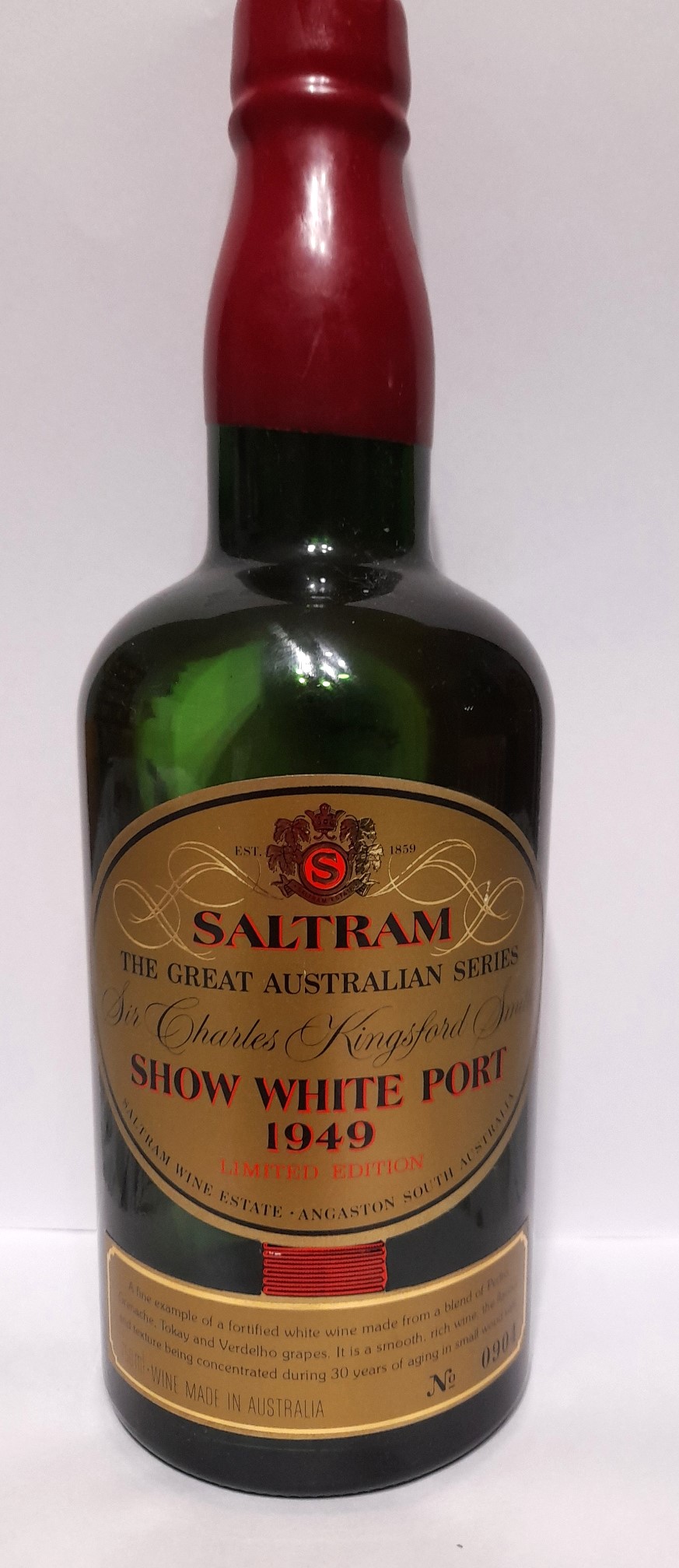
1949 Saltram Show White Port 19.5%
Barossa Valley, Bottle #0934 (tasted blind)
Bricky, lots of raisin, and a spice-bucket with rancio, and plentiful vanilla, so a Tawny style. High quality spirit. My guess was 20 years in oak. The reveal was that this wine spent 30 years in small oak,  released in the 1980s and unusually was a blend of Pedro, Grenache, Takay and Verdelho, so based on white grapes. A curio for sure, The back label contained a lot of information about aviator Sir Charles Kingsford Smith, but further wine detail was scanty (plus the cork was very ordinary).

Drink now, 90 points (more if you like the style)

2000 cockburn canais

2000 Cockburn Quinta dos canais Vintage Port 20%
Portugal, and another producer I can’t recall tasting before (a 1955 tried in 2015 was faulty).

Dense colour, then fig, plum, dark cherry plus voluminous spices. Concentrated, fruit-driven with moderate tannins, blueberry, Sweeter than most Portuguese, but with the power to thrive. Just some “burnt” characters for me that didn’t bother the other tasters one jot. Plenty of time ahead.

Drink to 2035, 92 points

Three Australian vintage fortifieds

1994 peter lehmann vp

1994 Peter Lehmann “the king” AD 2015 (Vintage Port) 20%
Barossa Valley, 100% Shiraz

An auction purchase last year for $32. Reasonable cork, and abundant sediment.
I thought there was some faint oxidation present, but not to the extent that it would worry – I need to respect a mature, thirty-year-old fortified.

Colour was mature, deep and bricky. The wine offered very classy mellow brandy spirit, hazelnut, mocha, cola and dark plumcake. Absolutely, obviously Australian. The palate was round and rich, with more sweet spices emerging, and the spirit is a winner.

There may be better bottles, but this one will drink to 2030, and 90 points.

1997 ch reynella vp

1997 Chateau Reynella Vintage Port 19%
Bottle #8097, McLaren Vale, South Australia (different bottle image)

Served masked, the wine is still a deep ruby colour with trivial bricking; dark fruited style – black cherry, plum and blackberry, with some spice. Australia, and Shiraz.  The palate is rich, sweet and balanced. with terrific quality brandy spirit. The finish is pleasingly dry finish, but there is some hotness. My guess at its age was late 1980’s to early 1990s.

People at the lunch had no qualms about seeking a top-up., but this bottle was not quite as memorable as the one consumed and reviewed in October 2018.

92 points, and drink to 2030.

1995 S&K vp

1995 Stanton and Killeen Vintage Port 19.0%
95% Shiraz, 5% Touriga Rutherglen, Victoria.

Another auction purchase last year for $31. “A big full style that will mature and improve in bottle for up to 25 years” was the accurate statement on the back label.

Deep ruby with some bricking. Aromatic, violets and menthol, wafts of sweet mixed spices. Mellow, rich and lush – camphor, raspberry jam, sweet dark fruit – blackberry, and raspberry plus excellent brandy spirit.  Yes, it’s less “multi-dimensional” than other vintages of S&K, but their track record is consistently excellent.

To 2030 (or longer), 91 points

One Barossa fortified

1987 peter lehmann VP back1987 peter lehmann vp front

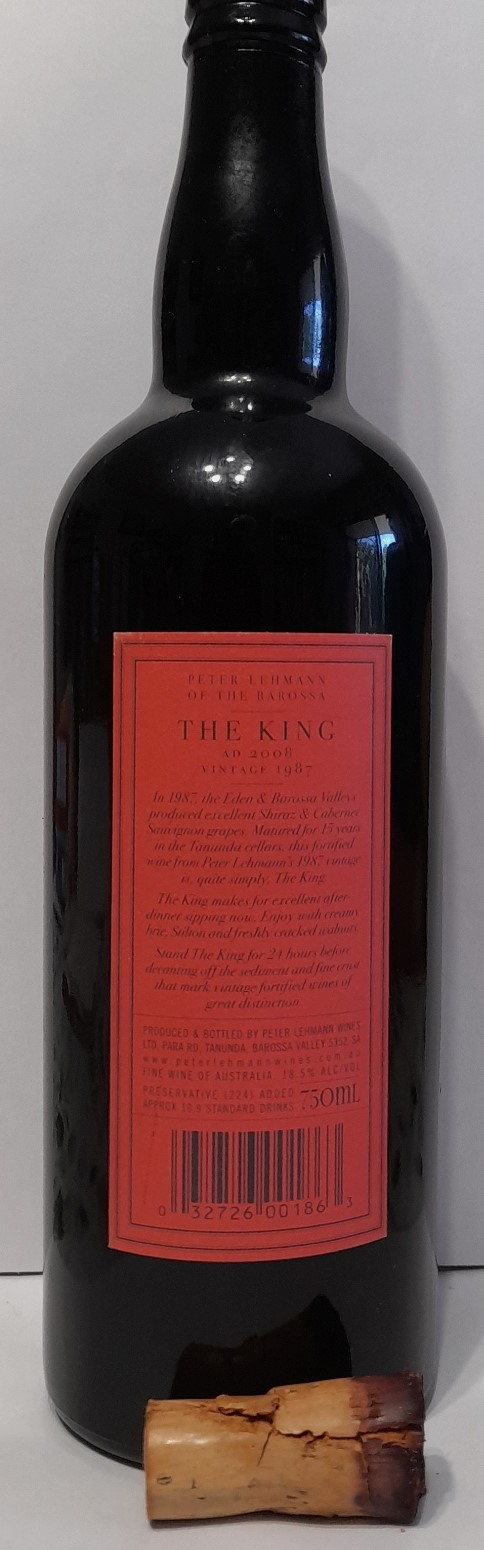
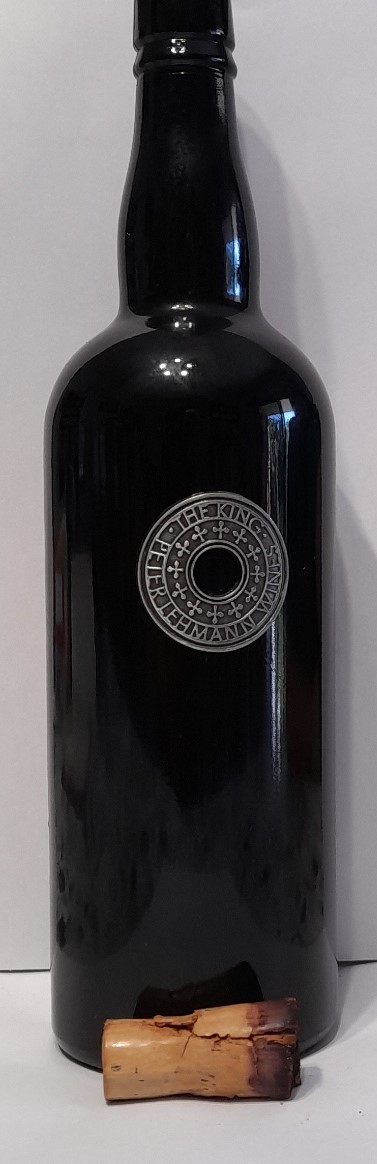
1987 Peter Lehman “the king” AD 2008 (Vintage Port) 18.5%
Barossa Valley, South Australia, Mainly Shiraz with some Cabernet Sauvignon. Unusual, metal-embossed bottle, with all the detail on the back.

Confusion alert, as the “AD” is meant to announce peak drinking as a 21-year old wine. Anyway, this was a sneaky auction buy last year for $29- pretty smart for a 37yo.

Hefty sediment, dense colour with minor bricking. Dark cherry, roses, liquorice, blackberry and blackcurrant and amazing high-quality brandy spirit. Soft and mellow, but still tannin sneaking away. Absolutely a winner, with time ahead.

Drink to 2034, and 92 points

Old and unusual

1996 Boll and Cie Champagne de Ratafia 18%
From Reims, Champagne. Pinot Noir, fortified.

Served masked, and I was baffled. Amber colour. Scents of camphor, nettle, marmalade, furniture polish and oranges. Very likely French, but not sauternes, not Loire, not vin de paille. Not Banyuls/Maury/Rivesaltes. I correctly estimated the residual sugar at around 120 g/l. It seemed to have relatively high alcohol (but not guessed as high as the label), and obvious age. Eventually I stabbed at a botrytised Alsace (historically in, and out of France), excluding Riesling or Gewurztraminer because of the lack of florals, so a Pinot Gris VT or SGN. Wrong!

I thought I had never tasted a Ratafia, but turns out I had tried one before. It was no consolation when someone pointed out the wine was stylistically like a pineau de Cognac (never tasted that wine either). This wine style is made by adding brandy or high strength spirit to unfermented, or barely fermented grapes, ending up with a wine both strong and sweet.

Drink now, but this is a curio rather than a wine of real merit, so 87 points just out of interest.

1973 Kaiser Stuhl Vintage Port
Barossa, Shiraz

Mocha, almond/marzipan, headsy spirit. Less tannic than expected and more sweetness than expected. Australian, and with time ahead. Very pleasant, albeit straightforward, After the unmasking, it’s always special to have a 50-year old wine that is drinking well. The company was swallowed and eventually shuttered by corporate manoeuvres but that wine certainly triggered memories.

Drink to 2030, 87 points

Two South Australian vintage fortifieds

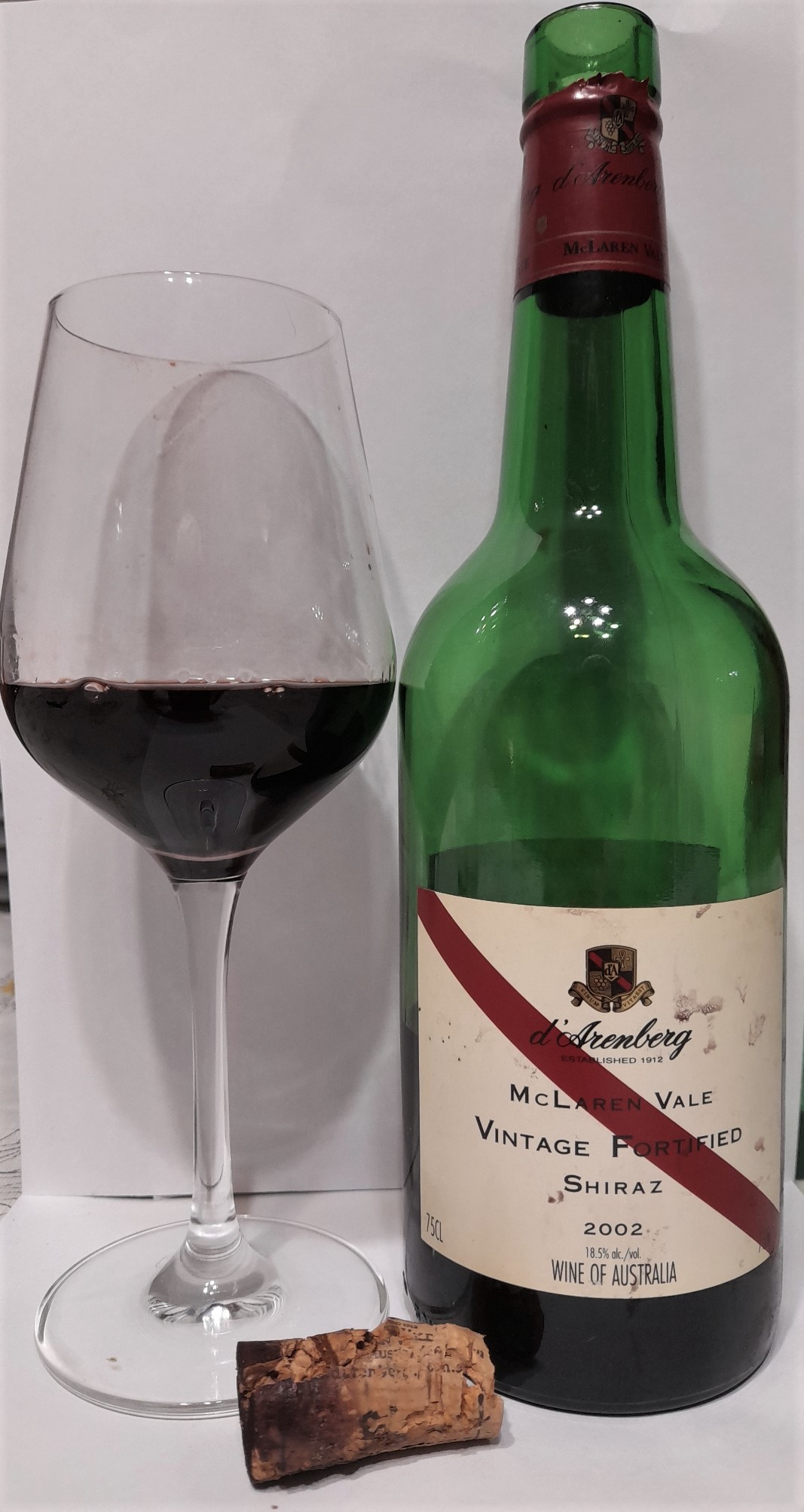
2002 d'arenberg vp

2002 d’arenberg Vintage fortified Shiraz 18.5%
McLaren Vale.

Last year I tried to visit D’arenberg to see the notorious cube, plus try some of their gigantic range of eclectically-named wines.  Their baffling website defeated my booking attempts, and the door-keeper was reluctant, and then in fact unable to assist. Who needs usability when the website looks attractive?? My conclusion was “never again”. But here is one of their wines…

This bottle was purchased a few months ago at auction for a meagre $23, so another bargain (and bonus points for being a cool vintage).

Battered cork, but the wine has survived 21 years. Loads of sediment.
Deep black colour, bricking but Ok; Dark fruits, red liquorice, fine brandy, plentiful spices. The palate has ripe, sweet dark fruits, fruit-peel characters and very refined “milk chocolate” tannins – altogether a memorable little package. Time ahead too, cork permitting.

Drink to 2030, 92 points, and 92 points.

1972 seppelt vp

1972 Seppelt Barossa Vintage Port GR72 20%
Shiraz, Barossa Valley

Served blind. Ruby with some bricking and evidently significant age.
Ripe, sweet, old-fashioned, cuddly, delicious. Australian, brandy spirit (although one winemaker thought neutral SVR). Very, very fine and lingering. Creamy and just some complexing hints of oloroso sherry.

A different bottle showed as slightly more youthful. I guessed mid-1970s, and from North-east Victoria, but when unveiled -a terrific treat as a 50 y/o with great wine show results.

Drink to 2035, and 94 points

Two less common Australian fortifieds

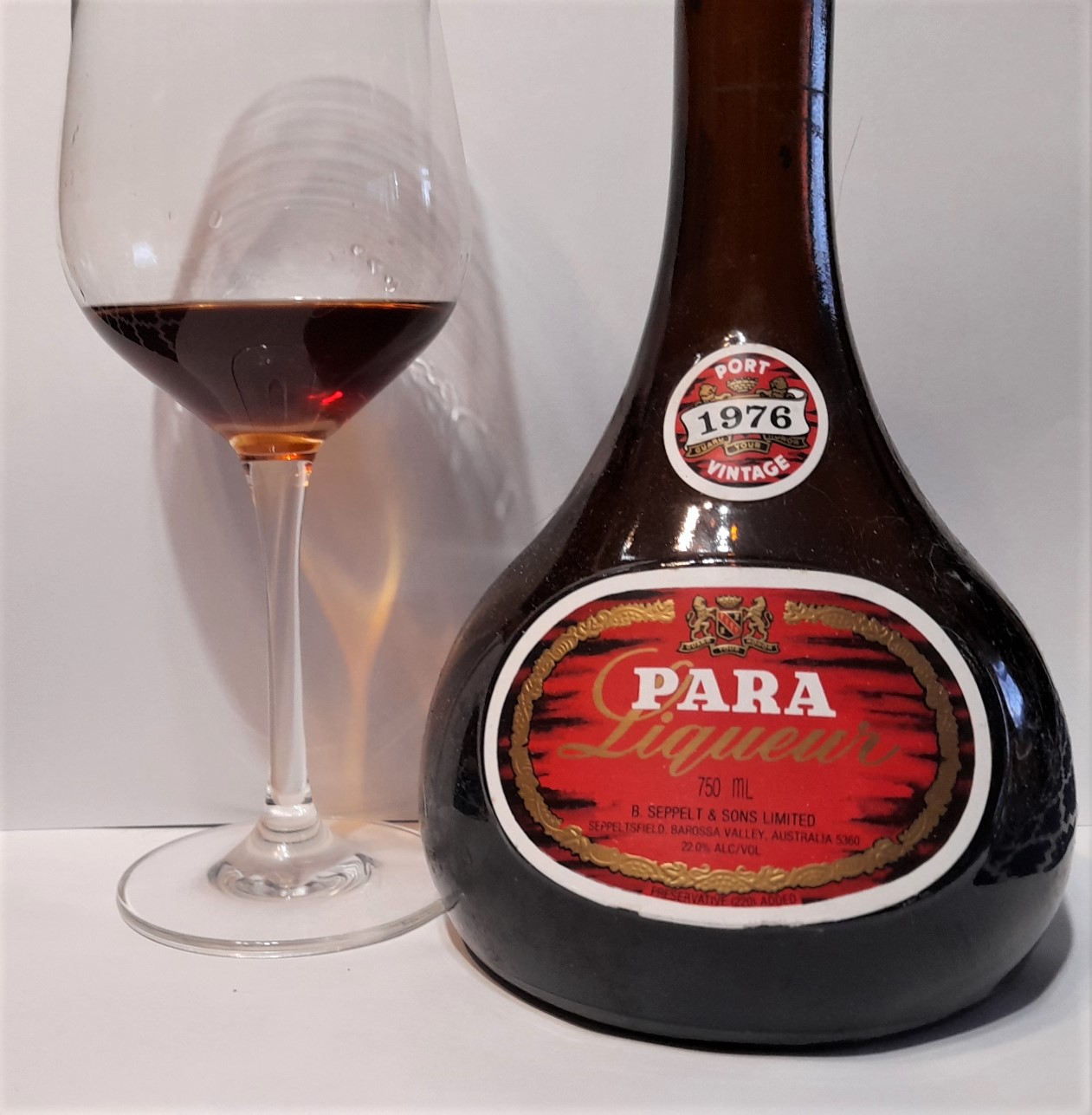
1976 seppelt para

1976 Seppelt Para Liqueur 22%
Barossa, predominantly grenache with some Shiraz and Mataro.

Most of these Seppelt tawny styles have a lovely amber/khaki colour with an olive green rim – the handbell/lantern shaped bottle is distinctive, but a minor storage hazard- though most will be kept on their original cardboard boxes.

This is not a 46 year old wine! Vintage Paras were released in 1922, 1925, 1927, 1930, 1933, 1939, 1944 and 1947. Labelling laws and imperfect records meant the year referred to the oldest component. The “101” was released in 1975, with an average age around 28 years. The numbered series continued up to “126”, but the releases were slightly more often than annually. This 1976 vintage wine was released in 2004, (aged in oak perhaps 28 years) and has been resting in bottle – and not improving- for nearly 20 years.

It smells ripe with citrus peel, mixed roasted nuts, fine caramel, fruitcake spices and quality brandy spirit. It’s lush on the palate, with some mocha creaminess, and a warm and decadent finish. The style is under-rated, and the quality is exemplary.

There will be some vintage variation with varying degrees of ripeness, minor spirit tweaks, and the usual artful blending from barrels of different sizes, and heights in the stacks. There are plenty of variables to keep across. The current release (from Seppelts) is the 2001, available for $95.

Match with sparkling conversation, contemplative music or a witty movie.

Drink now, 94 points.

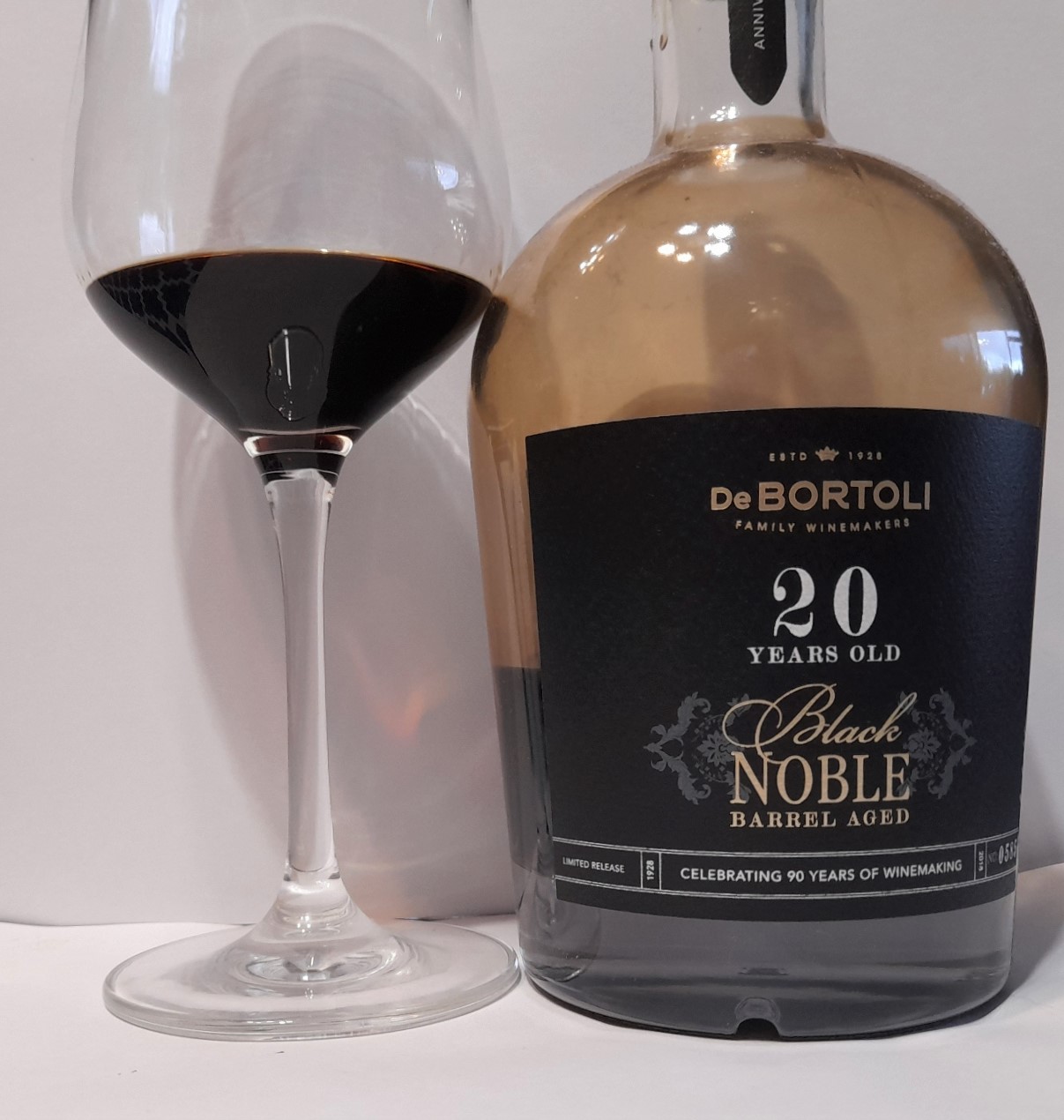
20 yo de bortoli black noble

De Bortoli 20 years old Black Noble 18.5%
Bottle #585. Released in mid-2018 ($90) to celebrate 90 years of de Bortoli winemaking. Average age 20 years, and made from incredibly ripe botrytised Semillon,  fortified and barrel -aged. Botrytis is often accompanied by volatile acidity, which makes its presence felt strongly here.

It’s a very dark treacly/espresso colour (indicating barrel age), with citrus and espresso, dried fruits and dusty fruitcake spices.

The palate has the nuttiness, an extra mocha shot and abundant spices, It’s turbo-charged with sweetness, acidy and power. It’s a monster step up from the widely available 10 y/o black noble. There is no getting away from the VA, but when there is so much intensity, flavour, lusciousness, and pleasure that I become a convert.

Drink now, 94 points.

Musings about Australian grenache 1

This is a stray, off-theme post about my recent excitement, fascination, and obsession with modern Australian Grenache. It’s had a huge historical presence within Australia, but setting aside its contribution to fortified wines, there haven’t been many varietal table wines that scaled the heights.

Of course, there have been honourable exceptions; some Hardy’s wines have proven Grenache’s longevity (a recent 1997 showed up well); the 2016 Turkey Flat famously won a Jimmy Watson trophy. Yet until recently, Grenache’s unfortified best seemed to be in rosé- style wines (a la Provence).

I have been a follower of SC Pannells grenache stylings for a few years (the Smart, the Old MacDonald and several blends) but apart from that, there weren’t many thrills. My view is that wineries regarded their red wine Shiraz, and Cabernet as their meal tickets – Grenache was an afterthought –picked when convenient, stored where convenient, treated cursorily.

But only a few years ago, some winemakers and companies realised that they had a treasure. They had the seriously old-vine resources (those that remained after the misguided vine-pull scheme). Earlier picking, treatment in older, larger oak, or concrete, or amphora, extended skin contact etc made a huge difference and the transformation began. Yalumba in the Barossa has many individual grenache releases, but the action really seems to be in McLaren Vale. Here, wines from Blewitt Springs can be world-class, but there’s terrific examples from Clarendon, and the less-known “outliers” Seaview and Onkaparinga Hills, plus the ability to blend across sites.

Stephen Pannell commented ”All I have to do is counteract the two misguided extremes of varietal style: sweet and syrupy at one end, under-ripe, tannin-free giggle juice at the other.  Truly great Grenache is neither.  Truly great Grenache has aromatics and texture with vibrance and energy. It unfurls gradually with air and, most importantly, speaks clearly of soil and season”.

What is the excitement? Red fruits with intrigue not just confined to raspberry, rose-hip, rhubarb, cherry, blood orange, grapefruit, sometimes violets, seaweed, red liquorice, blueberry, saltbush, and other exotics with an array of spices and incense. Fruit abundance not smeared with excessive oak, there’s tannins and longevity, and it’s ultra food-friendly. There’s an instant fruit hit, but easy to forecast equal joy with five-to-eight years cellaring.

My first visit To McLaren Vale for ten years was only a few months ago and I tasted some thrilling Grenache examples; in a rush of enthusiasm many more were purchased with very few disappointments. Plus many of the winemakers freely name acknowledge the growers.

I have not appended tasting notes or scores fore these Grenaches, but the meagre-cropping 2020 vintage was matched in quality by the 2021s I have tasted. I have been impressed enough to purchase (alphabetically, McLaren Vale unless noted) with very approximate prices. There are many more untasted, but there are limits both to my wallet, and drinking capacity.

Adelina (Clare Valley) 2021 $55

Bekkers 2020 (not cheap, $90 but the quality is riveting)

Cirillo “the Vincent”  2021 (Barossa)  $25 – outrageous VFM from old vines, but needs significant time in a decanter to strut

De Bortoli “wizardry” (Heathcote) $20 Bargain, short-term; with a more up-market amphora “Phi”

In Praise of shadows 2021 ($30)

Krondorf Founders View 2020 (Barossa) short-term, but outstanding $25 VFM)

Paralian 2020 and 2021 – Blewitt Springs, special VFM and quality ($45), the Shiraz is a ripper too

SC Pannell 2020 Smart, and Old McDonald ($70); the “Vale” blend is also eminently cellarworthy

Seppeltsfield “village” 2021 (Barossa) $30 intense, and fleshy. Don’t let “joven” deter you.

Thistledown There’s probably 10 grenaches in their kitbag, with the Sands of time well regarded, but thrills aplenty with Vagabond ($60) and I’m working my way through other 2021s

Vanguardist “V” 2020, Blewitt Springs ($50)

Varney 2021 ($35)

Willunga 100 2020 (Blewitt springs) $45; A range of Grenaches made; this stood out

Yangarra Blewitt Springs. The High Sands is admirable, but not immediately hedonistic; the Ovitelli and Hickinbotham (Clarendon  ($75) stir my senses.

I have not canvassed GSM blends; I am torn between the intellectual notion of site/terroir vs the bitter experience that many blends are not an attempt to make a better wine, but odds and ends thrown together, or an effort to “rescue” a batch in an attempt to cover its deficiencies.

I have also not covered the excitement of some of the Spanish Garnache blends nor some of the Southern Rhone (and yes, I have tasted several Ch Rayas).

Curiously, I think that some of the care taken with Grenache in McLaren Vale has benefited the approach taken with Shiraz too. These seem to have more freshness and are not mono-dimensional dark chocolate exemplars. I further speculate that experiences with tannin management with Nebbiolo, Nero etc have infiltrated the approach to Grenache.

But the lesson is – go forth and try some of these wines; my preconceptions were outmoded; I hope my clever and influential readers are encouraged to experiment, gain thrills and spread the word; classy wines are so close, and the prices are more than fair.
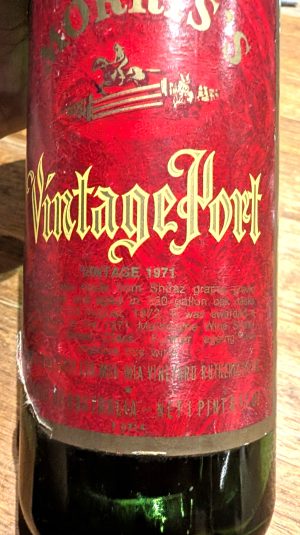
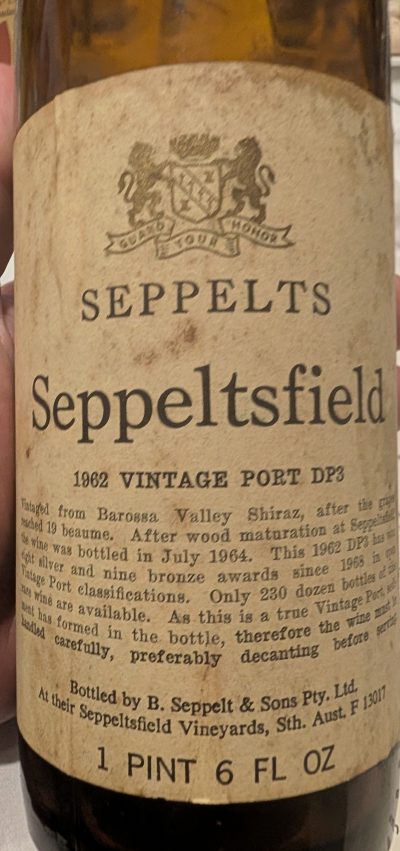
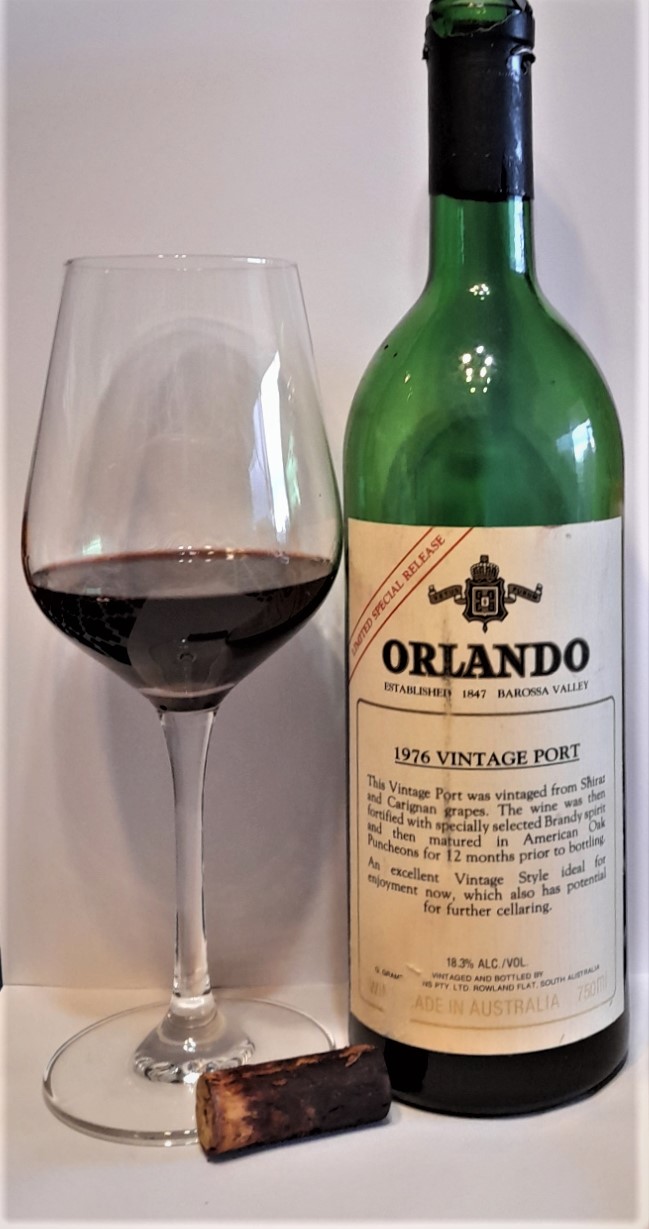
1976 Orlando Vintage Port 18.3%

Barossa Valley. “Limited Special release” with “potential for further cellaring”, Shiraz and Carignan, and possibly a better wine than the “unlimited ordinary”. A wizened cork, but no drama after 46 years.

1976 orlando vp new

An auction purchase last year for $20, this was insane buying, and a much better bottle than the previous one. Very dense garnet colour with some bricking on the rim; there’s sweet dark fruit, sweet spices and superior brandy spirit; the palate is plush and engaging, blueberry, blackberry and plum with a bit of mocha and red liquorice, all still fresh and crisp. A winner that looks good for another twenty years – cork permitting. Classic Oz. Exciting.

Drink to 2035, and well deserves 93 points

1972 – a fifty-year-old Australian fortified

1972 yalumba vp

1972 Yalumba Vintage Port
Barossa Valley, South Australia, and assumed to be mostly Shiraz.

Excellent level, and an intact, well-stained cork.
Deep brick-red colour; sweet brandy notes, liquorice and fruitcake spices. The palate is rich, mellow and rounded with brandy, mocha and bright dark plum fruits, a touch of almond, again with some spices. Clean, lingering, balanced and refreshing. Its enjoyment quotient was enormous.

For a fifty-year-old wine (purchased at auction only six months ago for a speculative $35), this is remarkable.  Australian vintage fortifieds don’t drink any better than this.

Drink now, and this spectacular bottle – at a key anniversary age -deserves 95 points.