Just one from Clare

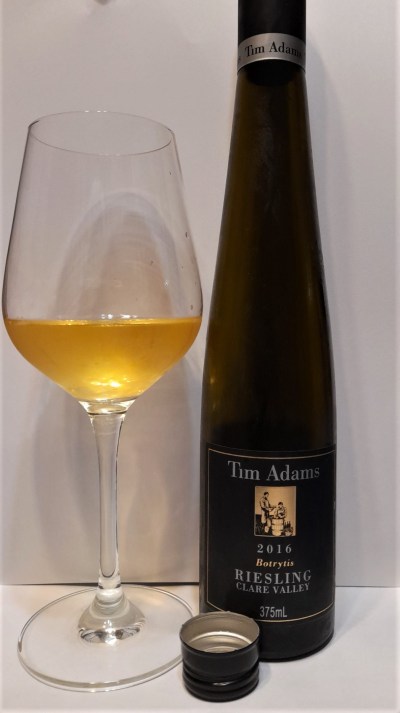
2016 Tim Adams Botrytis Riesling 11%
Clare Valley, South Australia (half bottle, screwcap)

I have a soft spot for Tim Adams, where the (dry) Rieslings, the Aberfeldy Shiraz (and other wines) were once household staples. Very well made, keenly priced and with a surprisingly broad range of museum wines at cellar door, what more could you want?

Light gold in colour, there is trademark botrytis “dustiness” plus varietal Riesling apple and pear, with bonus spice notes. The palate shows classic citrus (esp. mandarine) with a dollop of ripe peach and apricot. It’s clean crisp, lingering and completely delicious, with added concentrated textural interest.

Waiting, or holding hoping for botrytis is a fraught exercise (strong nerves and deep pockets are helpful). Reduced yields, fermentation and storage issues – then you merely need to sell it! I don’t understand why even the best examples struggle; maybe people think “what’s the catch” – it’s too expensive – or not expensive enough.  Or “what foods will it match”? But I have no trouble with fresh fruits or the simplest cakes for this style. It’s 87 g/l residual sugar – all absorbed by the acidity meaning it smells and tasted fresh. I’m sure younger vintages are available, and who wouldn’t enjoy this?

No hurry under screwcap, but it looks ready – drink to 2030 and 92 points.

A Clare valley bargain

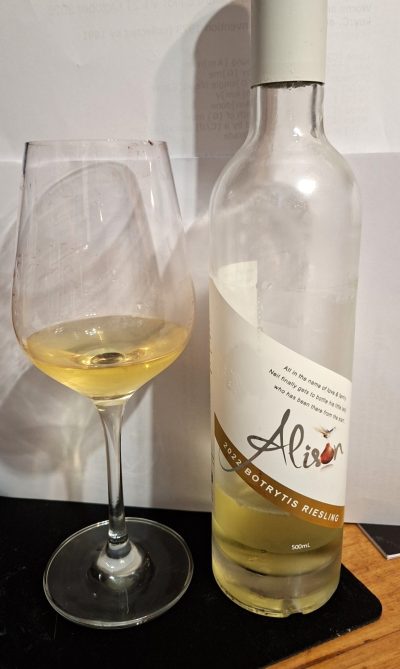
2022 Paulett Alison Botrytis Riesling 8.5%
Clare Valley (South Australia), 500 ml screwcap.

And a beauty. I paid a mere $25 for the bottle and am thrilled.
Cane cut- pale straw colour; pear, citrus, lime, ginger, purity, texture, and unlike most Oz sweeties, there is enough acidity to keep me happy, 150+ g/l residual sugar was my guess (web research says 161 g/l), and a complete bargain. Frisky, concentrated with some welcoming tropical fruit (guava, pineapple rind) and damn fine. A few proper trophies to its credit too. A great welcome back to Oz after five weeks in Europe (one week in Piedmont was my wine highlight).

Drink to 2032, 94 points

Four fortifieds

2005 S&K vp

2005 Stanton and Killeen Fortified 18.5%
Rutherglen, VP style; 32% Shiraz, 32% Durif, 16 % tinta cao, 10% touriga, 10% tinta roriz
Vintage rated 9/10. 1 trophy and 12 gold medals on the label.

I drank this youngster, as a recent bottle from a dinner looked a bit burned/baked. Youthful colour- morello cherry, rhubarb, violets, plus juniper. Palate is raspberry, blackcurrant lavender, camphor, red liquorice. Supple, with super spirit selection and integration. Look at the range of descriptors – always a sign of quality!

Drink to 2035; an easy 95 points.

1985 morris vp

1985 Morris Vintage Port
Rutherglen, 54% Durif, 46% Cab sav

Good colour for age, dense and intensely flavoured; dark berries. Sweet, chalk, coffee, mocha and just thrilling spirit integration. Balanced and delicious.

Drink to 2035, 93 points

1980 sevenhill vp

1980 Sevenhill Vintage Port 19.4%
Clare Valley, Shiraz
I seldom see this style from the area; and I was wary despite a cheap price at a recent auction. The cork was adequate; the colour is a quite developed ruby/tawny – plus plentiful sediment; there is sweet brandy spirit overlaying mocha and some dark fruit and chewy sweet spices; but really the spirit leads the charge here. The label quaintly claims “should be bottle aged for at least eight years” and forty-four years certainly exceeded the winemaker’s intentions. Regardless, it’s alert, and while it should have been consumed many years ago it does not fall into the curio category where excuses are easy to find. It’s still a solid, drinkable wine.

Drink now (sooner if you can), 85 points

NV Kopke Ten years old Tawny 20%
Served blind; Pale colour, roses, fruitcake, spices and some rancio. Sweeter on the palate than expected; with cinnamon, light and expressive, gentle and civilized. Citrus and toffee; light on its feet. Not enough acid for Madeira, not enough aldehydes for sherry, not the sweetness for muscat or topaque, I settled on a tawny style, but without the richness for Australia. I settled on 20 y/o Portuguese. Close enough!

Kopke is not in the first rank, but this was a super example, where the blend over-delivered on the reputation.

Drink now, 93 points (and I hope pricing is reasonable)

Welcome back to Australia?

Winter, and fortifieds exert their willpower, with somewhat disappointing outcomes from recent auction purchases.

1992 All Saints Vintage Port 18.5%
Rutherglen
|A cooler year, with some remarkable local red wines made – but not every wine can be a winner. Here, the colour is respectable, there is sweet brandy spirit, but the dark fruit struggles to keep up. Sound, and utterly unexciting.

Drink now, 84 points

1987 Sevenhill Vintage Port 18.5%
Clare Valley
Oxidised, not rated

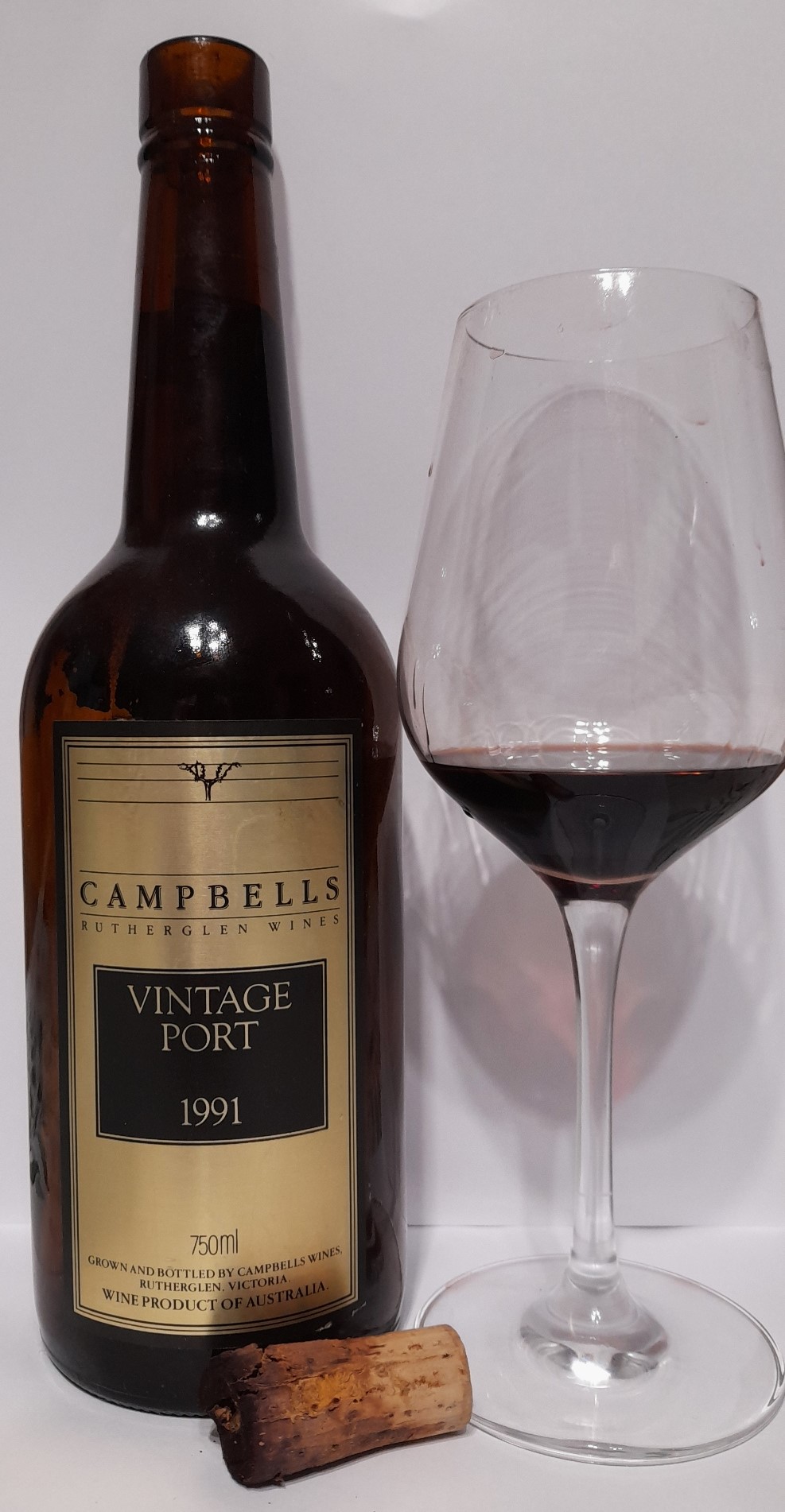
1991 campbells vintage port

1991 Campbell’s Vintage Port 18%
Rutherglen (70% touriga, 30% Tinta cao, Souzao etc)
Deep red with bricky edging. Back in the land of fruit vibrancy – sweet red cherry, blueberry, sweet spices; excellent spirit. Fruit compote pie, with soft, fine tannins, and supple texture. Very satisfying, in terrific condition for age, with just a minor, forgivable miss in the complexity stakes. Drink up while it retains freshness.

To 2030, 91 points

Two enjoyable sweeties

2009 ch raymond lafon

2009 Ch Raymond-Lafon 13.5%
Sauternes, 136 g/l residual sugar. Half bottle

80% Semillon and 20% Sauvignon Blanc, aged in new barrels for three years. Bright deep gold colour, pear-juice meets apricots, white peach and marmalade, backed up with a solid citrus line. Honey and spices resound on the opulent palate with some almond and marzipan. Voluptuous, fresh and morish. A reliable bargain VFM producer. Authentic.

93 points, and drink to 2027 while its fresh. Full bottles will have a longer life span.

2016 tim adams botrytis

2016 Tim Adams botrytis Riesling 11%
Clare Valley. 87 g/l residual sugar. Snapped up this half bottle recently from my local DM for $13.

Light bright clear gold colour; apricot and yellow peach, dusted with cinnamon and ginger; palate is syrupy/viscous but beautifully fresh with a zingy citrus finish. Good mix of botrytis while retaining varietal character. Really doesn’t need more time and will match up a treat with a fresh fruit platter.

Drink to 2027, and 90 points

A freak Alsace and a Rieslingfreak

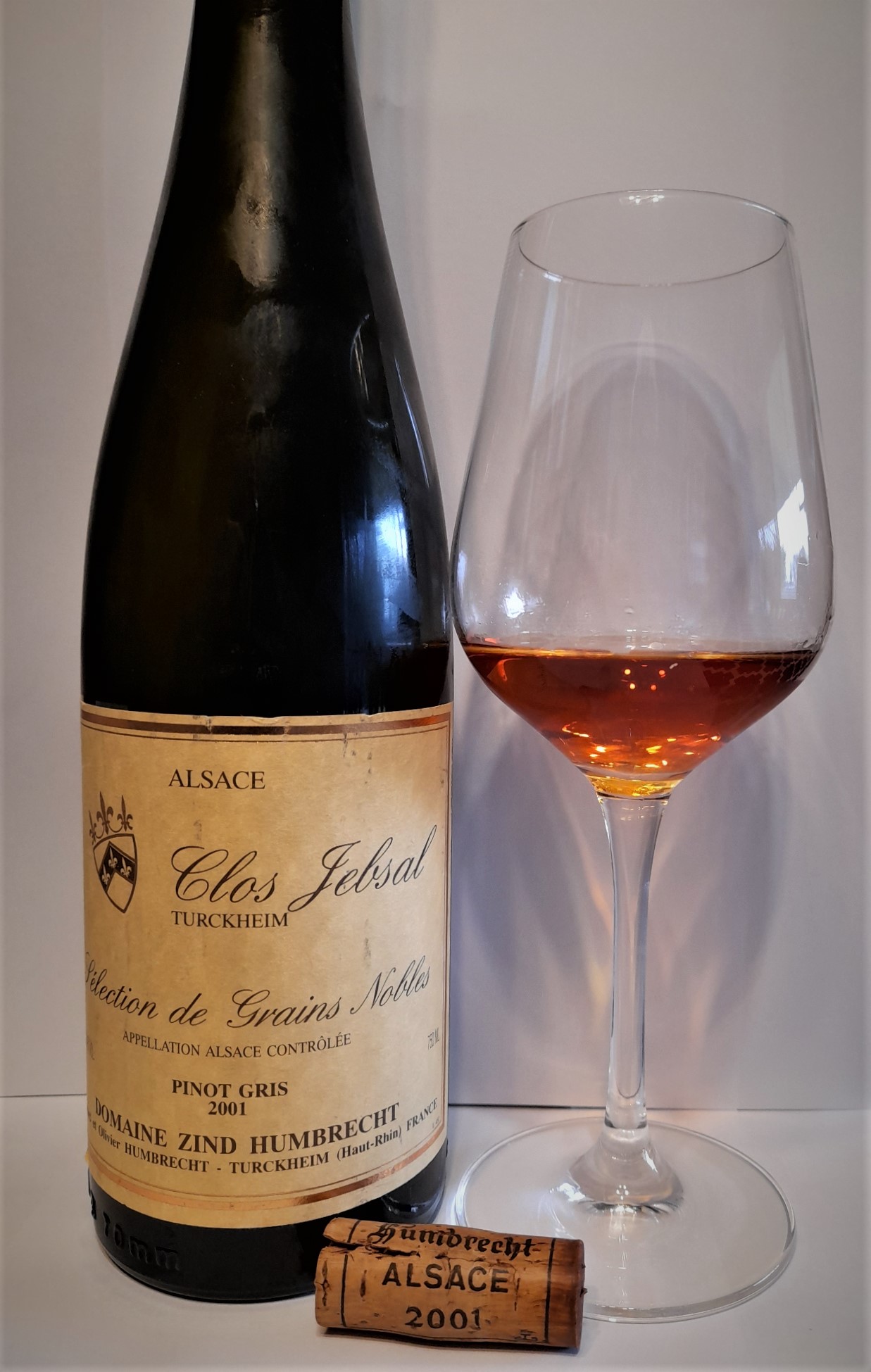
2001 Zind Humbrecht Clos Jebsal Pinot Gris SGN 12%

2001 zh pg sgn 2021

From Alsace (France), a rare botrytised Selection de Grains Nobles (SGN) purchased at auction in late 2014 For $115. Previously reviewed on 29 June 2016, back then I gave it 97 points.

The cork was in excellent condition; the bright amber/copper colour of the wine caused some looks at the table, but all was forgiven – and more- when people smelled, and then tasted.

Baked apple, stonefruit – ripe peach and rich dark honey with some candied peel and dried fruits; palate (168 g/l) is lush yellow peach, pear, orange marmalade and spice notes. Outstanding. The sweetness level is high, but immaculately folded into balance. Gloriously enduring and hauntingly fresh tasting – irresistible. Magic again.

97 points, drink to 2028, but why wait? – this is a wine worth seeking too!

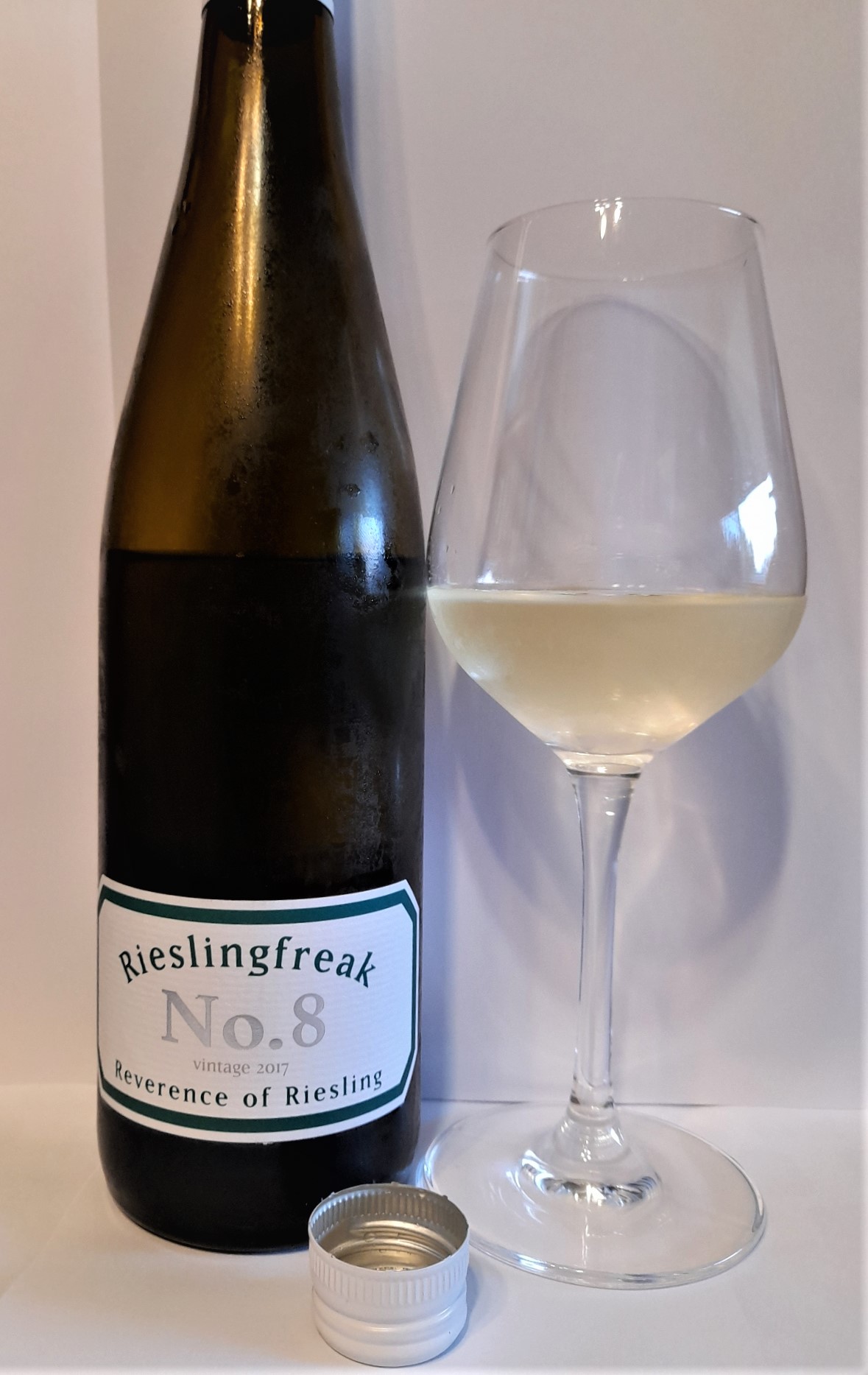
2017 Rieslingfreak #8 (Schatzkammer) 7%

2017 rieslingfreak #8

Medium-sweet at 50g/l, this is from the Polish Hill River sub-region of the Clare Valley.

2017 was a highly successful vintage for the area – and is well represented in my cellar. Winemaker John Hughes makes only Riesling- a numbered array showcasing various areas, styles, sweetness levels, including a fortified and a sparkling. Rieslingfreak (reverence of riesling)is a fantastic brand name!

Lemon zest with a dash of lime; apples dusted with icing sugar and lemon sherbet, with a dash of sweet spices; the palate follows through representing those aromas, and some light honey; pebbly acidity means the wine is lip-smackingly joyful and balances the level of sweetness. An excellent example of the style (roughly a Kabinett-weight)

I’m inclined to drink it in the next few years while it thrums with vibrancy.

Drink to 2025, 90 points

2015 O’Leary Walker “Wyatt Earp” Fortified Shiraz 18.5%

This is not my typical review, but features detours galore – that I hope will stimulate research by my readers.

Australia produced many “series” of fortified “ports” with racehorses, greyhounds, Prime ministers – and more – adorning labels. “Wyatt Earp” immediately seems to lack any Australian heritage but was a brand launched by Quelltaler, and now this vintage appears from O’Leary Walker.

Wyatt Earp was the gambler and lawman famed for the “shootout at the OK Corral”. He was portrayed by Henry Fonda  in John Ford’s excellent western movie “My Darling Clementine”. Parts of this movie – and many more – were shot in the indelibly scenic Monument Valley – (Utah/Arizona)- which I visited in October 2014 and recently in April 2019. I am a monster fan of these westerns, with Ford’s “Searchers”, “She Wore a yellow Ribbon”, “Stagecoach”, “Fort Apache”, “Rio Grande”,  “Wagon Master”, “Sergeant Rutledge” “Liberty Vallance”, plus more westerns by other directors such as “Red River”, “Shane”, “True Grit” and “Unforgiven” supremely recommended.  A further diversion is that “My Darling Clementine” also features one of my favourite character actors –  Walter Brennan, charismatically irresistible here,as well as in “The Westerner” and with Humphrey Bogart in “To have and have not”.

Google revealed the antipodean connection to Dodge City and Tombstone’s marshall. American explorer Lincoln Ellsworth converted a boat for polar use in 1929 and named it “Wyatt Earp”, after one of his heroes. The boat made several voyages (from Adelaide) to Antarctica until the Australian navy acquired the vessel in 1939 – renaming it “Wongala”.  Several more names changes occurred until the boat ran aground in 1959. A Quelltaler box claimed that the boat’s skipper developed a firm friendship, and made regular copious vintage port purchases for the crew. The fortified was then branded as “Wyatt Earp” in celebration. The earliest Wyatt Earp vintage I found references to was from 1947, with the latest from 1977. But I’m glad it was revived!

It may seem odd to be tasting a fortified Shiraz that is so youthful, with many years before its most rewarding drinking window. The winemaker has to aim a long, long way into the future. However, this drinking decision was inspired by Andrew Jefford’s extraordinarily stimulating column in Decanter, where he describes the winemaking process as  “fruit is pummeled to annihilation as quickly as possible during a break-neck vinification period of extreme if carefully controlled violence (perhaps cage-fighting would be the best metaphor of all)”. Jefford then adds a riveting tasting note, in support of early – and later- drinking of this fascinating wine style.

After these digressions, (finally) I turn to the 2015 O’Leary Walker Fortified Shiraz (screwcap, 500ml, Clare Valley – South Australia, available from the O’Leary Walker website). The back label asserts it’s made from 80y/o Shiraz vines and fortified with brandy spirit.

2015 o'leary walker fortified

It’s a luscious, youthful purple/crimson colour; its perfumed meld includes blackcurrant, dark cherry, plum, light cocoa, and delicious fine, sweet brandy spirit; the palate adds blackberry, blueberry and the emergence of some fig and dark cocoa. By no means a blockbuster, it’s ultra supple, with fine tannins supporting the fruit weight. This wine is surprisingly delicious already, although another 20 years is easily achievable and will increase the variety of characters detectable. I’m very glad Jefford tempted me into trying this youthful wine!

Drink to 2040 and 92 points.

Two Australian off-dry Rieslings

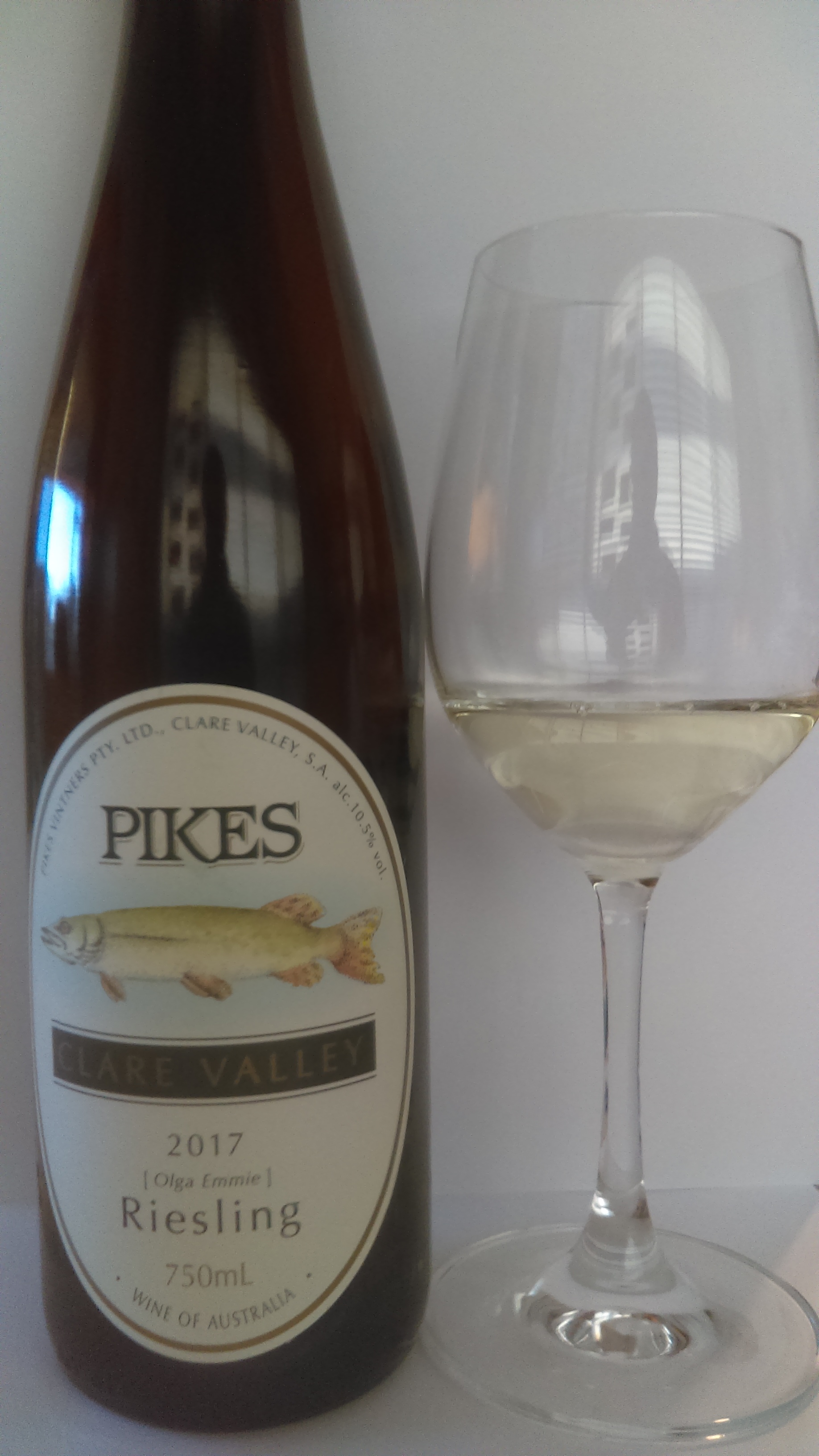
2017 Pikes “Olga Emmie” Riesling 10.5%
From the Clare Valley, South Australia, from a classic year.  Pikes make a well-priced and readily available “traditionale” Riesling, and their reserve is the “Merle” (a terrific wine that I have purchased to cellar).
2017 pikes oe riesling

The “Olga Emmie” is Pike’s off-dry Riesling, described as “slightly sweet” on the back label, with perhaps 20 g/l of residual sugar. It is available for around $20, and well worth seeking out.

“Olga Emmie” proved an interesting wine, particularly since I had the luxury of consuming it over several days. Each time, my assessment, and score improved- so perhaps this is a wine whose virtues are not instantly obvious. It’s youthful and pale in colour; its aromatics are present but not overt and include lime marmalade, passionfruit and pebbles.

There is some residual sugar, and my first impression was that an extra tweak of acidity would have pleased me; but the wine is absolutely delicious with lime, and then lemon, and some fresh honeydew melon. The acidity is keenly pitched, and fills out a wholesome drinking experience.

I am baffled that there are so few examples of serious off-dry Rieslings in Australia; food-friendly, approachable and delicious – Grosset’s Alea, and the  Pewsey Vale Prima come to mind; further mental effort retrieves Pressing Matters R9, a Rieslingfreak offering, then the memory bank fades.

It’s not necessarily easy for a customer to work between the range of “dry” and “dessert”; and the complex interplay of sweetness and acidity on perceptions is another issue; not today’s topic! Labelling wines as off-dry, semi-sweet, medium dry or medium sweet doesn’t seem to have helped.

While this Pike’s wine will certainly improve for a few years (particularly based on the moving target of my views), it will already be a terrific accompaniment to a range of foods much broader than generic “Asian”, with fish and white meats well into play.

Conservatively, drink to 2022 and 90 points

Disclosure- this was a sample bottle.


2009 Lethbridge Dr Nadeson Riesling 11.5%
Although Lethbridge is based in Geelong Victoria, this particular wine is from Portland, SW Victoria, from the Barratt vineyard. There have been several releases from this vineyard, but not for the past few years.

2009 lethbridge riesling

It’s a pale gold colour, and displays varietal talc, wax, mango, cantaloupe and some definite but unobjectionable petroleum. The palate shows green apple characters, some textural grip and a twist of lemony acidity. There is perhaps 10 g/l of residual sugar which adds to the package, providing intrigue to the palate . Nine years old, but the taste is still defiantly fresh.

Perhaps not a wine for technocrats (with its degree of textural grip); certainly idiosyncratic in its winemaking approach, and I firmly favour drinking this wine soon, while its vibrancy critically supports  its drinkability. But the wines very slow evolution means it will last much longer.

Drink to 2020, and 88 points.

2004 (AP Birks) Wendouree Shiraz Mataro 13%

I don’t only drink or review  wines with some residual sugar, these are not at all my staple drinking fare; but after my the recent digression about mailing lists, it’s time to look at a red wine supported by information from the mailer; “a blend of Shiraz (76%) and Mataro (24%) from 1893 Central and 1920 Eastern vineyard plantings”.  No dispute about vine age –these are old!

The wines Wendouree releases vary in price – this is the cheapest. Mataro is a synonym for Mourvedre – or Monastrell –  (one of the blending varieties of the Southern Rhone Valley, and other areas in France, especially Bandol), and Spain,  with a reputation for being full coloured, full-flavoured, tannic, alcoholic and straightforward. In Australia, Mataro is often one of the blenders with Grenache and Shiraz. Mataro is one of the varieties that suffered under the vine-pull scheme not so many years back in Australia. So this wine is a fairly traditional blend from Wendouree.

2004 wendouree shiraz mataro

And how do you get the best out of Wendouree wines, which don’t always shine in tastings? It helps to have a good year, like 2004 in the Clare Valley (and like most of South Australia). It helps to decant the wine and let it breathe for a few hours. And it helps to put into proper glassware – and after some experimentation, the Zalto burgundy glass works particularly well, bringing out some of the more fruity flavours. James Halliday describes the wines of Wendouree as the epitome of the “velvet first in the iron glove”, with 30 years of cellaring potential almost guaranteed based on the vine age and the restricted yields. My experience is that Wendouree wines can be quite shy and sulky – I used to think of them as being attuned to heroic Pinots, but now believe I think they are more like Nebbiolo in approach.

The cork has done an outstanding job – just as well, as this wine has a long future.

The colour is a dense crimson/black – encouraging in an 11 year old. Dark sour cherry, dried herbs, cola, plum and some mint; the medium- weight palate echoes this and adds chalks plus “rum and raisin” chocolates, and liquorice. Complex. The wine is still quite – pleasantly – tannic, and the (Seguin Moreau) oak is swamped by the fruit intensity.  The old-vines add what I call “slinkiness”. Show judges may be looking for more oak, and for more highlights, but the wine is complete in its expression. Lip-smacking and delicious.

Drink 2020 to 2030, score 93 points.