Professor Albert Pedant (MA Hons- Lagos, PhD – Port-au-Prince) – from the online university of Woolloomooloo, has diligently researched the history of numerous Australian wine brands and labels. “There are extensive gaps in the records; family and staff have often put a spin on history; but meticulous searches through dusty filing cabinets, microfiche, oral histories and numerous interviews have shown much of the branding is a mixture of spin, myth, mischief and accident; my definitive conclusions are set out below – certain to disturb and dismay the establishment. No black armbands, fake news or alternative facts here!”
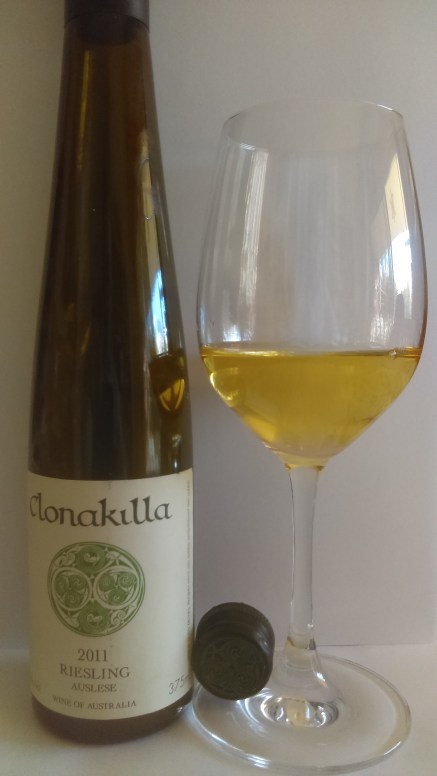
Clonakilla
Long-claimed that Clonakilla refers to the name of Dr John Kirk’s Irish grandfather’s dairy farm (translated as the meadow of the church); my scholarship proves the name was inspired by the family’s shared love of ritual and obsessive viewings of World Championship wrestling on their TV. The stunning character of Killer Kowalski, and his trademark manoeuvres – the piledriver and Kowalski claw – stimulated much household study and emulation. There was also an protracted period when winemaker Tim (“Captain”) Kirk channelled the music of another “killer” – Jerry Lee Lewis – but with guitar rather than piano.
Clonakilla thus epitomises the Kirk clan’s hero worship and Tim’s secret ambition to become a professional wrestler. As chief winemaker, Tim’s career is probably a win for oenology, but a sad loss to the gladiatorial arts.
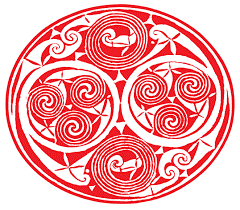
The Clonakilla logo is purportedly taken from the 7th century Irish gospel manuscript the Book of Durrow. But its resemblance to Killer Kowalski’s championship belts is compelling.
It’s no coincidence that the very same wrestler also inspired the label Kilikanoon. Lightning can strike more than once. Certainly, the Killer has left an indelible mark on Australian wine.
Henschke Hill of Grace
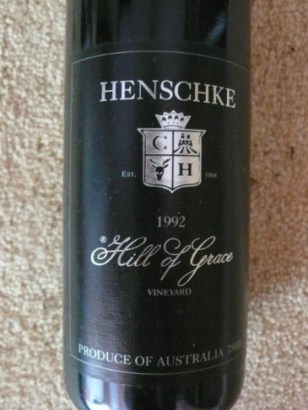
The legend insists that the famous Henschke wine Hill of Grace is a translation from the German ‘Gnadenberg’ (a region in Silesia). The truth is more prosaic; although vines were planted on the location in 1860, the site produces an extra-ordinary variety of weeds, thistles and thorns; the biological control agent deliberately introduced – rabbits- did not have the desired outcome. Instead, several different grassy cover crops -both local and imported- were – successfully- deployed to crowd out the weeds. Thus for many years, the site was known to the family, and neighbours as “Hill of Grass”.
This was the intended name for the label, and it was only due to the linguistic misunderstandings, and a degree of hearing impairment of the printer, that Hill of Grace was created. In 1958, When Cyril Henschke saw the newly-printed labels for the first time, he was torn between fury and despair. Owning a cashflow-impaired small business, he could not afford a reprint, and was gracious enough not to hold the printing firm, or the printer- a fellow congregationer -responsible for their error. Thus Hill of Grace was born- now a venerable Australian wine icon.
But the true founder of this Australian label is a long-forgotten, unknown print tradesman of ethnic German descent.
Seppelt (now Seppeltsfield) Para Port
There is no truth that “Para” was derived from the arcana of print and publishing mark-ups.
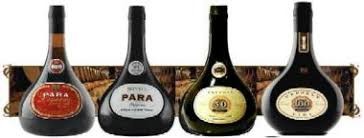
The legend attributes this Seppelts (and now Seppeltsfield) brand to the Para river in the Barossa valley; but this is erroneous. The key market for Australian wines – at that time – was England, and the Antipodean approach to branding was to create “critter labels” often featuring emus, kangaroos and other native fauna.
The group tasked with creating the name settled on Parrot Port. Further, the colourful Australian King Parrot was chosen to be depicted on the label. But economics intervened; the quoted cost of multi-coloured printed labels was formidable and weighed decisively against a new market entrant. A plainer label would fail to display the avian magnificence of this ornithological beauty.
Forced to make a hasty decision , the shorter Para was selected. It’s become famous in its variant guises, especially the extra-ordinary 100 year old “port”.
Penfolds Grange Hermitage
The official back-story is that Penfolds’ winemaker Max Schubert travelled to Bordeaux, and after returning to South Australia made the very first – experimental – “Grange” in 1951. But where did the name come from? This question is far from straightforward.
One proposal – noted in Huon Hooke’s volume “Max Schubert winemaker” – suggested Grange was the name of the Penfold’s cottage inside the Magill vineyard- but alternate explanations surely have greater plausibility than this convenient corporate flim-flam.

Due to a scarcity of high-quality Cabernet Sauvignon, Max used the grape variety Shiraz (aka Hermitage). Max would have been well aware of the famous Chapel (la Chapelle) on the Hill of Hermitage. Did Max pay direct homage here? – it’s not a huge leap of description between Chapel and Grange.
Grange is not a wordplay on Garage, and it’s not related to 3rd growth St Julian property Chateau Lagrange. It is highly unlikely that Max was aware of the gentlemens’ establishment outside La Grange Texas (also called the Chicken Ranch), brought to widespread notoriety in 1973 by the band ZZ Top.
Max Schubert typically refers to the wine as “Grange”, but he has unwittingly provided several clues, claiming his aim was to produce a wine “capable of improving year by year for a minimum of twenty years …something different and lasting….controversial and individual.”
One serious suggestion is that Max Schubert was inspired by the Australian composer and performer Percy Grainger– best known for his revival of the tune “(English) country gardens” but also a renowned connoisseur and collector of Europe’s finest wines. Could Max have originally referred to his own opus as “the Grainger”, but ultimately tired of explanations to his less-high-browed colleagues, and gradually it became the “Grainge” and then somehow the spelling was corrupted or simplified? Certainly this heritage is controversial, individual and different. It is unclear, however, if Max was aware of Percy Grainger’s proclivity for self-flagellation and his other sado-masochistic interests.
Grange is a seaside suburb of Adelaide, where Max spent countless hours on his lesser-known pastimes, fishing from the jetty, and imbibing beer – and smoking- at its numerous attractive hostelries. Like Marcel Proust’s madeleines, did this humble municipal district and its numerous attractive recreational memories – perhaps a teenage romance? – inspire Max to pay tribute, and create the wine Grange?
We have a riddle wrapped in a mystery inside an enigma; the contenders are numerous, but the true origin of Grange remains a conundrum. Further research is planned, although regrettably the current owners of this brand have so far not co-operated with my endeavours.
As Austrlia’s foremost historian, and while my vinous research is ongoing, (Wendouree and Giaconda are currently under my intense scrutiny), I am honoured to have finally set the record straight on the factual origins of these famous Australian wine brands, and shamed the writers and historians who have uncritically and recklessly promulgated the fantasies behind these labels.
My discoveries will surely impel studies of establishments in Bordeaux, Burgundy, the Rhone Valley, Rioja, Alsace, Tuscany and Piedmont – just for starters. Heads will roll – Vive la revolution!


 sweetworldwines