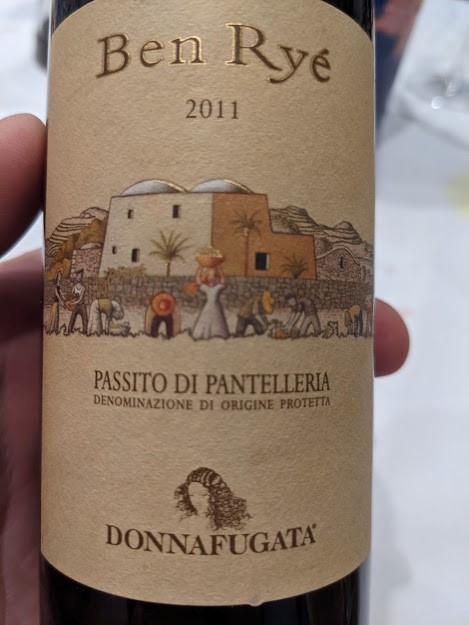
2011 Donnafugata Passita di Pantelleria Ben Ryé 14.5%
Half-bottle. From Sicily, Zibibbo (Muscat of Alexandria) air-dried, ending up with 203 g/l of residual sugar. On this island off Siciy, old bush vines are protected from the prevailing winds by terraces. The drying process means the grape-juice loss of perhaps 30%, with lots of manual handing (selecting, and de-stemming) with a flow-on to pricing. This is a super-refreshing dessert wine – no botrytis, no fortification, so there are – merely – the usual sweet wine production hazards of VA, lengthy fermentation and reduced yield. The air drying on mats or racks can add its own special dangers with humidity, insects and wildlife. Further information from the producer is here. The wine will be hard to find in Australia, but one retailer sells a half-bottle for $80 (vintage not known).
This is a wine with distinctive character – narrow to some but mesmerising.
The colour was deep gold; scents came through with peppermint, vermouth-like herb and spices, and an overwhelming sense of apricots and other stonefruit, peaches, nectarine – a halfway house between over-ripe and tinned fruit. It’s a full-bodied wine of power and intensity. The exotically fragrant Muscat of Alexandria grape is expressed – winemaking here has been expert at preserving fruit vigour over artefact.
Drink to 2025, but it’s ready and will awaken jaded palates, so 93 points
NV Orlando Commemoration (tawny) Port
Another speculative auction purchase for just over $30, again from Barossa Shiraz, Carignan and Mataro, matured in small French oak with an average age of 15 years. So this “old liqueur port” is somewhat more than a generic commercial release, and probably hit the market in 1981 or 1982. Made in a deliberately oxidative style, any improvement in the bottle is marginal, and runs the usual risks of improper storage, cork failure, and potential loss of freshness. Decanting not only avoids sediment, but can alleviate initial aromatic oddities.
The contents have rested in a bottle for 40 years, and the cork broke when I tried to remove it. The art of blending this style is trying to ensure the blend is better than its components, getting depth and flavour complexity from older material, gaining the vibrancy from more youthful material.
I admire the squat bottle, black wax remnants and the charmingly retro label.
The colour is a amber, khaki and a lighter amber-tinted rim. Fresh and strong. The palate is a rich, smooth amalgam of mocha and light caramel, with vanilla present but not obtrusive, dried and stewed fruits, citrus peel., mixed spices- an assembly of passion. Everything sits smoothly,
Drink now, 90 points

 sweetworldwines