Drinking in Europe 1

I have been in Europe on holidays, not visiting any wineries, and quality drinks have been hard to find, and harder to drink given that daily temperatures seem to be in the mid-thirties (Celsius) and humid too.

2018 Oremus Late-harvest 11.5%
Tokaj, Hungary from  Furmint, Hárslevelü, Zéta and Sárgamuskotály, mixed botrytis and ripe grapes, oak fermented. Details.
Pale gold colour with a greenish tint. Honeysuckle, nettle, jasmine, gooseberry, quince, light honey. Viscous, with tropical and pear notes. Clean, youthful, lingering, balanced, and very good. And of course sweet. My guess was 80g/l, but winery notes state 111 g/l.

Drink to 2030, 90 points

2012 molitor et auslese

2012 Markus Molitor Erdener Treppchen Riesling Auslese ** AP#37 7.5%
Mosel, Gold capsule, with the ** indicating something extra in its ripeness category.
Glowing buttercup yellow/gold colour; white honey, lime, herbs with a dash of spice, ripe red apple and pear. Very good concentration, balanced acidity, and some harmless bitterness at the finish.

Drink to 2032, 92 points
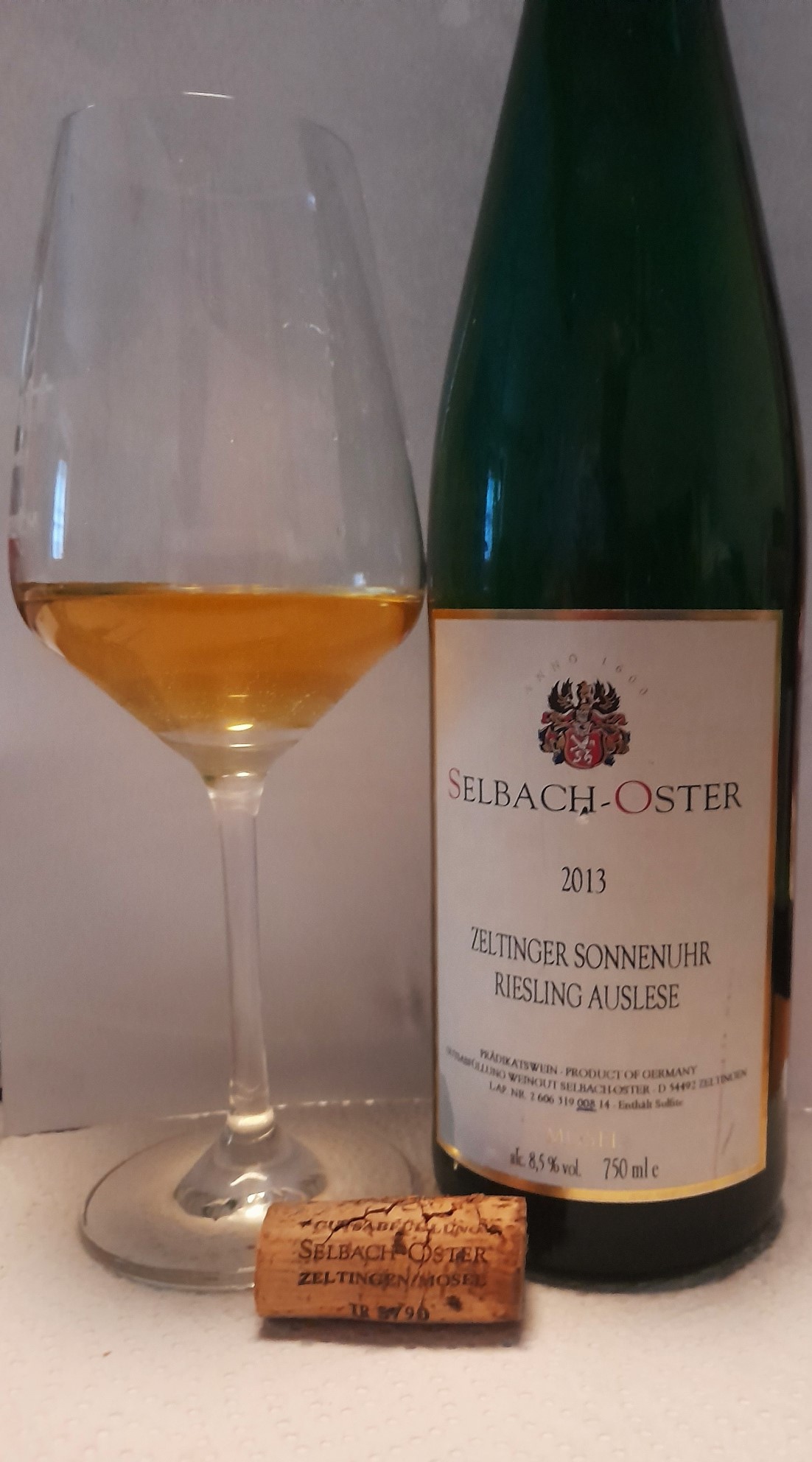
2013 selbach-oster ZS auslese

2013 Selbach-Oster Zeltinger Sonnenuhr Riesling Auslese AP#8 8.5%
Mosel.
Pale gold colour, apple, nectarine, citrus and spices, dried green herbs. Racy, zingy, with a fine talcy texture. Brisk and refreshing, white peach dominant with rampant brown spices adding interest to the palate.

To 2035 and 93 points
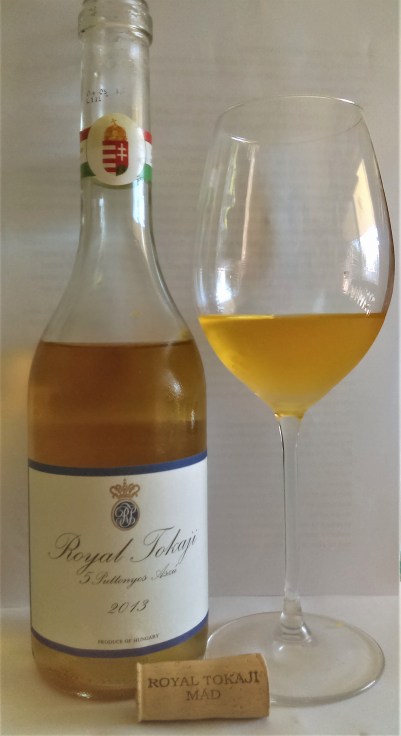
2013 Royal Tokaji 5 Puttonyos Aszu (blue-edged label) 11%

Aszu means “rotten” (botrytis affected). The puttonyos is a weight measure, but translates to minimum sugar levels, with wines matured for at least three years before release including at least tow years in oak).

3 puttonyos 60 – 90g/l
4 puttonyos 90 – 120 g/l
5 puttonyos 120 – 150 g/l
6 puttonypos 150 – 180 g/l
Aszu eszencia 180 – 450 g/l
Escenzia 450 g/l (and I’ve never tried one of these)

The Royal Tokaji company’s website gives deep information about history, production and so on.

The Tokaji I have tried over the years had levels of oxidation (bruised apple etc ) that I found unacceptable, so this wine was a triumph of hearsay over experience; and I was very pleasantly surprised.

2013 tokaji

Bright gold in colour, the wine has floral apricot, marmalade and honey characters. The palate is similar- apricot jam, quince, red apple, fruitcake spices and a touch of ripe pineapple. (75% Furmint, 25% Hárslevulu, and 155 g/l residual sugar). With this abundant residual sugar, but plentiful acidity, the wine is winningly vibrant. It’s concentrated but with a different mouthfeel to a Sauternes. Oak is obliterated here by the fruit depth and acidity.

It’s a terrific experiment, worth 92 points and drink to 2026 (a guess with my inexperience of this style),