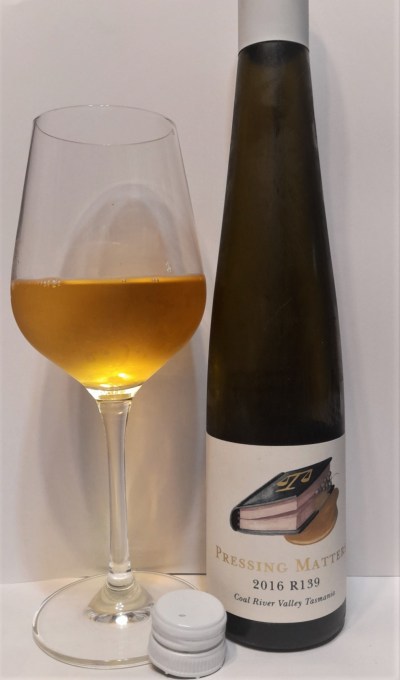
better mixed sweets

2016 pressong matters r139

2016 Pressing Matters Riesling R139 9.2%
Coal river valley, Tasmania

Pale colour, lime, pear, apple, ginger biscuit. The winery specialises in the unusual combination of Pinot Noir plus assortment of Rieslings at varying sweetness levels (R0, R9, R69 and r139) with many wine show successes and a wine club that offers regular museum releases. This wine is a cracker. With the crisp Tasmanian acidity, it has the magic combination of varietal definition, botrytis and purity. White peach and lime, thrilling acidity and it just lingers gracefully. Special!

Drink to 2030, 94 points

2015 ca' d'gal vv

2015 Ca d’Gal vite Vecchia Moscato d’asti 5%
Piedmont, lightly sparking (frizzante) packed with icing sugar, musk, and grapiness, spices and texture. The muscat character shines.  Around 90g/l residual sugar, and >$100.

Not as stellar as the 2008 tasted about twelve months ago, but its vitality will utterly revive jaded palates, and confound many with its delicious, bracing freshness.

Drink to 2027, 92 points
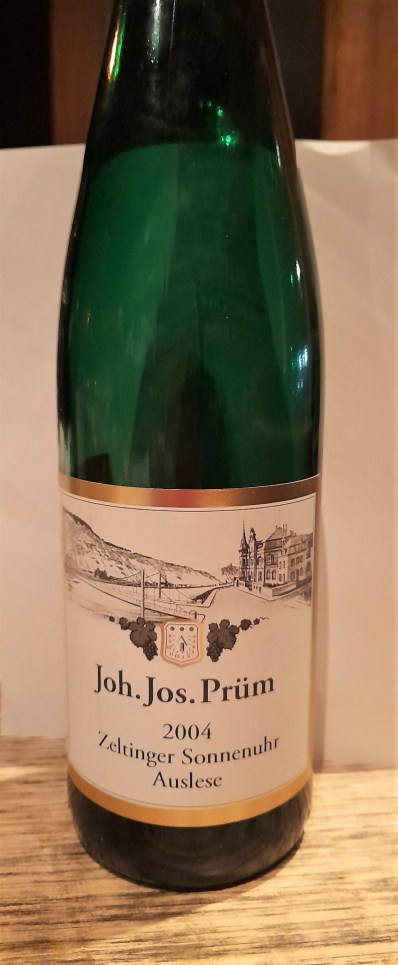
2004 jj prum zs auslese

2004 Joh Jos Prum Zeltinger Sonnenuhr Auslese Riesling 7.5%
Mosel, and a startlingly pale colour for its age. Showing white flowers, herb, apple and pine/nettle. The palate is full of minerals and phenolic grip. More modern vintages are riper and sweeter, but even though this wine was served straight after the Ca’ d’Gal, it didn’t seem to have the level of Auslese sweetness (my guess was Kabinett) A rare, relative disappointment from this producer.

Drink to 2026, 90 points

Three wines, at least two learnings

1982 S&K VP

1982 Stanton and Killeen Vintage Port 19%
Rutherglen Shiraz, from a vintage rated as 9/10 by the winemaker.

Forty years old , and the cork has held up. Bricky colour, but nothing out of order.
Black fruits, mocha, fresh red liquorice, and vanilla bean; almond and clove spices join in. Light milk chocolate, soft palate. Easy to ask for more.

Drink to 2025, and a resounding 91 points

Warre’s Optima 20 Year old Tawny Port 20%
Portugal, bottled in 2013 (and served blind)

Light khaki colour, and packed with toffee, caramel, vanilla, fruit peel, and citrus. Light on its feet, lingering, everything in its place…except one sensitive taster mentioned mousiness.

This is – fortunately for me-not easy to detect (it depends on mouth pH and other factors), else it would ruin my enjoyment of many fortified wines. Mousiness can occur in non-fortified wines, seemingly more prevalent with no-early-SO2 wines (hello, natural wines again). A brief article by Jamie Goode is here.

I can find mousiness via the “skin test”, smearing it over my wrist and waiting for evaporation. The result can be horrific – I liken it to burnt bacon, corn chips and popcorn with a bitter, harsh and unfortunately persistent flavour. Once detected, it’s impossible to overlook –  I’ve had worse than this wine, but…

Avoid. No score.

2008 Ca’ d’gal vite vecchia Moscato d’asti 5%
Piedmont, Italy (served blind)

Partiallly obvious what this was – the frizzante, slightly sparkling style (around 1.5 atmospheres – Champagne is 4.5-6), the sweetness (90-100 g/l) and obvious grapey muscat aromatic. However, instead of merely the usual refreshing sherbetty and “fun” approach, this wine had much more complexity – chamomile, lime, beeswax/candlewax, a spice-bucket with mandarin citrus. Flavours mirrored this, and while still bracingly vibrant, bonus merit for its surprising cellarability and the exotic souk perfumes, Aged for 5 years in bottle, and look at the meagre alcohol level! Obvious ageing potential here. The producer makes a range; this is the old-vine flagship, No surprise its> $120.

Scoring presents a conundrum – Moscato d’asti is user-friendly, but this was well beyond my expectations of the style. It startled me, and led to some research.

Drink now, and 95 points