One VP and a loss

1963 Warre’s vintage Port
Served masked. Pale faded rose colour; and determinedly Portuguese; blue and red plum fruit with some Turkish delight, mocha, cocoa, valrhona choc. Completely mellow with just a touch of nuttiness. The spirit is essentially holding this wine together, and my guess for age was around 1970. Great fun as I am rarely fortunate enough to try sixty-year-old VPs, and this wine isn’t yet decrepit. Its donor advised that there was monster sediment that was filtered off.

Drink now (until 2033 and 93 points

Bill Chambers died recently – terrific links are here, and here but I will add a few reminiscences, as I visited Chambers’ winery many times over the years.

Curiously, my (late) father Frank worked at the vineyard for a brief period labouring in the 1940s.  He also took the family to Rutherglen on many occasions, where we usually stayed at Wahgunyah’s Riverside motel, with Buller’s bird park an essential stop. These visits continued with my partner and children.

On one occasion, Bill met us on the tasting verandah letting us know “wines are all in the fridge- help yourselves”. We usually made a point of wandering off to admire the ornate “exhibition” barrel. I also remember finding Bill rebottling some 1958 muscat, which was very reluctant to pour, just slowly trickling. Known for the age and complexity of the muscats and topaques, we could usually also find a well-priced red wine or two to buy. I have many more memories of Bill’s friendliness and generosity.

Finally, one remarkable talent of Bill’s was not well known to the public although wine show judges and winemakers would be aware of his prodigious wine spitting technique.

Bill could effortlessly direct a stream of wine with exceptional pace and accuracy into a bucket several metres away, while we watched in awe and envy – my own efforts shorter, less precise, and with occasional random dribbles. Vale Bill!

Two countries, two styles

1986 chambers VP

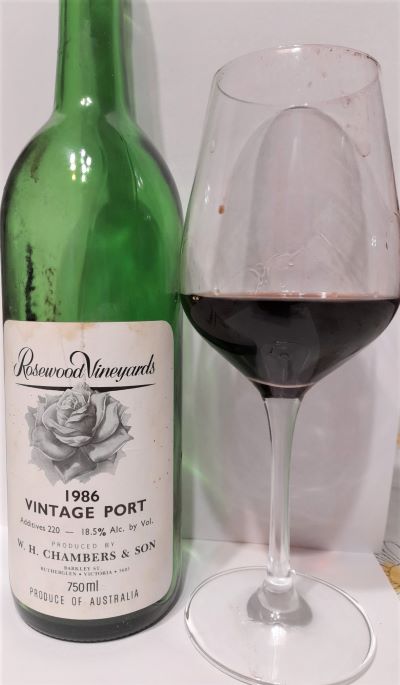
1986 Chambers Vintage Port 18.5%
Rutherglen, Victoria.

This wine had substantial sediment, so decant very, very carefully. The colour is aged and bricky, but solid. Red liquorice, cherry, mocha, malt and beautiful spirit. The palate is very sweet, but such is life. The rest of the package is the spirit integration, the freshness and tannin elegance. Made by the legendary Bill Chambers, likely Shiraz – but who knows? – a terrific tribute to a winery renowned for its ancient muscats and topaques, but akos with a monster range of reliably underpriced table wines.

Drink to 2033, and 93 points

2008 fonseca crusted

2008 Fonseca Crusted Port 20%
Portugal.

Similar in style to a late-bottled vintage Port, this fortified wine spent four years in large oak, and was bottled unfiltered, thus having a (heavy) crust and demanding decanting.

Deep in colour – and served masked- I instantly leapt to Portugal as its origin, the florals including roses, blueberry and violets. The palate was savoury, laden with cherry, plum plus fruitcake spices and super-supple, an elegant, youthful fresh and lively style with delicious spirit integration. My only question was whether the wine was a VP (did it have enough “stuffing”) or an LBVP, or a single quinta? I wrongly settled on a young VP, perhaps 2007. Regardless, a lovely drink with many years ahead.

Drink to 2033, 94 points

Three countries, two curios

2007 vinoptima gwt noble

2007 Vinoptima Noble 11%
Gewurztraminer, Gisborne, New Zealand

From a half-bottle served blind. Orange/copper colour, very floral grapey muscat characters and sweet spices; extremely sweet palate with botrytis plus apricot marmalade, herbs and mixed spice. Not Sauternes, and not fortified. Not Riesling, but the botrytis confuses the variety. Not oaked. Gewurztraminer, Muscat, Pinot Gris – or something less common from Austria or Hungary? Alsace? Ten years old? But the reveal was New Zealand and Gewurztraminer– abetted by around 180 g/l residual sugar. A surprise!

Drink now, 90 points and one to baffle punters obsessed with options.

1987 buller vp

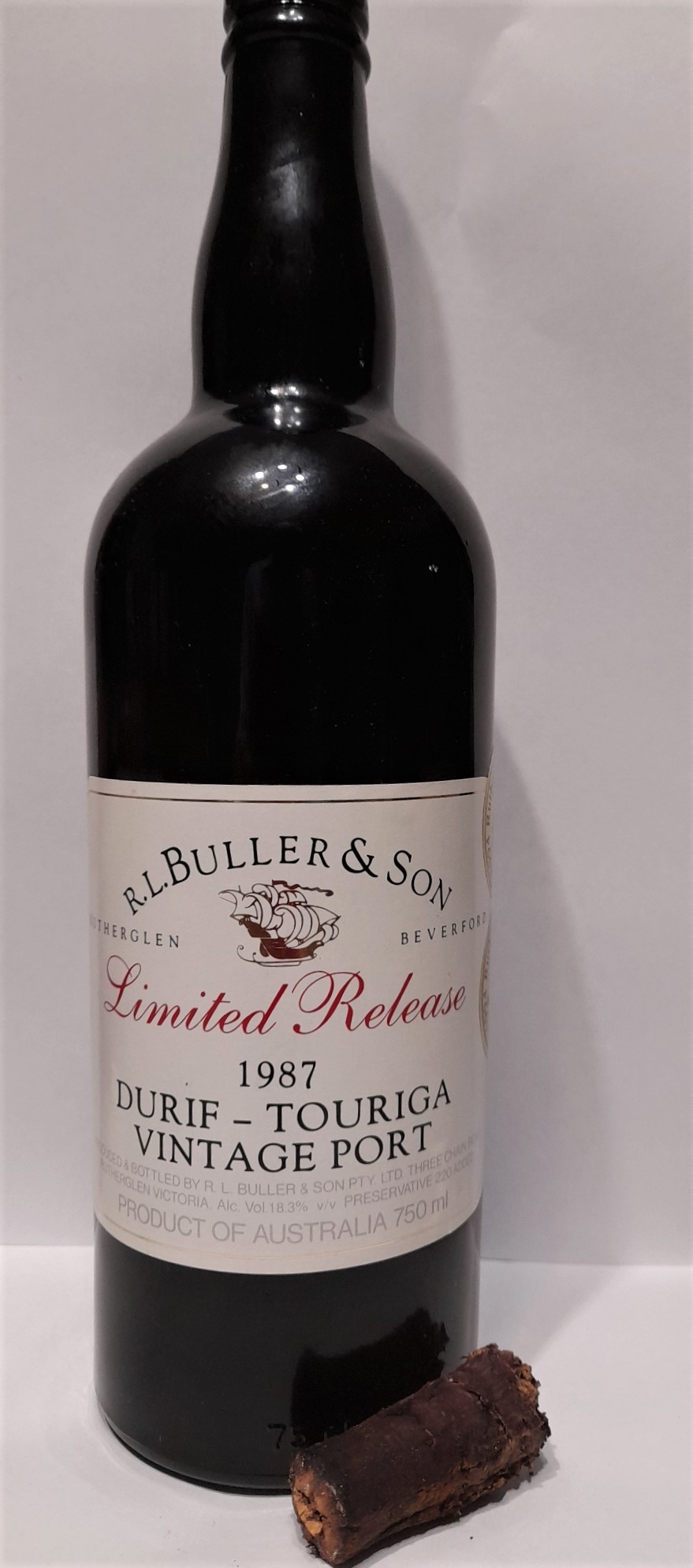
1987 Buller Limited Release Vintage Port 18.3%
Rutherglen, Victoria 70% Durif, 30% touriga

Deep colour with some bricking; mocha, swiss chocolate, sweet for style with spices, soft balanced spirit and almond. One astute taster commented “Australian, with a significant Touriga impact, possibly a third variety”. In any case, a terrific wine with superfine tannins drinking remarkably well for its age (and most had never seen this label).

Drink to 2030, and 93 points

2000 warre's vp

2000 Warre’s vintage port 20%
Portugal.
From two half-bottles (a third half- bottle was corked, alas)

Short corks but in good condition, and a lot of sediment. My main takeaway was that despite the smaller packages, this wine has a long time ahead! Good colour for age; complex mix of blue, red and dark fruits – figs, and a touch of almond. Succulent, fresh, sweet and mouthfilling – but deserves much more time to uncoil. Super integration of fruit and spirit, but it’s just a baby. Warre’s seems to like this wine.

Leave this alone or give it a long decant. Drink to 2040, 95 points.

Rushed impressions – recent blind tastings

1998 Ch Coutet 14%
2000 Ch Coutet 14%
(Semillon 90%, Sav Blanc 9% muscadelle 1%)
Neither are from a “top” year, yet Coutet seems to have a knack of over-delivering for its price. Both these wines are in the drink soon category.

Barsac, both swerved blind- I had to beg a small sample of the second, as our table’s bottle was TCA affected. These were stylistically similar, both showing obvious development of colour and aromatics; the older wine slightly flatter, with orange marmalade and icing sugar notes; the second wine with vanilla, light pineapple, camphor – and certainly some forgivable floor polish VA – cinnamon notes, and altogether a better wine than its components indicate.

89 and 91 points respectively

2003 Taylors Vintage Port
Portugal. Our table’s bottle was again TCA affected, but remnants from another bottle arrived.

Cherries and other red fruits, almond meal, liquorice and light tannin- pleasant but slightly skinny; my guess was an LBVP or a quinta wine. After the “reveal”, this was a disappointment from this maker and looked more advanced than expected. Maybe a lesser bottle?

Drink to 2027, 88 points

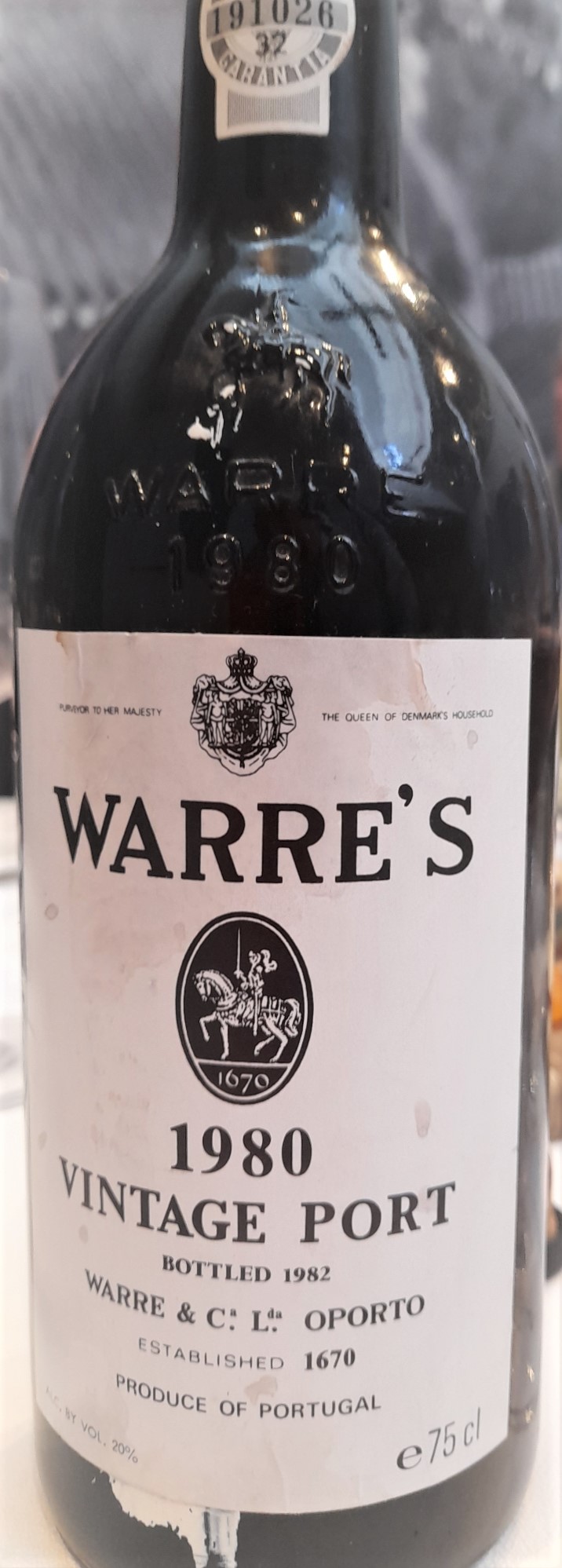
1980 warres vp 2

1980 Warre’s Vintage Port 20%
Portugal. This was a much more vibrant and youthful bottle than the one I described a few months ago.

Developed but still ruby; blue fruits abound (a pointer to Portugal), roses, mixed spices; a soft but hauntingly persistent palate – mocha, fine dark creamy chocolate, integrated spirit, mixed red and dark berries.

Drink to 2032, and 94 points

Three more vintage ports

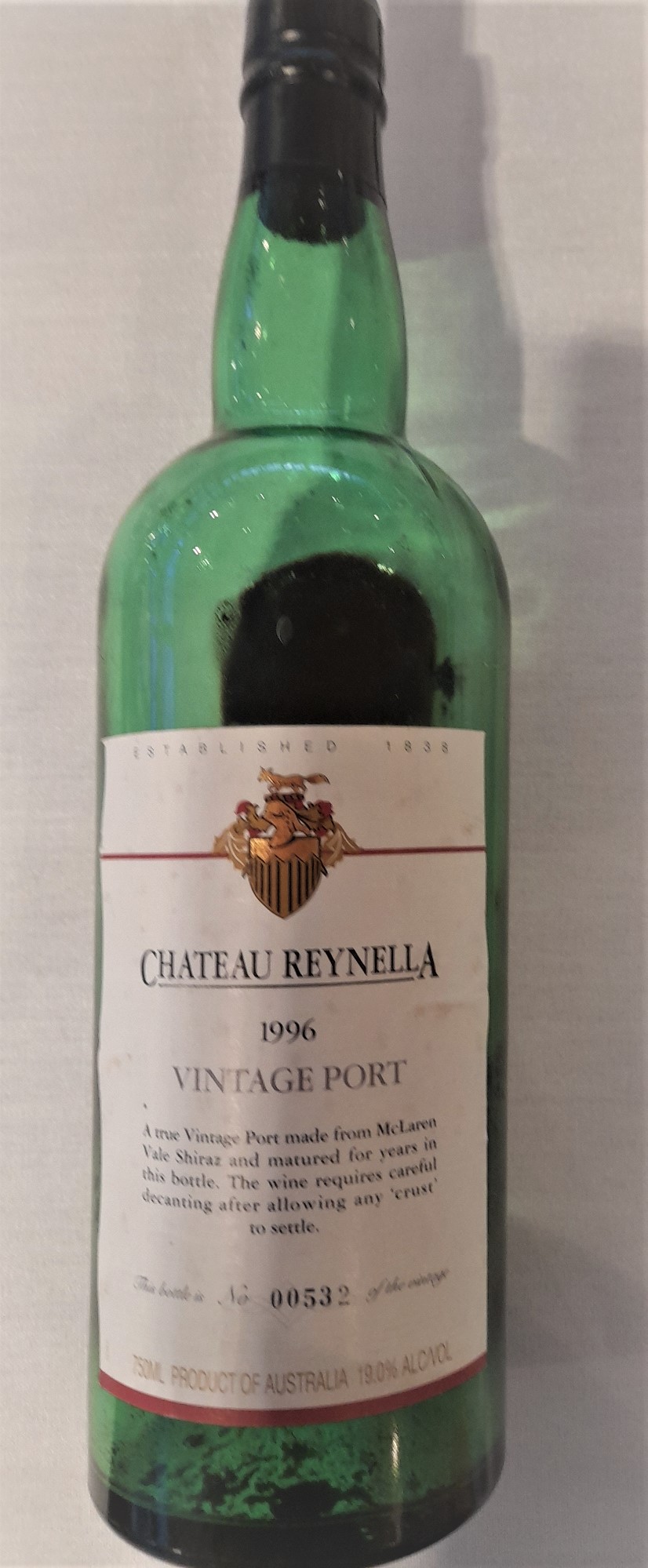
1996 ch reynella vp again

1996 Chateau Reynella Vintage port 19%
Shiraz, McLaren Vale, bottle #532. Served blind.
Ruby with some bricking, dark berries, mint and camphor. Sweet dark berry flavours, mocha, liquorice, sweet spices, ample tannin but absolutely ready to drink.
Drink to 2030, 92 points. (an uncanny similar description to my post from March this year)

1980 warre's vp

1980 Warre’s Vintage Port 20%
Portugal. Served blind.
Ruby colour, camphor, cardamon, wax, putty. I was suspicious that there was a faint whisp of TCA, but it was invisible on the palate, so I relented. Palate is soft, with mocha and some figgy character with headsy spirit. This is a wine where the fruit was playing second fiddle to the spirit, but the whole seemed better than its components
Drink to 2030, 92 points (and there may be better bottles around)

1980 taylors vp

1980 Taylor’s Vintage Port  
Portugal. Served blind.
Ruby colour, with some browning. Putty, cherry and almond. Palate drier than Australian, with marzipan and cherry; spirit slightly sharp, but a winner on the flavour persistence stakes.
My initial age range was 1975-1985, and when options came up as 77/80/83 I correctly selected 1980. (However, I got the house wrong- I don’t drink enough Portuguese VPs!)
Drink to 2035, 94 points

Two sweet, and two strong

2000 Ch Rieussec (Fargues, Sauternes) 13.5%
1999 Ch Coutet (Barsac, Sauternes) 13%
These were served as a pair (masked). The first wine had more of a copper colour, but with definitive Sauternes character – vanilla, cumquat, wax, honey, bitter orange and citrus rind. It seemed ripe, ready, and enjoyable. 2000 was a wet year with a small crop – 65% Semillon, 24% sav blanc, 11% muscadelle.
Drink to 2025, and 92 points

The second wine also seemed typically Sauternes, albeit with less overt acidity. Pale orange colour, melon and tropical pineapple were its key features. This was also ready, but in a subtler style than the first wine. Sound, correct but few thrills. 75% Semillon, 23% sav blanc, 2% muscadelle.
Drink now, 90 points

I (correctly) guessed both wines were from the mid to late 1990’s, and from “lesser” years.

Continue reading

Three wines, at least two learnings

1982 S&K VP

1982 Stanton and Killeen Vintage Port 19%
Rutherglen Shiraz, from a vintage rated as 9/10 by the winemaker.

Forty years old , and the cork has held up. Bricky colour, but nothing out of order.
Black fruits, mocha, fresh red liquorice, and vanilla bean; almond and clove spices join in. Light milk chocolate, soft palate. Easy to ask for more.

Drink to 2025, and a resounding 91 points

Warre’s Optima 20 Year old Tawny Port 20%
Portugal, bottled in 2013 (and served blind)

Light khaki colour, and packed with toffee, caramel, vanilla, fruit peel, and citrus. Light on its feet, lingering, everything in its place…except one sensitive taster mentioned mousiness.

This is – fortunately for me-not easy to detect (it depends on mouth pH and other factors), else it would ruin my enjoyment of many fortified wines. Mousiness can occur in non-fortified wines, seemingly more prevalent with no-early-SO2 wines (hello, natural wines again). A brief article by Jamie Goode is here.

I can find mousiness via the “skin test”, smearing it over my wrist and waiting for evaporation. The result can be horrific – I liken it to burnt bacon, corn chips and popcorn with a bitter, harsh and unfortunately persistent flavour. Once detected, it’s impossible to overlook –  I’ve had worse than this wine, but…

Avoid. No score.

2008 Ca’ d’gal vite vecchia Moscato d’asti 5%
Piedmont, Italy (served blind)

Partiallly obvious what this was – the frizzante, slightly sparkling style (around 1.5 atmospheres – Champagne is 4.5-6), the sweetness (90-100 g/l) and obvious grapey muscat aromatic. However, instead of merely the usual refreshing sherbetty and “fun” approach, this wine had much more complexity – chamomile, lime, beeswax/candlewax, a spice-bucket with mandarin citrus. Flavours mirrored this, and while still bracingly vibrant, bonus merit for its surprising cellarability and the exotic souk perfumes, Aged for 5 years in bottle, and look at the meagre alcohol level! Obvious ageing potential here. The producer makes a range; this is the old-vine flagship, No surprise its> $120.

Scoring presents a conundrum – Moscato d’asti is user-friendly, but this was well beyond my expectations of the style. It startled me, and led to some research.

Drink now, and 95 points

Recent misses (and hits)

1968 Moulin Touchais (Coteaux du Layon) Loire Valley
Chenin blanc. A bit of dried apple, but this oxidised bottle provided no pleasure.
1979 Moulin Touchais (Coteaux du Layon) Loire Valley
Similar, but worse. Pretty dead.

These “fails” could not be scored. But Cellartracker shows there are better bottles around.

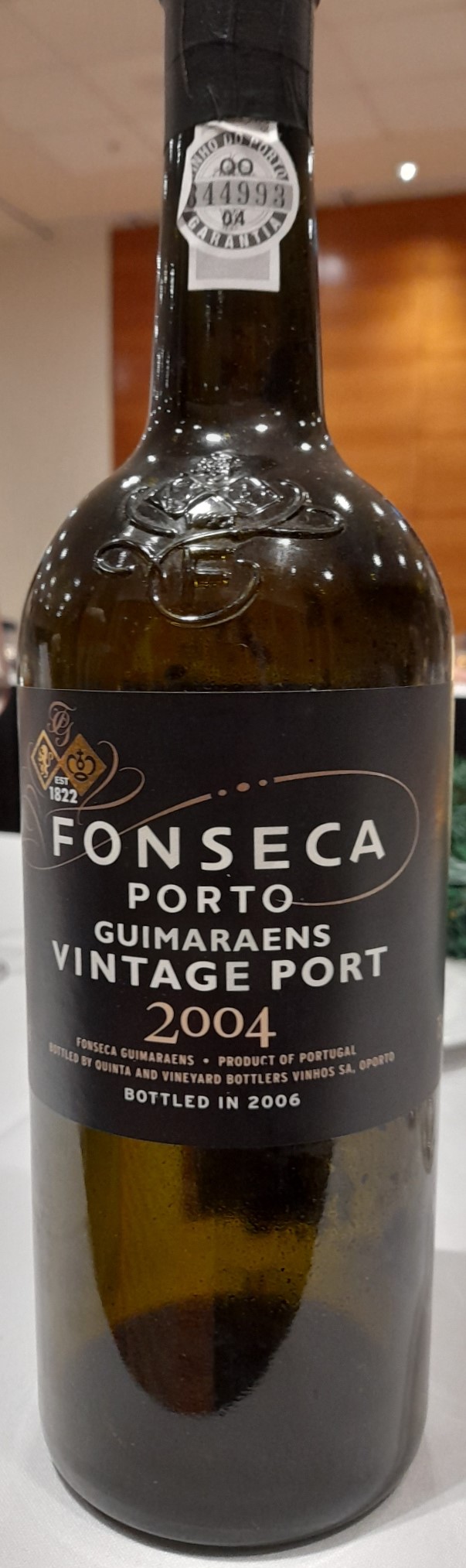
2004 fonseca
2004 Fonseca Guimaraens Vintage Port
Portugal. Ruby colour with some bricking; dark red fruits and plum, dried fruitcake and spices, almond meal, clean spirit, savoury, grippy, chalky. Maybe a tad light, but very smashable at the end of a long night! Not a generally declared year, and in this year Fonseca also produced a Panascal. The single quinta wines can be excellent value.

Drink to 2030, 92 points

2005 Zind-humbrecht Turkheim Riesling 13%
Alsace. Advanced mandarine colour; apricot and tropicals run riot. Palate is off-dry, waxy, with lime marmalade, and  22 g/l residual sugar. Great fun, but drink up. Alsace is so inconsistent, but when they get it right. Zind-humbrecht sometimes seem alcohol-heavy; this hit the spot.

Drink now, 90 points

2000 Chambers botrytis tokay
Rutherglen, Victoria. Its colour was almost mahogany, but it was still kicking sweetly with orange, toffee, quince,  and dried fruits. It was very grapey, spicy, and varietally not Riesling nor Sauterne-like. I was pondering Frontignac, or something unusual.

Botrytis tokay (muscadelle) is uncommon, but not unique. Chambers in Rutherglen released thi style from 1996, 2000 and 2011. Pfeiffer has also made the style.

Drink now, and 90 points-  as a wine that was difficult to define, but worth the effort.

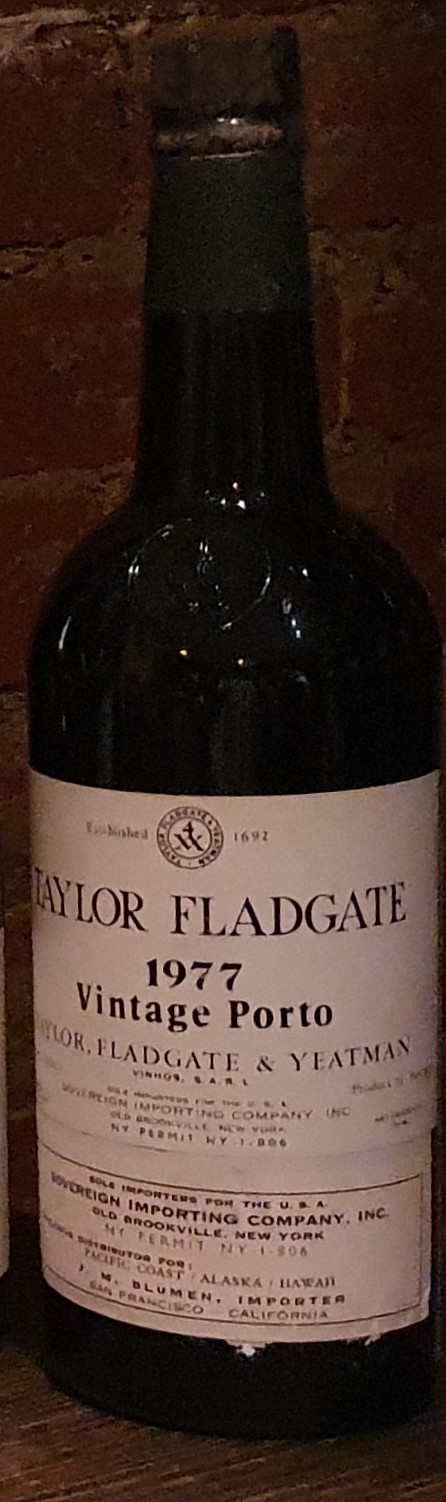
1977 taylors VP
1977 Taylor Fladgate Vintage Port
Portugal. Memories came flooding back after this wine was unmasked; it was the first Portuguese VP I ever tasted, and I instantly purchased one bottle despite my meagre salary. That bottle was opened in mid-2005 – “rose-petal & raisin & Turkish delight, high alcohol, huge power- another 20 years”.

Sixteen years later…. ruby with some brick, not the deepest, but with a mix of red, blue, black, purple fruits; fresh, fleshy, ultra-supple, clean spirit, almond notes, spices and rich dark chocolate. Its owner informed that a three-hour decant did the trick. This wine looks indestructible, and its complexity was a delight.

Drink to 2040, and 95 points

Two different Port styles, two countries

2000 graham's vp

2000 Graham’s Vintage Port 20%
Cork in great condition, and the wine has a youthful deep crimson colour; bracingly fresh and floral raspberry and faint musk; palate with rich cherry liqueur and blue fruits ; terrific calibre of spirit, chalks and almond; has entered a decent drinking stage of a long, long, life. Graham’s reputed to be at the sweeter end of Portuguese VPs- but there were no complaints at the table.

Drink to 2040, 93 points – with more to come.

1933 para

1933 Seppelt Para Liqueur Port
1933 merely represents the oldest material in this barrel-matured tawny blend, which was released around 1962. At that tender time, there was no requirement to list alcohol, and its composition is likely to be some mix of grenache, shiraz and Mataro, with an average age guessed at 25 years.

There is the unmistakable squat bottle; but the colour did not show the tell-tale Seppelt khaki/green. It revealed more vanilla characters than expected for this style. However, it was fresher than several previous examples, and showed an array of dried fruits, almond and caramel, with a touch of mocha. Aged Barossa Valley material, and it’s always a treat to look at some history.

Drink now, 92 points.

A few different ports

1994 Gehrig Family Estate Vintage Port 17.5%
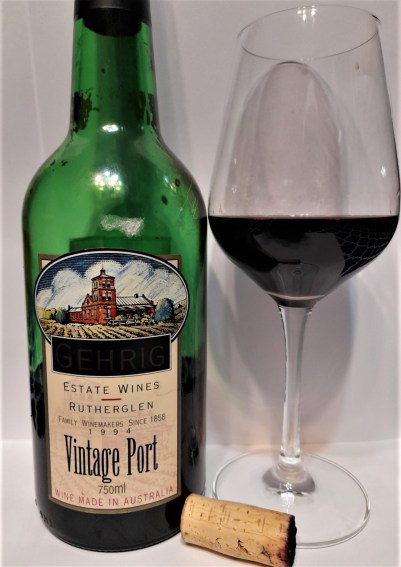
Barnawatha, on the outskirts of Rutherglen (Victoria). A recent very smart $25 auction buy. Although the cork failed to survive the corkscrew and ah-so, all was OK after the usual filtration. From “low-yielding old Shiraz vines”, it’s still a deep ruby colour with blackberry, bramble and sweet brandy vanilla. The palate is mellow and cuddly. There is fruity plum, blackberry and fig to satisfy the most fastidious with enough weight and tannin to maintain interest throughout.  Absolutely at its peak with cork gods indulgence. Terrific, and insanely delicious from a less-well-known producer.

1994 gehrig vp

Drink to 2026, and 91 points

1985 Warres Vintage Port 20%
Three different corkscrews failed to remove the cork cleanly, and plentiful sediment was successfully filtered out.

Ruby with some bricking, but the colour was still  flattering for a 36 year old Portuguese Vintage Port.. The wine is very stylish with fragrant mocha, fig, ripe red and black fruits and smart integrated mellow spirit. The palate adds almond notes, spices and the fresh as well as dried fruit flavours persist.

Drinking dramatically well now – and up to say 2030, and 95 points

1991 Seppeltsfield Para (21 year old) 21%
A single vintage tawny style, purchased last year at auction for $70. Around 40 y/o seems to be my preference in tawny styles; older wines can show extremes, meaning they are impressive but not entirely pleasurable; younger wines don’t achieve all the complexities the style is capable of. But 21 years is enough!

Seppelts (and Seppeltsfield) have unparalleled experience in this style with Para appearing in many guises. Mainly made from Grenache, there is the typical Seppelt khaki colour with a green tint. Beautifully assembled; there are all sorts of nut – almond and brazil with whispers of olive.  Toffee, caramel, mocha, hints of malt, salinity; clean spirit integrated and the end result in is a lush triumph. Rich with depth and acidy preventing any cloying. From a terrific red year in the Barossa

Drink now, and 93 points.