Odds and ends impressions- local, and not

at matteos

2011 Ch Climens
Barsac, 100% Semillon (biodynamic) 20-22 months in oak, 30-40% new oak

Crème brulee, stonefruit, vanilla, ripe but not overripe apricots, citrus. 140g/l rs, but light on its feet, energetic, beautifully balanced. If time permitted, more nuance would come through. A Long cellaring time beckons but no problem tackling now!

Drink to 2035, 95 points

2010 Crawford River “nektar”
90% sav Blanc, 10% Semillon. 116 g/l rs. From Henty (western Victoria), and proof that Crawford River can produce more than their mighty Rieslings.

Very youthful, with a striking overlay of an attractive green nettle character and citrus, with . Pure, bright, and frighteningly youthful, botrytis and citrus, lingering and packed with acidity. The half-bottle emptied rapidly!

Drink to 2030, 92 points.

1997 Stanton and Killleen Vintage Port
Rutherglen, and regarded by the late winemaker Chris Killeen as his best wine. 60% Shiraz, 25% touriga, 5% each of Durif, tinta cao and tinta barocca. 3 trophies and 13 gold medals (when these were hard to get).

When I tasted this wine prior to its release; I instantly signed up for six bottles, and still have a few! I last wrote about it for this site in November 2018.

Dense deep red colour, cocoa, blackcurrant, chocolate mocha, almond, liquorice and blueberry. Masterful. Australia, you bloody beauty!

Drink to 2035, 95 points

2012 Quinta do Noval unfiltered Late-bottled vintage port 19.5%
QDN now declare a vintage every year, with the “less-than VP” wines cascaded potentially into the single quinta Silval, the LBVPs, and onwards.

LBVPs are a curious partway house between VPs, and the deliberately oxidative tawnies. From a single year, they can fall into “ready” vs “worth ageing”, but I have not found “unfiltered” to be a reliable cellaring guide; the key is producer.

Regardless, this excellent-value wine is a bawling infant, crimson in colour, ultra-fresh with floral red cherry, mixed spices and almond spirit; delicious, dry but ultimately straightforward. Tannin too, but not the substantial underlying depth of a true VP.  There’s no need to rush to consume, but its best will be within this decade.

Drink to 2027, 91 points

Two worthy Oz VP styles

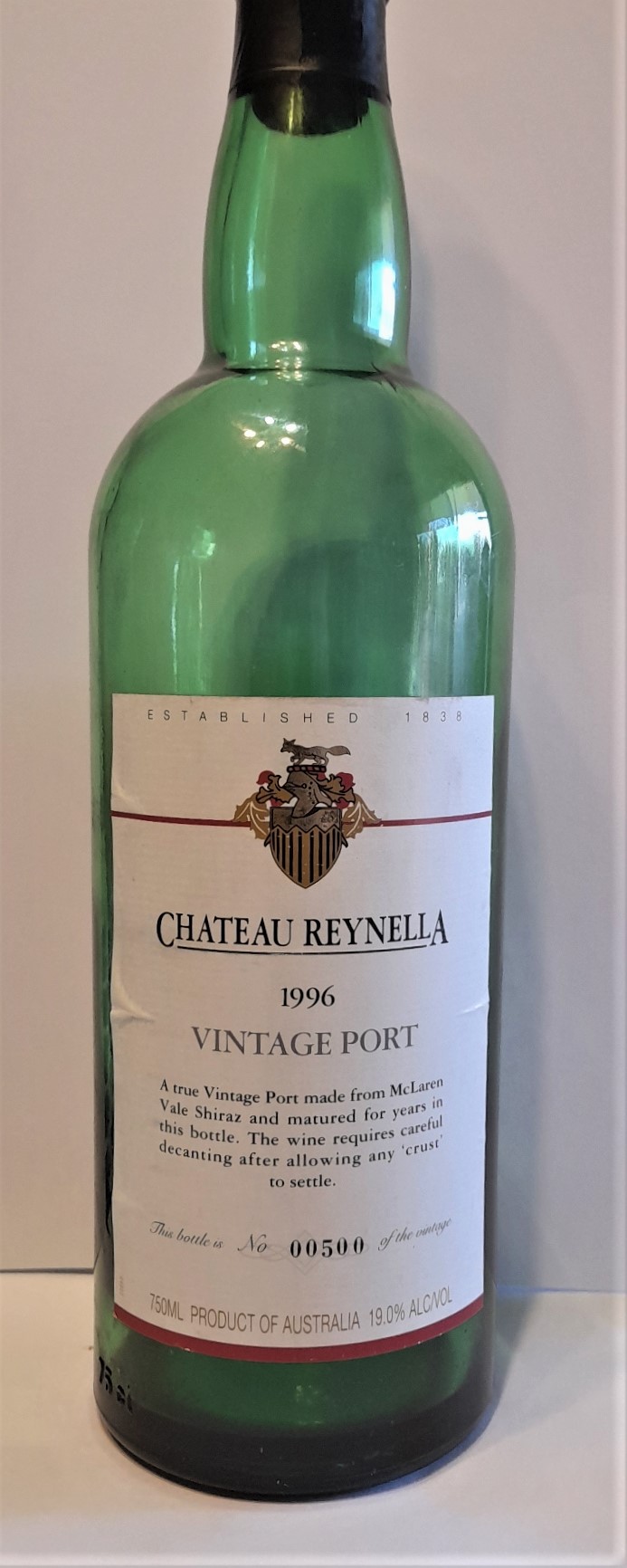
1996 Chateau Reynella Vintage port 19%
Shiraz, McLaren Vale, bottle #00534 “should offer excellent drinking at ten to twenty years of age”

1996 reynella vp

The photo is of bottle #500, which was rejected as being slightly dull. That’s cork!

Deep ruby in colour, with some bricking. Camphor, red berry and cherry, with a slight confectionary character, and definite sweet spices. Served blind, my conclusion was that the wine was Australian, and predominantly Shiraz, with some Portuguese varieties present. With hindsight, I attributed its plentiful spice notes to Portuguese varieties such as Touriga rather than to the high-quality brandy spirit – so there’s another factor to watch for. The palate was fresh, with mixed spices, Swiss milk chocolate, and some creaminess.

Chateau Reynella – now Reynella-  was renowned for the blackberry characteristic of its VP styles (battling with the “rounder” plate of  neighbour Hardys). However, the absence of blackberry pushed my assumption (wrongly)  to a Victorian base. Altogether, the wine was in excellent condition, and passed the “more please” test.

Drink to 2030, and 92 points.

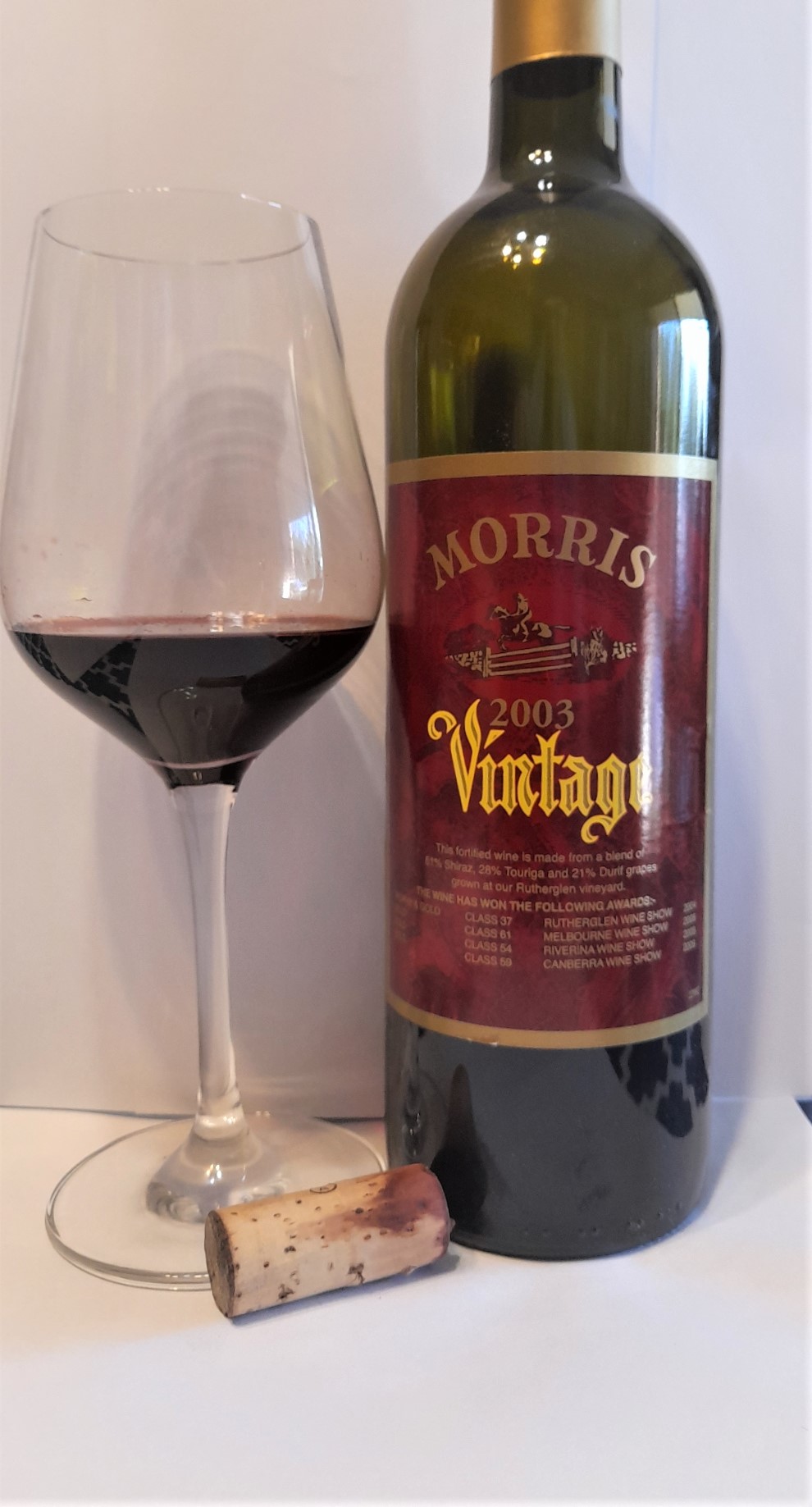
2003 Morris Vintage Port 19%
Rutherglen, 51% Shiraz, 28% Touriga, 21% Durif.

2003 morris vp

A $22 auction purchase last year. Its label shows gold medals at four different shows across five years, a super- impressive result.

Adequate cork. Deep black with some trivial bricking on the rim. Cherry ripe meets blueberry and violets. Sweetness with wafer-fine tannins. Spirit folded in. Seductive, sensuous texture. Concentration with elegance. Supple, bright and fresh, with a lot of time left to mellow. Bargain.

Drink to 2035, 93+ points

Three wines, at least two learnings

1982 S&K VP

1982 Stanton and Killeen Vintage Port 19%
Rutherglen Shiraz, from a vintage rated as 9/10 by the winemaker.

Forty years old , and the cork has held up. Bricky colour, but nothing out of order.
Black fruits, mocha, fresh red liquorice, and vanilla bean; almond and clove spices join in. Light milk chocolate, soft palate. Easy to ask for more.

Drink to 2025, and a resounding 91 points

Warre’s Optima 20 Year old Tawny Port 20%
Portugal, bottled in 2013 (and served blind)

Light khaki colour, and packed with toffee, caramel, vanilla, fruit peel, and citrus. Light on its feet, lingering, everything in its place…except one sensitive taster mentioned mousiness.

This is – fortunately for me-not easy to detect (it depends on mouth pH and other factors), else it would ruin my enjoyment of many fortified wines. Mousiness can occur in non-fortified wines, seemingly more prevalent with no-early-SO2 wines (hello, natural wines again). A brief article by Jamie Goode is here.

I can find mousiness via the “skin test”, smearing it over my wrist and waiting for evaporation. The result can be horrific – I liken it to burnt bacon, corn chips and popcorn with a bitter, harsh and unfortunately persistent flavour. Once detected, it’s impossible to overlook –  I’ve had worse than this wine, but…

Avoid. No score.

2008 Ca’ d’gal vite vecchia Moscato d’asti 5%
Piedmont, Italy (served blind)

Partiallly obvious what this was – the frizzante, slightly sparkling style (around 1.5 atmospheres – Champagne is 4.5-6), the sweetness (90-100 g/l) and obvious grapey muscat aromatic. However, instead of merely the usual refreshing sherbetty and “fun” approach, this wine had much more complexity – chamomile, lime, beeswax/candlewax, a spice-bucket with mandarin citrus. Flavours mirrored this, and while still bracingly vibrant, bonus merit for its surprising cellarability and the exotic souk perfumes, Aged for 5 years in bottle, and look at the meagre alcohol level! Obvious ageing potential here. The producer makes a range; this is the old-vine flagship, No surprise its> $120.

Scoring presents a conundrum – Moscato d’asti is user-friendly, but this was well beyond my expectations of the style. It startled me, and led to some research.

Drink now, and 95 points

Recent misses (and hits)

1968 Moulin Touchais (Coteaux du Layon) Loire Valley
Chenin blanc. A bit of dried apple, but this oxidised bottle provided no pleasure.
1979 Moulin Touchais (Coteaux du Layon) Loire Valley
Similar, but worse. Pretty dead.

These “fails” could not be scored. But Cellartracker shows there are better bottles around.

2004 fonseca
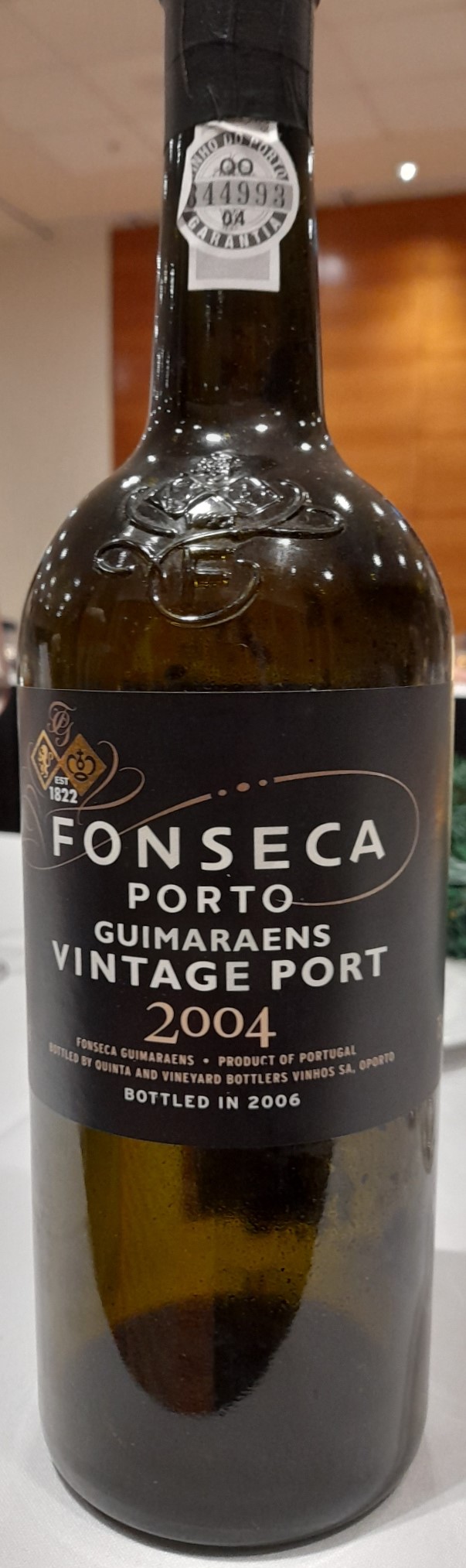
2004 Fonseca Guimaraens Vintage Port
Portugal. Ruby colour with some bricking; dark red fruits and plum, dried fruitcake and spices, almond meal, clean spirit, savoury, grippy, chalky. Maybe a tad light, but very smashable at the end of a long night! Not a generally declared year, and in this year Fonseca also produced a Panascal. The single quinta wines can be excellent value.

Drink to 2030, 92 points

2005 Zind-humbrecht Turkheim Riesling 13%
Alsace. Advanced mandarine colour; apricot and tropicals run riot. Palate is off-dry, waxy, with lime marmalade, and  22 g/l residual sugar. Great fun, but drink up. Alsace is so inconsistent, but when they get it right. Zind-humbrecht sometimes seem alcohol-heavy; this hit the spot.

Drink now, 90 points

2000 Chambers botrytis tokay
Rutherglen, Victoria. Its colour was almost mahogany, but it was still kicking sweetly with orange, toffee, quince,  and dried fruits. It was very grapey, spicy, and varietally not Riesling nor Sauterne-like. I was pondering Frontignac, or something unusual.

Botrytis tokay (muscadelle) is uncommon, but not unique. Chambers in Rutherglen released thi style from 1996, 2000 and 2011. Pfeiffer has also made the style.

Drink now, and 90 points-  as a wine that was difficult to define, but worth the effort.

1977 taylors VP
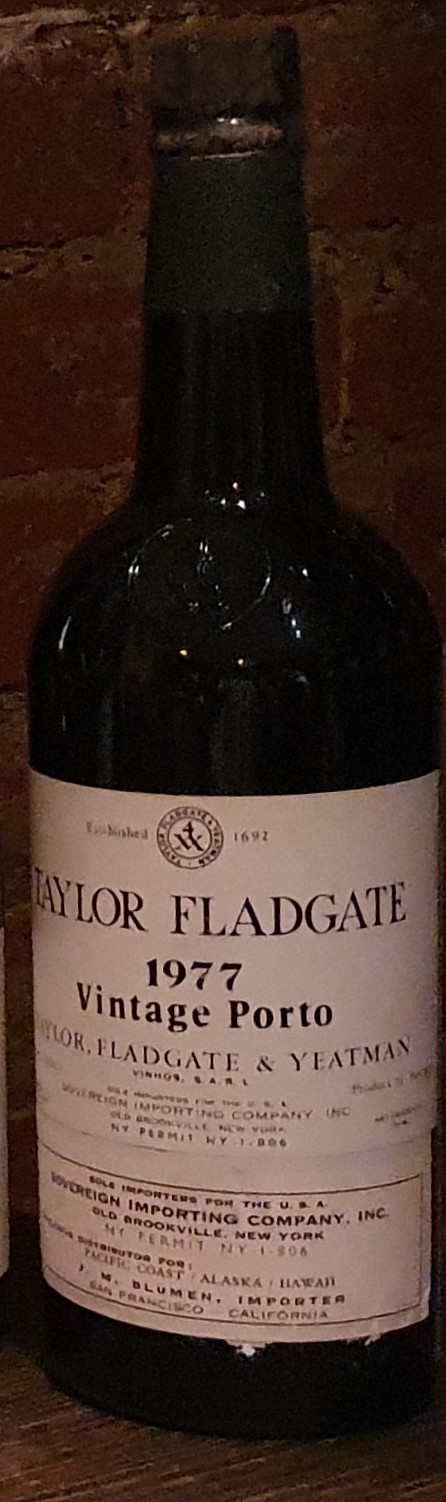
1977 Taylor Fladgate Vintage Port
Portugal. Memories came flooding back after this wine was unmasked; it was the first Portuguese VP I ever tasted, and I instantly purchased one bottle despite my meagre salary. That bottle was opened in mid-2005 – “rose-petal & raisin & Turkish delight, high alcohol, huge power- another 20 years”.

Sixteen years later…. ruby with some brick, not the deepest, but with a mix of red, blue, black, purple fruits; fresh, fleshy, ultra-supple, clean spirit, almond notes, spices and rich dark chocolate. Its owner informed that a three-hour decant did the trick. This wine looks indestructible, and its complexity was a delight.

Drink to 2040, and 95 points

Belated odds and ends

2007 (Forstmeister Geltz) Zilliken Saarburger Rausch Riesling Kabinett AP #8 8%
Mosel. Very good cork. Pale lemon colour, Tropical fruits, petroleum, lime, mint and plentiful spices. Brisk, round, yellow-flesh stonefruits on palate, with a touch of oily smoke and wax. This is light bodied, but the flavours linger strongly.

Drink to 2025 (easily) and 91 points

1981 and 1990 Chateau Rieussec
Sauternes, and predominantly (>90%) Semillon. From a generous friend, steady conversation over a terrific meal made note-taking problematical. However, the 1981 was paler and presented classic barley sugar, citrus peel and marmalade flavours, lighter flavours (as the year was not strongly botrytised); the 1990 was richer, with an almost-burnt almond, orange, honey and spices – altogether in ripping form. Depending on cork representativeness, the 1981 has seen better days, while the “younger” wine was terrific, and if you have any, get stuck in for a hedonistic ride.

No scores, but what a fantastic experience!

2002 morris vp

2002 Morris Vintage (Fortified) 19%
Acceptable cork. Readers know my esteem for the Morris fortifieds – Topaque and Muscats, plus fascination for the Rutherglen reds (especially Durif), but occasionally Shiraz and the odd Sparkling red. 

I’m baffled that the “current” release of the Morris VF at cellar-door is the 2008 – its price a derisory $25. Later releases (some with Durif, Touriga, etc) have looked very swish at wine shows – as has the continued excellent form of the Pfeiffer “Christopher’s Vintage Fortified”.

100% Shiraz, this wine’s label boasts assorted trophies and gold medals. Density, dark cherry, blueberry, camphor, chalk. Fresh and a good meld of fruit sweetness and spirit. Small berry flavours abound and the finish is appropriately quite dry. Sampled over three days, my score varied between 92 and 94 points so…

Drink to 2035, 93 points.

Two inexpensive mature wines

richter s&k

2006 MF Richter Brauneberger Juffer Riesling Kabinett AP #35 9.5%
Mosel, and this bottle was found in a mini-stocktake. Few Kabinetts should be kept this long, so I was nervous. Cork was fine, and the colour was developed but not alarming.

Deep gold, but bright. Apple pie, sultana and raisin, citrus peel, sweet spices and mango. It’s full-on for a Kabinett, with 83 g/l residual sugar. On the palate, the mixed sweet spices are prominent, with redcurrant fruits, honeyed peach, mineral and citrus. The wine is surprisingly fresh, with excellent depth of flavour. Fully mature, it’s honest and a welcome surprise. My previous impression was posted on 15 July 2020 – and a relatively consistent note.

Drink up (it may have been better in the past) and 90 points.

1990 Stanton and Killeen Jack’s block (vintage) Port 18.5%
Rutherglen, Victoria 100% Shiraz. A recent – bargain – $33 auction purchase; rated 9.5/10 by the producer, it has assorted trophies and gold medals while the back label modestly proclaims, “optimum drinking around the year 2010”. A note on its sibling – the 1990  Moodemere –  was posted on 19 November 2018 with a similar note; this wine is slightly better!

Cork broke. The colour is developed ruby with bricking on the meniscus, mocha, camphor, floral, blackberry and sweet well-integrated spirit. Dark and dense, blackberry and red liquorice, mixed nuts, lavender, fine chalky tannins and light coffee. Lots of different aromas and intermittent flavours = complexity, and explain the score, I have many bottles from this producer, but can’t resist purchase when reasonable opportunities arise. Mature, but still vibrant and utterly delicious.

Drink to 2030, 94 points

A few different ports

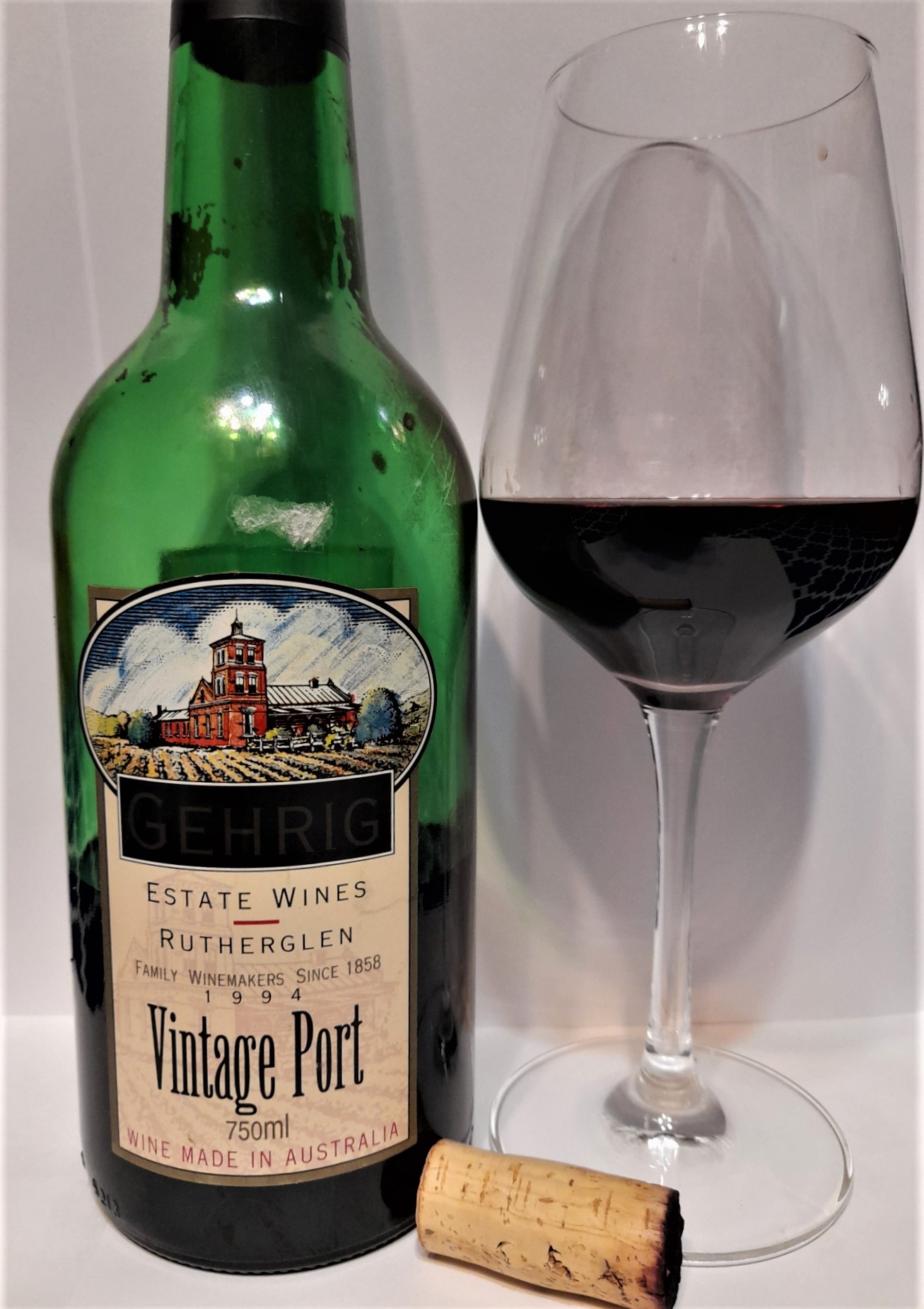
1994 Gehrig Family Estate Vintage Port 17.5%
Barnawatha, on the outskirts of Rutherglen (Victoria). A recent very smart $25 auction buy. Although the cork failed to survive the corkscrew and ah-so, all was OK after the usual filtration. From “low-yielding old Shiraz vines”, it’s still a deep ruby colour with blackberry, bramble and sweet brandy vanilla. The palate is mellow and cuddly. There is fruity plum, blackberry and fig to satisfy the most fastidious with enough weight and tannin to maintain interest throughout.  Absolutely at its peak with cork gods indulgence. Terrific, and insanely delicious from a less-well-known producer.

1994 gehrig vp

Drink to 2026, and 91 points

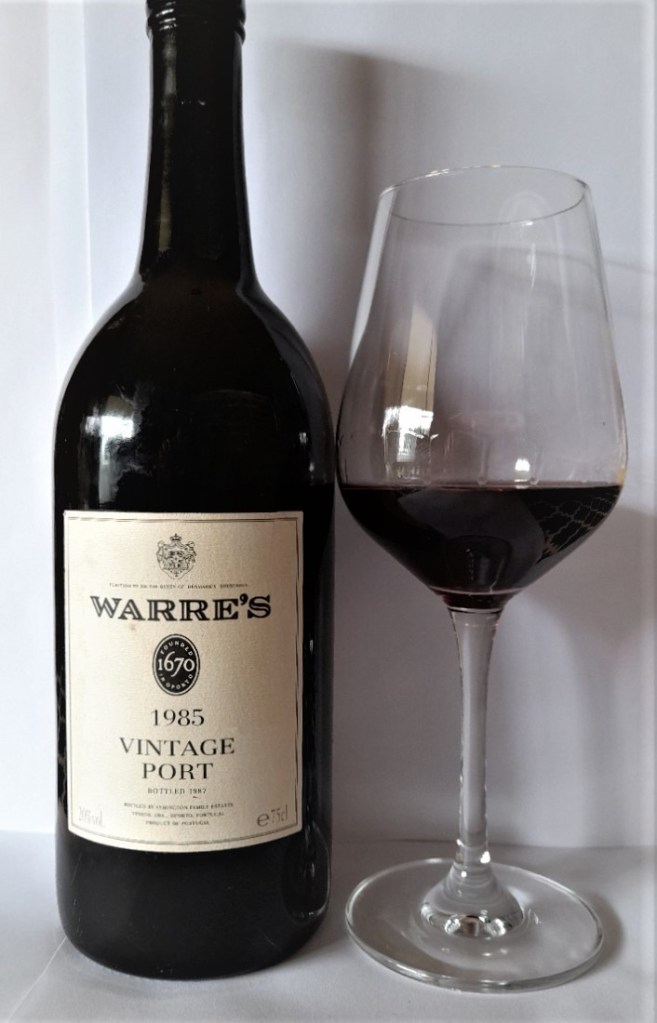
1985 Warres Vintage Port 20%
Three different corkscrews failed to remove the cork cleanly, and plentiful sediment was successfully filtered out.

Ruby with some bricking, but the colour was still  flattering for a 36 year old Portuguese Vintage Port.. The wine is very stylish with fragrant mocha, fig, ripe red and black fruits and smart integrated mellow spirit. The palate adds almond notes, spices and the fresh as well as dried fruit flavours persist.

Drinking dramatically well now – and up to say 2030, and 95 points

1991 Seppeltsfield Para (21 year old) 21%
A single vintage tawny style, purchased last year at auction for $70. Around 40 y/o seems to be my preference in tawny styles; older wines can show extremes, meaning they are impressive but not entirely pleasurable; younger wines don’t achieve all the complexities the style is capable of. But 21 years is enough!

Seppelts (and Seppeltsfield) have unparalleled experience in this style with Para appearing in many guises. Mainly made from Grenache, there is the typical Seppelt khaki colour with a green tint. Beautifully assembled; there are all sorts of nut – almond and brazil with whispers of olive.  Toffee, caramel, mocha, hints of malt, salinity; clean spirit integrated and the end result in is a lush triumph. Rich with depth and acidy preventing any cloying. From a terrific red year in the Barossa

Drink now, and 93 points.

NV Morris CHM Muscat 17.5%

My few, (but select) readers will know my affection for the style of Morris fortifieds – go cruising for my thoughts on the amazingly affordable Old Premium (rare) muscat, or the 1986 Muscat. Morris – in Rutherglen Victoria – has large stocks of old fortified material, but it’s not solely age that matters – even though the holding cost, maintenance and evaporation are issues – the key is retaining life, vitality, and freshness where judicious blending with younger material is a dark, and underappreciated skill.

The CHM – named for winemaker David Morris’ father, mentor and legend Charles Henry (Mick) Morris – is a cellar-door only wine, pitched at $500 per half bottle (less for Club members) and I easily parted with my money after tasting the wine. Apparently only 100 half-bottles are released annually (mine was #70), and is described by David Morris as “the best muscat that I can make”. It shows love can triumph over the accountants!

If the Rutherglen “rare” classification is around” the 20 year mark – what is the next level? – Antique? Museum? Pinnacle? Icon? And despite more than 300 g/l of residual sugar, the acidity ensures a clean, refreshing wine.

Is there a food accompaniment? Not for this wine – give it some contemplation, let the flavours tantalise, and just smile and nod in appreciation and respect for the style, and the wine.

nv morris chm muscat

It’s a dark, dense mahogany colour, sticking to the glass. Floral raisin, mocha, toffee, rose-petal, cardamon and other spices. The very intense palate joins with a cascade of salinity, dried fruits and roasted mixed nuts on a silky, endless finish. The fortifying spirit is seamless.

Like all wines that stick in the memory, it has the magic that insists the bottle size is too small, and there just isn’t enough. A true “desert island” wine, it seems cruel to provide a score.

Drink now (if you can find it) and conservatively, 98 points.

1993 Stanton and Killeen Vintage Port 18.6%

90% Shiraz, 5% Durif, 5% Touriga. Rutherglen, Victoria
This vintage was rated very highly by the late master winemaker Chris Killeen from Stanton and Killeen – it won 5 trophies and 13 gold medals when these were hard to come by. “Will mature and improve in bottle for up to 25 years” claims the label – accurately!

1993 S&K vp

Deep ruby with some bricking. Aromatic, violets and a hint of mint, wafts of sweet mixed spices. Mellow, rich and lush – camphor, raspberry jam, sweet dark fruit – mulberry, blackberry, raspberry and excellent brandy spirit. With more time, greater red fruit characters emerge – red cherry and red licorice; this renewed complexity and the wine’s memorable flavours linger, forcing a score upgrade!

Altogether integrated and delicious, on a lovely plateau. Outstanding.

To 2025 (or longer), 95 points

More recent splashes

2014-5 doisyblanck heggies1983 vps

All served blind – it may seem premature to serve young Barsacs, but these proved wholly delicious, with enormous capacity to live and improve for many years. Cellaring estimates are conservative, but no-one is immortal.

2014 Ch Doisy-daene 13.5%
Barsac, 100% semillon 144g/l rs; The website is very detailed, and I tasted this wine a few months ago with similar notes.  Enormously aromatic; tropical fruits, pineapple rind, touch of vanilla essence, green nettle, botrytis. Exciting, fine creaminess, honeyed with lovely racy acidity, some cashew oak,  spotless.

Drink to 2030, 93 points

2015 Ch Doisy-daene 13.5%
Barsac, 100% Semillon, 136 g/l rs. A slightly greener fruit profile than the wine above, ripe pear and more stonefruit white peach (and botrytis); this wine already seems more rewarding, with impressive fine honeyed texture, greater- but still balanced-ginger-spice oak, and richer depth and mouthfeel, with supporting acidity.

Drink to 2035, 94 points (and more to come)

2005 Paul Blanck Furstentum vendanges tardives Gewurtztraminer 12.5%
Alsace, screwcap! Half-bottle, purchased at the winery, from a special site. Light gold in colour, it displays musk, roses and oiliness. The palate is moderately sweet, but its persistent, varietal with a winningly appealing citrus twang

Drink to 2025, 92 points

2007 Heggies “242” botrytis riesling 8.1%
A half-bottle located after my records showed I had none left (previously reviewed on this site). Amber/light copper coloured. The 242 refers to the amount of retained sugar, which comfortably sits at the BA level, and from a site in the Eden Valley, South Australia – where mostly dry Rieslings are produced, but often a small amount of botrytised Riesling. It’s packed with orange essence and marmalade, very decadent; on the viscous palate there are apricot and stonefruits. It’s still fresh, ultra-sweet -but still balanced-  some hardness is emerging, so drink sooner, not later.

Drink to 2022, 92 points

1983 Stanton and Killeen Vintage Port 19%
Rutherglen, and a hot dry year. A solid bricky colour, but browning only on the rim. Ripe and sweet with some raisined fruit, iron and liquorice, sweet, chalky, lively but a little warm. But it’s 35 years old, and 100% shiraz. On the evidence of this bottle, no further improvement is likely, but it’s still a satisfying and rewarding wine

Drink now, 88 points

1983 Dow’s Vintage Port 20%
Portugal of course. Paler colour than the wine above, showing a more interesting fruit expression of blue and red fruits, and milk chocolate covered almonds. The palate is fine and detailed – and medium-bodied, but also suggests the acidity will hold while the fruit recedes. At this stage, the tannin is balanced, but every bottle will be different.

Drink to 2025, 92 points