Two local, two not

2003 Ch La Tour Blanche 13%
Sauternes.
Deep gold colour; then citrus, minerals, quince, marmalade, apricot and stonefruit. Palate shows all this, plus some frangipani and balanced bitterness. Oak becomes more prominent with time, and a little more acidity would be welcome, but given its age and monster VFM, this was a damn enjoyable drink (and an insane 178 g/l rs).

Drink to 2028; 92 points

Seppelt Show Vintage Port GR151/153 20%
Barossa/McLaren Vale (tasted blind)
Bricky mature colour; VP style with high for style alcohol. Mellow, mocha, brown spices and nutmeg, liquorice and yet still with crispness and plenty of tannin to hold interest. Reasonably sweet, but lots of savouriness too. Hmm, first thought was Oz, but the ripeness, spirit quality, tannin and alcohol wrongly diverted me to Portugal. I punted on around 1990. The reveal proved it to be 45 years old, and a label covered in bling. Excellent wine (and I was fortunate to taste the slightly better bottle).

Drink to 2030 – 93 points
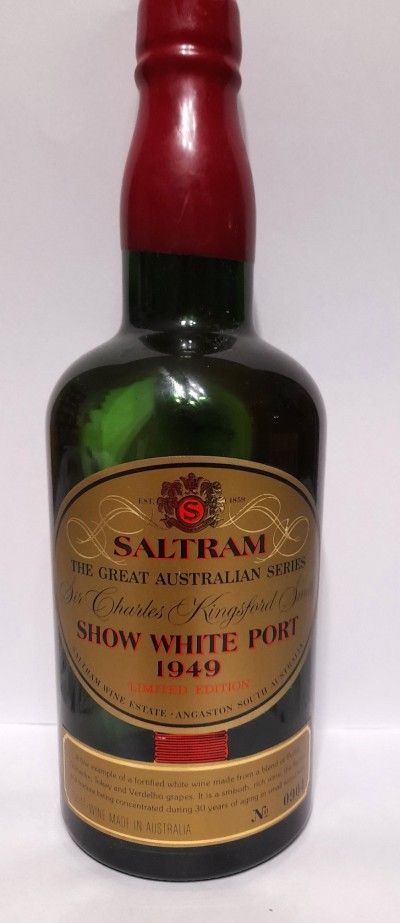
1949 saltram white port

1949 Saltram Show White Port 19.5%
Barossa Valley, Bottle #0934 (tasted blind)
Bricky, lots of raisin, and a spice-bucket with rancio, and plentiful vanilla, so a Tawny style. High quality spirit. My guess was 20 years in oak. The reveal was that this wine spent 30 years in small oak,  released in the 1980s and unusually was a blend of Pedro, Grenache, Takay and Verdelho, so based on white grapes. A curio for sure, The back label contained a lot of information about aviator Sir Charles Kingsford Smith, but further wine detail was scanty (plus the cork was very ordinary).

Drink now, 90 points (more if you like the style)

2000 cockburn canais

2000 Cockburn Quinta dos canais Vintage Port 20%
Portugal, and another producer I can’t recall tasting before (a 1955 tried in 2015 was faulty).

Dense colour, then fig, plum, dark cherry plus voluminous spices. Concentrated, fruit-driven with moderate tannins, blueberry, Sweeter than most Portuguese, but with the power to thrive. Just some “burnt” characters for me that didn’t bother the other tasters one jot. Plenty of time ahead.

Drink to 2035, 92 points
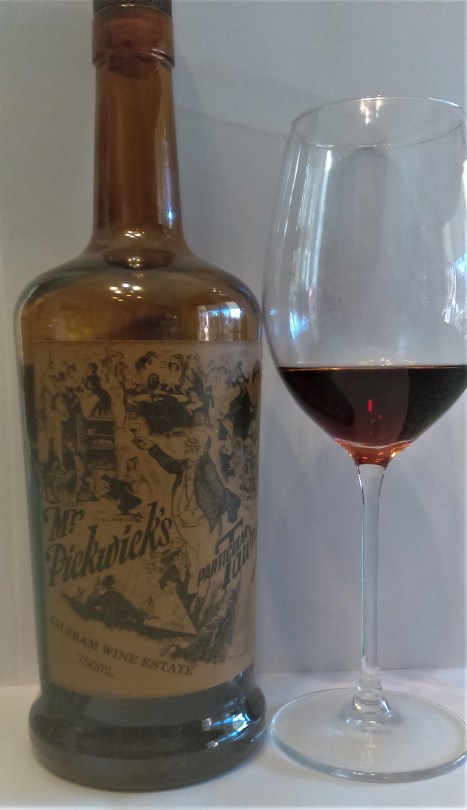
NV Saltram Mr Pickwicks Particular Tawny 19.5%

The label looks fussy and old-fashioned with its portraits of old men in the period costume of the 1830’s. The back label alludes to Charles Dicken’s (first novel) character the Mr Pickwick, founder of the Pickwick Club and his (light) adventures.

Dickens always has memorable characters (albeit often “flat”) Here’s a nice quote…
“’I assure you, my good friend, I have more money than I can ever need; far more than a man at my age can ever live to spend,” said Mr. Pickwick.
“No man knows how much he can spend, till he tries,’ observed Mr. Weller.

There’s a conflict between this homage, and the need to find a market, not easy with a fortified, and becoming even more difficult. I can’t believe I’m begging for label tweak, since this wine is readily available, retailing around $60, and represents such very good value for its quality.

nv saltram mr pickwick tawny

With an average age somewhere between 21 and 25 years (internet searches vary), this is old material – assume its Shiraz-based and from the Barossa Valley.

Amber colour with a khaki rim, its packed full of all the Christmas cake dried fruits, nuts and peel imaginable; fig, citrus, toffee, spices. Exquisite brandy spirit plays its part, and it ends with vanilla and lusciousness. There is obviously old material here, but it’s but amazingly fresh, smooth and decadent.

Oak, and vanilla presence makes a greater contribution than I would prefer in a perfect world, but there is no denying the concentration, power and grace that make it difficult to resist reaching for more.

Drink now (it will happily last a few weeks after the cork is removed), and 93 points.

Mixed drinks, recent short impressions

2003 Joh Jos Prum Wehlener Sonnenuhr Riesling Auslese 8%
Very pale lemon in colour, there is an array of the usual petroleum (not kero), and faint smokiness mixed with tropical fruits of mango, passionfruit, a pull of citrus, flint and warm spices. The palate is sweet, fresh, viscous  and long-lasting. The wine got better as it sat in the glass.

Its not easy to resist the style, one of my favourite Mosel vineyards plus the combination of freshness and bottle-aged complexities. It’s a triumph of old vines and winemaking nous over the heatwave European 2003 vintage.

95 points, and drink to 2030.

2014 Chateau La Tour blanche 14%
Sauternes (83% semillon, 12% sauvignon blanc, 5% Muscadelle; 130 g/l r/s)

A great VFM Sauternes producer, and a wonderful result from an excellent vintage. Light gold in colour, the wine displayed vibrant nettle, stonefruit, pineapple rind and bright lemon icing sugar. The palate showed more barley-sugar, and some vanilla pod to add to the aromatics. Rich, sweet, balanced with much more pleasure to cover over the next ten to fifteen years.

The range of fruit flavours, the complexity and balance makes the wine a delight.

94 points, and drink to 2030 (at least)

2014 Chateau Lafaurie-Peyraguey
Sauternes (93% Semillon, 6% sauvignon blanc, 1% Muscadelle)

Served (masked) at the same occasion as the La Tour Blanche above, this wine looked darker in colour, showed greater – and simpler- tropical fruits, and custard apple. The palate was sweet, fresh and supple, but with greater oak presence, some hardness, and some bitterness. Time may help, but the contrast did not help its cause.

87 points, drink to 2023.

1952 Saltram Pinnacle selection Show Muscat 18.8%
Barossa muscat, stored in small oak, believed to have been bottled sometime in the 1980’s.

Colour (after decanting) was a bright khaki, and the wine showed caramel, toffee, mocha. Some raisin character, and a degree of vanillan oak and rancio.

Served masked as usual, the mix of attributes made it difficult to decide style between muscat and tawny; the lushness pushing for muscat, the rancio pointing to tawny. Revealed as muscat,  the wine itself was excellent, and a nice piece of Barossa history.

90 points, drink now.

2003 Taylor Fladgate Vintage Port
A devastatingly hot year in Europe, but most Port producers declared the vintage. Cork – or storage- struck; the bottle I sampled was strong, powerful in colour, but the flavour impact was tertiary mixed mocha and coffee grounds; and the wine looked plain, young, raw and lacking finesse. A hasty look at remnants from another two bottles opened showed more expected fruit flavours of violets and dark cherry, but time and the amount left conspired against further contemplation

Not rated, but I will have other opportunities!