From two recent dinners

1995 Christoffel-berres Erdener Pralat Spatlese Riesling 8%
Mosel, germany

A glowing deep yellow with some amber, indicating age (early 2000s). Cumquat, honey, petroleum, camphor, smoke, high residual sugar, low alcohol. German for sure, Spatlese at least, perhaps Auslese? Palate is luxurious, and beautifully balanced. Revealed as older than my guess. It’s a magic site, and the label is charming.

Drink to 2030, 94 points

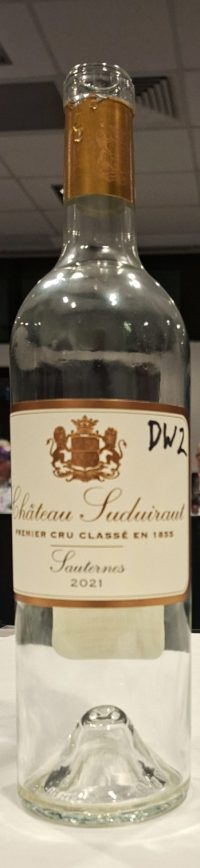
2021 Ch Suduiraut 14%
Sauterne, France

Vanilla, vitality, rich and pure botrytis. Apricot, citrus, quince, with some very attractive green notes in the mix. Palate is opulent, viscous – all quality here and sublime length. But young – 2017? Unveiled, it turns out even younger, already approachable without guilt, but a long life beckons. Very little was made due to a combination of frost and mildew – but this is brilliantly assembled. 100% semillon, 138 g/l rs.

Drink to 2045, 94 points

2004 Stanton and Killeen fortified 18.5%
Rutherglen, Victoria, 8 gold medals and 4 silvers
30% shiraz, 21% touriga, 19% Durif, 10 tinta cao, 10%tinta roriz, 10%tinta barocca

It seems I reviewed this wine in 2018. Tonight, the cork has done its duty;  the wine is densely coloured with just some trivial ruby bricking on the meniscus; it’s thriving with dark cherry, raspberry, blueberry and sweet spices; it’s soft, civilized, and balanced with a mix of sweet and savoury; talcy tannins, fine spirit and fruitcake spices now with plum and blackberry joining in – combining very satisfactorily. And there’s no rush.

Drink to 2034; 93 points

Surprises recently

1972 Gayfers Durif Port
Rutherglen (Chiltern)

I wrote about this wine in June 2017, but this time – served blind- it presented very differently. Such is life, when dealing with a 50-year-old wine from a winery that made way for a highway. This time around, I was puzzled by the tawny, aged colour with an amber rim; sweet fruited (pulled me to Australia as its origin) with dried fruit peel and a lot of vanilla (pulled me away from a VP style), but missing the rancio/acidy to point at a tawny. Regardless, it provided genuine drinking pleasure and bafflement after the reveal.

Drink now (or sooner, based on this bottle) – 88 points

2007 Ch de fargues 13.9%
Sauternes
This was a hasty replacement for a 2005 Ch Doisy Daene that was a bit limp; faint TCA was suggested, but it looked quietly oxidised to me which robbed its vibrancy– cork frailty in both instances. But the de Fargues was a brilliant backup. Not easy to find in Australia, but the few bottles I have tasted have been memorable.

This was a deep burnished gold colour, with an unmistakable Sauternes origin- apricot, yellow peach, vanilla icing, orange blossom; lively with spices and bitter orange notes on the syrupy palate. Power with balance. A sublime and lengthy finish. While ravishing now, I would drink up if you are fortunate to have any bottles handy.

Drink to 2023, 95 points

Three styles, three countries

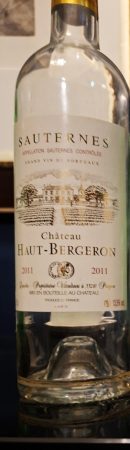
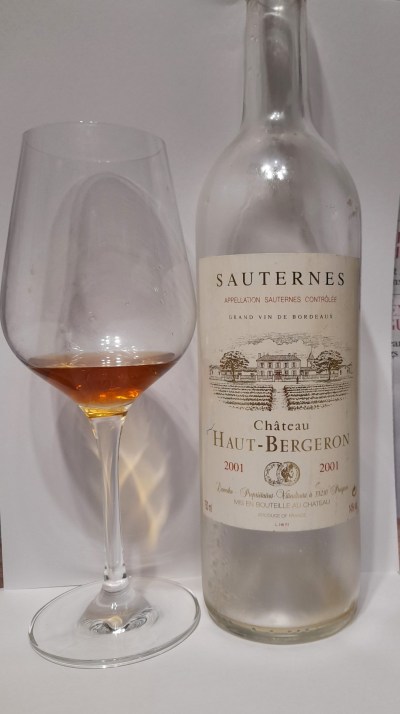
2001 ch haut-bergeron

2001 Chateau Haut-bergeron 14%
Sauternes

Deep gold colour with some foxy/copper notes– and some harmless sediment; no mistaking the origin – marmalade, creme brulee, mixed tropical and dried fruits, VA but no dramas for this style; the palate Is packed with citrus and honey, certainly some integrated oak and with abundant acidity that left most of us reaching for a refill.

Haut-bergeron is not classified, but this wine (from an excellent sauternes vintage) provided great value, longevity and pleasure.

Drink to 2030, and 91 points

2014 Konrad Noble Riesling 11.5%
Marlborough, New Zealand

Half bottle, masked, 221 g/l residual sugar. Deep gold colour, this was packed with floral, dusty, spicy botrytis notes, mixed citrus and marmalade. Botrytis has overwhelmed varietal character, but Riesling was deduced by the absence of oak, The palate was very dense and weighty, rich dark honey and citrus.

This wine is drying out, so drink up. 88 points

2007 Taylor Late-bottled vintage port 20%
Portugal

Served blind – Ruby colour with some browning on the rim. Blueberry fruits, some nuttiness and spice but also some detracting rubber/tar. Palate is better, with blue, then a range of red fruits. Good spirit and fine but low tannins. When unmasked, it seemed older than the actual vintage. Sound but unexciting.

Drink sooner, but before 2030, 87 points

Two enjoyable sweeties

2009 ch raymond lafon

2009 Ch Raymond-Lafon 13.5%
Sauternes, 136 g/l residual sugar. Half bottle

80% Semillon and 20% Sauvignon Blanc, aged in new barrels for three years. Bright deep gold colour, pear-juice meets apricots, white peach and marmalade, backed up with a solid citrus line. Honey and spices resound on the opulent palate with some almond and marzipan. Voluptuous, fresh and morish. A reliable bargain VFM producer. Authentic.

93 points, and drink to 2027 while its fresh. Full bottles will have a longer life span.

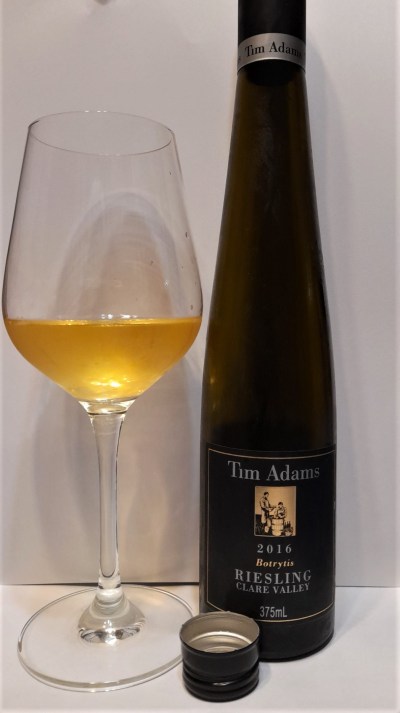
2016 tim adams botrytis

2016 Tim Adams botrytis Riesling 11%
Clare Valley. 87 g/l residual sugar. Snapped up this half bottle recently from my local DM for $13.

Light bright clear gold colour; apricot and yellow peach, dusted with cinnamon and ginger; palate is syrupy/viscous but beautifully fresh with a zingy citrus finish. Good mix of botrytis while retaining varietal character. Really doesn’t need more time and will match up a treat with a fresh fruit platter.

Drink to 2027, and 90 points

Chateau D’yquem

d'yquem

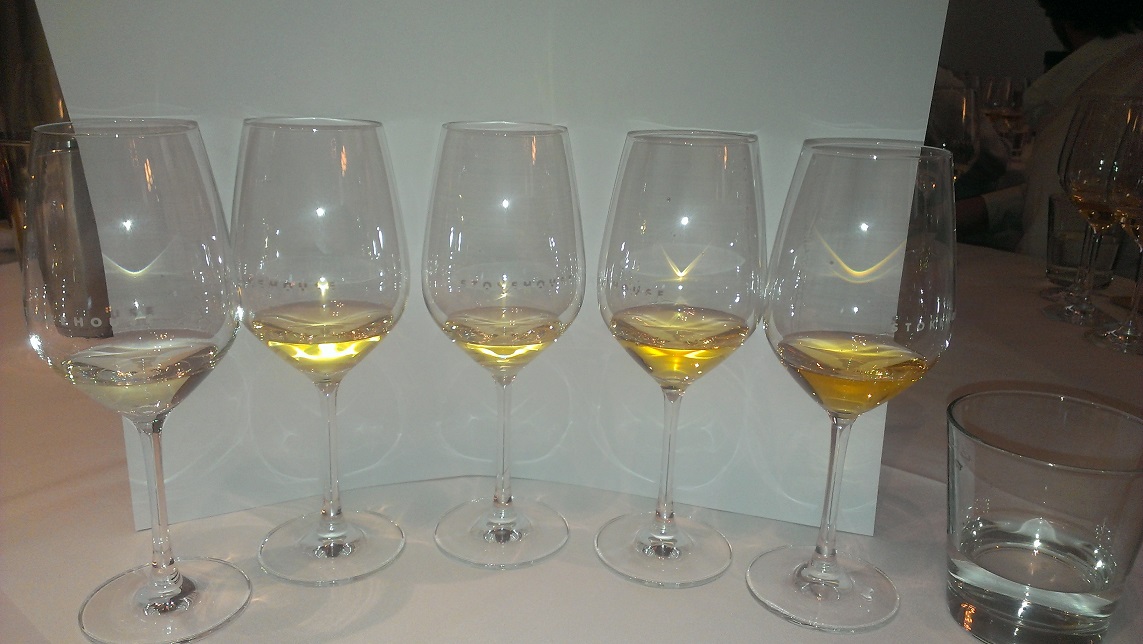
Another tasting thanks to Sommeliers, Negociants, Stokehouse and D’yquem’s Sandrine Garbay (oenologist) and Jean-Phillipe Lemoine (Marketing).

D’yquem is its own legend, and not a wine I can readily afford, and seldom try. I have vivid memories of the 1989 tasted in May 2013, and the 1975 tasted in June 2014. This hints at their longevity. The property in Sauternes is large, planted with Semillon and Sauvignon Blanc. Its elevation means it is prone to morning fogs, and then botrytis. Yields are very, very low. There is a mix of soli types and typically there are 4-5 different picks over a 4-7 week time-frame. This means there are often 25 batches to base blending decisions on. Fermentation is with indigenous yeasts, and in 100% new, fine-grained, medium-toast barrel- Seguin Moreau and Taransaud are mainstays .No malo. Lots of declassification of batches (and some years no d’yquem is released – such as 2012). Light racking. Light fining, light filtering.

The sweet wines below had an “airiness” in common, a texture that was subtle, and extreme persistence. Enormous concentration and the oak contributes to complexity without being obvious. And with enough acidity to avoid any semblance of flabbiness. Richness without fatness. Thematically, consider Chateau d’yquem to be a first growth, and its pricing doesn’t seem so extravagant. But money is still a factor for most people. Easy to like, hard to describe, as their class is thoroughly embedded.

The “dry” wine “Y” (formerly Y’grec) is now made from early picked Sauvignon Blanc, with some just-botrytised Semillon added. These are also very age-worthy, but can go into a dull phase after 3-4 years and remain there for a few years, before re-emerging. (this pattern is similar to Mosel wines)

2013 “Y”

(only 1 pick, 75% Sauvignon blanc, 25% Semillon, 7 g/l rs). Very pale, pungent notes of pear, apple, botrytis spices and some attractive bubble-gum. Stone, grass, nettles also on the palate, finished with crisp acidity. Angular and attractive, but will be better with time

Drink 2020- 2030, score 92+

2000 “Y”

(2 picks, 9 g/l rs) Some more colour, with a less voluminous bouquet, in the apple and honey style, It has a round, soft palate with more grip and warmth than the 2013. Would be very comfortable with many different foods

Drink now-2025, score 94

2013 d’Yquem

(70% Semillon, 30% sauvignon blanc, 13.2%, 150 g/l rs). Very pale, baked apple, peach-skin, and all comes together on the sweeter-than expected palate, Airy, and just at the start of its life.

Drink 2020-2040, score 96+

2005 d’Yquem

(13.9%, 140 g/l rs) Described by Sandrine as a “classical year, easy”. 5 picks. Quinces, almost some mint and exotics. Feathered, fine texture, chewy and elegant, ultra-refined. Fresh, concentrated and relaxed. At a lovely stage already, but absolutely plenty of time and improvement ahead

Drink now-2035, score 97+

1996 d’yquem

(125 g/l rs). Described as a textbook year. 5 picks. Some VA showing om top of,tangerines and scorched barley sugar but there is faint bitterness and some warmth too. But density makes this still pretty, and still fresh.

Drink now – 2025, score 94

One dry, one sweet

2003 Seppelt Drumborg Riesling 12.5%

From Henty in western Victoria. Screwcap, so unmodified by any cork influence, the wine is very pale light straw in colour. Abundant lemon/citrus aromas absolutely vibrant acidity. Pristine, high class, indestructible, delightful. Flavour without fatness.

seppelt rr 2003

Drink anytime over the next 20 years, score 95

2001 Ch Filhot (sauternes)

Light bright straw, and immediately obviously from Sauternes (or Barsac). Pears, spices, citrus and some grip. Some botrytis dustiness. About balance not power. Fresh, lovely drinking. So it seemed likely that the wine was from a “lesser” vintage such as 2002 or 2004. When revealed, it made more sense. The fantastic year of 2001 had bolstered the usual Filhot style

Semillon dominant with some sauvignon Blanc and muscadelle, Filhot is not a property that comes to mind when looking for quality (although known VGV); this wine was a resounding success, and proved that I had unfairly maligned the Chateau.

Drink now – 2020; score 94

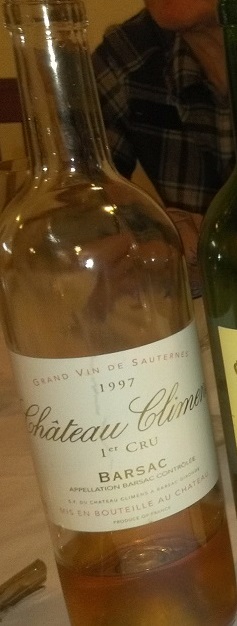
1997 Ch Climens

1997 ch climens

Gold in colour, apricots and oranges and cream, citrus and spices. 100 g/l residual sugar, so it’s not a blockbuster, nor overwhelming in sweetness. Clean, all is in balance and the wine has a rich mouthfeel with genuine palate length. Faintly dry finish suggests it’s ready to drink, although the maker’s track record suggests it could surprise by lasting (much) longer. 94= points