Two (masked) Euro surprises

2010 Donnafugata Passito di Pantelleria Ben Rye 14.5%
Sicily, Zibbibo (muscat) and 195g/l residual sugar; partly air-dried to concentrate the sugars.

Deep orange/gold colour, and first impressions ran “muscat, floral, apricot, ripe and vital; super-sweet, loads of spice and length”. Apricot dominates with a mix of jam, tinned fruit and juicy ripe fresh apricots. Engaging viscous texture, with honey and vanilla bean. Having had this style once before, this was instantly identifiable. My guess was around ten years old.

This is not the most complex sweet white wine I have ever encountered, but it possesses intensity and memorability. Clearly it can take some bottle age, but won’t really change, so get stuck in.

Drink to 2028, 93 points.

2006 Ch Filhot 13.5%
Sauternes, 60% semillon, 36% sav blanc, 4% muscadelle. At least 2 years in barrel, 1/3 new

Deep gold colour, with an array of apricot, citrus, vanilla and tropicals. Obviously Sauternes style, and also absolutely at its peak, with a winning mix of fruit, freshness, and mouthfeel. I guessed it was around fifteen years old. I was surprised that it was Ch Filhot, which I generally describe as lighter, affordable but less complex and age-worthy. This was very smart from an average vintage, and outperformed my prejudices!

Drink to 2028, and 91 points

One dinner – four from Europe

First up, Australian winemaker John Vickery died recently. He was a gentleman, an expert winemaker and had huge influence on winemakers here. Riesling was his forte, with many memorable wines made at Leo Buring,  Richmond Grove and the eponymous Vickery label. He kickstarted my interest in wine, and my early tribute is here.

A recent dinner I attended had a plethora of interesting wines (all served blind), and I will try to describe a few.

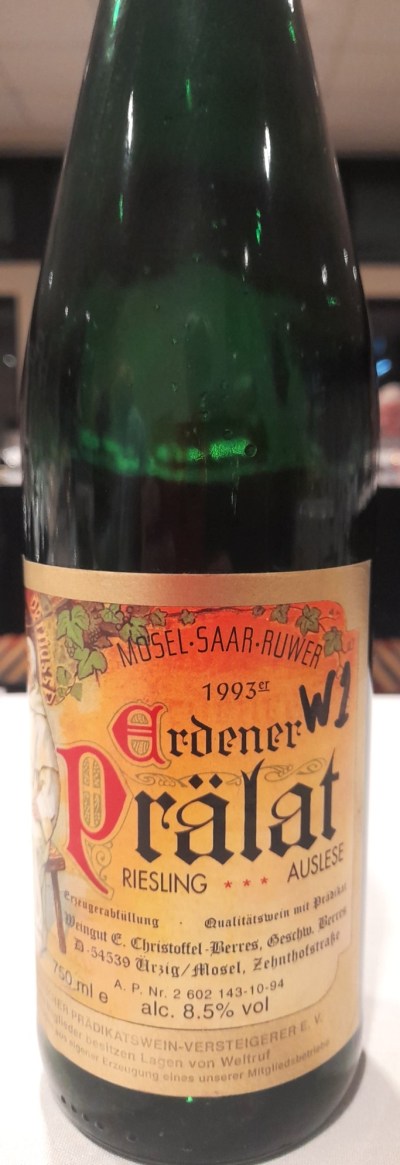
1993 christoffel EP

1993 Christoffel-Berres Erdener Pralat Riesling Auslese*** 8.5%
Mosel. Light gold colour- petrol, tropical fruits, blackcurrant. Creamy palate, fresh with terrific balance. Lovely wine from a great site in Mosel. Wines are no longer produced, but there is (or was) a fair stock of wines from 1987-97. This was apparently an auction wine, and the *** indicates greater richness in the style.

Drink to 2033, and 93 points

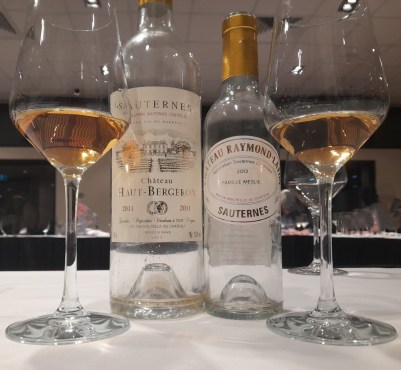
2011 2013 sauternes

2011 Ch Haut-bergeron 13.5%
Sauternes. Really Interesting to see this after the 2001 tasted recently.

Gold colour, bursting with vanilla, apricot, pineapple rind, Palate is slinky with vanilla bean, marzipan nuttiness and cumquat. Ripe, fresh, dense and dramatic. At least a decade in front of it. Oak plays an important structural role here, but the fruit is winning.

Drink to 2035, and 93 points

2013 Ch Raymond-lafon 13.5%
From half bottles – Slightly duller colour, with nettle and herbal elements. More savoury than the previous wine, palate showing guava, pineapple and passionfruit. Several winemakers present suggested some ignoble rot (aspergillus/penicillium) but in the amount involved won’t affect really enjoyment except for the truly ultra-fastidious.

Drink to 2030, 91 points

2000 Fonseca Vintage Port
Portugal

Sketchy notes made under time pressure “deep ruby colour, almond, spirit a bit hot; red and dark fruits, mellow – Portuguese – early 2000s”. A second bottle was not as good, and the third bottle had vanished before I could assess.

A bit disappointing for Fonseca on the night– drink to 2033, and 90 points

Very mixed masked sweets

sweeties april 2023vitsoc april 2023

1976 Deinhard Winkeler Hasensprung Riesling Auslese
Rheingau.

At first sight, there didn’t seem much hope of drinking pleasure (it looked like an old fortified). But it smelled like a Gewurztraminer, laden with spices, honey, apples and a touch of cork (not taint, just age). The palate was very sweet, enough to move its origin to Germany, but age a puzzle. It tasted grapey and reminiscent of muscat of Alexandria. Thus the clues mounted. German Riesling, perhaps Auslese back in 80’s? 70s? When unmasked, surprises all around. Past its best for sure, but a drinkable survivor.

Drink now 87 points (and higher if history guides you – up to 90 points)

2005 Tertre de lys d’Or Cuvee d’exception
Sauternes. Diam!

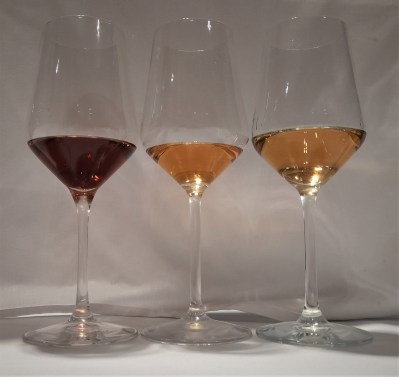
Darker colour compared to the next masked wine. Lemon meringue, vanilla pod, charry oak. Palate showed lemon and marmalade, but much lighter and straightforward than anticipated. Sauternes or Barsac for sure.

Drink now, 85 points

2014 Chateau Suduiraut 13.8%
Sauternes. 95% semillon, 5% sav blanc 150 g/l residual sugar
18/12 months oak, (50% new, 50% one y/o)

Lighter colour than its paired wine; has thrilling nettly/green pineapple and much greater impact overall. Palate is a much more viscous and sweeter with more overt oak impact. This is all class, and one to revel in. Ripe year – 2009? 2014? Botrytis and bursting with stonefruit and spices. Super freshness, length and hedonism already in an immaculate package, but will reward the patient.

Drink to 2035, 95 points now, and more to come.

Three from Europe

2007 schafer-frohlich

2007 Schafer-frohlich Monzinger Halenberg Riesling Spatlese AP#26 7.5%
Nahe (near Mosel), with its cork in good condition.

Golden colour, vibrant redcurrant, musk, spices, marzipan and tropical scents. The palate is viscous and leans into red apple notes, mandarine, honey and is still crisp. Guessing around 75g/l residual sugar, and balanced. Peak drinking now, and is yet another instance of “double-barreled or not-easy-to-pronounce name = bargain price”.

Drink to 2027 and 93 points.

2011 Ch Haut Bergeron (Sauternes) 13.5%
Not in the 1855 classification, but produces some terrific, and underpriced wines. 80-90% Semillon and 10-20% sauvignon blanc, the wine swallows the oak.

Pear, honey, marmalade; obvious, authentic and excellent Sauternes. This is a “power” style, but irresistibly delicious.

Drink to 2030, 93 points

2014 Ch Coutet (Barsac) 14%
75% semillon, 23% sav blanc, and 2% muscadelle. 162 g/l residual sugar! 18 months in French oak barrels

From the ripe 2014, and this is just beginning to give glimpses of its future. It was served as a masked pair with the previous wine, and showed more honeyed notes and finesse on the palate. It seemed less ripe, but showed more lemon blossom. Finer, but at this stage more reticent

Drink to 2035, 92 points now, but more in the future.

Catching up with some wines

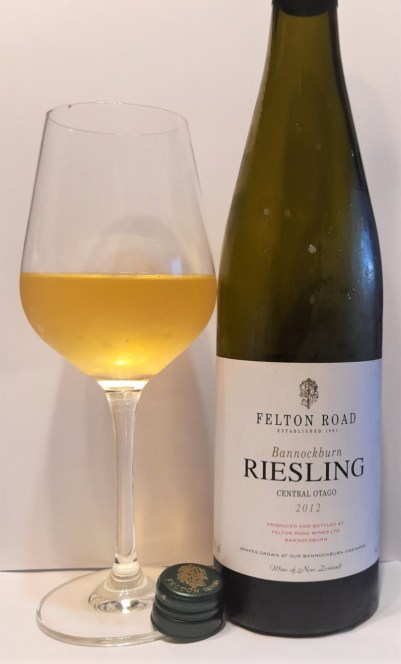
2012 felton rd riesling

2012 Felton Road Riesling 8.5%
Bannockburn, Central Otago, New Zealand. Screwcap, 64 g/l residual sugar. Lemon/gold colour, lime cordial and nectarine scents, red apple with a dusting of icing sugar; red apple again with some grippiness on the palate; flinty and convincing, even though the sweetness is spatlese-level.

Drink to 2025, 90 points

old ch gilette

1996 and 1997 Ch Gilette Crème de tete  (sauternes)90% semiilon,8% sav blanc, 2% muscadelle.  A curio, as the chateau ages the wines in concrete tanks for around twenty years prior to bottling. I will seek help from the boffins to understand how the wine remains sound under the circumstances. No oak!

These were served as a blind pair, and I was confident that they were Sauternes from the late 1990s. Both gold in colour, I found the 1997 to be a bit cloying, medicinal and varnishy. Relatively light-bodied, grapey with muscat-like overtones, and some stonefruit beneath. The 1996 had more depth, and more acidity, with marzipan, marmalade and mixed nuts over ripe stonefruit and citrus.

Very different wines, with the “other” bottles of the 1997 apparently better. I went in search but found the contents had “evaporated”. Curios certainly, but still an exercise in intrigue.

Drink soon; I rated the 1996 at 92 points; the 1997 at 86 points.

2001 Taylors Vargellas Vintage Port 20%
Served blind, this was obviously Portuguese, with its floral rose, violet, and spice notes, backed up by dark plum and berry flavours and a dry, long, chalky profile on the palate. It didn’t quite have the finesse of a truly serious VP, so my thoughts ran to a “lesser vintage or house”, and I was speculating on a year in the 1980s. Wrong! Much younger, but a terrific result from an undeclared year.

Drink to 2030 and 92 points.

Two sweet, and two strong

2000 Ch Rieussec (Fargues, Sauternes) 13.5%
1999 Ch Coutet (Barsac, Sauternes) 13%
These were served as a pair (masked). The first wine had more of a copper colour, but with definitive Sauternes character – vanilla, cumquat, wax, honey, bitter orange and citrus rind. It seemed ripe, ready, and enjoyable. 2000 was a wet year with a small crop – 65% Semillon, 24% sav blanc, 11% muscadelle.
Drink to 2025, and 92 points

The second wine also seemed typically Sauternes, albeit with less overt acidity. Pale orange colour, melon and tropical pineapple were its key features. This was also ready, but in a subtler style than the first wine. Sound, correct but few thrills. 75% Semillon, 23% sav blanc, 2% muscadelle.
Drink now, 90 points

I (correctly) guessed both wines were from the mid to late 1990’s, and from “lesser” years.

Continue reading

Festive drinks – one up, one down, one surprise

2001 Chateau La Tour Blanche 13%
Sauternes (Bommes).  The property is a training facility, planted with 83% Semillon, 12% sav blanc and 5% muscadelle. It regularly provides great value in the style, with typical Sauternes longevity.

Bright deep lemon colour, with toffee apple, and icing sugar notes, ripe with some vanilla and dusty varnish, joining lemon citrus and tropical fruits. Vibrant still, and very slightly too dense, but all too easy to take more. Stylish and delicious. 2001 was a ripe year, and this wine has 150 g/l residual sugar.

Drink to 2030, 93 points.

1995 Yarra Yering Portsorts 21%
Yarra Valley. Ruby colour. Marzipan, sugared almond, very soft and mellow, with the spirit basically holding this fortified wine together.

Dr Bailey Carrodus was a bit of a magpie, with many varieties at his property – Touriga Naçional, Tinta Cão, Tinta Roriz, Tinta Amarela, and Alvarelhão were planted in 1990 – certainly unusual for the Yarra Valley.

This brand also has an interesting history. It was initially labelled as “portsorts”, but by 2000 had become “potsorts”. I have a recollection that proprietor Bailey Carrodus attempted to import the wine to the UK, but fell foul of labelling requirements, and spontaneously deleted the “r under questioning at the airport.

Drink now, 83 points.

2013 JL Chave Hermitage Blanc (bottle #4474) 14.5%
Northern Rhone. Here’s another dry wine that forces its way into my blog for its outrageous quality. All too often Rhone whites can be flabby with an oxidative edge – not this one.

Bright deep lemon colour, white stonefruit and honeysuckle; unctuous seduction, very ripe but flavour-packed, dense, textured  and persistent, just a tickle of vanilla, almond and mint. This was masked, so it looked like Old World, then the depth of flavour propelled me to a superior White Burgundy – wrong! But the wine is outstanding, rare and expensive – and shows why some persist with Marsanne and Roussanne in Hermitage. Looks good for many more years. My best Rhone white ever. Drinking span is a bit of a guess; Livingstone-learmonth claims these have a monster life-span, but I haven’t seen enough old (and decent) examples.

Drink to 2030? 96 points

Recent impressions and snippets

2009 Ch Suduiraut Lions de suduiraut
From Sauternes, Bright pale lemon colour, tropical fruit salad, with lime and orange blossom; palate displaying greater apricot and some toffee. Light oak at finish and some honeycomb.  I haven’t seen this label before, but it seems like a second label, and intentionally an earlier drinking style – potentially from younger vines or from lesser graded barrels. 2009 was a rich and successful year for Sauternes, and this wine was a stimulating surprise.

Likely to be excellent value, drink to 2025 and 90 points

2008 Ch Lafaurie-Peyraguey
Also from Sauternes, this wine was a deeper light bronze colour. This wine was made with attitude- the fruit had more intensity, and much greater oak impact- conveying a complex wine of spices and vanilla. 2008 is regarded as a lesser vintage than 2009.  Unfortunately, the dark honey bouquet was accompanied by some varnish and fly-tox notes. Although this distraction declined with breathing, it still remained, rendering the wine unsound for me (two bottles tried with similar results), although other tasters were more complimentary. The palate had a furrier, more complex marmalade and mineral texture. Winemakers at the tasting suggested aspergillus (an undesirable fungus) was present along with the botrytis. This is a wine to divide opinion, with the grubbiness battling power.

Not rated.

1975 Baileys (Bundarra) Vintage Port
Glenrowan Victoria. Previously tasted in Nov 2015.

This was a canny auction purchase from 2019 with the level at the base of the neck. The cork was meagre, but had performed its duty faithfully over the intervening 45 years!

Still owning a dense bricky colour, the wine was replete with liquorice, mocha and some rose-petal. The palate was sweet but vibrant- iron tonic, blackberry, coffee, milk chocolate and lush mouthfeel. Another tribute to the late Harry Tinson’s winemaking prowess. Old-fashioned, but frighteningly enjoyable.

From a very good season, drink to 2030, 91 points.

1997 Ch Rieussec 14%

It’s startling to recognise the abundant fruit power this wine style can possess. From the website, its composition is around 95% Semillon, 4% Muscadelle, and a squiggle of Sauvignon Blanc. The typical treatment is 18-26 months in oak (approx. 50% new). And the wine has just soaked up this oak, and is bursting with fruit vitality.

1997 ch rieussec

The cork has performed its task.

This wine is drinking superbly. Deep, bright gold in colour, one can luxuriate in apricot, citrus peel, lime, quince, vanilla, and light honey and almond. Apple and raisin appear on the viscous palate, joined by barley sugar, sweet spices and lime.  The wine is resoundingly fresh, obviously complex, and lingers effortlessly. Sweetness and acidity are highly harmonious here.

Drink to 2030 (but why wait?) and 96 points.

Two from Barsac, two from Sauternes

It’s a source of wonder that one area can produce a great dry wine styles of the world (red Bordeaux, with Cabernet Sauvignon allied with Merlot and other red varieties), and also one great sweet white wine style (Barsac and Sauternes, made generally from Semillon and Sauvignon Blanc). The dry whites can be tantalisingly complex too.

The Sauternes area is usually blessed by fogs, and botrytis can perform its magic. Low yields and the concentration delivered by botrytis mean the wines can absorb an extensive amount of oak, adding even more complexity, and while attractive as young wines, have the potency to last for decades.

Two wines were served masked; they turned out to be from the same producer with just one years difference in the vintage. While I successfully initially estimated the wines as around 20 years old, the more advanced nature of the second (and actually younger) wine made me guess a little older. The wines were from Chateau Coutet.

1996 Ch Coutet (barsac) 14%
75% Semillon, 20% sauvignon blanc, 10% muscadelle

The wine was a bright light copper orange liqueur colour, displaying some vanilla, dark honey, fresh and dried apricot plus crème brulee; the palate lush, with attractive slightly bitter orange marmalade, sweet spices and texture. Full-bodied with grace and balance. Harmonious with drive and length. At its peak.

Drink to 2026, and 93 points

1997 Ch Coutet (barsac) 13.5%
80% Semillon, 10% sauvignon blanc, 10% muscadelle)

Three bottles were opened, the bottle I was served from was most successful; another bottle was nearly as excellent; the third bottle however was plain and comparatively dull.

The wine had a similar bright dark gold colour, and showed darker, riper fruit flavours – stewed fruits with some ripe tropical notes. Overall, while seemingly a little sweeter, and with a silky palate, it was simpler in its characters, and seems a drink-soon proposition.

Drink to 2023, 90 points.

The next two wines were half-bottles from terrific QPR producers from the outstanding 2009 vintage. Dim restaurant lighting thwarted proper assessment of colour, and the bottles quickly emptied, preventing more leisurely appraisal at home.

2009 Ch la tour blanche (sauternes- Bommes) 13.8%
Semillon, sauvignon blanc and Muscadelle) 150 g/l rs

Bright and clear gold colour, this wine was packed with floral tropical fruit notes, of mango, orange peel, green pineapple backed up with green nettle and barley sugar; altogether complex and delicious. It was rich and complete on the palate, with racy acidity cutting through its lushness. I’m a happy purchaser, with a few more bottles for the future

Drink to 2030 and 92 points

2009 Ch Raymond Lafon  (sauternes) 13.5%
80% semillon, 20% sauvignon blanc, 138 g/l rs

The colour was clear, albeit slightly darker than the wine above. It seemed to show brighter perfumed fruits, greater honeyed richness and a grippier palate, but not quite the intrigue of the first wine, and seemed readier,

Drink to 2026 and 91 points