Selbach-Oster is a well-known estate in Germany, but distribution in Australia (via Nelson’s, Sydney-based) is recent, so I hadn’t tried many of their wines. The estate is 22 hectares, and typically produces 35 different wines each year, covering 7 sites, different classifications. Picking can proceed on the same site several times as well as picking different classifications at the same time – all site –dependent. Wine is quickly pressed, settled and gravity fed into old oak, and some into stainless steel tanks. Ambient yeasts are used, (cultured yeasts used only if necessary). Fermentation is slow, and cool.
We set out to gain some familiarity with the styles made, with the English-speaking Barbara Selbach.

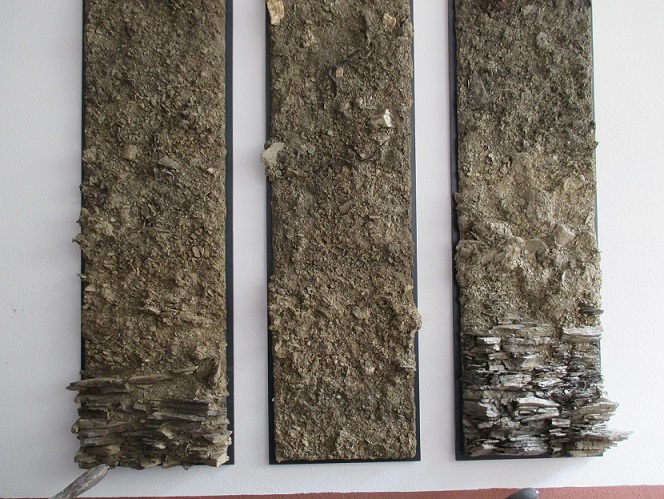
First we were shown profiles of the soil, showing the slates and degree of decomposition. L-R is Zeltinger Himmelreich (kingdom of heaven), Zeltinger Schlossberg (hill of the castle), Zeltinger Sonnenuhr (sundial).

2014 S-O Weissburgunder (Pinot Blanc) 13%
Little is made in Australia, and I’m not terribly familiar with the variety, although I have been surprised at the depth of flavour in some wines from Alsace. S-O makes very little, matured in new 1000l litre oak. Round, mouth-filling flavours of white peach and smokiness (oak-derived?). Brisk to close. Great education on one of the Mosel’s “non-Rieslings”.
Drink now- 2020, score 89
Then we moved to a bracket of Rieslings. All were very pale.
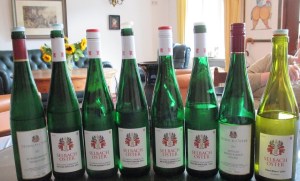
2012 S-O Riesling Kabinett trocken 11.5%
Scents of cape gooseberry, green apple, stones, minerals, textured
Drink now – 2018, score 90
2012 S-O Riesling Schlossberg Spatlese trocken 13%
More aromatic, spices, melons, viscosity. Lovely drinking style
Drink now – 2019, score 92
2014 S-O Zeltinger Himmelreich Kabinett
Approx 17 gl/ residual sugar. Highly floral, red berries, green plum, gun-smoke, granny smith apple, plus some honey and lemon. Lots happening here!
Drink now- 2020, score 90
2014 S–O Riesling Kabinett 8.5%
Icing sugar. Musk, Ultra-light, feathery. Where else can you get this delicious drinking style than in the Mosel? A lovely drink all-day wine
Drink now – 2018, score 90
2013 S-O Riesling Zeltinger Sonnenuhr spatlese feinherb “Ur Alte reben” 12.5%
From vines >100 years old! Grapes described by Barbara Selbach as loose bunches of lentil size, and as ‘a treasure”. Immediately seems ripe, with passionfruit, honey, citrus, and serious acidity. A “masculine” wine, and very serious.
Drink now – 2025, score 92
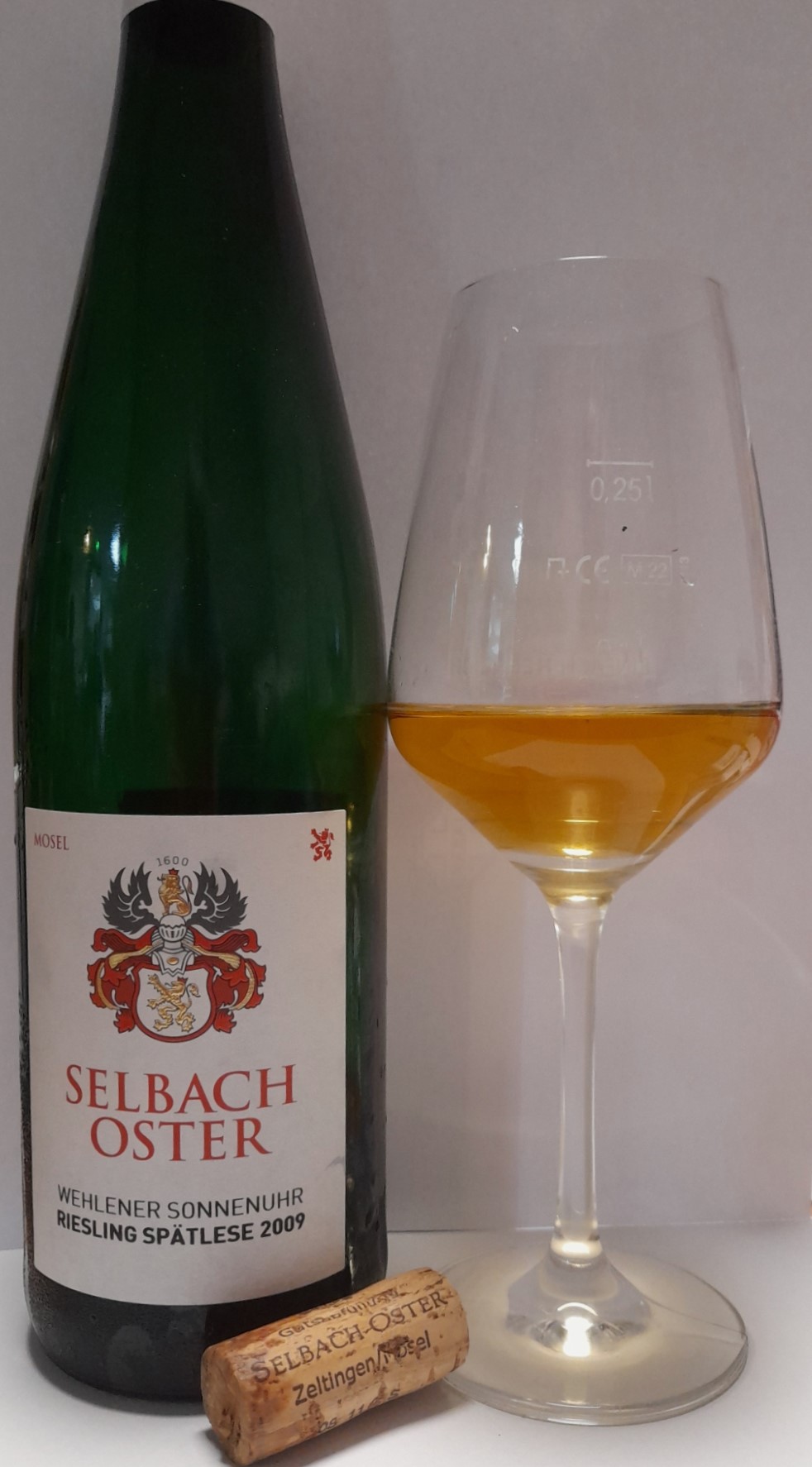
2009 S-O Riesling Wehlener Sonnenuhr Spatlese 8.5%
Ripe, and extremely playful, there are almost tropical arrays of pineapple here and other exotics. This wine just seems so balanced, natural and unforced, with warming, extensive finish. Completely delicious.
Drink now- 2025, score 94
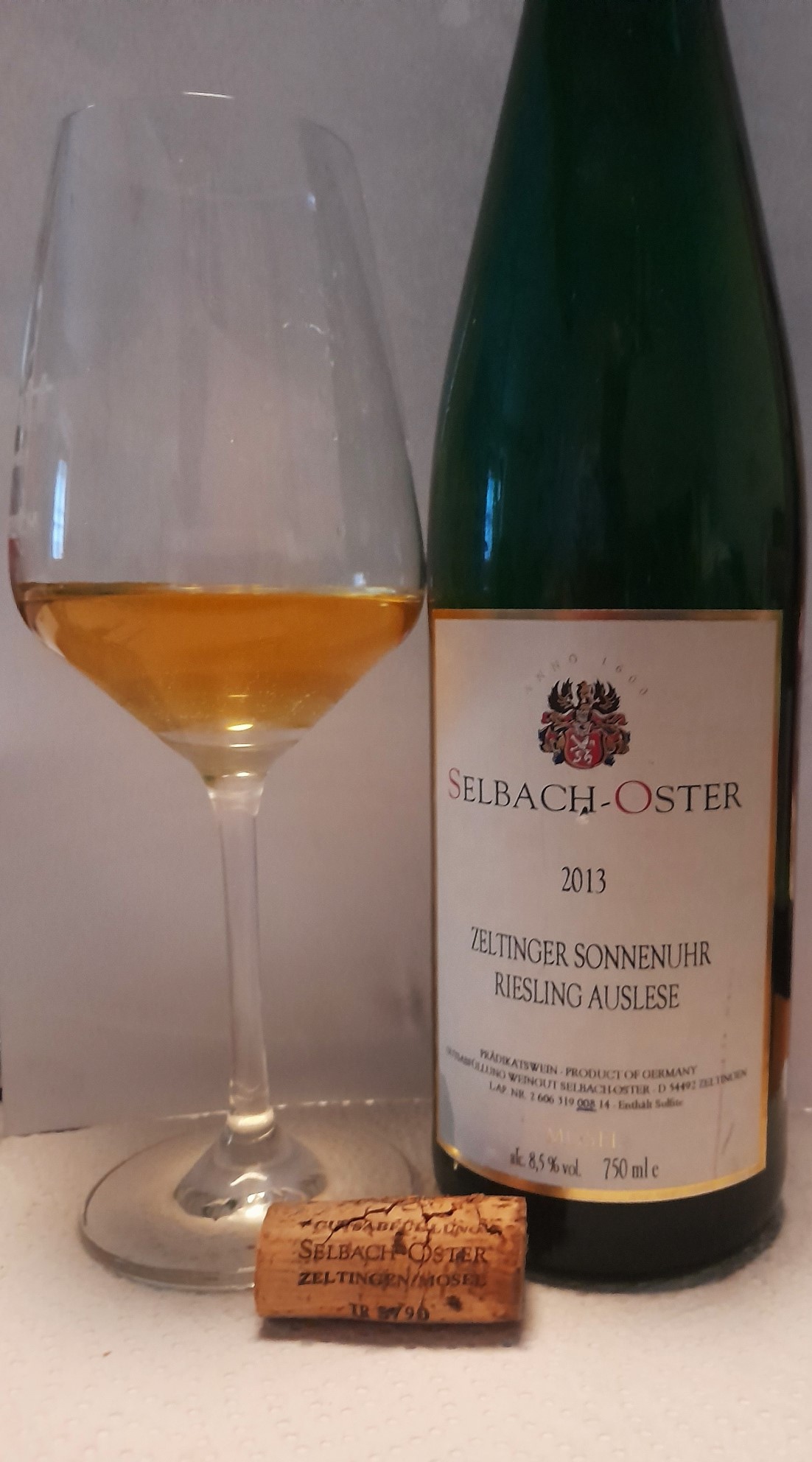
2013 S-O Riesling Zeltinger Sonnenuhr Auslese 8.5%
Light white honey plus ripe nectarines. More depth and concentration than the previous wine, Creamy, rich, fine, balanced, refined. Very extensive finish
Drink 2020-2030, score 93
Conclusions
We had the great good speculative fortune to taste uniformly excellent quality across the board. The wines are balanced and unforced, with the benchmark Mosel acidity and excellent VFM. There is a fanatical degree of care taken to preserve the various parcels but in a low-intervention manner. Barbara Selbach emphasised several times that winery work could not fix any problems that left the vineyard. Keep your eyes peeled especially for their parcels such as Anrecht, Schmitt and Rotlay!
Most of the Rieslings made even in the Mosel are “off-dry”, but Selbach-Oster takes a great deal of pride in their dry wines too, regarding them as more difficult to achieve finesse.
Finally, many of the wines – thankfully – are in screwcap, so no cork issues such as TCA or oxidation.




 sweetworldwines