Another Rutherglen ripper

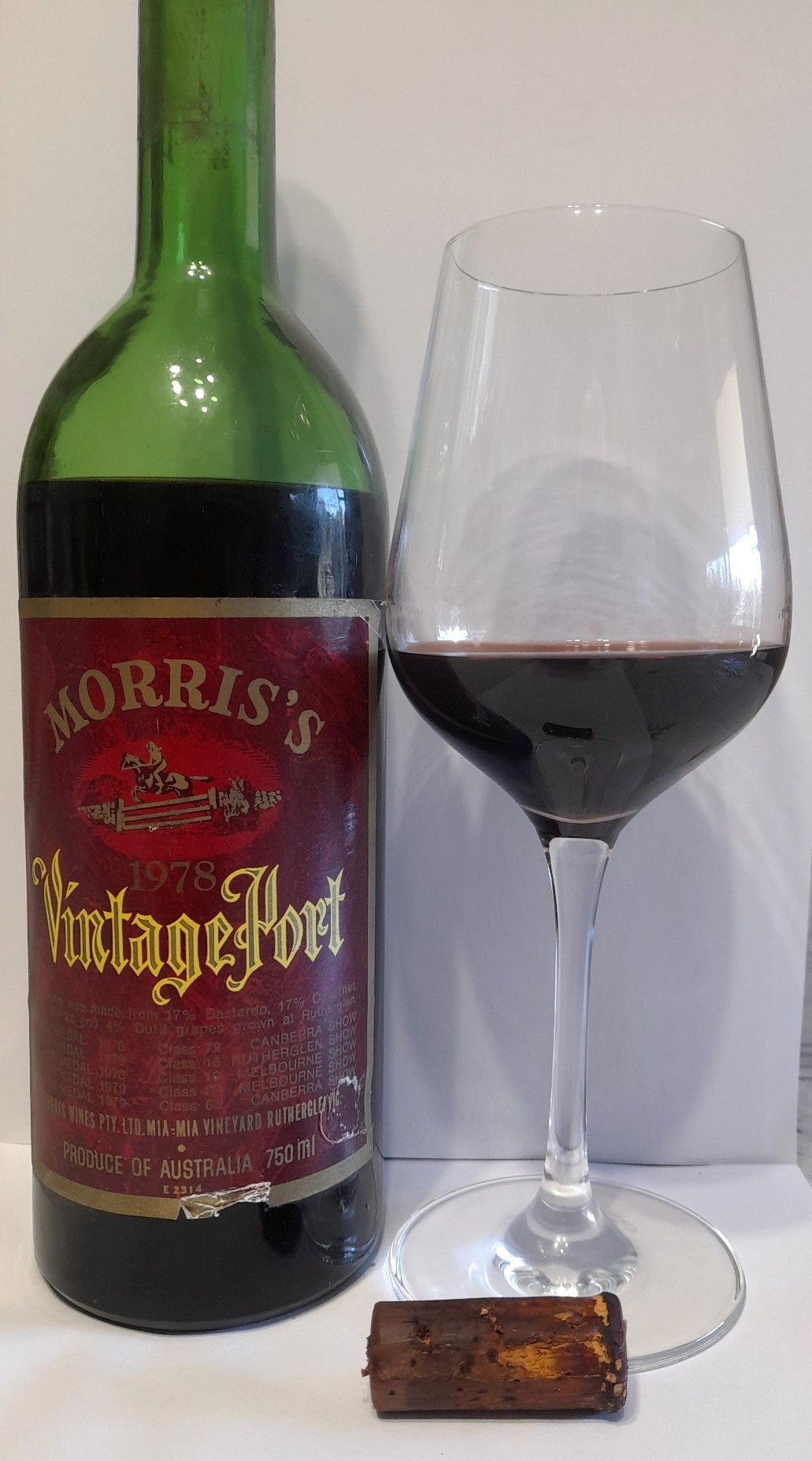
1978 Morris Vintage Port
Rutherglen, 62% Shiraz, 17% Cab Sav, 17% Bastardo (touriga), 4% Durif

A recent auction purchase, the level was down slightly (but good for age), the cork was slightly raised, and proved soggy. But the wine was just fine.

Great colour for age- liquorice, plum, blackberry, camphor, mixed spices; palate powerfully packed with mixed dark fruit as above; mocha, and spirit seamlessly melded in. Clearly Australian, and a wine of depth and charm. Tasters were totally surprised by the final options question on its age “1978, 1982 or 1986”, as the colour in no way indicated a >40 y/o wine. Indestructible, given the less-than-perfect storage evidenced by the slight ullage and condition of the cork. My assumption is that the Cabernet and Durif components were to bolster the tannins, and the Touriga to add floral and spice notes; and a great result from the blend overall.

Drink to 2035, 93 points

Botrytis semillon bargains from De Bortoli

De Bortoli makes so many wines it’s hard to keep up. And a lightning day trip during vintage last year convinced me of their very serious intents. But as well as their Yarra base, plantings at Heathcote, Rutherglen, plus the incredible amount of Prosecco processed, they have a substantial outpost in the irrigated Riverina, (NSW), where a speciality is botrytised Semillon wines.

The 1982 Noble One was a memorable wine, and the line continues to be made with only a few unco-operative vintages. Having picked botrytis Riesling, I can appreciate the stresses involved in weather-watching, picker availability, dodging “less-than-noble rots” plus the challenges in pressing, fermenting, and manoeuvring wines safely into bottle, without excess VA to detract.

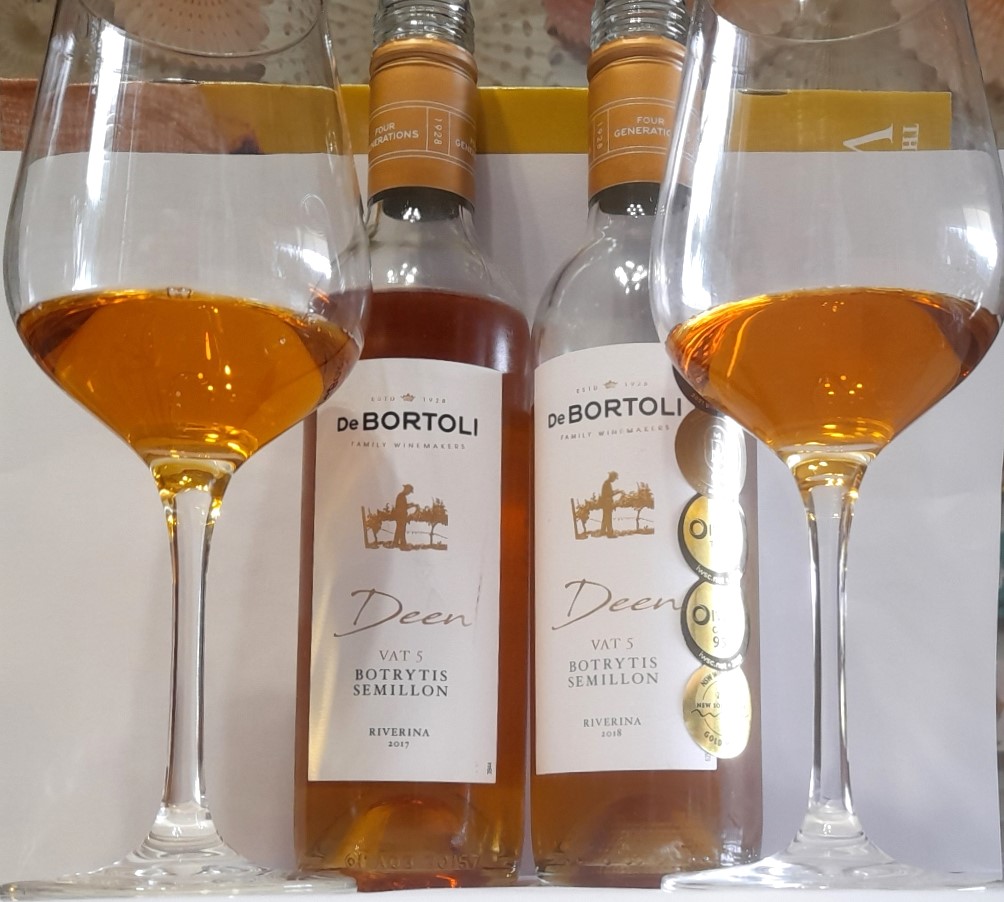
Noble One shows its capacity to absorb an amazing quantity of oak; but the wines that piqued my interest recently are the Deen de Bortoli Vat 5 Botrytis Semillon. Sure, it’s a “junior” label that won’t get the best fruit, will see little oak, and get less fanatical winemaking care, but the quality difference is much less dramatic than the price differential. The RRP of $17 half bottle leaves me bewildered at how this is possible, when the wines provide so much character, hedonism and engagement – and have bottle age as well. This pair of wines were made under the stewardship of recently-retired Julie Mortlock (and no doubt Steve Webber continues his strong interest in the line).

I preferred the 2018, and came to no harm drinking a half-glass every few days over a week. My generic match is fresh fruit, but an array of cheeses, or a tea cake will work wonders too.

2017 Deen de Bortoli Vat 5 Botrytis semillon 11.5%
Bright gold colour with some copper. Quince, bitter melon, apricot, cumquat, dark honey, vanilla, nougat. Ready! 158 g/l residual sugar.

Drink to 2027, 90 points

2018 Deen de Bortoli Vat 5 Botrytis semillon 9.5%
Bright deep gold. Apricot, cumquat, vanilla, dried pear, fruit peel, ginger. Absolutely seductive, lingering, generously drenched mouthfeel. My guess on residual sugar was >180g/l. It turned out to be 231 g/l! But wrapped in acidity, there was no cloying. This measure is well into the German BA territory, and will be an excellent sensory assessment exercise for wine students, the curious, and furthermore won’t break the bank.

Drink to 2030, 93 points

Portuguese, available and terrific

2017 Quinta do Noval (unfiltered) LBVP 19.5%
The LBVP is halfway cross between a VP, and a tawny, this one aged five years in Portuguese oak and chestnut casks. Touriga Nacional, Touriga Francesa, Tinta Roriz, Tinto Cão and Sousão, made from a decent year, with excellent fruit selection, and care. The style can easily improve with some bottle age – and represent great value! This wine was purchased at retail recently for $65.

A vibrant dense crimson colour, lashings of cherry liqueur and blueberries. Juicy, fleshy, bursting with vitality, and a touch of liquorice. Proper tannins, integrated spirit. Mixed fruit peel, dark spices, old leather, very, very comforting.

93 points and drink with real pleasure to 2033.

Stoney Goose Ridge – FOMO

I have had a recent flare-up of a chronic medical condition, including six nights in hospital. I was unwell before that stay, but I’m on the mend, and looking forward to resuming wine tasting. In the meantime, a teaser from Stoney Goose Ridge.

When I (Hector Lannible) took over as CEO, revitalising the company, and setting an outstanding system of transnational excellence, I didn’t fully forsee the depth of customer demand for NOB (natural, organic, bio) wines.

But I am adept at finding and leading trends, and we have an arsenal in the pipeline. Lo-fi, no-fi, au naturel. Skinsy, textured, tactile. I follow the money, and rake it in, accelerating our margins while shaming rivals with our QPR.

We began with Hipster’s Reward®, then came our Petty Nat (sparkling), and then Cloudy Hay! Our latest entrant into this niche is FOMO (Far Out Mystical Outcome). It’s sure to place an exceptional smile on the delighted faces of our happy clientele, deliver outstanding memories and certainty that our advocates will enlighten their friends and acquaintances to the engaging and irresistible pleasures of the comprehensive suite of Stoney Goose Ridge beverages. Wines, beers, spirits, mixers, cocktails, all rewarding with renowned resonances and unbeatable quality and value.

FOMO of course comes with our brand’s typically innovative packaging’s presentational stylistic verve and elan, with artistic interpretation from Binksy, under my detailed guidance.

FOMO – the wait was well worthwhile.

One from there, one from here

2012 molitor et auslese

2012 Markus Molitor Erdener Treppchen Auslese Gold capsule ** AP 37 7.5%
Mosel, purchased from the estate in 2015 and retrieved from storage in Germany this year.

(The ** indicates something extra in the category), Light gold colour, honey, quince, raisin, herbs red apple with a lick of spices. This is ready to drink, but will hold on a plateau for another ten years. The plate is creamy, fresh and balanced with lemon verbena, honey, and stonefruit. Very similar to my note from Germany a few months ago!)

Drink to 2034, 91 points.

1998 morris vp

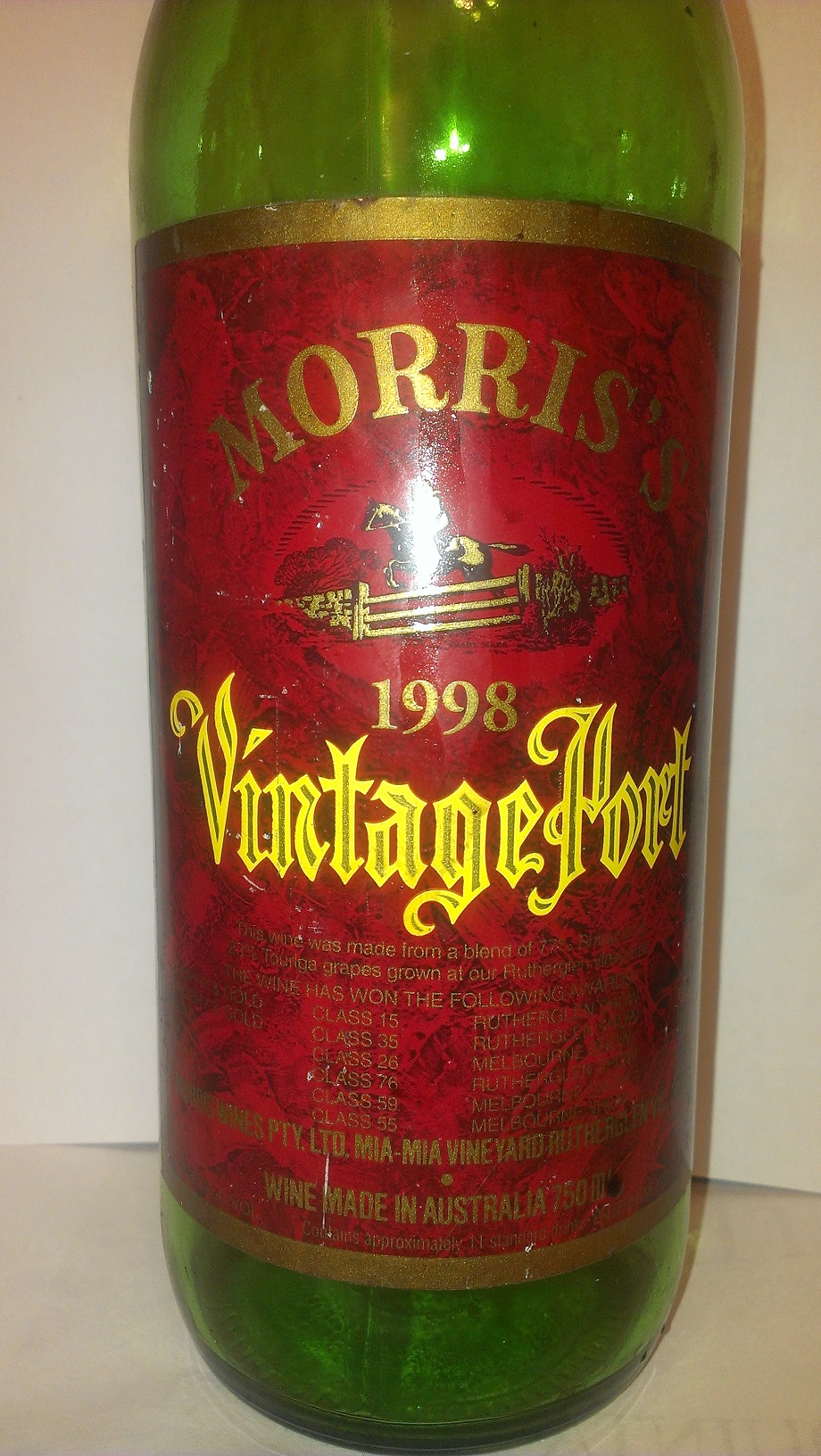
1998 Morris VP 18.8%
Rutherglen, 77% Shiraz, 23% Touriga, trophies and gold medals from credible wine shows over a period of several years.

BTW, I reviewed this in early 2016 and this bottle is slightly more attractive! Meagre cork, but it’s performed. Still a vibrant deep crimson/black colour, it thrills with wild scents of lavender, blueberry, red liquorice, dried herbs, and mellow spirit. The palate is all about fruit definition and texture – there’s violet, plum, redcurrant, spices and best of all, vitality and flavour persistence. It’s a terrific package with at least another decade well within its stride. Hard to resist, and I have several more bottles!

Drink to 2035, 94 points

Mid-year review – end of calendar 2024

Now that 2024 is over, nearly all staff are on their compulsory restorative break – before resuming with renewed rigor, commitment, perseverance, resilience, and passion (my strengths). We reflect on the people that have left the embrace of Stoney Goose Ridge, having failed to meet their KPIs. It’s my way, or out the window. We are alert to any attempts to deviate from their non-compete periods and/or NDAs. I also welcome the new hires to our lean headcount. Their CVs will now be more impressive, thanks to the rigorous development and mentoring provided OTJ. Reviewing the piles of discarded multi-media EOIs provided plenty of entertainment and befuddlement before most went straight into the virtual wastebasket. Hint – be concise, and check grammar and spelling- UGH!

Despite double digit sales growth, and even better profitability, my restless nature views 2024 as a year of consolidation of our core capabilities. All our brands performed across wines, beers, spirits, RTD mixers and so on, from budget to ultra-luxe. Indeed, several performed so well, that sourcing additional materials will require exceptional diligence, creativity and cunning. Our global footprint expanded, with innovative cross-border blending, and sales now in thirty countries. Our social metrics, CSAT and NPS are phenomenal and envied. But there is much more to come in my timeframe horizon.

Another outstanding wine success for Stoney Goose Ridge was the launch of the Pub Test™ range (PT white aromatic, PT white full-flavoured, PT rosé. PT mellow red, and PT robust red). Yet another of my winning ideas, it solves the conundrum by providing quality and exceptional VFM at a pub. If any pub doesn’t stock the range, their premises should be avoided as they have failed the test. And of course, bonus QR codes on the bottles provide access to hundreds of sets of trivia questions! Truly, the Pub Test™ brand is an optimised high-margin generator that secures further bottom-line profit and value growth creation.

Other triumphs include our low-tech orangesque wine Limbo, and the Essential Cookbook for Humans, which has garnered literary and culinary acclaim, plus massive sales.

Once more, our legal team has tirelessly prosecuted breaches of our ironclad contracts, trademark infringements, garnering bountiful punitive damages and fulsome grovelling apologies. Allied to their valiant structural efforts to minimise taxation, my incisive negotiating prowess has ensured numerous outrageous bargains accumulating our proactive synergies and led to many favourable legislative tweaks and judicial interpretations across varied jurisdictions.

The virtual trophy cabinet has been extended to cater for the deluge of awards for marketing, packaging, innovation etc, but of course of legions of fanatical Stoney Goose Ridge customers are our true glory.

My personal staff have supported me heroically, responding to my calls, emails and so on even while I have been on essential conferences in Rio de Janeiro, Geneva, Singapore, Port Douglas etc plus while holidaying with my family at Hakuba and Telluride, with short stays at Broome, Hobart and Dunedin.

Impressively, several team members achieved a bonus, and while the quantum was not as fulsome as mine, they deserve recognition.

With my intuitive customer insights and stewardship, I have rescued neglected brands from competitors and realised scale, diversification, and operational leverage. Renowned for our resonating value proposition, unique offers personalise customer experience in the omni-channel environment, seamlessly folding new generations into our compelling e-commerce ecosystem.

Our assets have increased massively with certified revaluations of our IP and brand valuation metrics.

I am a proud HIPPO (Highest Paid Persons’ Opinion) with my incredible extreme hardcore creative abrasion challenging my minions. I have no time for the WOLF (Working On the Latest Fire) and their ignorance of strategy, nor the ZEBRA (Zero Evidence But Really Arrogant). Our data-mining team has been laser-focused to extract material that supports my multitudinous initiatives.

The Stoney Goose Ridge wine fashionistas have managed to avoid frosts, fires, and other agricultural tribulations, and as ever, our network is adept at sourcing distressed assets with myself as the final sensory and financial arbiter.

Another of my ongoing issues is talent development. I will be taking a one-month sabbatical in 2025 for a personal entrepreneurial project, and the aptitude of my hand- picked executive team is not yet up to the task of “minding the store”. But there is time, and I have options up my sleeve to manage the temporary transition. I’m sure the selected person or team will perform adequately in my absence, and there always the Batphone hotline. I expect copious tidying when I return. Plus, all critical decisions will be deferred.

I can characterise our rivals’ long-winded, asinine and self-congratulatory announcements as untrue in parts, evasive, disingenuous, and entirely unsatisfactory. Then there are their egregious greenwashing eco-ceptions. It’s no wonder customers vote with their wallets, migrate – and stay with the better quality, better value, better sensory offerings from Stoney Goose Ridge! There are people in commerce that I know and respect, but thankfully we run in different lanes, and types of business.

Plenty of our accomplishments are due to the derisive inadequacy of our competitors, their masterly inactivity and willingness to embrace the strategy of “cross our fingers,” all while waiting to be stabbed in the back after their next foot-in-mouth episode. Throw in aimless rebrandings, desperate “campaigns”, fixation with outside consultants, massive stock writedowns and a culture of indolence. What a blessed luxury to be a vital part of an industry riddled with such extraordinary incompetence! We forensically analyse their accounts, always alert to related-party transactions, “Director loans”, dubious and gratuitous sponsorships and we are adept at highlighting and publicising contemptable personal moral lapses of executives. And there are so many!

After such a year of positive momentum, all staff can look forward to thrills, triumphs, and creative tension.

Your magisterial, acclaimed innovator – Hector A Lannible
Three blind beauties


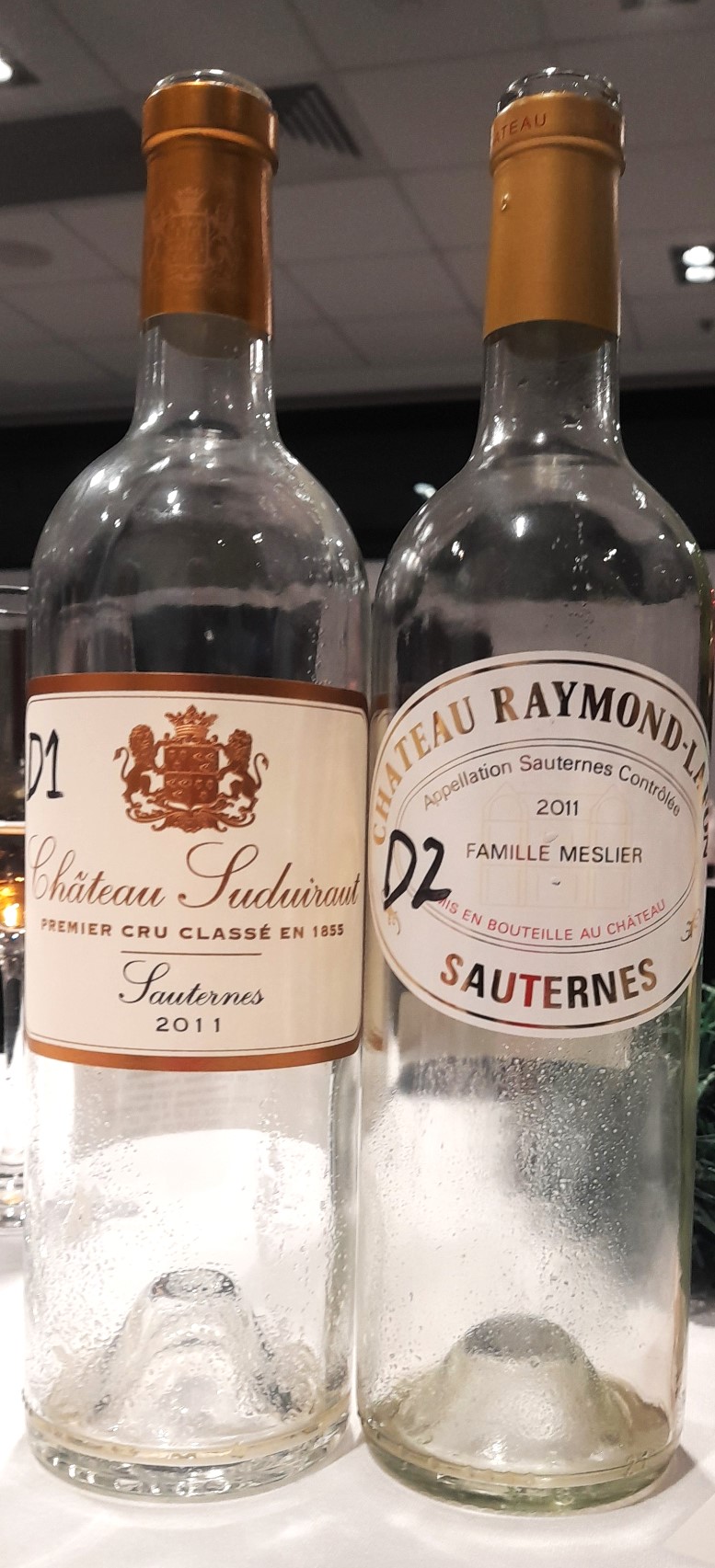
2011 sauternes pair

2011 Chateau Suduiraut 13.5%
2011 Chateau Raymond-Lafon 13.5%

This pair was served blind; and I was called on to describe and assess (towards the end of a terrific EOY dinner). Both were a healthy bright gold colour, and the apricot and vanilla notes instantly took me to Sauternes.

The first wine (Suduiraut) displayed just-ripe apricot, quince, dusty botrytis with terrific presence and drama; and a touch of floor polish. Lots of vanilla on the palate, honey, ginger, and abundant fruit power from a ripe year. Very sweet (138 g/l), but balanced. (93% semillon,  7% sav blanc).
Drink to 2035, 93 points.

The second wine (Raymond-lafon) had a slightly less developed colour, with greater tropical and pineapple notes. This wine had the magic combo of florals, citrus and balance (149 g/l rs); delightfully fresh and authentic. Pressed, I went for Barsac on this one – likely Ch Coutet – I was wrong but what a nice surprise!
Drink to 2038, 94 points

2007 quinta do vale meao

2007 Quinta do Vale meao 19.5%
Portugal. Also served blind, this was a vivid deep color. Blueberry, violets, dark cherry, elegant and with vivacity. Plus a producer I don’t recall trying. Portuguese for sure, early 2000s. But hard to concentrate at the end of a long night! Quality with aplomb.
Drink to 2034 . 92 points.

Two very different Oz fortifieds (inc one fail)

seppelt 1983 para

1983 Seppelt Para Liqueur (single vintage Tawny) 20.5%
Barossa, released around 2004, with no further improvement once bottled. Grenache, likely with Shiraz (and maybe something else). A bit of breathing helps. Gosh this is good.

In the familiar bell-shaped bottle, the colour was a deep khaki with a telltale olive green rim,  Floral and decadent, displaying very fire brandy spirit; caramel, vanilla and almond. Fresh and delicious, mocha, spices, salinity, and citrus peel, with a generous, lasting set of flavours. I have reviewed the 1976 and 1991 before – the line provides marvels of consistent pleasure, with the 2003 available on the Seppeltsfield website for $105.

Drink now (but any decent unopened bottle will safely keep).  94. points.

1977 morris VP

1977 Morris Vintage Port
Rutherglen (70% Shiraz, 30% Bastardo -aka Touriga)
Faded label, with a marginally raised cork, and the level was high shoulder but no dramas.

Still a deep red/black colour! Mocha, brandy, sweet brambles and blackberry; palate is sweet and syrupy, but defiantly fresh, sweet fruit and mellowness. Indestructible.

There were – alas – some cork artefacts present – I struggled to disentangle cork taint from corky/woodiness, and about and hour later reluctantly conceded that that very low-grade TCA was present, But very few would still resist drinking the wine. Such is life under the arbitrary hands of cork deities. Despite this “fail”, other bottles are worth seeking out.

No score but drink to 2035.

One from Rutherglen

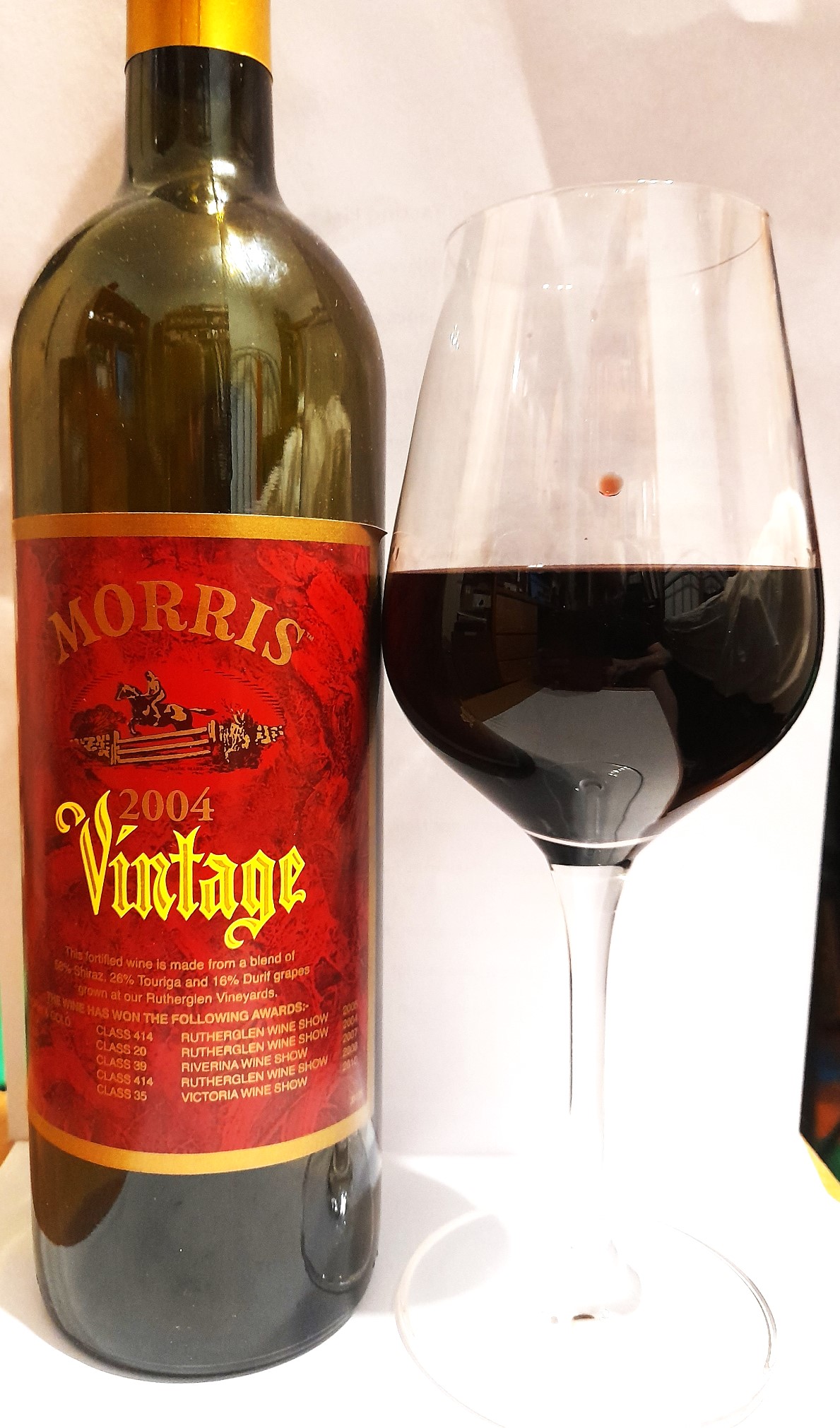
2004 morris VP

2004 Morris vintage (port) 19.4%
Rutherglen, Victoria. 58% Shiraz, 26% touriga, 16% durif

Gold medals at credible shows across six years. Decent cork. Twenty years old, and plentiful sediment.  Very dense youthful black/red colour; violets, plum, fig, dark cherry, sweet spices. Here’s a wine that is relatively soft and approachable, yet has all the structural elements that hold my attention and augur well for the future; high class spirit is melded with the plentiful fruit power; the palate is voluptuous, fresh, and with fine, fine tannins to encourage another taste. Hard to resist (and I still have a few bottles).

Drink to 2034 (very conservatively), and 93 points

Two from Portugal

1975 Cockburn VP

1975 Cockburn Vintage Port

Served blind. Amber tawny colour, and clearly old (early 80s?). Roses, light mocha, sugared almond; palate less fragile than expected; spirit is holding this wine together. Unveiled – a modest VP year, a modest producer, but a triumph to have survived damn near 50 years. Certainly its been better in the past, but no shame, and no problems drinking my share!

Drink up, 91 points

2000 fonseca

2000 Fonseca Vintage Port 20.5%
Medium ruby colour; very floral with blueberry, roses and violets, spice notes too; palate is bright and crisp, very supple and civilized, dark red fruits, almond sugar, refined tannins and beautifully judged spirit. Enormous drinkability too. (This was a much better result than the bottles tasted in October 2023!)

Drink to 2035, 95 points