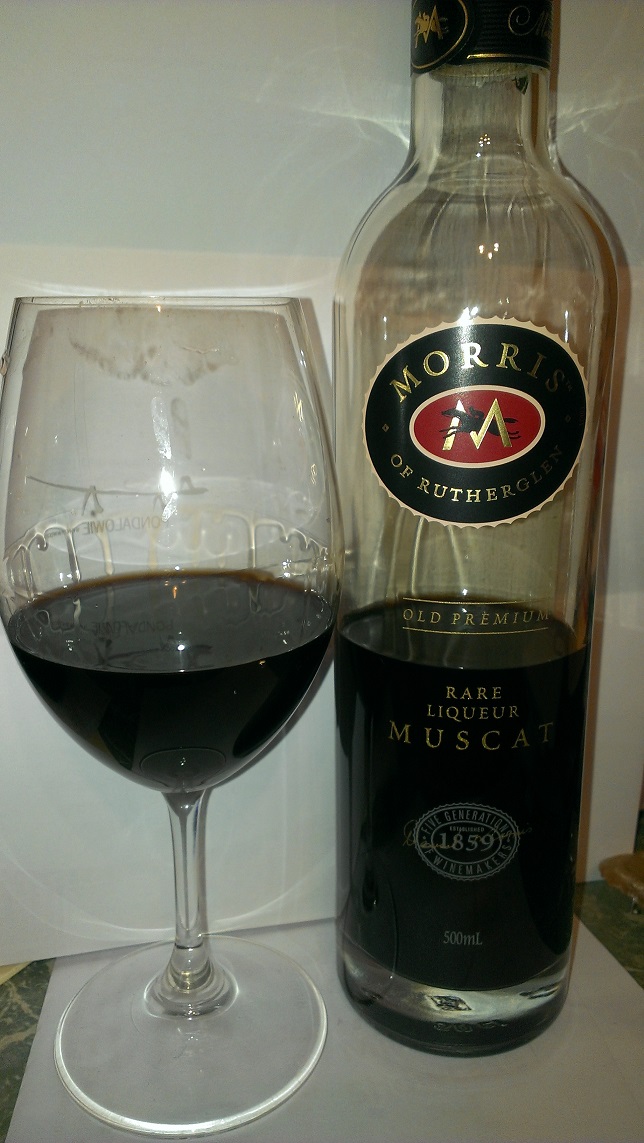
Morris (old premium) Rare Liqueur Muscat

The colour is a deep, clear khaki/brown.

It pours slowly- like motor oil -into the glass. demonstrating its aged concentration. It smells of stewed raisins, and strong dark coffee. There is a streak of cleansing acidity that accompanies the mixed flavours of raisin, almond and mocha. The wine (17% a/v) dwells in the mouth, sticking to all parts.

This Rutherglen muscat falls into the “rare” classification. The price at cellar-door is a very respectable and fair $75, which means canny buyers can acquire the wine for around $60.

morris rare muscat

A bottle doesn’t seem to last long in my household.

This hedonistic world-class style deserves 94 points, while perhaps some judicious freshening with younger material could add to the aromatics.

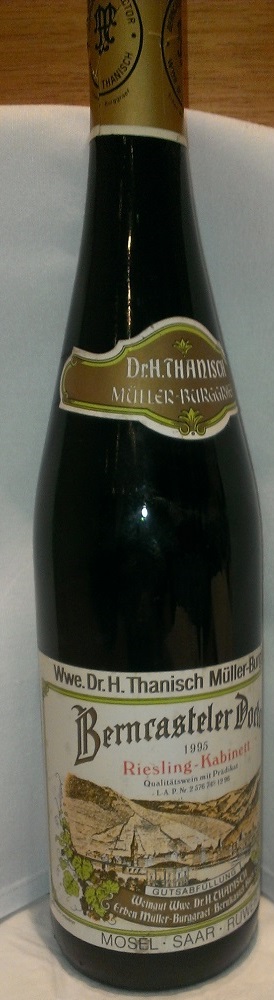
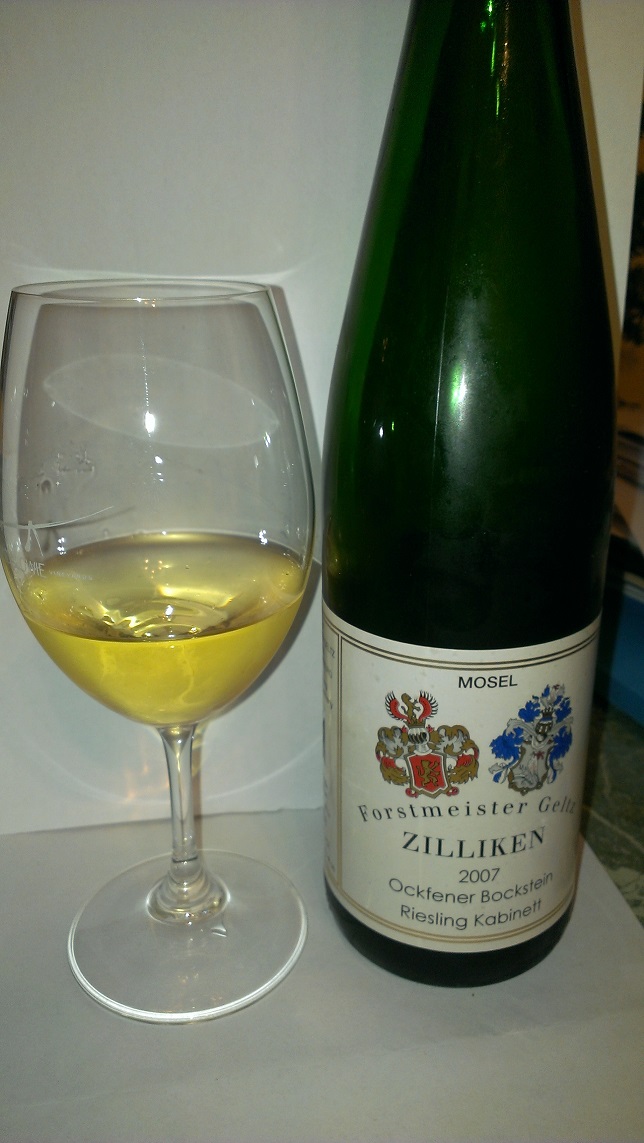
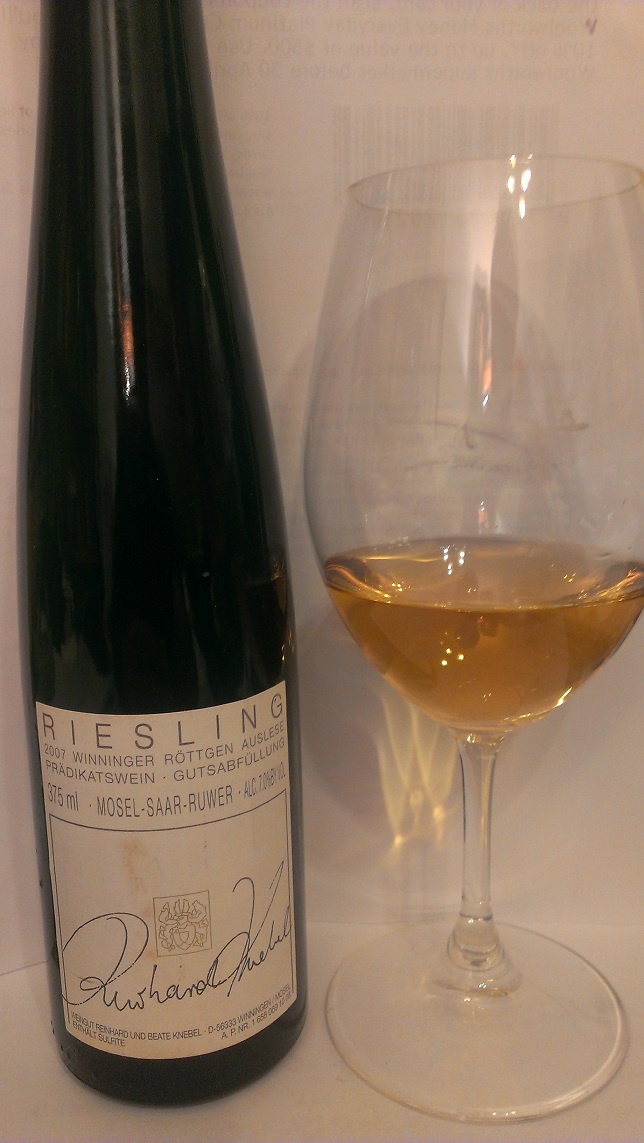
2007 Knebel Winninger Rottgen (Mosel) Riesling Auslese 7%

Pale straw, all apricots and pear and almond scents; mandarine on the very dense palate. Lush (190 g/l rs) but despite the very gradual development, the still searing acidity, and very enjoyable tactile sensation,  there does not seem enough complexity to reward further aging, although there is no necessity to rush.

knebel 2007

Drink now to 2025, score 91

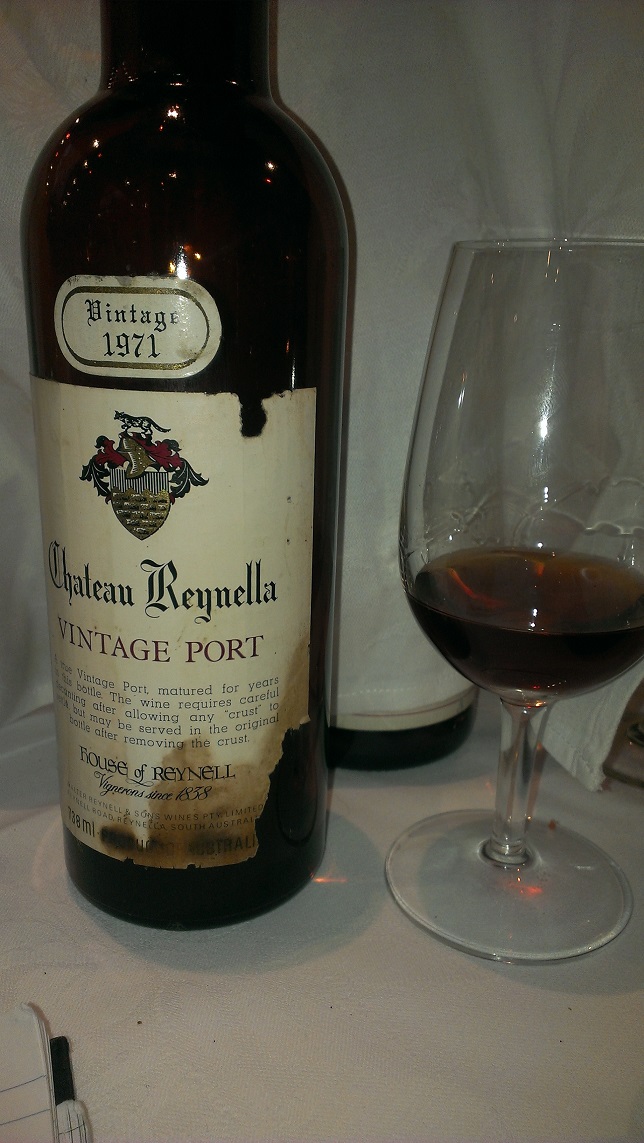
1971 Chateau Reynella Vintage Port

Served masked. Light khaki colour, with amber rim. Strong rancio and touches of vanilla and nougat. Well balanced, clean, sweet and stylish.

1971 reynella

Obviously a tawny style- except it wasn’t! Unclear what’s happened to the colour, as recent 1981 Reynella VPs have been inky black and display typically intense blackberry fruits verging on jammy. The 1971 is excellent but atypical; a much more mellow example than expected. Drink up. Score 90.

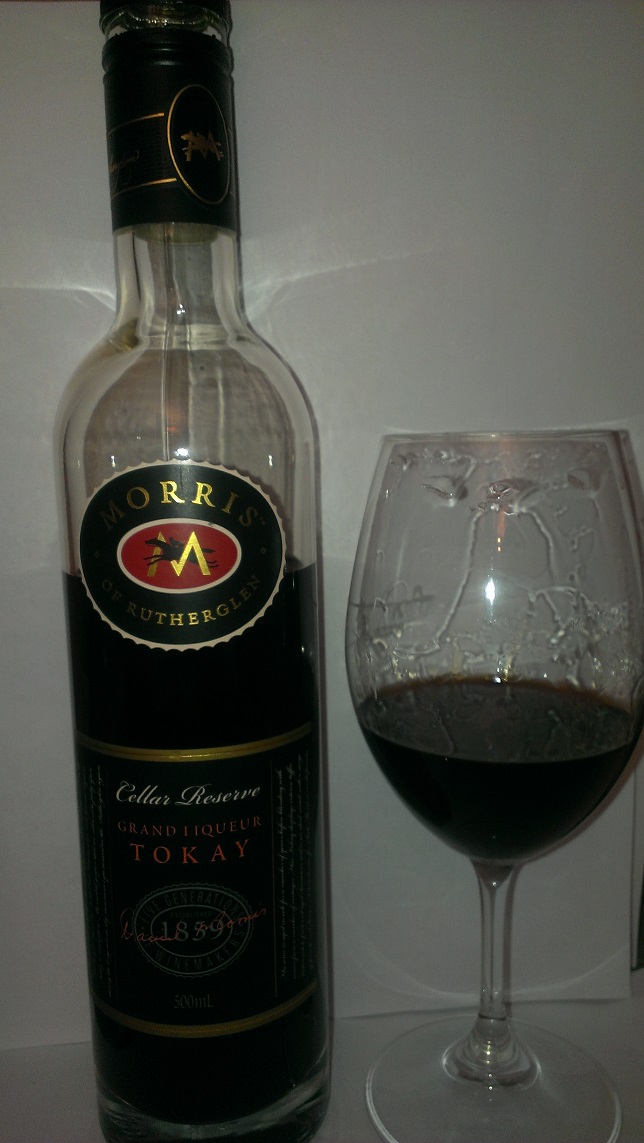
NV Morris cellar reserve grand liqueur tokay 17%

This is a style that Australians should be patriotic about. It’s recently been rebadged the ghastly “topaque”, to avoid any confusion with the Hungarian Tokay, and is made from muscadelle. It’s a fortified wine, made with neutral spirit, and has extensive barrel aging. The classification scheme from the Rutherglen area ascends from Rutherglen, Classic, grand, then rare, largely based on years in barrel, but with a committee assessing submissions – older does not been better – as a bit of judicious freshening can really make a difference. As a guide, the Grand classification is usually around 10-20 years old on average, and may be upwards of 250 g/l residual sugar. This is one of the styles I perform impromptu kitchen bench blends with.

This particular wine is available at Morris cellar-door only for $50; $40 for club members

morris grand top 1

The typical memory prompts include cold tea, malt, toffee and butterscotch ; while Muscat veers more into raisins. Telling them apart is never a certainty. A little is alleged to go a long way, but the style is irresistible to me, and one glass leads to another. Many North-east Victorian wineries make this style, such as All Saints, Baileys, Bullers, Campbells and Chambers. Morris is the one most attuned to my sensitivities – or the one that seems to float my boat.

There is no real food match- heretics may pour over ice cream, some will try strong hard cheeses, nuts and black coffee; but the winning match is an open fire and pleasant conversation, The wine was made by David Morris, but no doubt incorporates heritage work by his father the legendary Mick Morris, and beyond!

It’s a deep dark khaki colour with an amber/olive rim; it’s viscous and somewhat reluctant to pour. It oozes into the glass hesitantly, the words” rich and luscious” do not do justice to the length and depth of flavours, this wine seems all about toffee and malt; there is bracing cleansing acidy that defies a person to stop sipping.

Score 94 points

It’s frightening to consider that there is a further quality echelon (rare) to come, and even more awesome that there are other special bottlings at prices beyond my means. If I win a lottery yes – but I would need to first buy a ticket.

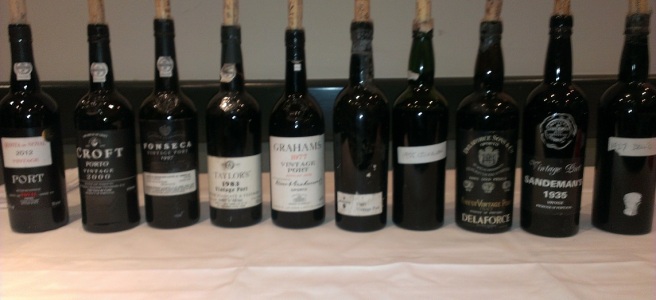
10 decades of (Portuguese) Vintage Port

This turned out to be extremely educational about the longevity of this style. 10 different houses, and some great comments from the organisers and a contingent of winemakers from Rutherglen. Certainly its unusual for me try more than one VP at a session. Far from easy task locate these, and we suffer in Australia from vagaries of shipping and storage. All wines were decanted for about 3 hours, and we’re looking at single bottles as they were on the night. The oldest Portuguese VP I recall is the wonderful 1970 Fonseca, with the oldest Australian versions I’ve tried include a 1956 Hardy and a 1957 Lindemans. An observation  was made at the tasting that Australia was intent on moving to a drier, more Portuguese style with greater use of Portuguese grape varieties (rather than our traditional Shiraz). There was less agreement of whether the Portuguese had made any concessions to early drinking or more approachable VP’s.

As it happened the 3 oldest wines fared brilliantly. I had feared they might be historical curios, but they were defiantly truly alive.

2012 Quinta do Noval

Not many declared 2012 especially since 2011 turned out so well.

Dense red black with purple tints; this is highly perfumed and floral – blueberry and violets and black fruits. It surprisingly approachable, but the tannins are very fine and persistent. Red liquorice and some headsy spirit. But not the magic of 2011. Score 93+, but no doubt this will live longer than I suspect.

2000 Croft

Slightly murky colour, Slightly grubby bouquet with some cough syrup and cocoa; palate is better. The spirit holds this together, and kicks in vigorously at the finish. Score 90

1997 Fonseca

Medium red, spices, grainy tannins, sweeter style on the palate. Score 91

1983 Taylor’s

Clear ruby colour, with some floor-polish aromas, seems pretty straightforward on the palate. Score 91

1977 Grahams

Clear pale ruby. Lots of rose petal, toffee/coffee/ jersey caramel. Brisk with spirit making a terrific contribution. Graham is reputed as a sweeter style, but its not out of place. Lovely now but will keep for a long time yet, such is its balance. Score 95

1960 Warres

Looking forward to this, but TCA has made an unwelcome appearance. Kept for 55 years and ruined by cork taint.

1955 Cockburn

This was also ruined, but whether oxidation or other issues was debated by the group. Certainly faulty.

1947 Delaforce

Ruby colour with some orange tints. Starting to look like an old tokay. Citrus peel and salted mixed nuts, spirit a bit hot, but lovely drinking. Score 94

1935 Sandeman’s

Ruby colour, dried fruits and plums, vanilla, and toffee. Fleshy, subtle, singing. Score 94

1927 Dow’s

Amber colour; scents of green olive, orange peel and chocolate covered peanuts (one of my favourite indulgences). Could drink this all night. Score 96
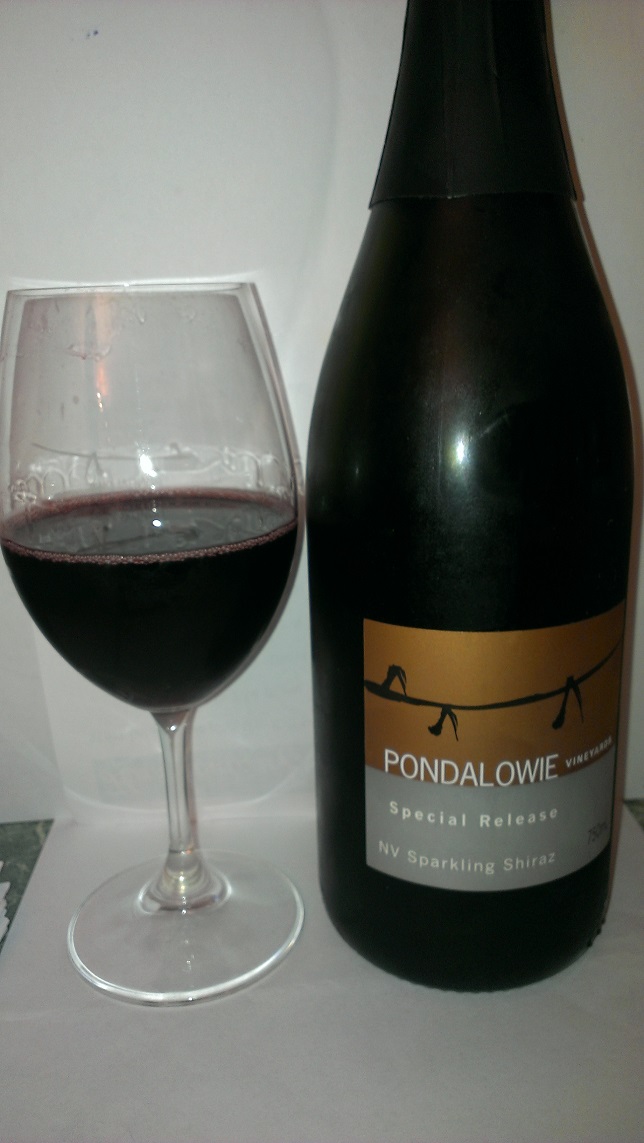
NV Pondalowie special release sparkling shiraz 14%

From near Bendigo in Central Victoria. Goldfields areas, so often a portent of wines of amazing colour and depth of flavours. Appropriately I opened this bottle on Australia’s “spurgle” (sparkling red) day. While this style is not – quite- unique to Australia, we’ve given it a home, and when I’ve shown examples to some European tasters they have been baffled. Generally made from Shiraz, but sometimes other varieties are used- Cabernet Sauvignon, Durif, even Merlot. Like other sparkling wines, time on yeast lees really makes a difference, as does ripeness, as does time in oak. A bit of sweetness is necessary to balance the tannins- anywhere from 10-50 g/l, but I think less successfully when over 30g/l. And they can age very well, under cork or increasingly common crown seal (think of the seal on a beer bottle…).

pondalowie

Enough preamble- the Pondalowie is a blend of several vintages. It’s a very dense blood red/black colour. The bubbles are not very persistent, but thankfully the wine is at the drier end of the spectrum – my guess is about 15g/l. incidentally the label depicts a stylised dog – not barbed wire as I once suspected, and is sealed with a diam cork. Its all about intense ripe blackberry, fruitcake spices, other dark fruits including cherry. It walks the line of combining long savoury notes and the creaminess of the palate. How could anyone not enjoy this? Score 91, Drink now- 2020

This wine is currently available on the Pondalowie website for $40. If you enjoy this wine style – which matches extremely well with duck, and other red meat roasts, – try the 2012 Seppelt or if you are not constrained by cash or availability, the Primo estate “Joseph” in its extraordinary tall bottle, or the NV Rockford Black Shiraz, or sparkling reds from Anderson’s in Rutherglen.

2005 Zind-Humbrecht Heimbourg Pinot Gris SGN 10%

zind sgn

The selection de grains noble (SGN) from Alsace. I guessed at 190 g/l; but is 219 g/l.

I struggle to define Pinot Gris; sometimes its pear-like, with more body than  riesling but throw in botrytis and its all too difficult. This wine is  at BA sweetness levels and the oiliness and honey elements could easily lead to choosing this as a Mosel wine; there are some phenolic aspects, nothing untowards.

Pale colour revealing some musk and lemon sherbet and botrytis spices, very sweet pear and apricot but held together by magic acidity; marvellous texture and balance, so clean – will live for another 20 years. Score 95+.

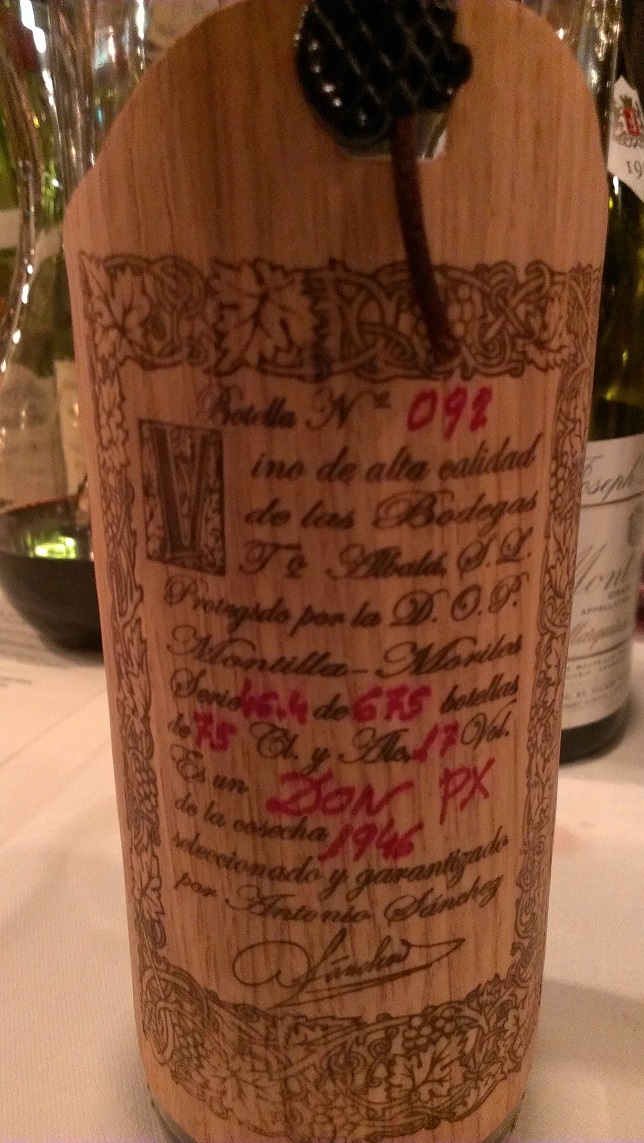
1946 Toro Albala Don PX Convento Seleccion

Apparently like a colheita, a single vintage Pedro Ximinez barrel-aged for many years. Prolonged barrel age will increase a wine’s acidity, alcohol (although the label only claimed 17%a/v), sugar and VA  – the challenge is to maintain freshness.

toro a

The wine itself was unbelievably dense black with some khaki on the rim; stuffed with raisin, roses and mocha. And not at all painful to drink.

But, it does not deserve 100 Parker points – 92 from me.

I continue to hope that the world doesn’t outprice my fondness for Australia’s best muscats and topaques, and there is much better value around than its roughly $400 price at auction.