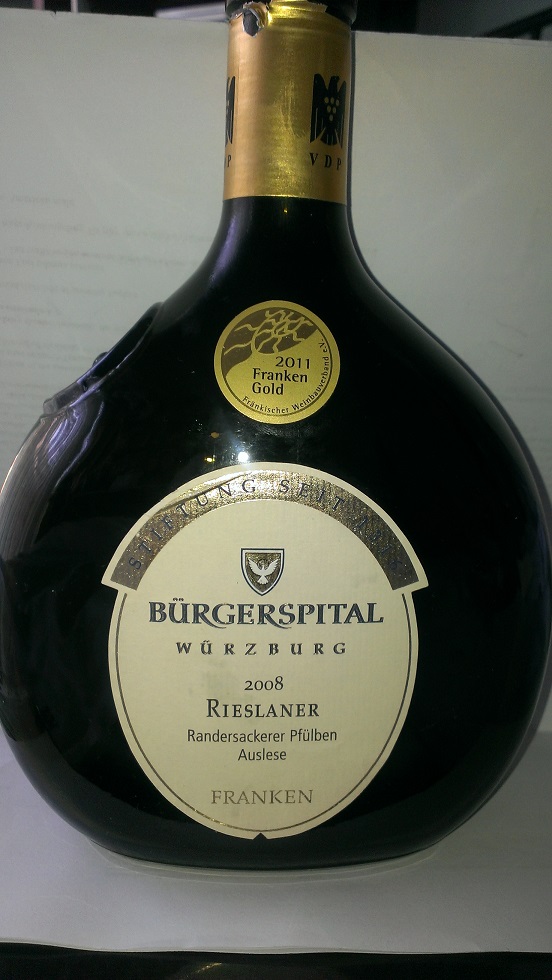
2008 Burgerspital Rieslaner Randersacker pfulben Auslese 9%

A cross between Riesling and Sylvaner, it’s a late-ripening  high acid variety, producing very good results with botrytis.

Another Franken area bocksbeutle, this time under cork.

burger 2008

Clear, bright light gold in colour, it has pungent tropical aromas – mainly mango, with some green fruit overlay – melon-rind. The palate leans more to pineapple and golden delicious apples, with abundant refreshing acidity. The texture is appropriately oily and syrupy.  An excellent dessert wine.

Drink now-2035, 93 points

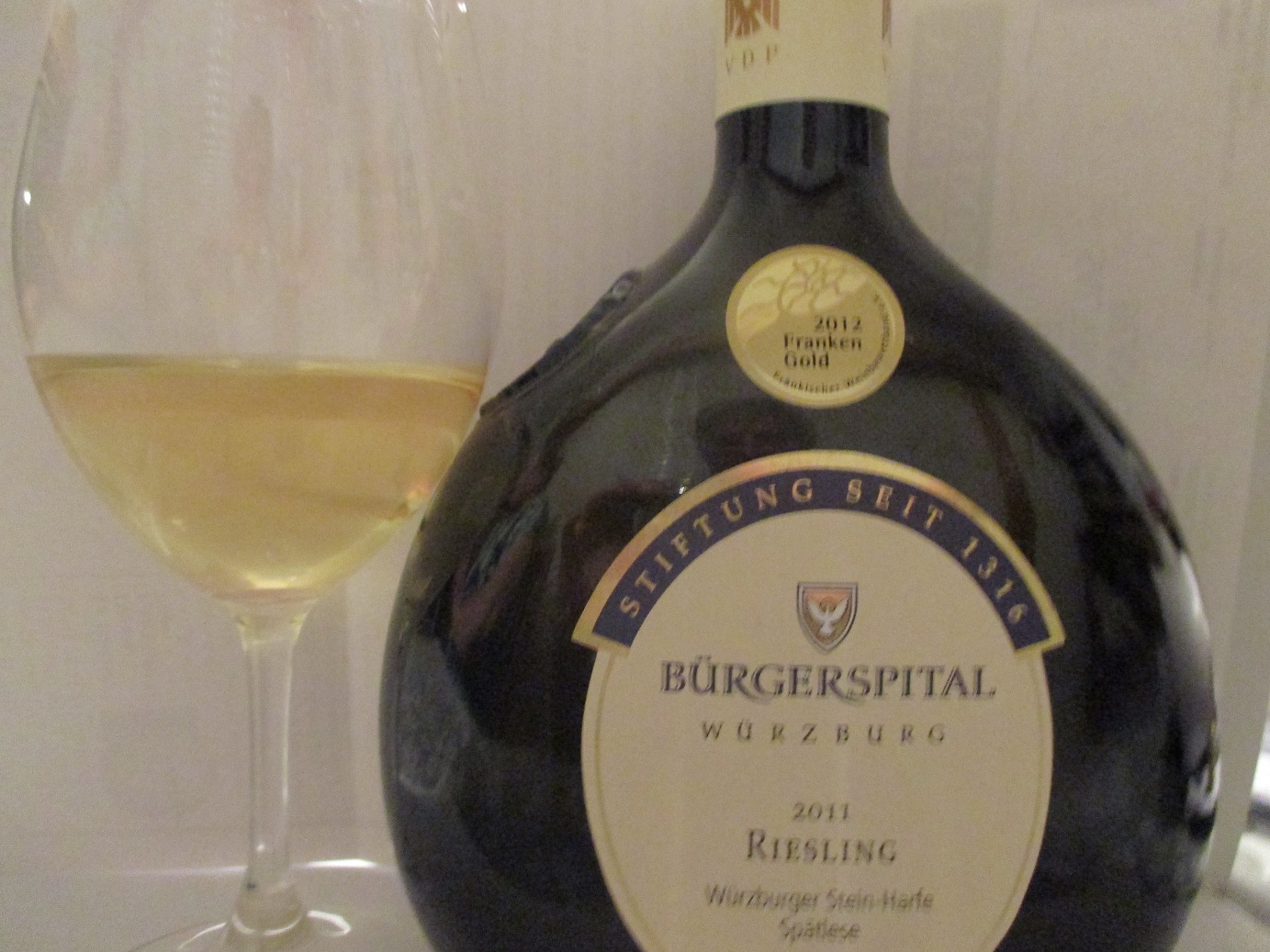
2011 Burgerspital Wurzburger Stein-horfe Riesling spatlese 9%

From the Franken area of Germany, a bocksbeutle with a screwcap.

burgerspitalPale straw in colour, the wine exhibits exuberant aromas of mango, pineapple, lemon and other tropical fruits. The palate shows lemon sherbet, fruit-tingly acidity, plus some chalk and minerals. It’s a pure, driven wine that is crisp and delicious with lingering depth. Lovely balance and the degree of sweetness is just right. Very pleasurable.

Drink to 2025, score 91.

2009 Sainsbury’s late-bottled vintage port 20%

In London with my family after being in Germany and Italy. Not a wine trip, so purchased this from the local supermarket for 9 pounds. Sourced from Symington stocks of Portuguese material. (I don’t think this style is made in Australia).

Late bottled vintage ports are held in oak for a longer period than vintage ports; this softens them somewhat; whether there will be improvement after bottling depends partly on how (or if) they are filtered, and how brawny you like them.  In any case, its safer to consume them early. Stylistically they are more like a vintage port than a tawny, and once opened drink within a few days.sainsbury lbvp

Deep crimson colour, dense and healthy; muscadels, spices, and sweet spirit. There is real plumcake on the palate, marinated red and blue fruits, and a sense of restraint and balance between fruit and spirit. A nice attack of tannins making this very gluggable wine. A bit more stuffing would have made a better wine, but no complaints at the price for this style.

Drink to 2019; score 87 points.

Franken frolics

Wines from Franconia (Germany) are seldom seen in Australia. Wurzburg itself has two large wineries, Burgerspital and Juliusspital.

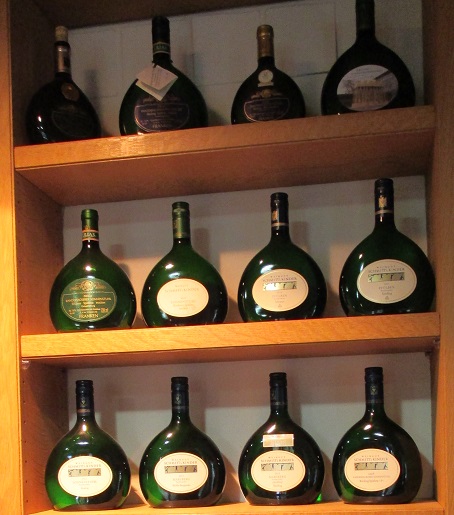
The wines in Franconia can also be grown on steep slopes, with the prevalent varieties of Silvaner and Riesling. The traditional bottle-shape – the bocksbeutel is difficult to transport and store, and its shape unfortunately reminds many people of Mateus rose. Some wines are now in “normal” wine bottles, and some are in screwcap. The best of the sweeter wines can last decades.

bocksbeutle

We visited Schmitt’s Kinder in the town of Randersacker.

Andi Schmitt said there were Riesling fans, and Silvaner fans, with little crossover. Silvaner is less aromatic, but compensates with a fuller-bodied palate. Regardless, Silvaner can look rather plain, until food brings it back into play. Until I gather further experience with the variety, I would be wary of cellaring longer than 10 years (except for very sweet wines). Franken also has other varieties planted such as Bacchus, Scheurebe, and Muller-thurgau- which surprisingly has some character- plus the rustic red Domina, Spatburgunder (pinot Noir), and make wines ranging from sparkling, dry right up to very sweet botrytised wines.

In Franken, 2014 was regarded as ok- 2013 was again very difficult with pickers having to discard clusters of grapes within bunches – even after rotten bunches were culled. 2010 was described as a “strange” year, with excellent ripeness unusually accompanied by high acidity; wines looked awkward at first but are looking very smart now after a few years.

2013 SK Randersacker Marsberg Silvaner trocken “alte reben”  12.5%

Stonefruit, passionfruit, honeysuckle. Clean (to 2020, score 89)

2013 SK Pfulben Silvaner trocken GG 13%

Pfulben is a special site, steep and very close to the river. Land is expensive and seldom changes hands. Orange and apple blossom, plus minerals (to 2020, score 90)

2013 SK “weinberg mendelssohn” Riesling trocken im Pfulben 12.5 %

Delicate, orange blossom on the bouquet, but the palate is quite different, full- bodied – a masculine food-friendly wine. Drink to 2023, score 90

2010 SK Marsberg Weissburgunder Spatlese trocken 13%

Served masked, this showed some colour development, with scents of ripe apricot, honey and light raisins, yet the palate was dry, rounded and fine. Variety was unknown but we correctly selected the vintage. A surprise; Drink now- 2020, score 91

sk spatburgunder

2010 SK Randersacker Sonnenstuhl spatburgunder “tradition” 13%

Obvious quality here. A light ruby colour, the wine had an overlay of smoked meats on a light-framed palate of dark cherry and plums with a lingering finish. Flavour-packed and compelling. Drink to 2020, score 91

2010 SK Randersacker Sonnenstuhl Spatburgunder GG 13%

Similar but with more stuffing, minerality and concentration. Denser, and oozes quality. Will provide drinking pleasure for many years. Drink to 2025, score 94

More Mosel musings

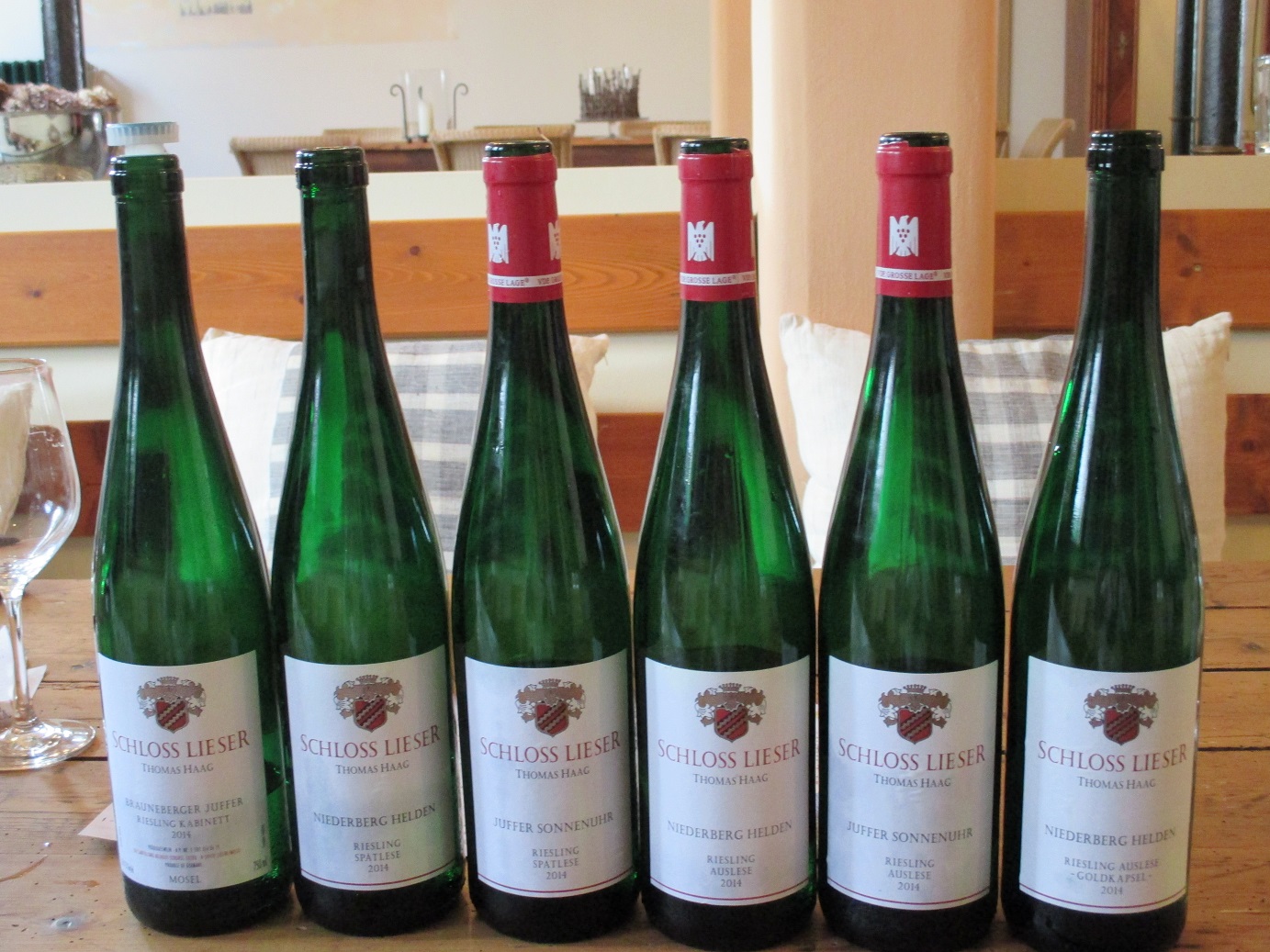
Schloss Lieser is located next to an impressive building undergoing long renovations to become a hotel. Thomas Haag was on holiday prior to the looming 2015 vintage but daughter Anna took us through the 2014 vintage wines that were not yet sold out. Wines are imported into Australia by Neville Yates at Eurocentric, and the winery’s reputation has built enormously since it started a mere 20 years ago. The Rieslings all showed a family trait of clean crunchy acids.

schloss lieser wines

2014 Schloss Lieser trocken was very dry, but with stony minerals underlying (drink to 2018, score 87); 2014 Schloss Lieser feinherb was probably drier than usual, but demonstrated lemon and apple, some green fruits and herbs (drink to 2020, score 88); 2014 Juffer Kabinett 7.5% again showed the magic 7.5% could achieve- poached pears, spices wrapped in a fine lightly textured wine drink to 2025, score 90). 2014 Niedeberg Helden spatlese had tremendous depth of flavour, mingled honey and pears, cinnamon and other baking spices (to 2028, score 90; the sold-out 2014 Juffer Sonnenuhr Spatlese 7% was easy to like, melons and slightly under-ripe cantaloupe sitting with its honeyed texture (to 2030, score 92). 2014 Niederberg Helden Auslese seemed very comfortable now with honeysuckle, pears, spices, concentration and balance (to 2032, score 92) . 2014 Juffer Sonnenuhr Auslese was an even better wine, seemed drier, but with flavours touching on apricot and again with the lovely spices backing it up to 2036, score 93. Finally the 2014 Niederberg Helden Auslese Goldkap had different apple flavours – perhaps the golden delicious, and voluminous brown spices. A compelling wine (to 2035, score 95). Quality through the range.

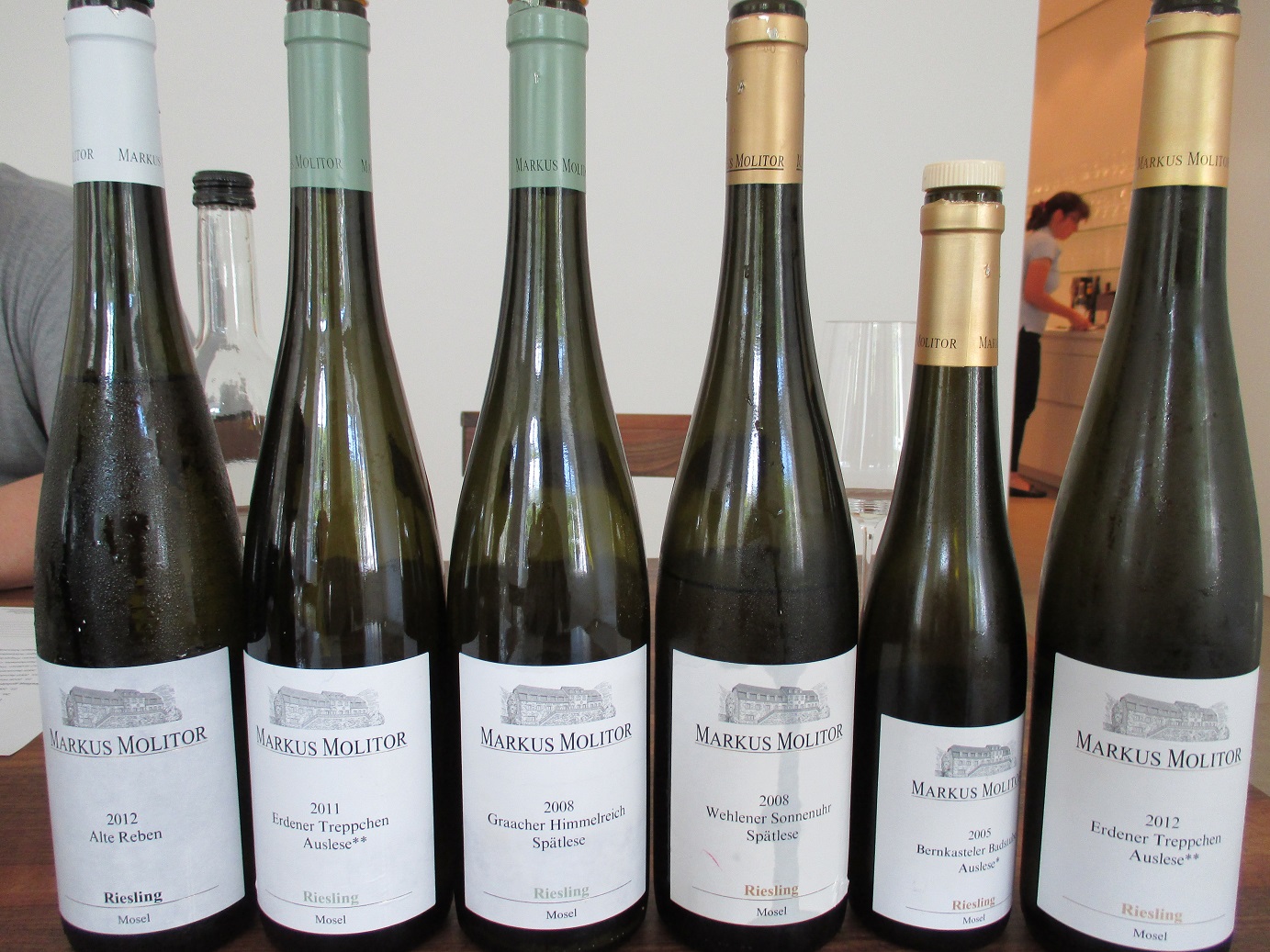
molitor tasting room molitor wines

Markus Molitor is a large family estate (beware- not located at the address on the website). There were about 40 different wines available, but we felt we had disrupted their routine. I didn’t enjoy the 2014 MM Schiefersteil with its odd aromatics (not recommended), the 2012 MM Alte Reben (70-80 y/o vines) had strong mineral overtones, white flowers, and a touch of passionfruit (drink to 2023, score 90). 2008 MM Graacher Himmelreich Spatlese feinherb had persistence, the interplay of its honey and stone fruits memorable (to 2023, score 90; 2011 MM Erdener treppchen Auslese** feinherb had a filigree texture (to 2025, score 91). (In some estates, the use of an asterisk – or several -indicates a bit “extra” in the category). Moving to sweeter wines, I was disappointed with the 2005 MM Bernkastler Badstube Auslese*, its rich and dense honeydew melon aspects cut short by a seeming lack of acid (drink now, score 83). The 2008 Wehlener Sonnenuhr spatlese was very smart; ripe apples and “sultana bran” coming together beautifully (to 2025, score 92). 2012 Erdener Treppchen Auslese** was gorgeous, Apricot, mandarine, honeydew melon again, this was viscous and a nice way to end the tasting cheerfully (to 2030, score 94).

mg tractor

Maximin Grunhauser is in Mertesdorf (not far from Trier) and on the opposite side of the road to what the GPS directed. Is labels can only be described as “traditional”. Our host was not really a salesman, but was quite willing to locate bottles and answer questions. This estate turned out to be another find – great quality across the range.  Wines are imported into Australia (again) by Neville Yates at Eurocentric. Picture is a very cute vehicle!

I was not impressed with the entry-level 2014 MG Riesling trocken (drink now, score 83), but things moved up significantly with the 2014 MG Herrenberg Riesling Alte Reben trocken, with much more finesse, limes and other citrus fruit running through its delicious frame (Drink to 2022, score 88). 2013 MG Herrenberg Riesling Kabinett feinherb, exhibited more peach and apple To 2023, score 90; 2014 MG Abtsberg Kabinett at a mere 7.5% blazed with orange blossom, limes and had the lovely balance of sweetness and freshness (to 2025, score 92);  2012 MG Herrenberg Spatlese was superb; the combination of density, Riesling purity and silkiness won me over (to 2025, score 93); 2011 MG Herrenberg Auslese had the touch of petroleum jelly and honey, a melange of mango, and matched acidity; imagine the best thick cordial you have tasted.(to 2030, score 94). The 2013 MG Abtsberg Auslese 7.5 % was a lesser wine in comparison- still slick and silky (to 2025, score 90). Finally we tried the 2011 MG Abtsberg #87 Auslese – just an extra-ordinary wine; tropical fruits plus other exotic fruits, plus some nettles, and a decadent endless finish. (Drink to 2030, score 95).

Mosel musings

Its not easy to take notes when on holidays, and with limited access to the internet. A few thoughts follow. Photos may be added later.

There are dozens of wineries in Bernkastel, and hundreds in the surrounding areas. Most are small, so the wines are not exported. Insider knowledge is needed to determine makers of decent wines. And the larger wineries may make more than 50 different wines each year, so what is available to taste and for sale can cover multiple vintages, sites, levels of quality; and it is certainly not feasible to try every possible wine, so we relied on the abilities of the hosts to take us through a range of wines. Further, although English was spoken everywhere we went (and my partner Robyn is fluent in German) there are only so many questions that can reasonably be asked, and notes scrawled in a limited time. The logistics to get any purchased wines back to Australia are awkward- I felt guilty buying so little.

The Mosel area is based around the  winding Mosel River, so it is quite a long area, with vines planted mostly on “the good side” of the river. This means the wines swap sides as the river meanders. Slopes can be death-defying, and it’s amazing how the vines can be cared for under such conditions. There are many paths suitable for cycling too.

Many wineries are only available to visit by appointment, and the car GPS was invaluable! Once opened, bottles can be safely refrigerated without degrading for at least one week (not a capability I seem to need).

The Mosel has had a dream run without poor vintages since the late 1980’s. This came to a crashing end in 2013 and 2014, vintages that winemakers described as “difficult” or worse. Buy with caution.

A special mention needs to be made of Rieslinghaus (formerly called Porn) in Bernkastel. There were >20 wines available by the glass, of varying vintages, makers etc. In addition, bottles, magnums etc were available for sale at very fair prices and covering again a range of vintages from makers such as JJ Prum, Schloss Lieser, Willi Haag and many more – plus some “auction” wines. This was an excellent resource – although we were busy revisiting wines purchased on our last trip in 2009. And this time around we wanted to try some different makers to gain a portrait of style (previous visits included MF Richter, Willi Schaefer, JJ Prum, R Haart, Dr Loosen).

A few random dinner wines -with scanty impressions included

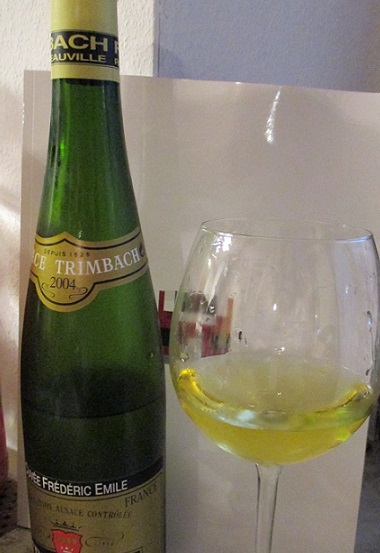
fe riesling

2004 Trimbach Frederick Emile Riesling – We had to start with a dry wine, and one from Alsace; delightful, pale, spicy, stony, dry. Drink now – 2025, score 93

bernkastel dinner wines

2003 JJ Prum Wehlener Sonnenuhr spatlese; this was a very hot vintage, and many wineries struggled; Prum described the wines as “sulky” and that the sites would take time to overcome the vintage vagaries – rich, mouthfilling, lush sweet tropical fruits, ready. Drink to 2020, score 90

2004 JJ Prum Wehlener Sonnenuhr spatlese; very different! Lively acidity and more classical limes, apple and energy. Drink to 2025, score 93

2004 JJ Prum Wehlener Sonnenuhr Kabinett; acidity powers this wine; minerals, lively; Here we are with an older Kabinett that will endure for at least another 5 years, but can’t quibble with drinking it; drink to 2020, score 90

2007 R Haart Kreutzwingert Piesporter feinherb 12.5%; Happy to drink this, although its drying out a bit. Red berries, stonefruit, white peach, and orange bitters.  Drink now, score 87

2008 R Haart Goldtropchen Auslese; 2008 seems to be the vintage that never retreated into its shell; this is a very sweet wine where the bottle mysteriously seemed to empty rapidly. I cannot really see further improvement and am happy to drink with its now – although the wine will hold. Drink to 2023, score 91.

2010 Schloss Lieser juffer sonnenuhr spatlese.  A year of high acidity, but once again the wine had the pleasurable balance of acid, sweetness and texture. Drink to 2025, score 93

A tasting at Selbach-Oster (Zeltingen, Mosel)

Selbach-Oster is a well-known estate in Germany, but distribution in Australia (via Nelson’s, Sydney-based) is recent, so I hadn’t tried many of their wines. The estate is 22 hectares, and typically produces 35 different wines each year, covering 7 sites, different classifications. Picking can proceed on the same site several times as well as picking different classifications at the same time – all site –dependent. Wine is quickly pressed, settled and gravity fed into old oak, and some into stainless steel tanks.  Ambient yeasts are used, (cultured yeasts used only if necessary). Fermentation is slow, and cool.

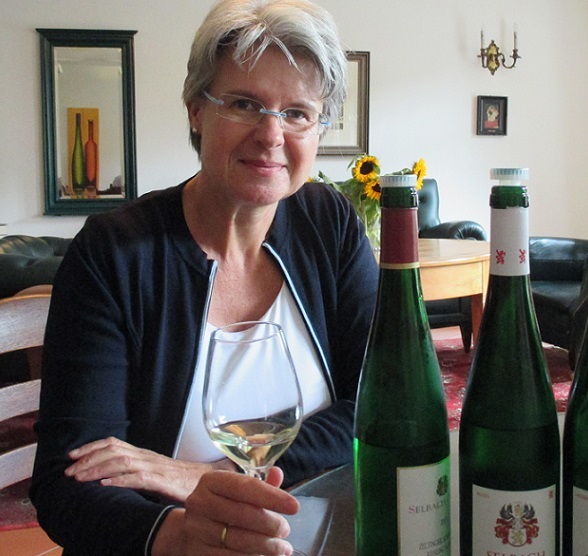
We set out to gain some familiarity with the styles made, with the English-speaking Barbara Selbach.

barbara selbach

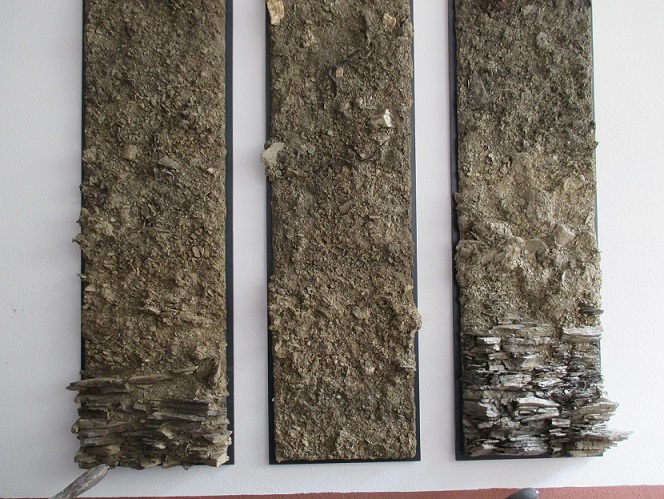
First we were shown profiles of the soil, showing the slates and degree of decomposition. L-R is Zeltinger Himmelreich (kingdom of heaven), Zeltinger Schlossberg (hill of the castle), Zeltinger Sonnenuhr (sundial).

so rocks

2014 S-O Weissburgunder (Pinot Blanc) 13%

Little is made in Australia, and I’m not terribly familiar with the variety, although I have been surprised at the depth of flavour in some wines from Alsace. S-O makes very little, matured in new 1000l litre oak. Round, mouth-filling flavours of white peach and smokiness (oak-derived?). Brisk to close. Great education on one of the Mosel’s “non-Rieslings”.

Drink now- 2020, score 89

Then we moved to a bracket of Rieslings. All were very pale.

so wines

2012 S-O Riesling Kabinett trocken 11.5%

Scents of cape gooseberry, green apple, stones, minerals, textured

Drink now – 2018, score 90

2012 S-O Riesling Schlossberg Spatlese trocken 13%

More aromatic, spices, melons, viscosity. Lovely drinking style

Drink now – 2019, score 92

2014 S-O Zeltinger Himmelreich Kabinett

Approx 17 gl/ residual sugar. Highly floral, red berries, green plum, gun-smoke, granny smith apple, plus some honey and lemon. Lots happening here!

Drink now- 2020, score 90

2014 S–O Riesling Kabinett 8.5%

Icing sugar. Musk, Ultra-light,  feathery. Where else can you get this delicious drinking style than in the Mosel? A lovely drink all-day wine

Drink now – 2018, score 90

2013 S-O Riesling Zeltinger Sonnenuhr spatlese feinherb “Ur Alte reben” 12.5%

From vines >100 years old! Grapes described by Barbara Selbach as loose bunches of lentil size, and as ‘a treasure”. Immediately seems ripe, with passionfruit, honey, citrus, and serious acidity. A “masculine” wine, and very serious.

Drink now – 2025, score 92

2009 S-O Riesling Wehlener Sonnenuhr Spatlese 8.5%

Ripe, and extremely playful, there are almost tropical arrays of pineapple here and other exotics. This wine just seems so balanced, natural and unforced, with warming, extensive finish. Completely delicious.

Drink now- 2025, score 94

2013 S-O Riesling Zeltinger Sonnenuhr Auslese 8.5%

Light white honey plus ripe nectarines. More depth and concentration than the previous wine, Creamy, rich, fine, balanced, refined. Very extensive finish

Drink 2020-2030, score 93

Conclusions

We had the great good speculative fortune to taste uniformly excellent quality across the board. The wines are balanced and unforced, with the benchmark Mosel acidity and excellent VFM. There is a fanatical degree of care taken to preserve the various parcels but in a low-intervention manner. Barbara Selbach emphasised several times that winery work could not fix any problems that left the vineyard. Keep your eyes peeled especially for their parcels such as Anrecht, Schmitt and Rotlay!

Most of the Rieslings made even in the Mosel are “off-dry”, but Selbach-Oster takes a great deal of pride in their dry wines too, regarding them as more difficult to achieve finesse.

Finally, many of the wines – thankfully – are in screwcap, so no cork issues such as TCA or oxidation.

Chateau D’yquem

d'yquem

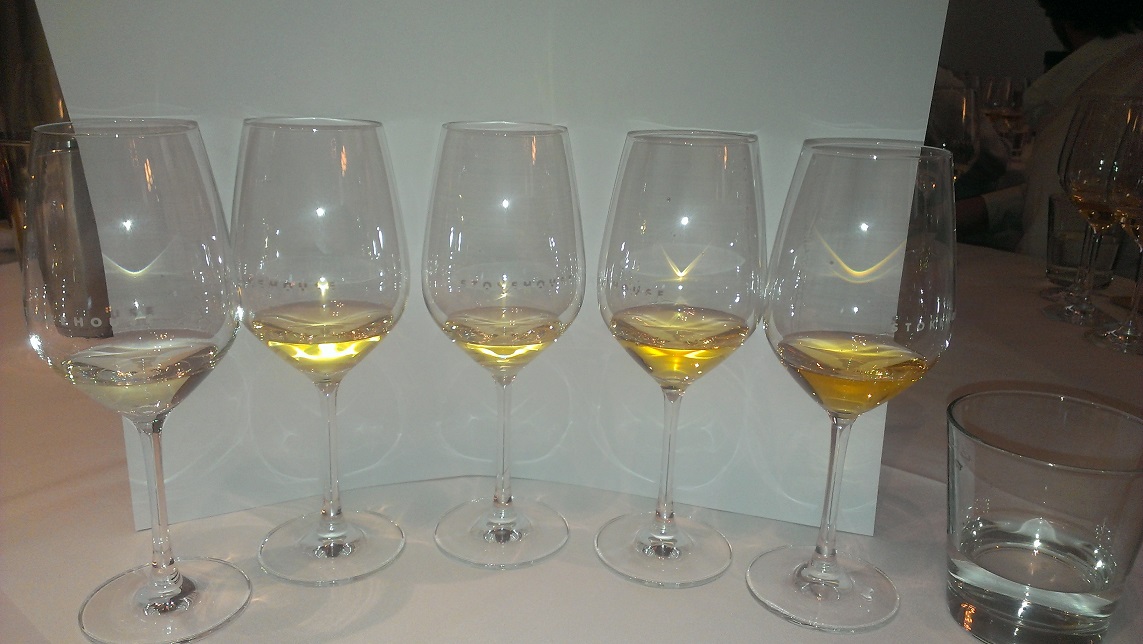
Another tasting thanks to Sommeliers, Negociants, Stokehouse and D’yquem’s Sandrine Garbay (oenologist) and Jean-Phillipe Lemoine (Marketing).

D’yquem is its own legend, and not a wine I can readily afford, and seldom try. I have vivid memories of the 1989 tasted in May 2013, and the 1975 tasted in June 2014. This hints at their longevity. The property in Sauternes is large, planted with Semillon and Sauvignon Blanc. Its elevation means it is prone to morning fogs, and then botrytis. Yields are very, very low. There is a mix of soli types and typically there are 4-5 different picks over a 4-7 week time-frame. This means there are often 25 batches to base blending decisions on. Fermentation is with indigenous yeasts, and in 100% new, fine-grained, medium-toast barrel- Seguin Moreau and Taransaud are mainstays .No malo. Lots of declassification of batches (and some years no d’yquem is released – such as 2012). Light racking. Light fining, light filtering.

The sweet wines below had an “airiness” in common, a texture that was subtle, and extreme persistence. Enormous concentration and the oak contributes to complexity without being obvious. And with enough acidity to avoid any semblance of flabbiness. Richness without fatness. Thematically, consider Chateau d’yquem to be a first growth, and its pricing doesn’t seem so extravagant. But money is still a factor for most people. Easy to like, hard to describe, as their class is thoroughly embedded.

The “dry” wine “Y” (formerly Y’grec) is now made from early picked Sauvignon Blanc, with some just-botrytised Semillon added. These are also very age-worthy, but can go into a dull phase after 3-4 years and remain there for a few years, before re-emerging. (this pattern is similar to Mosel wines)

2013 “Y”

(only 1 pick, 75% Sauvignon blanc, 25% Semillon, 7 g/l rs). Very pale, pungent notes of pear, apple, botrytis spices and some attractive bubble-gum. Stone, grass, nettles also on the palate, finished with crisp acidity. Angular and attractive, but will be better with time

Drink 2020- 2030, score 92+

2000 “Y”

(2 picks, 9 g/l rs) Some more colour, with a less voluminous bouquet, in the apple and honey style, It has a round, soft palate with more grip and warmth than the 2013. Would be very comfortable with many different foods

Drink now-2025, score 94

2013 d’Yquem

(70% Semillon, 30% sauvignon blanc, 13.2%, 150 g/l rs). Very pale, baked apple, peach-skin, and all comes together on the sweeter-than expected palate, Airy, and just at the start of its life.

Drink 2020-2040, score 96+

2005 d’Yquem

(13.9%, 140 g/l rs) Described by Sandrine as a “classical year, easy”. 5 picks. Quinces, almost some mint and exotics. Feathered, fine texture, chewy and elegant, ultra-refined. Fresh, concentrated and relaxed. At a lovely stage already, but absolutely plenty of time and improvement ahead

Drink now-2035, score 97+

1996 d’yquem

(125 g/l rs). Described as a textbook year. 5 picks. Some VA showing om top of,tangerines and scorched barley sugar but there is faint bitterness and some warmth too. But density makes this still pretty, and still fresh.

Drink now – 2025, score 94

Grampians masterclass

Grampians (Western Victoria), centred around Stawell and Ararat is less known for its Rieslings than its Shiraz, – probably overshadowed by the Rieslings from Henty (Seppelt Drumborg and Crawford River). However the Grampians can produce long-living, floral and mineral styles. Judicious use of low levels of residual sugar seems to help. The wines below are firmly in the “fruity” camp, not sweet.

Seppelt Great Western Riesling 2014

Varietal bath-salts, talc, mineral tang, zippy, delicious (14 g r/s) balanced, versatile

Drink now-2020, Score 92

Mt Langi Ghiran Langi Riesling 2010

Geisenheim clone of Riesling. Some bottle age-characters, honey and limes, but is on the austere side

Drink now- 2020, Score 88

Halls Gap Estate Riesling 2015

Obviously very youthful, residual sugar (8 g/l) is subdued by the beautifully judged.acidity, Fruit tingles. A producer new to me, although winemaker Duncan Buchanon is well known

Drink now- 2025, score 94

Best’s Great Western ‘Foudre ferment’ Riesling, 2014

Alsace-inspired, but thankfully at 11% not overblown as Alsace can be. Moderately soft, with some musk, citrus peel and florals, but the reward is the palate- slippery, slinky, textured, rounded.

Drink now- 2022, score 91

Jamsheed Garden Gully Riesling 2013

Skin contact, some barrel ferment. unfined, unfiltered, Looked a bit cloudy, and had some sour/bitter characters. Full on, very determined winemaking, very individual, but definitely didn’t appeal to me.

Not recommended

The Story Westgate Vineyard Marsanne Roussanne Viognier 2014

OK its not a Riesling, but was included in the bracket. There’s only a few rows of these varieties around in the district, and it’s a field blend. Bright, clear, tell-tale citrus and honeysuckle with a rounded palate. Comfortable rich wine, but I think some extra acidity would be my preference.

Drink now-2017, Score 86


Grampians shiraz is the “hero” wine; like many of the red wines grown in alluvial areas, it’s robust in flavours while being only medium bodied – likely benefitting from old vines, and restrained yields. The array of exotic spices and pepper integrated with natural acidity means the wines are long-lived, savoury and food-friendly. A move to whole bunches in the ferment means care has to be taken in techniques and judgement to avoid green characters and the technical composition including pH of finished wines.

2013 was a warm vintage with the added issue of varieties ripening together, complicating the typical vintage task of matching capacities of the right kind of vessel and picking best blocks at right times while crossing fingers and toes for the rest. All colours of wines tasted below were very youthful, with oak and tannins just beginning to really integrate. Alcohol levels were generally around 14%. Patience will be rewarded, as they are a pretty bracing now, with their best well ahead, as demonstrated with the bracket of wines following.

I feel that maybe it was not the best season to be brash on whole bunch inclusions.

Seppelt St. Peter’s Grampians Shiraz 2013

A riot of mixed spices matched with fine mocha-oak. Mix of black and red berries. Balanced but possibly lacking the usual concentration of this marque. Whole bunch used as “blend-in” material. Curiously disappointing after recalling the quality of the VFM Seppelt 2013 Chalambar Shiraz.

Drink 2018 – 2030, score 91

Bests Bin 0 Great Western Shiraz 2013

No “Thompson” made in 2013, so this wine has benefited from the “trickle-down”. A very health rude purple colour, there is upfront oak, but built in over savoury, clove-y, cocoa notes. I find the Bests Bin 0 often not especially varietal except via elimination, but this is a splendid wine regardless.

Drink 2016-2030, score 94

Jamsheed Garden Gully Vineyard Syrah 2013

80% whole bunch – high pH, high TA (a curious combination). I found the tannins here hard and green, Time may help, and I may be entirely wrong.

Drink 2015-2019, score 82

Halls Gap Estate Shiraz 2013

Seems, rawer and sweeter-fruited than other wines in the bracket. Tannins make their presence felt, but ultimately seems a bit straightforward – although keenly priced.

Drink 2016-2020, score 86

The Story Westgate Vineyard Grampians Shiraz 2013

Crisp, savoury, smooth, slinky, classy wine. There is some hardness in the tannins here too. I’m a fence-sitter on this one

Drink now-2020, score 89

Mt Langi Ghiran Langi Shiraz 2013

Slightly medicinal bouquet (forgiveable) which dissipated over time, oak is prominent, acid is poking through and this wine looks entirely backward; hard to describe which means it is “right”, with all in place; best course is to revisit in a few months

Drink 2017 – 2027, score 91

Now we get to look at the time capsule; older wines as a pointer to how the 2013’s could develop. Most of these wines are lower alcohol.

Seppelt Great Western Hermitage 1971

A wine I have agonised over on previous occasions; is it a bit of TCA, or is it a combination of some hay/straw and some garlicky sulphides and varietal mushroom? It resuscitates on the palate as a fully mature, generously flavoured old wine with tremendous now-vinous fruit concentration. Remember its 44 years old, and deserves respect.

Drink now, Score 87

Bests Bin 0 Shiraz 1984

Chewy, some Ribena-like characters, and dark cherries. No rush!

Drink now-2020, score 86

Bests Bin 0 Shiraz 1998

Vibrant, beautiful medium bodied wine of length, charm and finesse. Astounding.

Drink now- 2025, Score 95

Mt Langi Ghiran Langi Shiraz 1998

Also very alive, with some sweet toasty oak, a decent wine but wouldn’t place it as Victorian

Drink now – 2018, score 87

Mt Langi Ghiran Langi Shiraz 2004

Colour seems to show its been in a deep freezer; ultra youthful. But it seems a bit “stretched”, and I cannot see improvement with further maturation.

Drink up 84

Jamsheed Shiraz 2006 (magnum)

Colour is a bright bomb; there is some slight reduction on the bouquet, but the wine is dense, and flavour packed. Very happy here, and future is extensive.

Drink now- 2022, Score 93

Seppelt Show Sparkling Shiraz 1986

Disgorged in last week or so, there are some unattractive decayed elements on the bouquet, and the degree of bubbliness is subdued; BUT the fruit power remaining on the palate is extra-ordinary; full ripe plums, and blackberries, a wine at peace with itself.

Drink now, score 90
One dry, one sweet

2003 Seppelt Drumborg Riesling 12.5%

From Henty in western Victoria. Screwcap, so unmodified by any cork influence, the wine is very pale light straw in colour. Abundant lemon/citrus aromas absolutely vibrant acidity. Pristine, high class, indestructible, delightful. Flavour without fatness.

seppelt rr 2003

Drink anytime over the next 20 years, score 95

2001 Ch Filhot (sauternes)

Light bright straw, and immediately obviously from Sauternes (or Barsac). Pears, spices, citrus and some grip. Some botrytis dustiness. About balance not power. Fresh, lovely drinking. So it seemed likely that the wine was from a “lesser” vintage such as 2002 or 2004. When revealed, it made more sense. The fantastic year of 2001 had bolstered the usual Filhot style

Semillon dominant with some sauvignon Blanc and muscadelle, Filhot is not a property that comes to mind when looking for quality (although known VGV); this wine was a resounding success, and proved that I had unfairly maligned the Chateau.

Drink now – 2020; score 94