One local, one German, and another loss

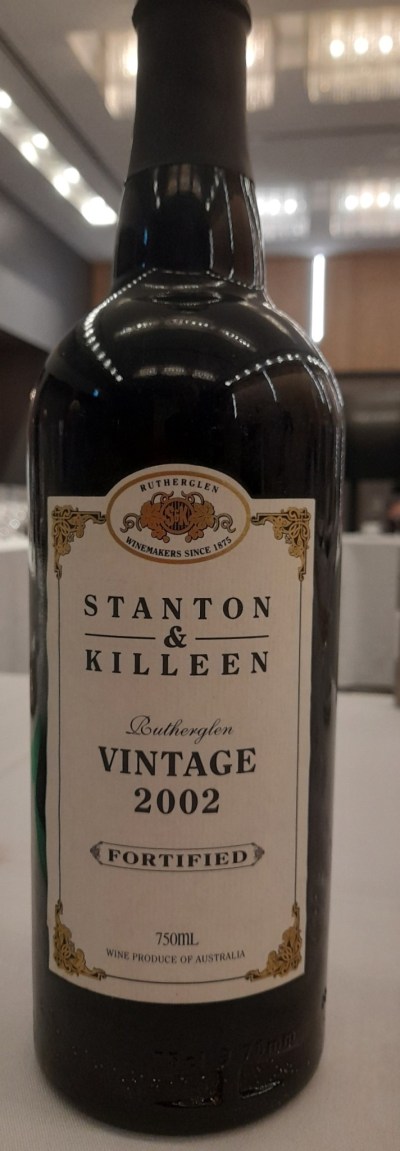
2002 S&K vp

2002 Stanton and Killeen Vintage Fortified 18.1%
29% Shiraz, 25% touriga, 20% durif, 12% tinta cao, 12% tinta barocca, 2% tinta roriz

Deep black/red colour with some bricking. Mocha, spices, creaminess, excellent spirit integration, and dark blackberry. Palate is packed with liquorice and aniseed, and fruitcake spices. Vintage port style, but It was certainly sweeter than Portuguese models. I suspected touriga inputs alongside Shiraz, and age around 25 years. Stanton and Killeen rate the vintage as very good with an 8/10 rating.

After the wine was unmasked, I was disappointed that marque’s usual depth, complexity, suppleness, savoury bite and drinking pleasure was less than expected. A sound wine, but lacking the expected thrills.

Drink to 2030, 91 points

2007 haart auslese

2007 Reinhold Haart Wintricher Ohligsberg riesling Auslese 7.5%
Mosel, AP#16 and 127 g/l rs.

Gold colour; plentiful spices, red apple, white peach, and passionfruit; palate is fresh and lush, creamy plus some mineral and light smoke with that classy balance between its high sugar (for an auslese) and acidity that avoids cloying and leaves one begging for more. A delight.

Drink to 2030, 94 points (and thankfully still similar to my notes from Jan 2017)

I was saddened to learn of the recent death of Willi Schaefer. I love these Mosel wines – pure and unforced. I had a terrific visit to the dining room in the house in 2007. We were welcomed, despite our sketchy knowledge of the wines and our inability to purchase more than a token bottle or two. An unhurried and extensive tasting, with plentiful knowledge transfer which provided the determination to purchase and cellar their wines. I will drink my stock with pleasure and treasure my memories.
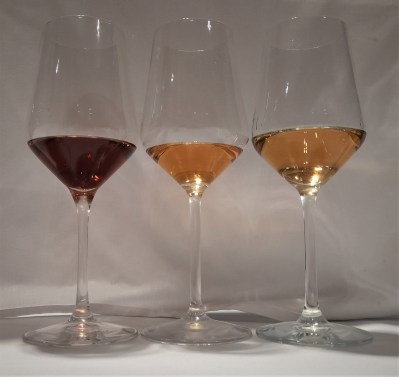
Very mixed masked sweets

sweeties april 2023vitsoc april 2023

1976 Deinhard Winkeler Hasensprung Riesling Auslese
Rheingau.

At first sight, there didn’t seem much hope of drinking pleasure (it looked like an old fortified). But it smelled like a Gewurztraminer, laden with spices, honey, apples and a touch of cork (not taint, just age). The palate was very sweet, enough to move its origin to Germany, but age a puzzle. It tasted grapey and reminiscent of muscat of Alexandria. Thus the clues mounted. German Riesling, perhaps Auslese back in 80’s? 70s? When unmasked, surprises all around. Past its best for sure, but a drinkable survivor.

Drink now 87 points (and higher if history guides you – up to 90 points)

2005 Tertre de lys d’Or Cuvee d’exception
Sauternes. Diam!

Darker colour compared to the next masked wine. Lemon meringue, vanilla pod, charry oak. Palate showed lemon and marmalade, but much lighter and straightforward than anticipated. Sauternes or Barsac for sure.

Drink now, 85 points

2014 Chateau Suduiraut 13.8%
Sauternes. 95% semillon, 5% sav blanc 150 g/l residual sugar
18/12 months oak, (50% new, 50% one y/o)

Lighter colour than its paired wine; has thrilling nettly/green pineapple and much greater impact overall. Palate is a much more viscous and sweeter with more overt oak impact. This is all class, and one to revel in. Ripe year – 2009? 2014? Botrytis and bursting with stonefruit and spices. Super freshness, length and hedonism already in an immaculate package, but will reward the patient.

Drink to 2035, 95 points now, and more to come.

better mixed sweets

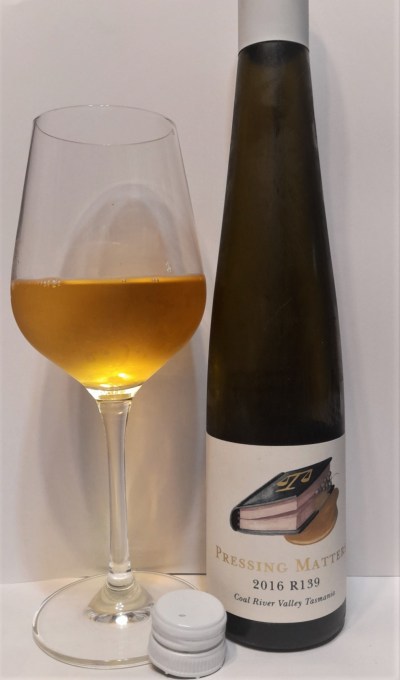
2016 pressong matters r139

2016 Pressing Matters Riesling R139 9.2%
Coal river valley, Tasmania

Pale colour, lime, pear, apple, ginger biscuit. The winery specialises in the unusual combination of Pinot Noir plus assortment of Rieslings at varying sweetness levels (R0, R9, R69 and r139) with many wine show successes and a wine club that offers regular museum releases. This wine is a cracker. With the crisp Tasmanian acidity, it has the magic combination of varietal definition, botrytis and purity. White peach and lime, thrilling acidity and it just lingers gracefully. Special!

Drink to 2030, 94 points

2015 ca' d'gal vv

2015 Ca d’Gal vite Vecchia Moscato d’asti 5%
Piedmont, lightly sparking (frizzante) packed with icing sugar, musk, and grapiness, spices and texture. The muscat character shines.  Around 90g/l residual sugar, and >$100.

Not as stellar as the 2008 tasted about twelve months ago, but its vitality will utterly revive jaded palates, and confound many with its delicious, bracing freshness.

Drink to 2027, 92 points

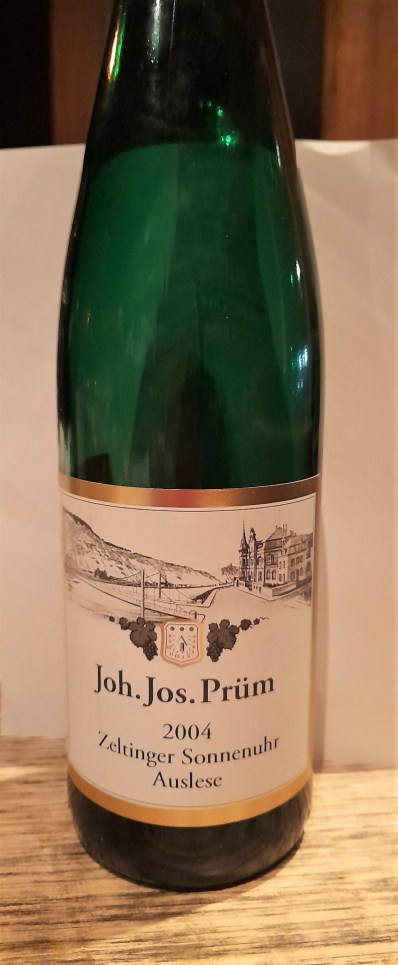
2004 jj prum zs auslese

2004 Joh Jos Prum Zeltinger Sonnenuhr Auslese Riesling 7.5%
Mosel, and a startlingly pale colour for its age. Showing white flowers, herb, apple and pine/nettle. The palate is full of minerals and phenolic grip. More modern vintages are riper and sweeter, but even though this wine was served straight after the Ca’ d’Gal, it didn’t seem to have the level of Auslese sweetness (my guess was Kabinett) A rare, relative disappointment from this producer.

Drink to 2026, 90 points

Drinks from different European areas

2008 Schloss Lieser Brauneberger Juffer Sonnenuhr Riesling Spatlese 7%
Mosel again, from winemaker Thomas Haag, with a short but serviceable cork. This wine was purchased from Eurocentric quite a while ago, and is in a great drinking phase.

2008 schloss lieser bjs spatlese

Bright gold in colour, it shows lime, icing sugar, and brown spice notes. The palate reveals more apple and mixed white and yellow stonefruit, with some green herb, plus the spices. It is sweeter than many in the spatlese category, but is poised for delight, being all too easy to drink and reach for more – the sign of a decent wine. Its racy, ready for enjoyment and shows no sign of fading.

To 2025, 92 points

2011 Georg Breuer Riesling Auslese 8.5%
From the Rheingau (Germany); another German area where most action is happening with the dry Rieslings – the Georg Breuer Berg Schlossberg is exceptional. But they have a range of sweeter styles too. Pale gold colour; fresh with dominant tropical fruits, particularly just-under-ripe pineapple. The wine still tastes fresh, honest and straightforward – enjoyable without providing dramatic highlights.

Drink soon, 87 points

1997 Trimbach Gewurtztraminer Vendanges Tardives 13%
Alsace (France). Buried in the cellar, and really should have been tackled earlier.

Pristine cork, and a bright deep gold colour. Vendanges Tardives (VT) is late-picked and my guess was around 40 g/l in this example. Tantalizing and unmistakable floral varietal scents – musk, apple, raisin and spices. Age and likely oxidation is showing with some furniture veneer and caramel aspects. Low acidity is a hallmark of the variety, and time has chipped away at this wine’s appeal. There is still rich mouthfeel, but it’s flatter than desirable, making drinking too much effort when othere wines are in reach.

Its peak drinking has gone by, so drink up – you may get a better bottle!

2006 Joh Jos Prum Wehlener Sonnenuhr Auslese Riesling Goldkap AP#17 7.5%

The gold capsule indicates “more” than an auslese category; greater ripeness, and complexity. This category from JJ Prum retails for around twice the price of the auslese. The combination of very special site, the experienced team that have mastered this style, the opulent botrytis-laden vintage, and the Goldkap combine to make a remarkable wine.

This is an outstanding Mosel Riesling. Bright gold in colour, it exudes a mesh of floral citrus, light smoke, petroleum jelly (decidedly not kerosene), mango, red apple, and furriness. The palate hums along with acidity and the most seductive and utterly compelling texture and length. Honey, plus citrus, with the affluent residual sugar entirely wrapped up with acidity; it oozes pleasure and decadence.

My brief note from May 2010 is similar “complex, penetrating with plenty of acidity, petroleum jelly, red apple and red fruits, amazing length 19/20)”

No harm to drink now, but anytime to 2035 with comfort. I wavered but it deserves 97 points.

Don’t hesitate if you can find it.

Two sweet old world wines

2007 von Schubert Maximin Grunhaus Herrenberg Riesling Auslese 8%
Mosel, Germany. A clear dark straw colour, this wine from Maximin Grunhaus shows tropical fruit especially mango plus a touch of mint. The palate is slightly oily, with some bitter herb, ripe red berry and red apple. It’s not the sweetest Auslese -style encountered (although acidity is balanced). Some grippiness is evident but not unduly intrusive – and my preference would be for earlier drinking while this wine retains its fruity zestiness.

In the likely realm of bottle variation, drink to 2025, 90 points

1964 Moulin Touchais 12%
Loire, Chenin blanc. The Loire valley is home to a range of chenin blanc from dry to botrytised (and other varieties). Chenin Blanc’s versatility means it can produce sparkling wines, the dry Savennières and sweeter styles but I seldom see the wines of Bonnezeaux or Quarts de Chaume in Australia. Chenin blanc in Australia however is generally innocuous, although it was once a mainstay of Houghton White Burgundy and I recall a stunning botrytis example in the 1981 St Leonards. I have also tasted some delicious South African examples.

The sweet wines from Moulin Touchais have a reputation for extreme longevity, and I’ve tasted other examples from Marc Bredif back to 1959, and have a few Domaine Huet tucked away. The Moulin Touchais wines are apparently picked in two passes – the first early while it is full of acidity, and a later harvest when it has ripened further; these are then blended.

1964 moulin

The bottle was opened and decanted at a restaurant and I didn’t see the cork, alas. The wine was a glowing gold in colour and showed the tell-tale varietal apple aromas, with some honeysuckle and spiced sultana notes. There was also a touch of straw oxidation, but not disconcerting, the palate exhibited wax, apple, honey,  citrus, some nuttiness and refreshing texture – and at a guess 50 g/l residual sugar. There was plenty of life in this old wine, and it seemed to become richer, more mouthfilling, vigorous and harmonious over the evening, and it matched particularly well with fish courses.

Again, at this stage of life, variation is expected, and I was well pleased with the result, especially the improvement with extensive aeration.  Drink to 2030, and 92 points.

1998 Stanton and Killeen Vintage (port) 18%, plus other impressions

At 21 years of age, this Rutherglen (Victoria) fortified is still very youthful. It has 1 gold and 5 silver medals to its credit and composition is 26% Shiraz, 26% Touriga, 20% Durif, 13% tinta cao, 13% tinta barocca, and 2% Cabernet Sauvignon; a mix of “traditional Australian”, and Portuguese varieties. Remarkably, the wine is still available ($114) – with many other vintages- on the Stanton and Killeen website.

1998 S&K VP

The cork emerged well, and in excellent condition. The colour is outstanding for its age, a very dense dark black crimson,  and there is an exciting range of aromas- dark liqueur cherry, almond-meal, blueberry, mulberry, and spice notes The quality of (brandy) spirit is excellent, and has integrated well. The palate is sweeter than Portuguese versions, but certainly drier than most Australian attempts. The palate is full-bodied but very supple, showing a lingering mix of black and red fruits, red liquorice and fine chalky tannins.  Above all, it is deliciously drinkable.

Drink to 2030, and 93 points.

1986 Stanton and Killeen Vintage Port
Served blind, this wine was bricky in colour, showing sweet mocha notes, dried fruits and citrus peel. The spirit was sweet; the palate was also sweet, soft and mellow, and seemed Australian in style. The milk chocolate and plum flavours suggested Victorian origins, and my conclusion “around 30 years old, Victorian, Shiraz” turned out to be reasonably accurate. (95% Shiraz, 5% durif). The wine is fully mature, and bottle quality may differ!

Drink to 2025, 90 points

2007 JJ Prum Wehlener Sonnenuhr Auslese Riesling AP#22 7.5%
Very pale in colour, this Mosel wine is supremely elegant and needs much more time (still) to reveal more of its charms. It displays smoke, petroleum, crunchy ripe red apple and tropical fruits, particularly just-ripe pineapple. The palate is pebbly, sustained and the acidity really masks the considerable sweetness. This is a mouth-filling, creamy, intense and decadent wine, but it’s not yet resolved, and I recommend a further 5 years aging if you are fortunate to own any.

Drink to 2035, 92 points –  with more in the future.

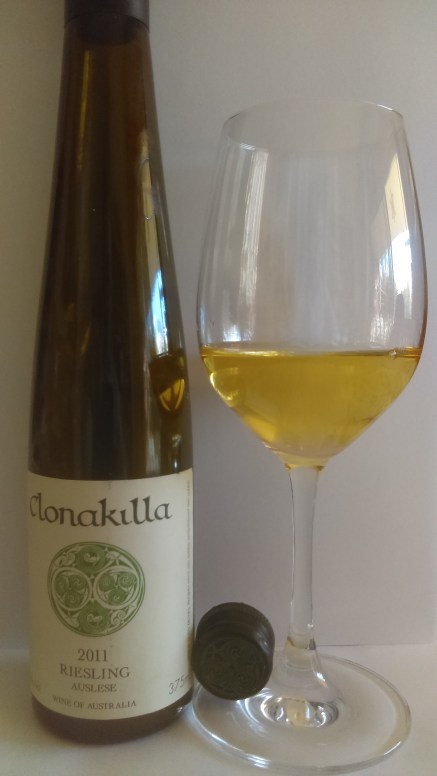
2011 Clonakilla Riesling Auslese 10%

Canberra district, screwcap, half-bottle.2011 clonakilla riesling auslese

From a “small batch release”, perhaps I had some spare cash then, and invested in a few bottles from this notoriously wet year in most of Australia (white wines fared better than red wines).

Clonakilla is famed for its Shiraz-Viognier red wine, but its Rieslings are convincing too (as are those from nearby Helms’s). But a late-harvest Riesling from Clonakilla is a rarity. And a fair amount of botrytis is suspected.

The wine is a light-to-medium gold colour, showing lime florals, white flowers, and some less overt ripe apricot and mango; the quite viscous – and sweet- palate is beautifully fresh and balanced, lime juice and spice notes finish with a cleansing citric twang to add interest to its hedonism. This dessert wine absolutely cries out for a fresh fruit platter.

Plenty of life; drink to 2025 and 93 points.

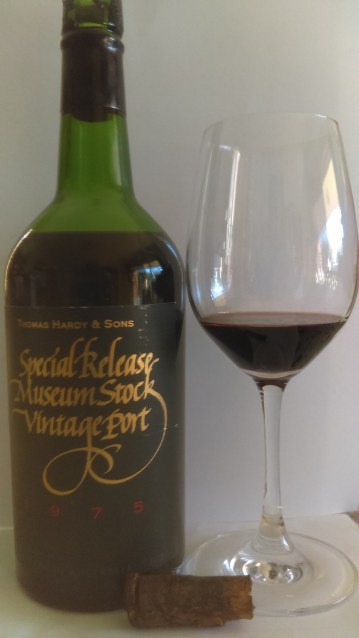
1975 Hardy’s Vintage Port (special release museum stock) 17.5%, and more

With 4 trophies and 20 gold medals up to 1987, this is a special wine. From McLaren Vale, South Australia, the cork has thankfully performed its duty, and the wine seems younger than its 44 years.

1975 hardy's vp

It’s a solid brick red colour (with substantial sediment that makes decanting worthwhile). Fig, rose-hip,  blackberry, espresso and sweet integrated brandy spirit are evident. Drier than the typical traditional Oz style, this wine is immaculately manicured; the satin-fine tannins melded with blackberry and a supremely extended palate fully demonstrates why obsessives bother cellaring this style.

Drink to 2030, 95 points.

2009 (Forstmeister Geltz) Zilliken Saarburger Rausch Riesling Diabas 12%
Destined for a “GG”, a cask stopped at 16 g/l residual sugar. Pale lemon colour with arresting aromas of passionfruit, white flower, red apple, and ripe green herbs. The wine is compelling in its length, texture and interest (nashi pear)  that will suit many cuisines (Asian or something simple such as smoked salmon). This Mosel area wine sits at a “feinherb” level (less than Kabinett) and is completely,  winningly delicious.

Drink to 2025, 93 points

2007 JJ Prum Graacher Himmelreich Riesling Auslese Goldkapsule 7.5%
The gold capsule denotes a bit “extra” for its category (some producers use “stars” such as **).

This Mosel wine instantly showed its style and class. Nettle, herb, and petroleum with white peach notes; the palate has rich tropical notes and brisk lemon but the balance of sugar and acidity makes it feathery; and a total, supple delight.

Drink to 2030, and 92 points.

another Willi Schaefer

2007 Willi Schaefer Graacher Domprost Riesling Auslese #17, 7.5%
94 g/l residual sugar- serious territory.

2007 willi schaefer

The wine is still a bright pale gold colour, with more “presence” than the two Kabinetts opened earlier.  There is a touch of petroleum, which does not detract from the array of white peach, white flower, ripe red apple, lemon sherbet  and flinty aromatics; the palate is sensual, with those fruit flavours melding with light honey viscosity and a twangy vibrant acidity. This wine is a parcel of delectability, and a fine example of a Mosel sweetie with some bottle development – with great prospects for its future.

Drink to 2033, and 94 points