Two from Portugal

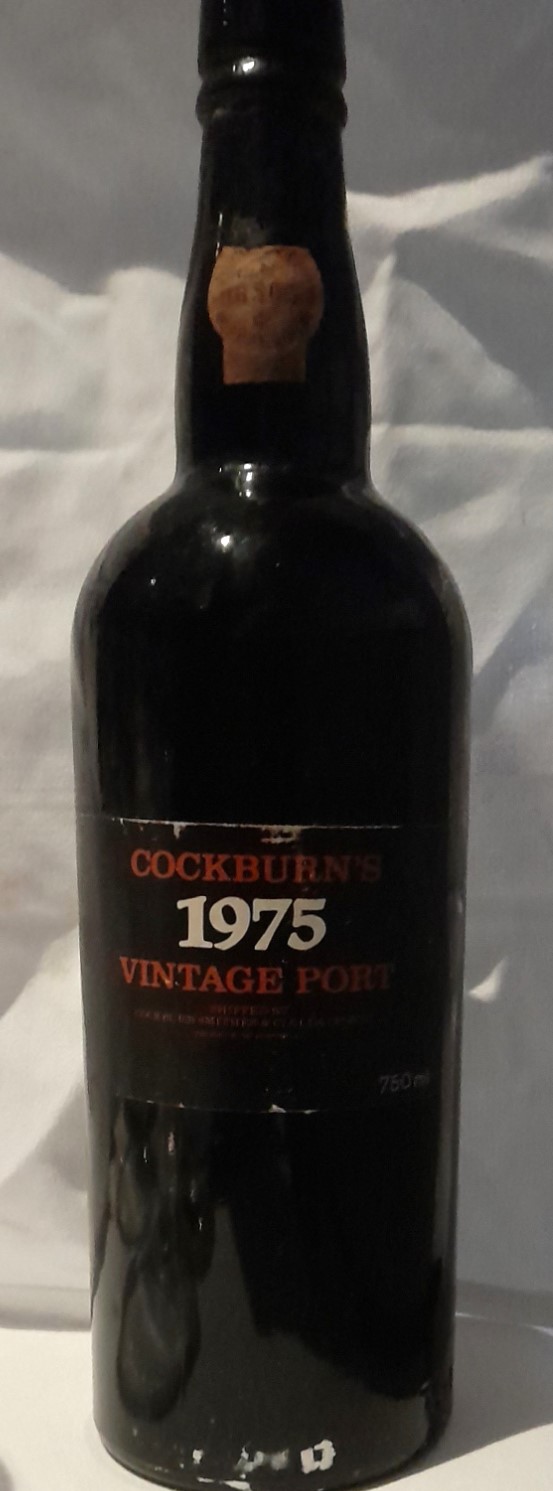
1975 Cockburn VP

1975 Cockburn Vintage Port

Served blind. Amber tawny colour, and clearly old (early 80s?). Roses, light mocha, sugared almond; palate less fragile than expected; spirit is holding this wine together. Unveiled – a modest VP year, a modest producer, but a triumph to have survived damn near 50 years. Certainly its been better in the past, but no shame, and no problems drinking my share!

Drink up, 91 points

2000 fonseca

2000 Fonseca Vintage Port 20.5%
Medium ruby colour; very floral with blueberry, roses and violets, spice notes too; palate is bright and crisp, very supple and civilized, dark red fruits, almond sugar, refined tannins and beautifully judged spirit. Enormous drinkability too. (This was a much better result than the bottles tasted in October 2023!)

Drink to 2035, 95 points

Three masked Euro wines from a dinner

2015 Ch Suduiraut 14%
Sauternes – 94% semillon, 6% sav blanc. Picked in 5 batches, matured for eighteen months in 50% new and 50% one-year old oak, 138g/l residual sugar.

Bright yellow colour, vivid tropical fruits – pineapple, mango, cumquat. Slinky texture with oak sunk into the background, and spices. Fresh, and welcoming, but more pleasure awaits

Drink to 2035, 94 points

2015 Ch Rayne Vigneau 13.5%
Sauternes – 74% semillon, 24% sav blanc, 2% muscadelle

Deep yellow/gold colour; dark honey and citrus, and botrytis dustiness; viscous, intense palate – ripe, rich and ready with a touch of orange/tangelo. I can’t recall trying a wine from this producer before.

Drink to 2030, 91 points

2001 Fonseca quinta do Panascal Vintage Port 20%
Portugal.

Not a generally declared vintage, but this is a very good site – and single quinta wines can often offer exceptional QPR. Deep red colour, showing blueberry, blackberry, “putty”, mocha and nuttiness. Vibrant and rich mouthfeel. Clearly Portuguese, and around 15-20 years old, I wavered between VP and LBVP. My notes thankfully very similar to my previous tasting on June 2021.

Drink to 2033, and 92 points

One dinner – four from Europe

First up, Australian winemaker John Vickery died recently. He was a gentleman, an expert winemaker and had huge influence on winemakers here. Riesling was his forte, with many memorable wines made at Leo Buring,  Richmond Grove and the eponymous Vickery label. He kickstarted my interest in wine, and my early tribute is here.

A recent dinner I attended had a plethora of interesting wines (all served blind), and I will try to describe a few.

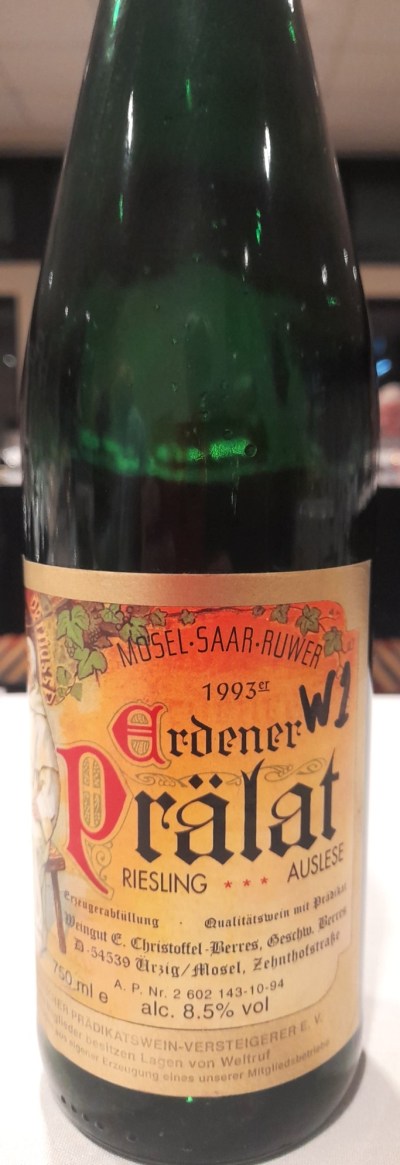
1993 christoffel EP

1993 Christoffel-Berres Erdener Pralat Riesling Auslese*** 8.5%
Mosel. Light gold colour- petrol, tropical fruits, blackcurrant. Creamy palate, fresh with terrific balance. Lovely wine from a great site in Mosel. Wines are no longer produced, but there is (or was) a fair stock of wines from 1987-97. This was apparently an auction wine, and the *** indicates greater richness in the style.

Drink to 2033, and 93 points

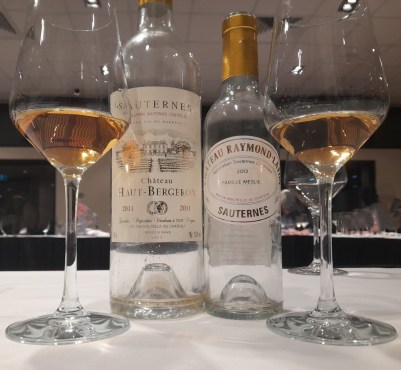
2011 2013 sauternes

2011 Ch Haut-bergeron 13.5%
Sauternes. Really Interesting to see this after the 2001 tasted recently.

Gold colour, bursting with vanilla, apricot, pineapple rind, Palate is slinky with vanilla bean, marzipan nuttiness and cumquat. Ripe, fresh, dense and dramatic. At least a decade in front of it. Oak plays an important structural role here, but the fruit is winning.

Drink to 2035, and 93 points

2013 Ch Raymond-lafon 13.5%
From half bottles – Slightly duller colour, with nettle and herbal elements. More savoury than the previous wine, palate showing guava, pineapple and passionfruit. Several winemakers present suggested some ignoble rot (aspergillus/penicillium) but in the amount involved won’t affect really enjoyment except for the truly ultra-fastidious.

Drink to 2030, 91 points

2000 Fonseca Vintage Port
Portugal

Sketchy notes made under time pressure “deep ruby colour, almond, spirit a bit hot; red and dark fruits, mellow – Portuguese – early 2000s”. A second bottle was not as good, and the third bottle had vanished before I could assess.

A bit disappointing for Fonseca on the night– drink to 2033, and 90 points

Two countries, two styles

1986 chambers VP

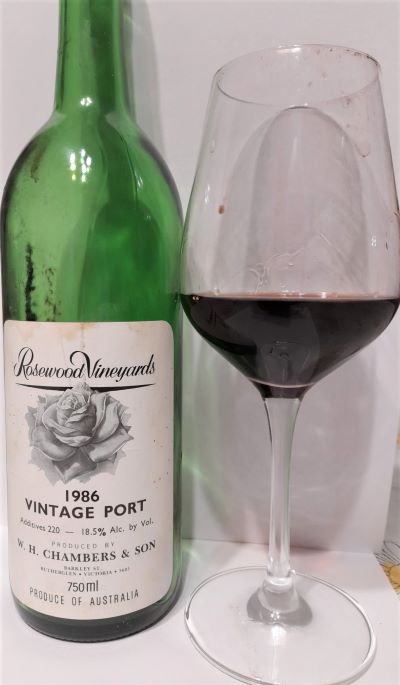
1986 Chambers Vintage Port 18.5%
Rutherglen, Victoria.

This wine had substantial sediment, so decant very, very carefully. The colour is aged and bricky, but solid. Red liquorice, cherry, mocha, malt and beautiful spirit. The palate is very sweet, but such is life. The rest of the package is the spirit integration, the freshness and tannin elegance. Made by the legendary Bill Chambers, likely Shiraz – but who knows? – a terrific tribute to a winery renowned for its ancient muscats and topaques, but akos with a monster range of reliably underpriced table wines.

Drink to 2033, and 93 points

2008 fonseca crusted

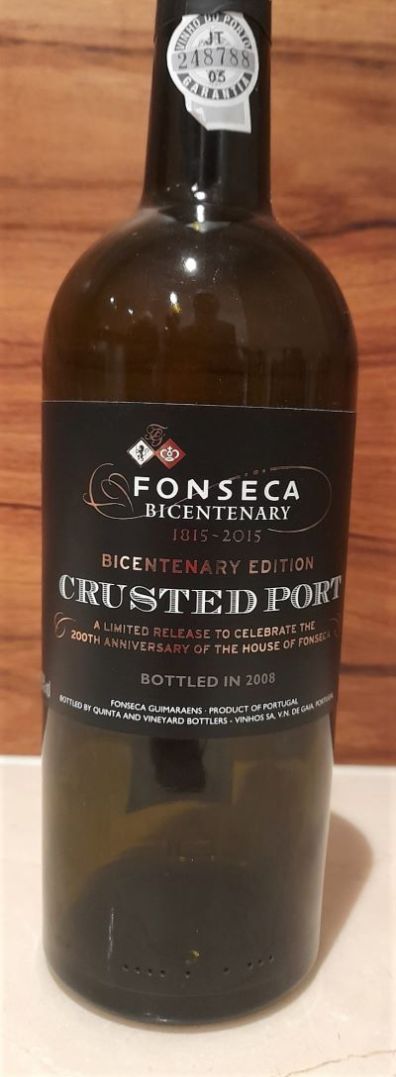
2008 Fonseca Crusted Port 20%
Portugal.

Similar in style to a late-bottled vintage Port, this fortified wine spent four years in large oak, and was bottled unfiltered, thus having a (heavy) crust and demanding decanting.

Deep in colour – and served masked- I instantly leapt to Portugal as its origin, the florals including roses, blueberry and violets. The palate was savoury, laden with cherry, plum plus fruitcake spices and super-supple, an elegant, youthful fresh and lively style with delicious spirit integration. My only question was whether the wine was a VP (did it have enough “stuffing”) or an LBVP, or a single quinta? I wrongly settled on a young VP, perhaps 2007. Regardless, a lovely drink with many years ahead.

Drink to 2033, 94 points

Two sweet, and two strong

2000 Ch Rieussec (Fargues, Sauternes) 13.5%
1999 Ch Coutet (Barsac, Sauternes) 13%
These were served as a pair (masked). The first wine had more of a copper colour, but with definitive Sauternes character – vanilla, cumquat, wax, honey, bitter orange and citrus rind. It seemed ripe, ready, and enjoyable. 2000 was a wet year with a small crop – 65% Semillon, 24% sav blanc, 11% muscadelle.
Drink to 2025, and 92 points

The second wine also seemed typically Sauternes, albeit with less overt acidity. Pale orange colour, melon and tropical pineapple were its key features. This was also ready, but in a subtler style than the first wine. Sound, correct but few thrills. 75% Semillon, 23% sav blanc, 2% muscadelle.
Drink now, 90 points

I (correctly) guessed both wines were from the mid to late 1990’s, and from “lesser” years.

Continue reading

Recent misses (and hits)

1968 Moulin Touchais (Coteaux du Layon) Loire Valley
Chenin blanc. A bit of dried apple, but this oxidised bottle provided no pleasure.
1979 Moulin Touchais (Coteaux du Layon) Loire Valley
Similar, but worse. Pretty dead.

These “fails” could not be scored. But Cellartracker shows there are better bottles around.
2004 fonseca
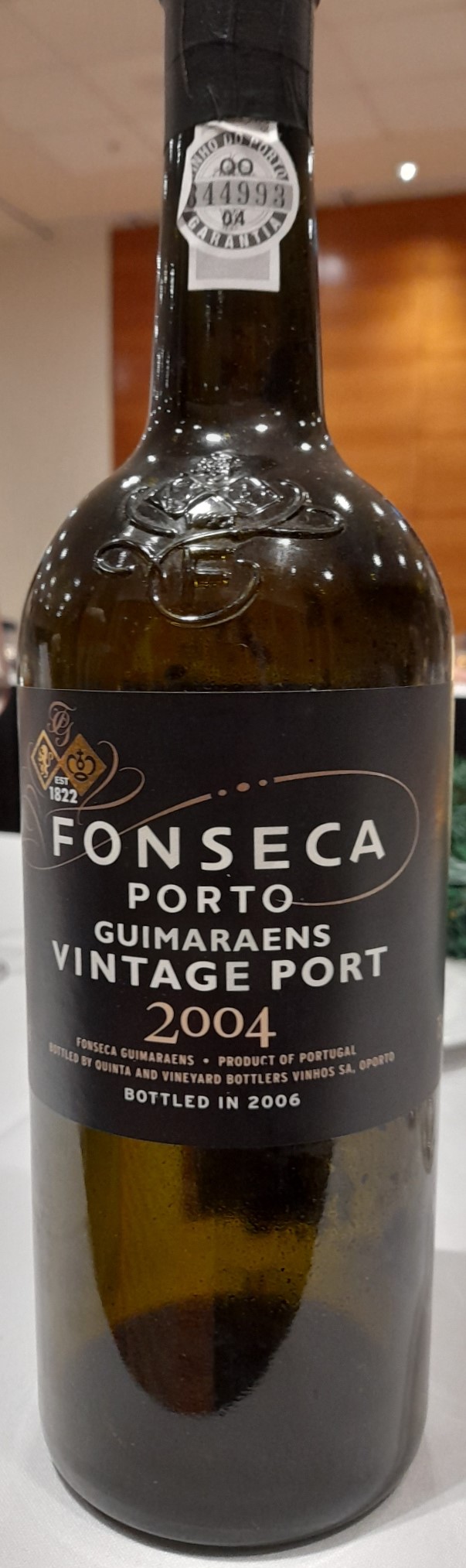
2004 Fonseca Guimaraens Vintage Port
Portugal. Ruby colour with some bricking; dark red fruits and plum, dried fruitcake and spices, almond meal, clean spirit, savoury, grippy, chalky. Maybe a tad light, but very smashable at the end of a long night! Not a generally declared year, and in this year Fonseca also produced a Panascal. The single quinta wines can be excellent value.

Drink to 2030, 92 points

2005 Zind-humbrecht Turkheim Riesling 13%
Alsace. Advanced mandarine colour; apricot and tropicals run riot. Palate is off-dry, waxy, with lime marmalade, and  22 g/l residual sugar. Great fun, but drink up. Alsace is so inconsistent, but when they get it right. Zind-humbrecht sometimes seem alcohol-heavy; this hit the spot.

Drink now, 90 points

2000 Chambers botrytis tokay
Rutherglen, Victoria. Its colour was almost mahogany, but it was still kicking sweetly with orange, toffee, quince,  and dried fruits. It was very grapey, spicy, and varietally not Riesling nor Sauterne-like. I was pondering Frontignac, or something unusual.

Botrytis tokay (muscadelle) is uncommon, but not unique. Chambers in Rutherglen released thi style from 1996, 2000 and 2011. Pfeiffer has also made the style.

Drink now, and 90 points-  as a wine that was difficult to define, but worth the effort.
1977 taylors VP
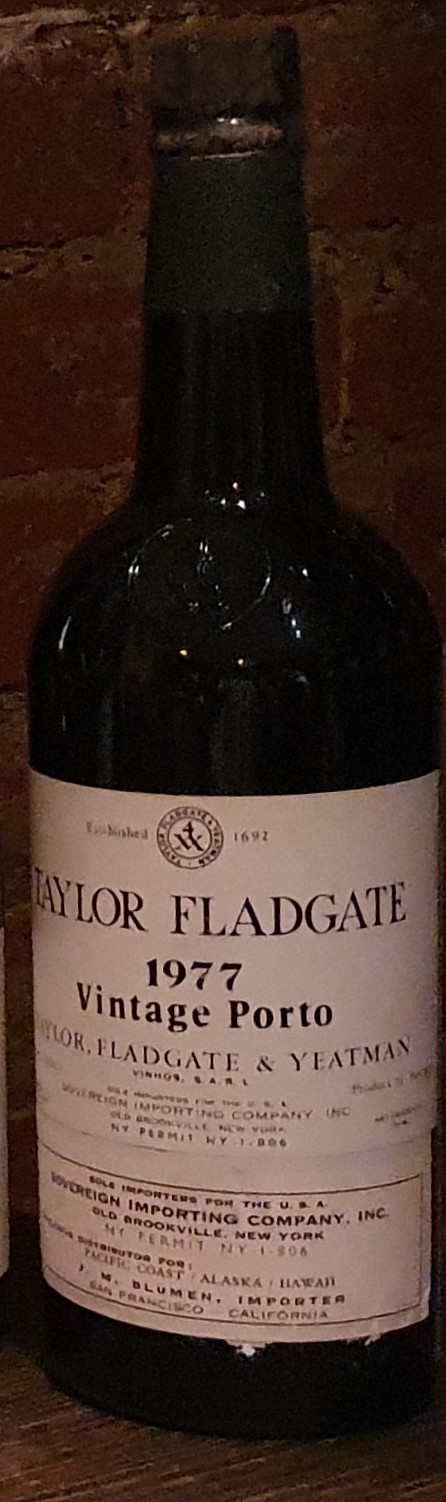
1977 Taylor Fladgate Vintage Port
Portugal. Memories came flooding back after this wine was unmasked; it was the first Portuguese VP I ever tasted, and I instantly purchased one bottle despite my meagre salary. That bottle was opened in mid-2005 – “rose-petal & raisin & Turkish delight, high alcohol, huge power- another 20 years”.

Sixteen years later…. ruby with some brick, not the deepest, but with a mix of red, blue, black, purple fruits; fresh, fleshy, ultra-supple, clean spirit, almond notes, spices and rich dark chocolate. Its owner informed that a three-hour decant did the trick. This wine looks indestructible, and its complexity was a delight.

Drink to 2040, and 95 points
One local and one Portuguese fortified

2010 Baileys VP 140 (vintage fortified) 19%
Another corporate insult: this “140” range was meant to celebrate the 140th anniversary of the founding of Baileys of Glenrowan. Yet the wine is apparently sourced from the Riverland and Barossa- a long way from Glenrowan! Some web sleuthing reveals- Touriga, Tinta Barocca, Tinta Cao and Shiraz, fortified with “specially selected spirit” but despite this strange regional and varietal mix, it deservingly carted off trophies at the Rutherglen wine show two years in a row, a fantastic achievement.

2010-baileys-vp

Screwcap, and opened at a whim after paying a meagre $20 at auction a few months ago.

It’s a deep ruby colour, and flaunts youthful perfumed sour red cherry, blueberry, blackberry and a cascade of spices with lavender as an aside. Savoury, it’s immaculately, exquisitely balanced, the spirit entirely supporting the fruit. It’s soft enough to approach now (just) but has the architecture to ensure a long and enjoyable life.

This is a terrific wine, but nothing like the ferruginous, concentrated (Shiraz) Baileys VPs of the past, and a travesty to the memory of wines, particularly those made by Harry Tinson…. but such is life.

Drink to 2035, and 94 points.

2001 Fonseca Quinta do Panascal Vintage Port 20%

2001 panescal

Unusually, this is a “single quinta” wine. Portuguese Vintage port may be declared by the producer, and samples are vetted before official approval. This can lead to situations where a vintage is “generally” declared, with some outliers, or where a handful of producers declare and the majority resist. The typical pattern is three declarations per decade, but this has had a shake recently; the successive vintages 2016 and 2017 were generally declared by houses; and Quinta do Noval marches merrily along seemingly declaring every year.

When a vintage is “not quite deserving”, the quintas (made in the same way as a VP) can be released at a much more affordable price; these “single quintas are generally not as rich, striking or age-worthy, but their pleasure can be abundant.

Some single quintas available in Australia include Graham’s Malvedos, Quinta do Noval’s Silval, and Taylors’ Vargellas. These can be terrific, and well worth the hunt.

Panascal forms a large part of the blend when Fonseca declares a vintage.

My extraction techniques failed and the cork broke into many pieces that were easily removed with a filter- this also removed the sediment; it’s a medium density dark ruby, with red plum, dark red cherry, putty, and blueberry aromas, plus unexpected pepper. It’s relatively dry, youthful, and approachable, with more blackcurrant mocha and cocoa on the palate. A pleasure.

Ready, but will easily drink to 2030, 91 points.

Mid-priced imports


midrange imports

We’re recently allowed some small gatherings, but I opened these two wines at home recently; they are not monstrously expensive – (Kabinetts $35-70 depending on brand; the Fonseca LBVP was around $50 recently) – but sweeter German Rieslings and the uber-fashionable dry GGs can easily exceed $100; Vintage Ports from the sensational 2016 and 2017 vintages are, alas, closer to $200.

2008 JJ Prum Bernkastler Badstube Riesling Kabinett 8.5%
Gifted to me a while ago; my go-to Prum is the Wehlener Sonnenuhr, with occasional deviations to Graacher Himmelriech (Bernkastler Lay can be special too). 2008 was an “open” year, but Prum is usually backward, fully priced but usually delivers. Mosel Kabinett is “off-dry” but Prum tends to be sweeter than expected, and can still last many years.  Very pale, there is the tell-tale red apple and petroleum, nettle, earthiness and spice notes. The palate is highly acidic, with some grippiness- nashi pear, citrus, apple. Varietal, distinctly Mosel, but drink up while the fruit remains intact- the acidity is pretty dominant, which won’t be to everyone’s favour.

Drink to 2023,  88 points

2011 Fonseca Late-bottled vintage unfiltered 20%
2011 was a mighty year for Portuguese Vintage Port; late-bottled is an easier, more approachable, (and more affordable category), with a longer time in oak (or tank) to ameliorate some of the tannic stuffing. Confusingly, the LBV wines may be ready on release – or capable of cellaring. Unfiltered is a clue that some ageing is expected – yet there was no discernible sediment here, and the stopper was another surprise.

This wine was bottled in 2016, and is nearly crimson in colour. It displayed fig, blueberry, plum, violet and mixed spices and wild herbs; the palate showed cherry, milk chocolate, spices and sound spirit integration. 108 g/l residual sugar is neatly balanced with the fruit, and alcohol. Fine tannins add further interest. I was hoping for greater concentration, but it’s so easy to reach for another glass – a great test of a wine’s engagement.

Drink to 2025, and 90 points.


1985 Fonseca Vintage Port 20.5%

Fonseca (or more correctly Fonseca Guimaraens) is a highly regarded Portuguese Vintage Port producer, and its excellent website, with notes covering this vintage is here.

I look forward to finding an occasion – and enough enthusiasts for the style- to warrant opening a vintage Port. The cork has fulfilled its task, and came out in very nearly one piece; decanted for several hours, the wine was tackled in several passes over several days, but always with delight.

1985 fonseca.jpgIts colour is still a robust dense ruby, with no bricking. An array of scents includes fig, cocoa, almond meal, chalk, and dried herbs. The palate is medium bodied, but voluptuous, with blueberry and liquorice adding to the picture. The finish is extensive, and fine, the spirit folded in seamlessly.
There is no need to rush this delicious 32 year-old wine; it will remain in thrilling form for many more years.

Drink to 2032, 94 points.

10 decades of (Portuguese) Vintage Port

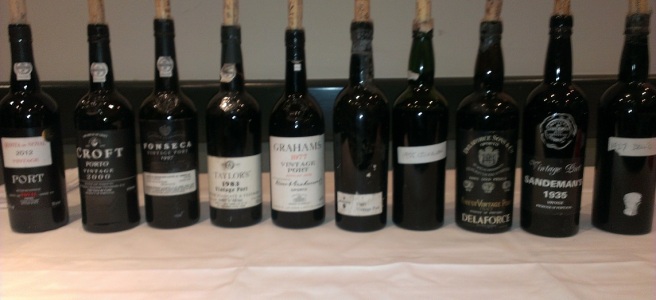
This turned out to be extremely educational about the longevity of this style. 10 different houses, and some great comments from the organisers and a contingent of winemakers from Rutherglen. Certainly its unusual for me try more than one VP at a session. Far from easy task locate these, and we suffer in Australia from vagaries of shipping and storage. All wines were decanted for about 3 hours, and we’re looking at single bottles as they were on the night. The oldest Portuguese VP I recall is the wonderful 1970 Fonseca, with the oldest Australian versions I’ve tried include a 1956 Hardy and a 1957 Lindemans. An observation  was made at the tasting that Australia was intent on moving to a drier, more Portuguese style with greater use of Portuguese grape varieties (rather than our traditional Shiraz). There was less agreement of whether the Portuguese had made any concessions to early drinking or more approachable VP’s.

As it happened the 3 oldest wines fared brilliantly. I had feared they might be historical curios, but they were defiantly truly alive.

2012 Quinta do Noval

Not many declared 2012 especially since 2011 turned out so well.

Dense red black with purple tints; this is highly perfumed and floral – blueberry and violets and black fruits. It surprisingly approachable, but the tannins are very fine and persistent. Red liquorice and some headsy spirit. But not the magic of 2011. Score 93+, but no doubt this will live longer than I suspect.

2000 Croft

Slightly murky colour, Slightly grubby bouquet with some cough syrup and cocoa; palate is better. The spirit holds this together, and kicks in vigorously at the finish. Score 90

1997 Fonseca

Medium red, spices, grainy tannins, sweeter style on the palate. Score 91

1983 Taylor’s

Clear ruby colour, with some floor-polish aromas, seems pretty straightforward on the palate. Score 91

1977 Grahams

Clear pale ruby. Lots of rose petal, toffee/coffee/ jersey caramel. Brisk with spirit making a terrific contribution. Graham is reputed as a sweeter style, but its not out of place. Lovely now but will keep for a long time yet, such is its balance. Score 95

1960 Warres

Looking forward to this, but TCA has made an unwelcome appearance. Kept for 55 years and ruined by cork taint.

1955 Cockburn

This was also ruined, but whether oxidation or other issues was debated by the group. Certainly faulty.

1947 Delaforce

Ruby colour with some orange tints. Starting to look like an old tokay. Citrus peel and salted mixed nuts, spirit a bit hot, but lovely drinking. Score 94

1935 Sandeman’s

Ruby colour, dried fruits and plums, vanilla, and toffee. Fleshy, subtle, singing. Score 94

1927 Dow’s

Amber colour; scents of green olive, orange peel and chocolate covered peanuts (one of my favourite indulgences). Could drink this all night. Score 96