Very mixed masked sweets

sweeties april 2023vitsoc april 2023

1976 Deinhard Winkeler Hasensprung Riesling Auslese
Rheingau.

At first sight, there didn’t seem much hope of drinking pleasure (it looked like an old fortified). But it smelled like a Gewurztraminer, laden with spices, honey, apples and a touch of cork (not taint, just age). The palate was very sweet, enough to move its origin to Germany, but age a puzzle. It tasted grapey and reminiscent of muscat of Alexandria. Thus the clues mounted. German Riesling, perhaps Auslese back in 80’s? 70s? When unmasked, surprises all around. Past its best for sure, but a drinkable survivor.

Drink now 87 points (and higher if history guides you – up to 90 points)

2005 Tertre de lys d’Or Cuvee d’exception
Sauternes. Diam!

Darker colour compared to the next masked wine. Lemon meringue, vanilla pod, charry oak. Palate showed lemon and marmalade, but much lighter and straightforward than anticipated. Sauternes or Barsac for sure.

Drink now, 85 points

2014 Chateau Suduiraut 13.8%
Sauternes. 95% semillon, 5% sav blanc 150 g/l residual sugar
18/12 months oak, (50% new, 50% one y/o)

Lighter colour than its paired wine; has thrilling nettly/green pineapple and much greater impact overall. Palate is a much more viscous and sweeter with more overt oak impact. This is all class, and one to revel in. Ripe year – 2009? 2014? Botrytis and bursting with stonefruit and spices. Super freshness, length and hedonism already in an immaculate package, but will reward the patient.

Drink to 2035, 95 points now, and more to come.

Three from Europe

2007 schafer-frohlich

2007 Schafer-frohlich Monzinger Halenberg Riesling Spatlese AP#26 7.5%
Nahe (near Mosel), with its cork in good condition.

Golden colour, vibrant redcurrant, musk, spices, marzipan and tropical scents. The palate is viscous and leans into red apple notes, mandarine, honey and is still crisp. Guessing around 75g/l residual sugar, and balanced. Peak drinking now, and is yet another instance of “double-barreled or not-easy-to-pronounce name = bargain price”.

Drink to 2027 and 93 points.

2011 Ch Haut Bergeron (Sauternes) 13.5%
Not in the 1855 classification, but produces some terrific, and underpriced wines. 80-90% Semillon and 10-20% sauvignon blanc, the wine swallows the oak.

Pear, honey, marmalade; obvious, authentic and excellent Sauternes. This is a “power” style, but irresistibly delicious.

Drink to 2030, 93 points

2014 Ch Coutet (Barsac) 14%
75% semillon, 23% sav blanc, and 2% muscadelle. 162 g/l residual sugar! 18 months in French oak barrels

From the ripe 2014, and this is just beginning to give glimpses of its future. It was served as a masked pair with the previous wine, and showed more honeyed notes and finesse on the palate. It seemed less ripe, but showed more lemon blossom. Finer, but at this stage more reticent

Drink to 2035, 92 points now, but more in the future.

Two lovely sweet Rieslings

2016 pressong matters r139

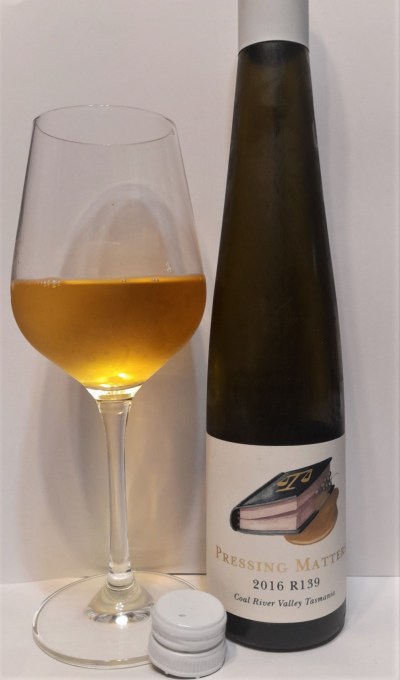
2016 Pressing Matters R139 Riesling 9.4%
Tasmania- Coal River valley, screwcap (half bottle, a recent auction purchase)

Pressing Matters are known for their Rieslings (R0, R9, R69, R139), and Pinot Noir, with amazing records in Australian wine shows. Limited distribution, so I’m absolutely, shamefully behind tasting across their range. The current release 2019 R139 is $37 for a half-bottle.

Bright gold colour, ripe red Apple and beurre bosc pear, with a frame of spices. Hooray, there’s enough acidity to balance the high residual sugar level, and this is pretty hard to resist. There’s varietal lime and citrus, and a long, and truly satisfying fresh textural finish. Exceptional value here too. The usual caveats with food matches- fresh fruits work; fruit pies will work if gentle on the sugar side, some cheeses will succeed, and some won’t; but the bottle contents will seemingly evaporate regardless. A find!

Drink to 2028, and 93 points.

2007 schloss bjs spat

2007 Schloss Lieser Brauneberger Juffer-Sonnenuhr Riesling Spatlese AP#8, 9%
Mosel, 94 g/l residual sugar

Light lemon colour, and then the marvels come. Cinnamon, icing sugar, pear, nectarine. Crunchy apple, flint, creamed honey and beautiful balance between fruit depth, acidity and sweetness. (I wrote about this wine in April 2020, with similar descriptors, scores etc).

This is an absolutely delightful spatlese (from a distinguished site), and my patience has been truly rewarded.
Drink to 2030, 94 points

Two enjoyable sweeties

2009 ch raymond lafon

2009 Ch Raymond-Lafon 13.5%
Sauternes, 136 g/l residual sugar. Half bottle

80% Semillon and 20% Sauvignon Blanc, aged in new barrels for three years. Bright deep gold colour, pear-juice meets apricots, white peach and marmalade, backed up with a solid citrus line. Honey and spices resound on the opulent palate with some almond and marzipan. Voluptuous, fresh and morish. A reliable bargain VFM producer. Authentic.

93 points, and drink to 2027 while its fresh. Full bottles will have a longer life span.

2016 tim adams botrytis

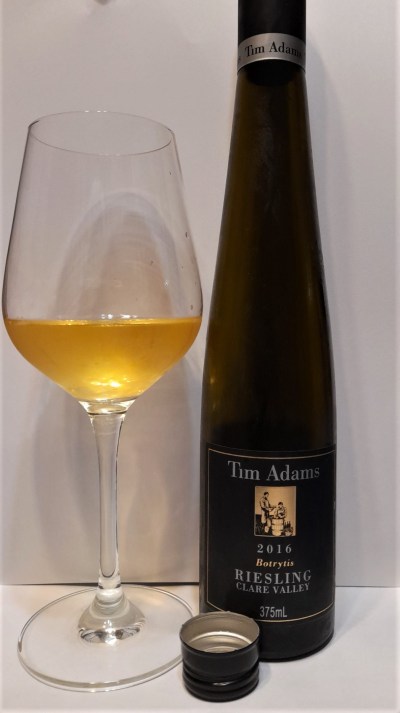
2016 Tim Adams botrytis Riesling 11%
Clare Valley. 87 g/l residual sugar. Snapped up this half bottle recently from my local DM for $13.

Light bright clear gold colour; apricot and yellow peach, dusted with cinnamon and ginger; palate is syrupy/viscous but beautifully fresh with a zingy citrus finish. Good mix of botrytis while retaining varietal character. Really doesn’t need more time and will match up a treat with a fresh fruit platter.

Drink to 2027, and 90 points

Two 2007 spatlese from Schloss Lieser

2007 schloss lieser spatlese pair

Schloss Lieser is one of my favourite Mosel producers, with a track record of providing excellence at a modest price. I have fond memories and notes from a dinner when winemaker Thomas Haag visited Australia in March 2010 – (with a mere 15! wines presented). Neville Yates‘ Eurocentric store has many Schloss Lieser wines available).

Neiderberg Helden wines are typically on the more earthy, minerally end than Brauneberg. These sweet wines of Schloss Lieser were fermented in stainless steel with wild yeasts.

2007 Schloss Lieser Neiderberg Helden Riesling Spatlese AP#7 8.5%
Mosel, 78 g/l residual sugar.

The first bottle was oxidised; so another was located and opened. Pale gold colour, Light spices, fresh red apple and some herbs. User-friendly now, with its lemon/citrus fruited sweetness melded with acidity and good concentration. But there’s no real upside in waiting.

Drink to 2027, 90 points

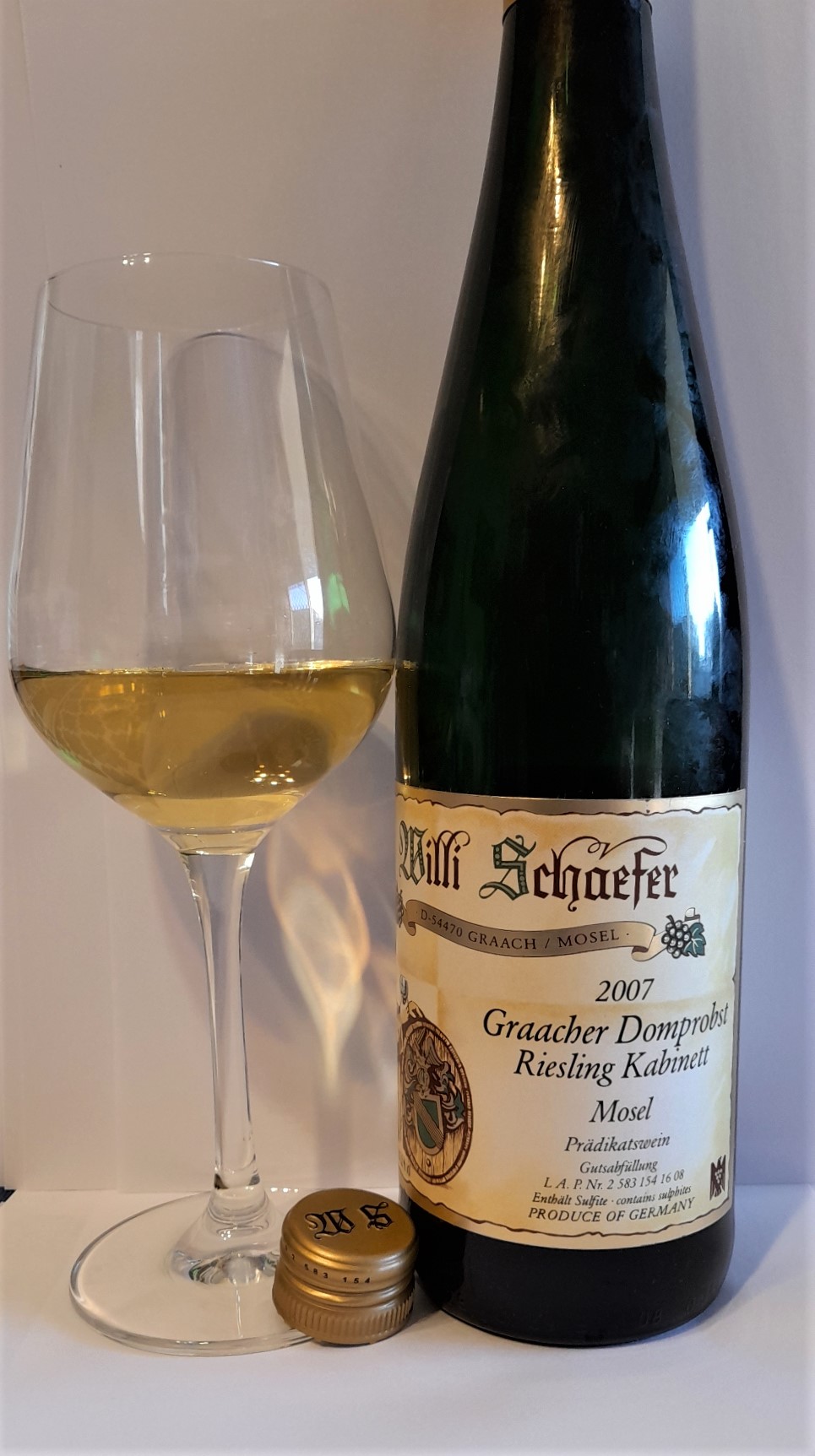
2007 Schloss Lieser Braunberger Juffer Sonnenuhr Riesling Spatlese AP#8 8%
Mosel, and a high-for-style 94g/l residual sugar.

Lemon colour, exuberantly bursts out with sweet cinnamon, spices, ripe apple and honey, a dash of lime and brown sugar. Balanced, fresh, and so easy to revel in. The palate is creamy, with white peach notes, oranges and underlying flintiness.

Crisp and persistent. Precise.  Sweet and cuddly, but that natural acidity cleans up beautifully. Ripping quality and value.

Drink to 2032, 93 points

2017 Frogmore Creek “FGR” Riesling 10.2%

Tasmania, and around “Forty Grams Residual”, called “medium sweet” on the label. Purchased on clearance from a chain for a bargain $10 recently.

2017 frogmore

There are many terrific Rieslings from Tasmania; but few reach mainland Australia with regularity and tastings are infrequent – I have had successes with Bay of Fires, Freycinet, Heemskerk, Leo Buring “leopold”, Pooley, Pressing Matters, and Tamar Ridge.

Very pale lemon colour, scents of lime, white nectarine and spices. The palate reinforces those impressions; the sweetness melded and disguised with red apple flavours, fruit-tingles and the spice notes. It’s well made, and while I would like a dash more acidity, this is a very food-friendly style that I enjoyed with a decent chill.

Drink to 2025, 88 points

2008 Reinhold Haart Piesporter Goldtropfchen Riesling Spatlese AP#12, 8%

2008 haart spatlese

Mosel. Bright deep lemon colour; spices and exotic tropical notes, particularly guava, plus red apples and citrus – oranges and lemon, some petroleum too. The palate is rich and at the sweeter end for a spatlese; honeyed, spice-filled, with the red apple dominant, and supported by racy acidity and stoniness. Its drinking vibrantly, but I feel it won’t improve further.

Drink to 2025, and 91 points

Two inexpensive mature wines

richter s&k

2006 MF Richter Brauneberger Juffer Riesling Kabinett AP #35 9.5%
Mosel, and this bottle was found in a mini-stocktake. Few Kabinetts should be kept this long, so I was nervous. Cork was fine, and the colour was developed but not alarming.

Deep gold, but bright. Apple pie, sultana and raisin, citrus peel, sweet spices and mango. It’s full-on for a Kabinett, with 83 g/l residual sugar. On the palate, the mixed sweet spices are prominent, with redcurrant fruits, honeyed peach, mineral and citrus. The wine is surprisingly fresh, with excellent depth of flavour. Fully mature, it’s honest and a welcome surprise. My previous impression was posted on 15 July 2020 – and a relatively consistent note.

Drink up (it may have been better in the past) and 90 points.

1990 Stanton and Killeen Jack’s block (vintage) Port 18.5%
Rutherglen, Victoria 100% Shiraz. A recent – bargain – $33 auction purchase; rated 9.5/10 by the producer, it has assorted trophies and gold medals while the back label modestly proclaims, “optimum drinking around the year 2010”. A note on its sibling – the 1990  Moodemere –  was posted on 19 November 2018 with a similar note; this wine is slightly better!

Cork broke. The colour is developed ruby with bricking on the meniscus, mocha, camphor, floral, blackberry and sweet well-integrated spirit. Dark and dense, blackberry and red liquorice, mixed nuts, lavender, fine chalky tannins and light coffee. Lots of different aromas and intermittent flavours = complexity, and explain the score, I have many bottles from this producer, but can’t resist purchase when reasonable opportunities arise. Mature, but still vibrant and utterly delicious.

Drink to 2030, 94 points

Impressions, again

2009 Zilliken (Forstmeister Geltz) Saarberger Rausch Riesling “diabas” 12.0%
Mosel, 16g/l residual sugar. Pale lemon colour, which leads to scents of passionfruit, quince, pear, red apple, and ginger spice. The palate is brisk, showcasing lemon, nashi pear plus salinity, minerals and depth. It’s rounded, textured mouthfeel, and acidity carries matters along with conviction. This wine is not dry, but not even approaching Kabinett level, and it’s drinking right in the zone.

Drink to 2025 while its fresh, complex and completely delicious – 91 points.

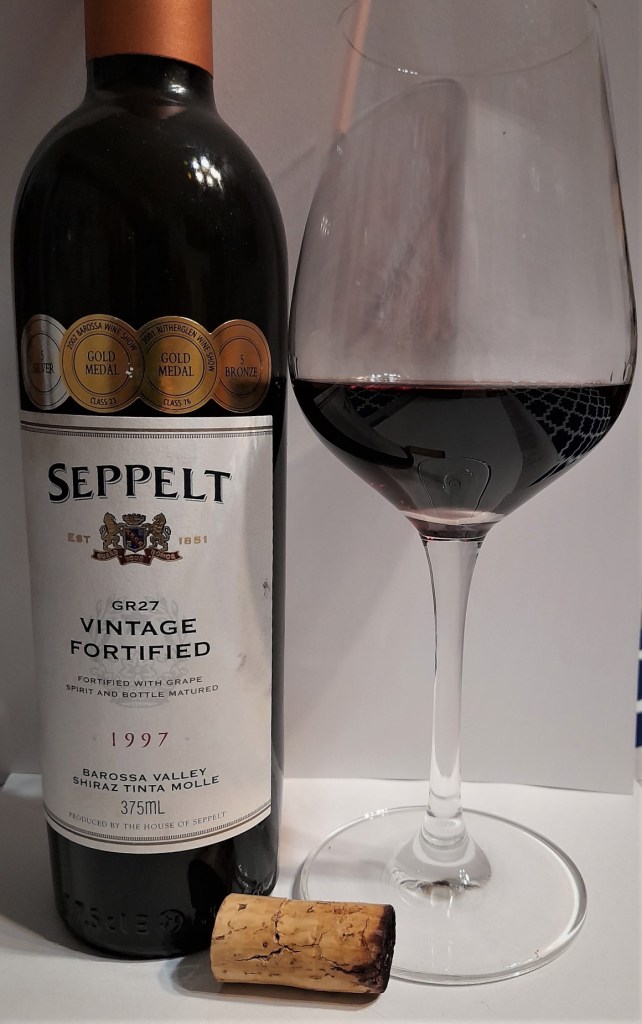
2007 Seppelt GR 27 Vintage fortified 19%
Barossa Valley (South Australia). Shiraz and Tinta molle.  Half-bottle with an abbreviated cork and abundant sediment. Decanting essential! Ruby colour with the beginning of some bricking. Rose-petal, sweet spices, sweet dark fruit and liquorice. The palate is soft, with the dark plum, blackberry and figgy fruit, mocha and brandy spirit in mellow harmony with a lingering spicy kick..

Drink now, as the structure may outlast the fruit – 89 points