De Bortoli makes so many wines it’s hard to keep up. And a lightning day trip during vintage last year convinced me of their very serious intents. But as well as their Yarra base, plantings at Heathcote, Rutherglen, plus the incredible amount of Prosecco processed, they have a substantial outpost in the irrigated Riverina, (NSW), where a speciality is botrytised Semillon wines.
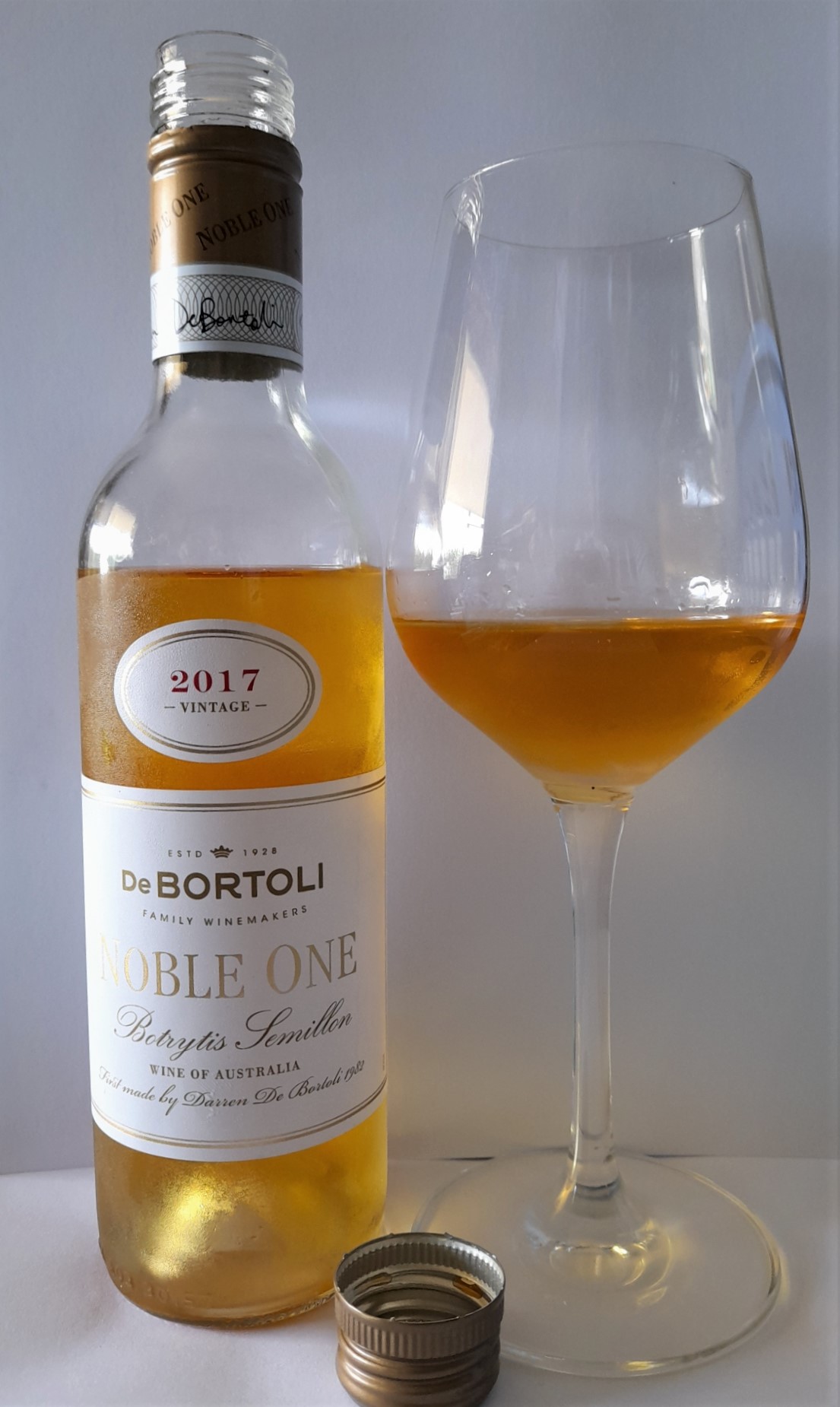
The 1982 Noble One was a memorable wine, and the line continues to be made with only a few unco-operative vintages. Having picked botrytis Riesling, I can appreciate the stresses involved in weather-watching, picker availability, dodging “less-than-noble rots” plus the challenges in pressing, fermenting, and manoeuvring wines safely into bottle, without excess VA to detract.
Noble One shows its capacity to absorb an amazing quantity of oak; but the wines that piqued my interest recently are the Deen de Bortoli Vat 5 Botrytis Semillon. Sure, it’s a “junior” label that won’t get the best fruit, will see little oak, and get less fanatical winemaking care, but the quality difference is much less dramatic than the price differential. The RRP of $17 half bottle leaves me bewildered at how this is possible, when the wines provide so much character, hedonism and engagement – and have bottle age as well. This pair of wines were made under the stewardship of recently-retired Julie Mortlock (and no doubt Steve Webber continues his strong interest in the line).
I preferred the 2018, and came to no harm drinking a half-glass every few days over a week. My generic match is fresh fruit, but an array of cheeses, or a tea cake will work wonders too.
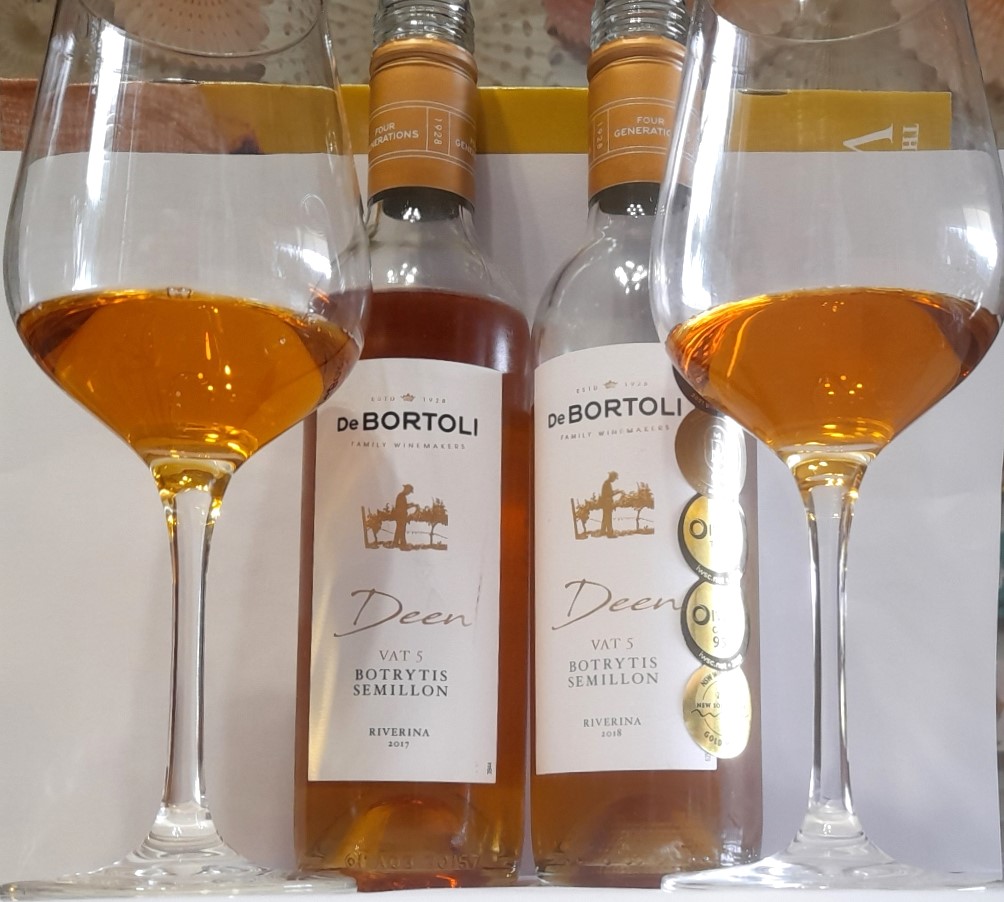
2017 Deen de Bortoli Vat 5 Botrytis semillon 11.5%
Bright gold colour with some copper. Quince, bitter melon, apricot, cumquat, dark honey, vanilla, nougat. Ready! 158 g/l residual sugar.
Drink to 2027, 90 points
2018 Deen de Bortoli Vat 5 Botrytis semillon 9.5%
Bright deep gold. Apricot, cumquat, vanilla, dried pear, fruit peel, ginger. Absolutely seductive, lingering, generously drenched mouthfeel. My guess on residual sugar was >180g/l. It turned out to be 231 g/l! But wrapped in acidity, there was no cloying. This measure is well into the German BA territory, and will be an excellent sensory assessment exercise for wine students, the curious, and furthermore won’t break the bank.
Drink to 2030, 93 points


 sweetworldwines