Two styles, two hemispheres

1990 Marc Bredif Grande Annee 12%
Vouvray, Chenin Blanc

The Grand Annee is the selection destined for aging. With their high natural acidity, Loire Chenin Blanc can age a long time. Domaine Huet, and Marc Bredif are particularly well known for their range of Vouvray wines. Australia has been less successful with Chenin Blanc – although I had a soft spot for some of the age-worthy Houghton “white burgundies” of the 1980s, and a thrilling botrytised 1981 St Leonards! I have tasted some startling South African Chenins across several styles too.

Presented blind, this wine was pale gold, but had some distracting cheesy/waxy notes. Fortunately,  this dissipated and the wine motored along improving with each taste showing honey, plenty of acidity and some residual sugar (50 g/l?) melded with spices made this wine a terrific, showstopping adventure. Just a marvel. When revealed, the freshness for its age was dramatic.

Drink to 2035, and 95 points

1994 Stanton and Killeen Vintage Port 19%
Rutherglen, est 95% Shiraz, 5% Touriga

“Will mature in the bottle for up to 20 years” claims the back label, but truly there is no need to rush, despite this being rated an “average” vintage with only a few silver medals listed.

Syrupy, almost jammy, dark-fruited, huge sweetness, dark cherry, plum, liquorice, chewy and still bright-tasting. A powerful flavour-bomb that doesn’t quite scale the heights of some other vintages. It’s in an enjoyable holding pattern. But that’s the vagaries and mysteries of the season, and this wine was heartily appreciated.

Drink to 2030, and 91 points.

One spectacular (Oz) fortified

1992 S&K Vp

1992 Stanton and Killeen Jacks block Vintage Port 19%
Rutherglen; 90% Shiraz, 5% Durif, 5% Touriga

From a special year in North-east Victoria, the back label shows 3 trophies and 12 Gold medals from credible wine shows. The (late) winemaker Chris Killeen rated that year’s vintage fortified wine as 10/10.

This wine is amazingly fresh for its age, and beautifully balanced. Cork and level in terrific form. It absolutely deserved its decant to remove the plentiful sediment. Very floral – dark cherry and some blackberry, red berry, toffee apple, lavender, mocha, fruitcake nut and spices are all present. The palate is dry (for Australia) and the persistence is exemplary. An absolute treasure, drinking amazingly well, but with power in reserve. Skimpy notes, as the group (and myself) tucked in, leaving nothing for a next-day retaste!

Drink to 2037, 96 points (I was very tempted to give 97 points)

Odds and ends impressions- local, and not

at matteos

2011 Ch Climens
Barsac, 100% Semillon (biodynamic) 20-22 months in oak, 30-40% new oak

Crème brulee, stonefruit, vanilla, ripe but not overripe apricots, citrus. 140g/l rs, but light on its feet, energetic, beautifully balanced. If time permitted, more nuance would come through. A Long cellaring time beckons but no problem tackling now!

Drink to 2035, 95 points

2010 Crawford River “nektar”
90% sav Blanc, 10% Semillon. 116 g/l rs. From Henty (western Victoria), and proof that Crawford River can produce more than their mighty Rieslings.

Very youthful, with a striking overlay of an attractive green nettle character and citrus, with . Pure, bright, and frighteningly youthful, botrytis and citrus, lingering and packed with acidity. The half-bottle emptied rapidly!

Drink to 2030, 92 points.

1997 Stanton and Killleen Vintage Port
Rutherglen, and regarded by the late winemaker Chris Killeen as his best wine. 60% Shiraz, 25% touriga, 5% each of Durif, tinta cao and tinta barocca. 3 trophies and 13 gold medals (when these were hard to get).

When I tasted this wine prior to its release; I instantly signed up for six bottles, and still have a few! I last wrote about it for this site in November 2018.

Dense deep red colour, cocoa, blackcurrant, chocolate mocha, almond, liquorice and blueberry. Masterful. Australia, you bloody beauty!

Drink to 2035, 95 points

2012 Quinta do Noval unfiltered Late-bottled vintage port 19.5%
QDN now declare a vintage every year, with the “less-than VP” wines cascaded potentially into the single quinta Silval, the LBVPs, and onwards.

LBVPs are a curious partway house between VPs, and the deliberately oxidative tawnies. From a single year, they can fall into “ready” vs “worth ageing”, but I have not found “unfiltered” to be a reliable cellaring guide; the key is producer.

Regardless, this excellent-value wine is a bawling infant, crimson in colour, ultra-fresh with floral red cherry, mixed spices and almond spirit; delicious, dry but ultimately straightforward. Tannin too, but not the substantial underlying depth of a true VP.  There’s no need to rush to consume, but its best will be within this decade.

Drink to 2027, 91 points

Three wines, at least two learnings

1982 S&K VP

1982 Stanton and Killeen Vintage Port 19%
Rutherglen Shiraz, from a vintage rated as 9/10 by the winemaker.

Forty years old , and the cork has held up. Bricky colour, but nothing out of order.
Black fruits, mocha, fresh red liquorice, and vanilla bean; almond and clove spices join in. Light milk chocolate, soft palate. Easy to ask for more.

Drink to 2025, and a resounding 91 points

Warre’s Optima 20 Year old Tawny Port 20%
Portugal, bottled in 2013 (and served blind)

Light khaki colour, and packed with toffee, caramel, vanilla, fruit peel, and citrus. Light on its feet, lingering, everything in its place…except one sensitive taster mentioned mousiness.

This is – fortunately for me-not easy to detect (it depends on mouth pH and other factors), else it would ruin my enjoyment of many fortified wines. Mousiness can occur in non-fortified wines, seemingly more prevalent with no-early-SO2 wines (hello, natural wines again). A brief article by Jamie Goode is here.

I can find mousiness via the “skin test”, smearing it over my wrist and waiting for evaporation. The result can be horrific – I liken it to burnt bacon, corn chips and popcorn with a bitter, harsh and unfortunately persistent flavour. Once detected, it’s impossible to overlook –  I’ve had worse than this wine, but…

Avoid. No score.

2008 Ca’ d’gal vite vecchia Moscato d’asti 5%
Piedmont, Italy (served blind)

Partiallly obvious what this was – the frizzante, slightly sparkling style (around 1.5 atmospheres – Champagne is 4.5-6), the sweetness (90-100 g/l) and obvious grapey muscat aromatic. However, instead of merely the usual refreshing sherbetty and “fun” approach, this wine had much more complexity – chamomile, lime, beeswax/candlewax, a spice-bucket with mandarin citrus. Flavours mirrored this, and while still bracingly vibrant, bonus merit for its surprising cellarability and the exotic souk perfumes, Aged for 5 years in bottle, and look at the meagre alcohol level! Obvious ageing potential here. The producer makes a range; this is the old-vine flagship, No surprise its> $120.

Scoring presents a conundrum – Moscato d’asti is user-friendly, but this was well beyond my expectations of the style. It startled me, and led to some research.

Drink now, and 95 points

Two inexpensive mature wines

richter s&k

2006 MF Richter Brauneberger Juffer Riesling Kabinett AP #35 9.5%
Mosel, and this bottle was found in a mini-stocktake. Few Kabinetts should be kept this long, so I was nervous. Cork was fine, and the colour was developed but not alarming.

Deep gold, but bright. Apple pie, sultana and raisin, citrus peel, sweet spices and mango. It’s full-on for a Kabinett, with 83 g/l residual sugar. On the palate, the mixed sweet spices are prominent, with redcurrant fruits, honeyed peach, mineral and citrus. The wine is surprisingly fresh, with excellent depth of flavour. Fully mature, it’s honest and a welcome surprise. My previous impression was posted on 15 July 2020 – and a relatively consistent note.

Drink up (it may have been better in the past) and 90 points.

1990 Stanton and Killeen Jack’s block (vintage) Port 18.5%
Rutherglen, Victoria 100% Shiraz. A recent – bargain – $33 auction purchase; rated 9.5/10 by the producer, it has assorted trophies and gold medals while the back label modestly proclaims, “optimum drinking around the year 2010”. A note on its sibling – the 1990  Moodemere –  was posted on 19 November 2018 with a similar note; this wine is slightly better!

Cork broke. The colour is developed ruby with bricking on the meniscus, mocha, camphor, floral, blackberry and sweet well-integrated spirit. Dark and dense, blackberry and red liquorice, mixed nuts, lavender, fine chalky tannins and light coffee. Lots of different aromas and intermittent flavours = complexity, and explain the score, I have many bottles from this producer, but can’t resist purchase when reasonable opportunities arise. Mature, but still vibrant and utterly delicious.

Drink to 2030, 94 points

More recent splashes

2014-5 doisyblanck heggies1983 vps

All served blind – it may seem premature to serve young Barsacs, but these proved wholly delicious, with enormous capacity to live and improve for many years. Cellaring estimates are conservative, but no-one is immortal.

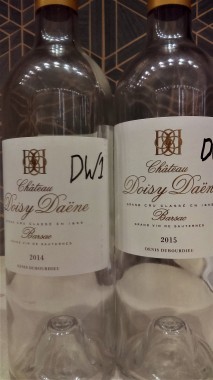
2014 Ch Doisy-daene 13.5%
Barsac, 100% semillon 144g/l rs; The website is very detailed, and I tasted this wine a few months ago with similar notes.  Enormously aromatic; tropical fruits, pineapple rind, touch of vanilla essence, green nettle, botrytis. Exciting, fine creaminess, honeyed with lovely racy acidity, some cashew oak,  spotless.

Drink to 2030, 93 points

2015 Ch Doisy-daene 13.5%
Barsac, 100% Semillon, 136 g/l rs. A slightly greener fruit profile than the wine above, ripe pear and more stonefruit white peach (and botrytis); this wine already seems more rewarding, with impressive fine honeyed texture, greater- but still balanced-ginger-spice oak, and richer depth and mouthfeel, with supporting acidity.

Drink to 2035, 94 points (and more to come)

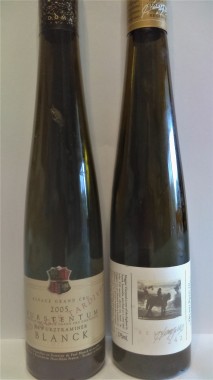
2005 Paul Blanck Furstentum vendanges tardives Gewurtztraminer 12.5%
Alsace, screwcap! Half-bottle, purchased at the winery, from a special site. Light gold in colour, it displays musk, roses and oiliness. The palate is moderately sweet, but its persistent, varietal with a winningly appealing citrus twang

Drink to 2025, 92 points

2007 Heggies “242” botrytis riesling 8.1%
A half-bottle located after my records showed I had none left (previously reviewed on this site). Amber/light copper coloured. The 242 refers to the amount of retained sugar, which comfortably sits at the BA level, and from a site in the Eden Valley, South Australia – where mostly dry Rieslings are produced, but often a small amount of botrytised Riesling. It’s packed with orange essence and marmalade, very decadent; on the viscous palate there are apricot and stonefruits. It’s still fresh, ultra-sweet -but still balanced-  some hardness is emerging, so drink sooner, not later.

Drink to 2022, 92 points

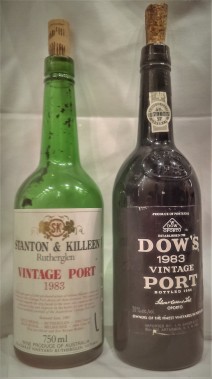
1983 Stanton and Killeen Vintage Port 19%
Rutherglen, and a hot dry year. A solid bricky colour, but browning only on the rim. Ripe and sweet with some raisined fruit, iron and liquorice, sweet, chalky, lively but a little warm. But it’s 35 years old, and 100% shiraz. On the evidence of this bottle, no further improvement is likely, but it’s still a satisfying and rewarding wine

Drink now, 88 points

1983 Dow’s Vintage Port 20%
Portugal of course. Paler colour than the wine above, showing a more interesting fruit expression of blue and red fruits, and milk chocolate covered almonds. The palate is fine and detailed – and medium-bodied, but also suggests the acidity will hold while the fruit recedes. At this stage, the tannin is balanced, but every bottle will be different.

Drink to 2025, 92 points

1998 Stanton and Killeen Vintage (port) 18%, plus other impressions

At 21 years of age, this Rutherglen (Victoria) fortified is still very youthful. It has 1 gold and 5 silver medals to its credit and composition is 26% Shiraz, 26% Touriga, 20% Durif, 13% tinta cao, 13% tinta barocca, and 2% Cabernet Sauvignon; a mix of “traditional Australian”, and Portuguese varieties. Remarkably, the wine is still available ($114) – with many other vintages- on the Stanton and Killeen website.

1998 S&K VP

The cork emerged well, and in excellent condition. The colour is outstanding for its age, a very dense dark black crimson,  and there is an exciting range of aromas- dark liqueur cherry, almond-meal, blueberry, mulberry, and spice notes The quality of (brandy) spirit is excellent, and has integrated well. The palate is sweeter than Portuguese versions, but certainly drier than most Australian attempts. The palate is full-bodied but very supple, showing a lingering mix of black and red fruits, red liquorice and fine chalky tannins.  Above all, it is deliciously drinkable.

Drink to 2030, and 93 points.

1986 Stanton and Killeen Vintage Port
Served blind, this wine was bricky in colour, showing sweet mocha notes, dried fruits and citrus peel. The spirit was sweet; the palate was also sweet, soft and mellow, and seemed Australian in style. The milk chocolate and plum flavours suggested Victorian origins, and my conclusion “around 30 years old, Victorian, Shiraz” turned out to be reasonably accurate. (95% Shiraz, 5% durif). The wine is fully mature, and bottle quality may differ!

Drink to 2025, 90 points

2007 JJ Prum Wehlener Sonnenuhr Auslese Riesling AP#22 7.5%
Very pale in colour, this Mosel wine is supremely elegant and needs much more time (still) to reveal more of its charms. It displays smoke, petroleum, crunchy ripe red apple and tropical fruits, particularly just-ripe pineapple. The palate is pebbly, sustained and the acidity really masks the considerable sweetness. This is a mouth-filling, creamy, intense and decadent wine, but it’s not yet resolved, and I recommend a further 5 years aging if you are fortunate to own any.

Drink to 2035, 92 points –  with more in the future.

1997 Stanton and Killeen Vintage Port 19%

The vintage was rated (by this Rutherglen winery) as 10/10, with a suggested drinking window between 2022 and 2026.  Their first vintage fortified to include a healthy proportion of traditional Portuguese port varietes (60% Shiraz, 25% Touriga, 5% each of tinta cao, tinta barocca and Durif), it was awarded 3 trophies and 13 gold medals at Australian wine shows. “Considered as one of the finest ever produced at Stanton and Killeen. Careful cellaring will reward the patient passionate port lover”.

1997 S&K vp

The cork is short, but in excellent condition. The wine has a deep ruby colour with some bricking; decanting removed a modest crust. Initial aromas included rose-petal, blueberry and raspberry  The palate is bright and fresh, showing sweet (but not overly sweet) red cherry, rhubarb and blueberry fruit, light milk chocolate, choc/mint and an occasional tease of plum, with still appropriately assertive tannins. Spirit is well absorbed.

The complexity and sustain makes this an outstanding wine, with a long future.

95 points, and drink anytime to 2032.

Recent drinks, mixed

Here are some very brief notes of wines recently consumed where I had little opportunity for leisurely contemplation, and sometimes dim lighting!

Stanton and Killeen are based in Rutherglen (Victoria), and continue to make a Vintage Fortified  (their first vintage was 1971), including some traditional Portuguese grape varieties since the mid 1990’s.  They have conducted several retrospective tastings, and from notes they have published, the cepages, vintage ratings and their – conservative- optimum drinking spans have been included below. They have a number of older vintages still available for sale (here). 

1990 Stanton and Killeen “Moodemere” Vintage Port (100% Shiraz)
The vintage was rated as 8.5/10, with a suggested drinking window between 2010 and 2015. (Stanton and Killeen also released a “jack’s block” Vintage Port from that year, rated as 9.5/10)

Served blind, I estimated this wine to be around 25 years old. Deep red colour with some bricking; camphor, lavender, musk, salted almond; dark fruits, mocha, spirit, cocoa. Plenty of time ahead – drink to 2030 and 92 points.

2004 Stanton and Killeen Vintage Fortified (30% Shiraz, 19% Durif, 21% touriga, 10% each of tinta cao, tinta roriz and tinta barocca).

The vintage was rated as 8.5/10, with a suggested drinking window between 2020 and 2024, and was awarded 5 gold medals and 4 silver medals at various Australian wine shows – “decadence, cocoa, relatively dry, wholesome”. Drink to 2030 and 93 points.

2005 Stanton and Killeen Vintage Fortified (32% Shiraz, 32% Durif, 16% each of tinta cao, 10% tinta roriz and 10% touriga).

The vintage was rated as 9/10, with a suggested drinking window between 2022 and 2026, and was awarded 1 trophy and 10 gold medals at Australian wine shows. Cocoa, raspberry and blackberry jam. This wine was amazingly vibrant, chewy with beautifully integrated spirit and fine tannins –  a long decant and further cellaring is highly recommended. Drink to 2040, and 95 points.

2015 Pressing Matters r9 Riesling
Tasmanian (Coal river valley) with around 9 g/l residual sugar; (the company also typically releases an r0, R39, r69 and r139 Rieslings), abundant vitality, clean citrus notes and the level of sweetness sits well with its framework of acidity; while it will keep, I would drink this wine while it is in a vibrant phase; anytime to 2025, and 89 points.

2005 Fritz Haag Brauneberger Juffer Sonnenuhr Riesling Spatlese 7%
Excellent winemaker, excellent site, and an excellent vintage in the Mosel, so I had high expectations. The wine is pale and youthful, with exciting viscosity, a touch of petroleum overlaying ripe red apple, flintiness and delicacy. Irresistible, so 93 points and drink anytime to 2030.

1997 Morris VP

An excellent year for this style in Rutherglen- Stanton & Killeen and Pfeiffer made outstanding wines.
IMAG0797
But this is the VP from Morris (correct but clumsily Morris’s on the label). The cork on this 20 year-old has performed its task – the wine (87% Shiraz, 13% Cab Sav) is a vibrant but slightly murky crimson (very little sediment when decanted); camphor, cherries, cocoa and mixed spices; the palate shows more dark fruits, especially plum; powdery tannins; a sneaky, approachable wine that looked better each time around, and positively youthful. The spirit has integrated beautifully. Warm, cuddly and no rush to drink this wine.

This wine that looked absolutely better with each assessment; complexity building – and longevity – becoming more apparent.

Drink to 2032, and 94 points