Impressive Europeans from one dinner (all served blind)

2010 Zilliken Saarburger Rausch Riesling Spatlese AP#8 7.5%
Mosel, Germany
Gold colour, still a touch of reduction, apple, cinnamon, and the palate is lush, delicate and balanced. This is an absolute delight, with poised sweetness (sweet for spätlese too) and acidity. A very high-acid year in Germany, and Zilliken achieved marvellous high sweetness levels.

Drink to 2035 (but irresistible now) and 95 points

2014 Ch Rayne Vigneau Sauternes 13.5%
Medium gold colour, then all sorts of tropical fruits – pineapple rind, dried paw-paw, crème brulee, almond; palate is stylish, with marzipan, citrus, pear, freshness and balance. Some other tasters thought this was fully mature and ready, but I see no need for haste. Serious wine!

Drink to 2033, 93 points

2015 ch Bastor-Lamontagne Sauternes 13.5%
Lighter gold colour; light apricots, and mealiness. Straightforward, easy (and ready) to drink,

Drink to 2028, 90 points

2017 Taylor’s Vintage Port 20%
Portugal

Vivid, astonishingly youthful black/purple colour – ultra fragrant – camphor, blueberry, cocoa, mulberry. Palate is supple, with drive, enormous concentration, strong defined tannins that the fruit power defies. Portuguese varieties for sure, and the savouriness is definitively Portugal. Then the liqueur cherry flavours meld with the blueberry and mulberry; the spirit is supportive. Drive and persistence. What a wine! And yet with a long, long way to go, this is insanely good.

Drink to 2045 (or more), 97 points – and will deserve more in time.

Three styles, three countries

2001 ch haut-bergeron

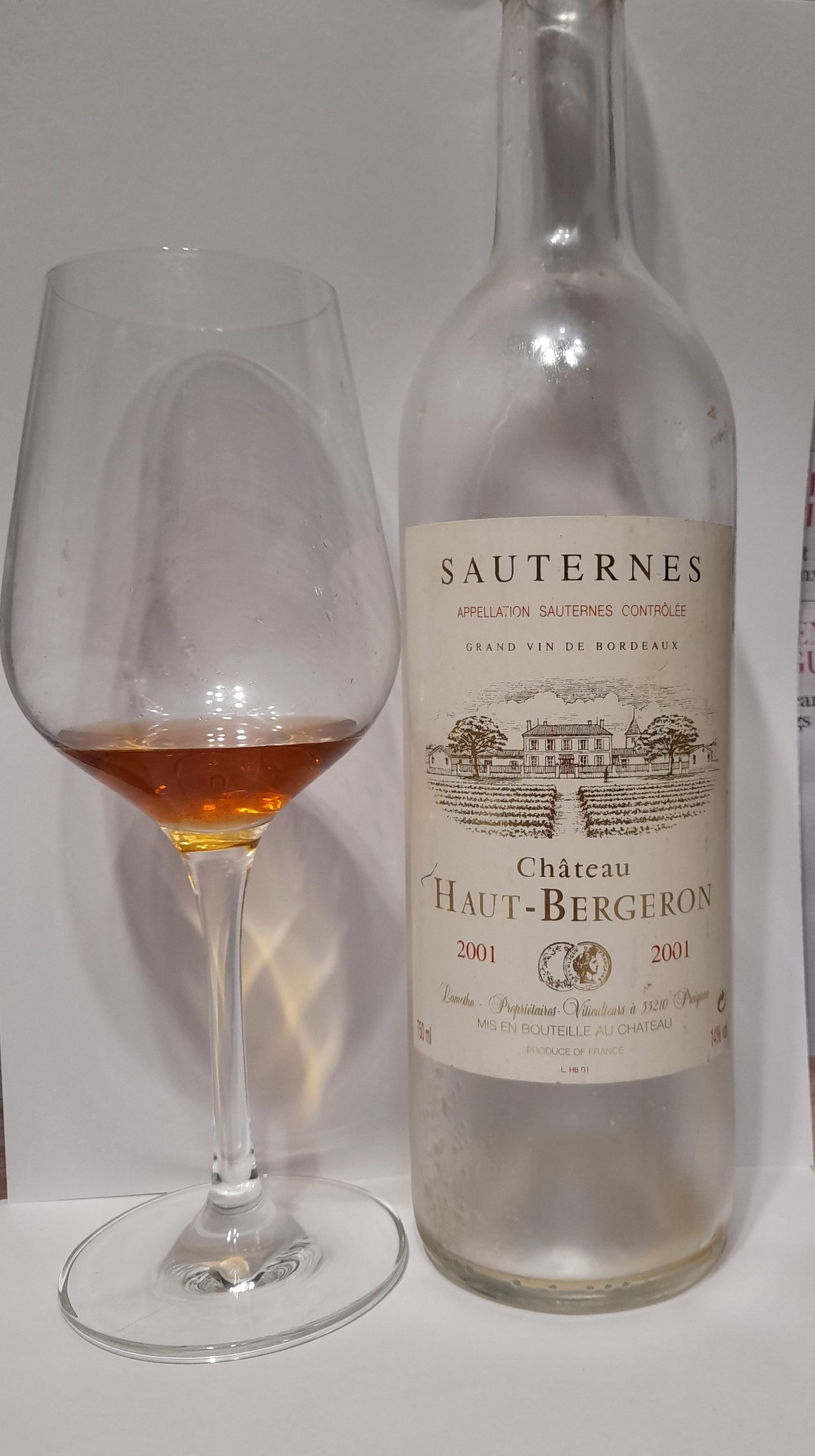
2001 Chateau Haut-bergeron 14%
Sauternes

Deep gold colour with some foxy/copper notes– and some harmless sediment; no mistaking the origin – marmalade, creme brulee, mixed tropical and dried fruits, VA but no dramas for this style; the palate Is packed with citrus and honey, certainly some integrated oak and with abundant acidity that left most of us reaching for a refill.

Haut-bergeron is not classified, but this wine (from an excellent sauternes vintage) provided great value, longevity and pleasure.

Drink to 2030, and 91 points

2014 Konrad Noble Riesling 11.5%
Marlborough, New Zealand

Half bottle, masked, 221 g/l residual sugar. Deep gold colour, this was packed with floral, dusty, spicy botrytis notes, mixed citrus and marmalade. Botrytis has overwhelmed varietal character, but Riesling was deduced by the absence of oak, The palate was very dense and weighty, rich dark honey and citrus.

This wine is drying out, so drink up. 88 points

2007 Taylor Late-bottled vintage port 20%
Portugal

Served blind – Ruby colour with some browning on the rim. Blueberry fruits, some nuttiness and spice but also some detracting rubber/tar. Palate is better, with blue, then a range of red fruits. Good spirit and fine but low tannins. When unmasked, it seemed older than the actual vintage. Sound but unexciting.

Drink sooner, but before 2030, 87 points

Rushed impressions – recent blind tastings

1998 Ch Coutet 14%
2000 Ch Coutet 14%
(Semillon 90%, Sav Blanc 9% muscadelle 1%)
Neither are from a “top” year, yet Coutet seems to have a knack of over-delivering for its price. Both these wines are in the drink soon category.

Barsac, both swerved blind- I had to beg a small sample of the second, as our table’s bottle was TCA affected. These were stylistically similar, both showing obvious development of colour and aromatics; the older wine slightly flatter, with orange marmalade and icing sugar notes; the second wine with vanilla, light pineapple, camphor – and certainly some forgivable floor polish VA – cinnamon notes, and altogether a better wine than its components indicate.

89 and 91 points respectively

2003 Taylors Vintage Port
Portugal. Our table’s bottle was again TCA affected, but remnants from another bottle arrived.

Cherries and other red fruits, almond meal, liquorice and light tannin- pleasant but slightly skinny; my guess was an LBVP or a quinta wine. After the “reveal”, this was a disappointment from this maker and looked more advanced than expected. Maybe a lesser bottle?

Drink to 2027, 88 points

1980 warres vp 2

1980 Warre’s Vintage Port 20%
Portugal. This was a much more vibrant and youthful bottle than the one I described a few months ago.

Developed but still ruby; blue fruits abound (a pointer to Portugal), roses, mixed spices; a soft but hauntingly persistent palate – mocha, fine dark creamy chocolate, integrated spirit, mixed red and dark berries.

Drink to 2032, and 94 points

Three more vintage ports

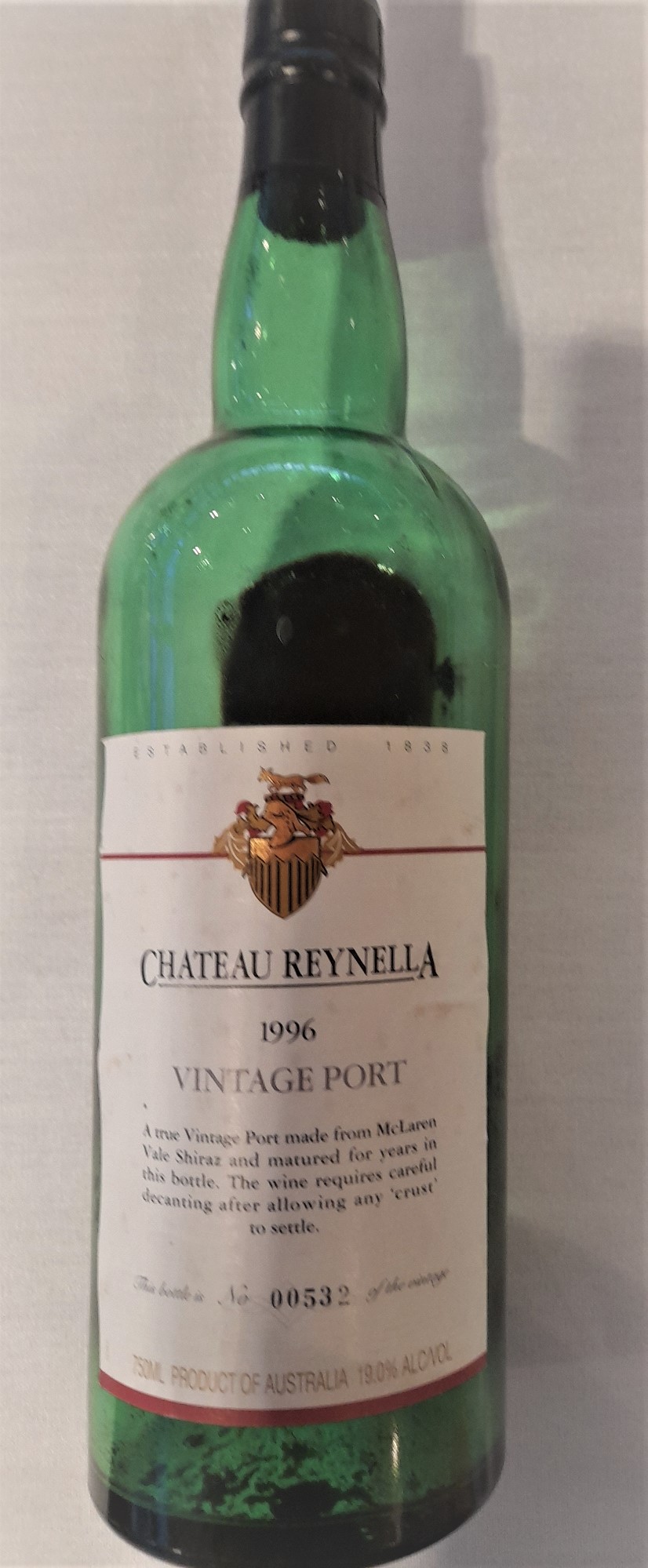
1996 ch reynella vp again

1996 Chateau Reynella Vintage port 19%
Shiraz, McLaren Vale, bottle #532. Served blind.
Ruby with some bricking, dark berries, mint and camphor. Sweet dark berry flavours, mocha, liquorice, sweet spices, ample tannin but absolutely ready to drink.
Drink to 2030, 92 points. (an uncanny similar description to my post from March this year)

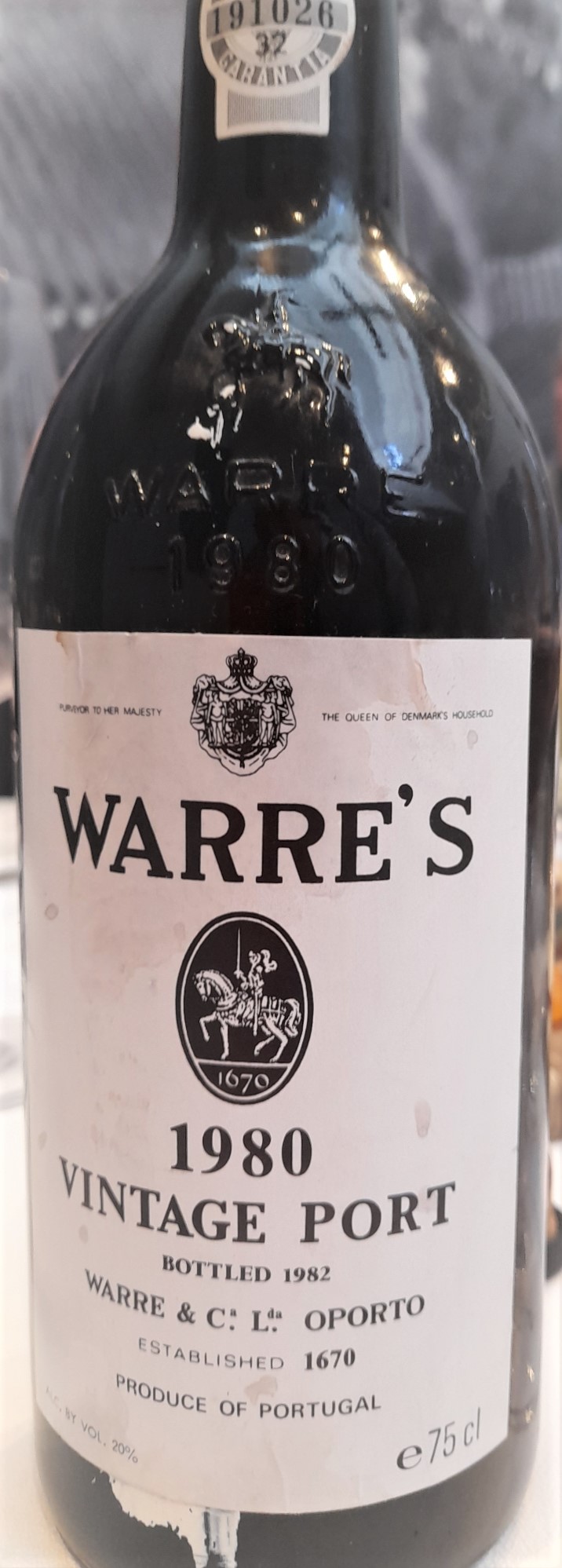
1980 warre's vp

1980 Warre’s Vintage Port 20%
Portugal. Served blind.
Ruby colour, camphor, cardamon, wax, putty. I was suspicious that there was a faint whisp of TCA, but it was invisible on the palate, so I relented. Palate is soft, with mocha and some figgy character with headsy spirit. This is a wine where the fruit was playing second fiddle to the spirit, but the whole seemed better than its components
Drink to 2030, 92 points (and there may be better bottles around)

1980 taylors vp

1980 Taylor’s Vintage Port  
Portugal. Served blind.
Ruby colour, with some browning. Putty, cherry and almond. Palate drier than Australian, with marzipan and cherry; spirit slightly sharp, but a winner on the flavour persistence stakes.
My initial age range was 1975-1985, and when options came up as 77/80/83 I correctly selected 1980. (However, I got the house wrong- I don’t drink enough Portuguese VPs!)
Drink to 2035, 94 points

Recent misses (and hits)

1968 Moulin Touchais (Coteaux du Layon) Loire Valley
Chenin blanc. A bit of dried apple, but this oxidised bottle provided no pleasure.
1979 Moulin Touchais (Coteaux du Layon) Loire Valley
Similar, but worse. Pretty dead.

These “fails” could not be scored. But Cellartracker shows there are better bottles around.

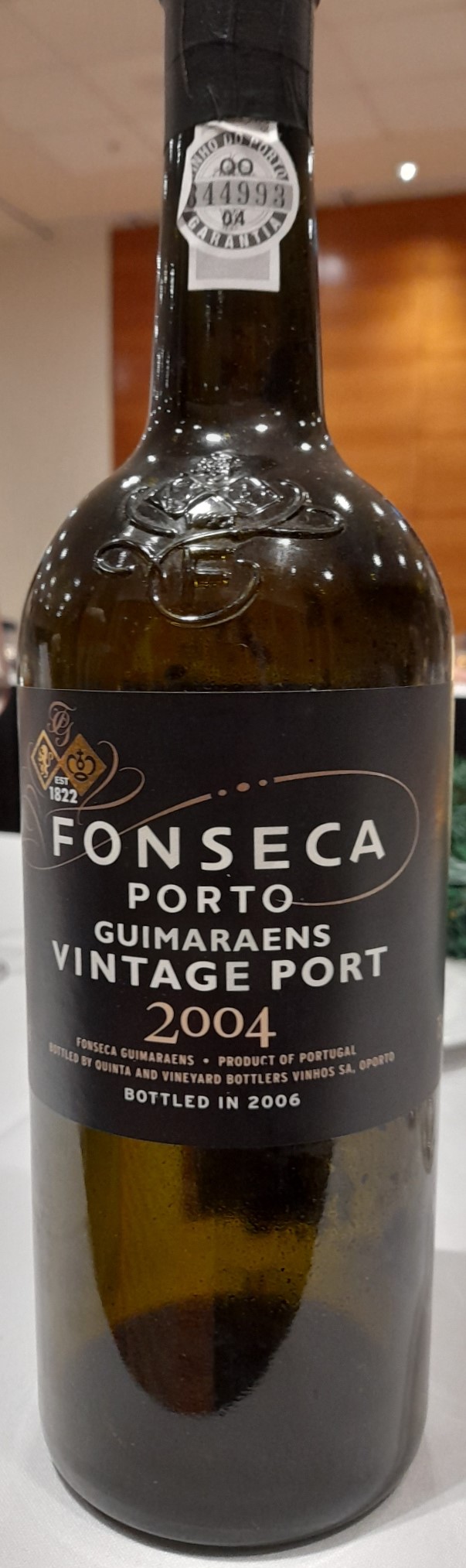
2004 fonseca
2004 Fonseca Guimaraens Vintage Port
Portugal. Ruby colour with some bricking; dark red fruits and plum, dried fruitcake and spices, almond meal, clean spirit, savoury, grippy, chalky. Maybe a tad light, but very smashable at the end of a long night! Not a generally declared year, and in this year Fonseca also produced a Panascal. The single quinta wines can be excellent value.

Drink to 2030, 92 points

2005 Zind-humbrecht Turkheim Riesling 13%
Alsace. Advanced mandarine colour; apricot and tropicals run riot. Palate is off-dry, waxy, with lime marmalade, and  22 g/l residual sugar. Great fun, but drink up. Alsace is so inconsistent, but when they get it right. Zind-humbrecht sometimes seem alcohol-heavy; this hit the spot.

Drink now, 90 points

2000 Chambers botrytis tokay
Rutherglen, Victoria. Its colour was almost mahogany, but it was still kicking sweetly with orange, toffee, quince,  and dried fruits. It was very grapey, spicy, and varietally not Riesling nor Sauterne-like. I was pondering Frontignac, or something unusual.

Botrytis tokay (muscadelle) is uncommon, but not unique. Chambers in Rutherglen released thi style from 1996, 2000 and 2011. Pfeiffer has also made the style.

Drink now, and 90 points-  as a wine that was difficult to define, but worth the effort.

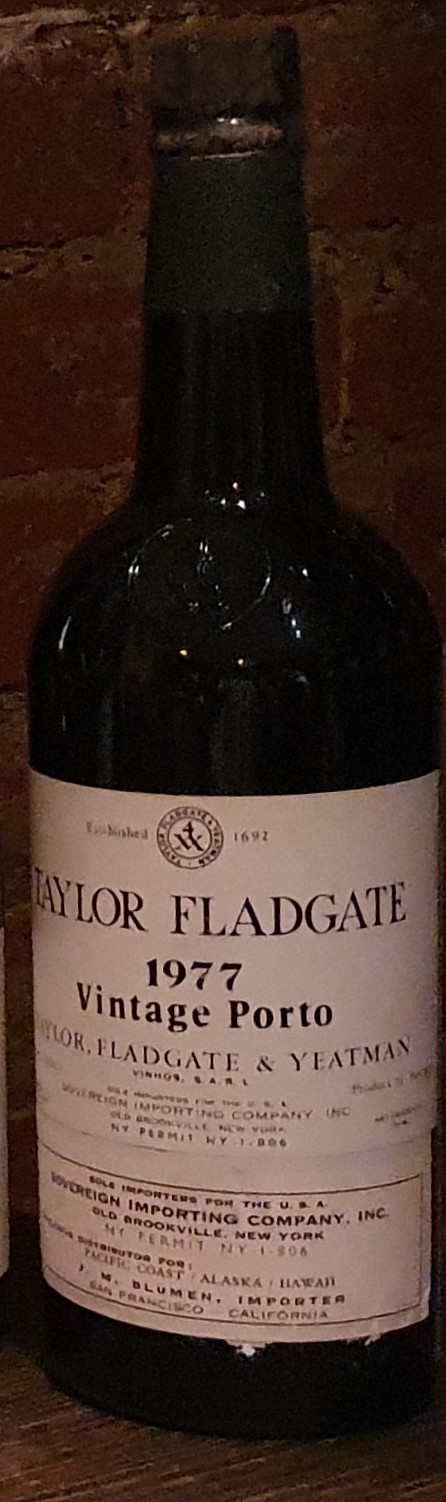
1977 taylors VP
1977 Taylor Fladgate Vintage Port
Portugal. Memories came flooding back after this wine was unmasked; it was the first Portuguese VP I ever tasted, and I instantly purchased one bottle despite my meagre salary. That bottle was opened in mid-2005 – “rose-petal & raisin & Turkish delight, high alcohol, huge power- another 20 years”.

Sixteen years later…. ruby with some brick, not the deepest, but with a mix of red, blue, black, purple fruits; fresh, fleshy, ultra-supple, clean spirit, almond notes, spices and rich dark chocolate. Its owner informed that a three-hour decant did the trick. This wine looks indestructible, and its complexity was a delight.

Drink to 2040, and 95 points

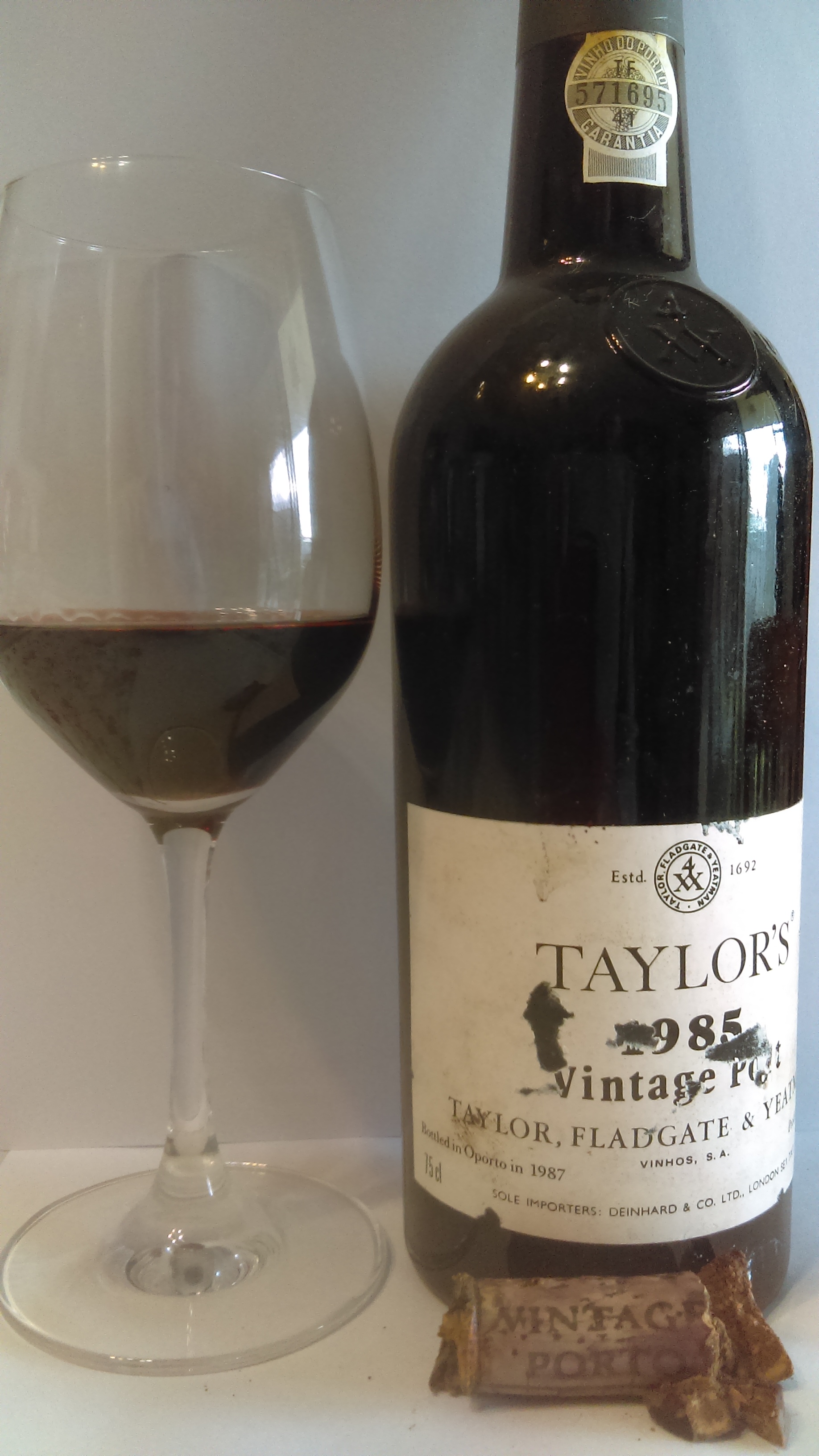
1985 Taylor’s vintage port 20.5%, again

I reviewed this wine in April 2016, and again in August 2018- and my final bottle was very recently consumed. Notes turned out to be similar!

Taylor’s is a distinguished house, with a useful, informative website.

1985 taylors vp 2019

The label was a bit damaged; the cork “almost” came out Ok, and the results from this good – albeit not outstanding -Portuguese vintage?

The wine is a solid ruby colour, with vibrant aromatics including fig. cocoa, dried citrus peel, sweet spices, and an intrigue of mixed blue and red berries; the palate is medium bodied but more substantial than expected – it shows fruitcake, hazelnut and mellow mocha characters, with some spicy, malty, almost gravied hints. The spirit and fruit are deliciously integrated with a sweet, lingering finish.

Beautifully put together, the wine provides complexity and freshness; drinking superbly

Drink to 2035, and 94 points.


Portuguese Vintage Ports; and cork problems so far in 2019

Many of the wines I drink are served “blind”; the wines below were briefly and typically presented as “a fortified”. The task? To describe, and determine style, age, origins and sometimes the producer. Encounters with two recent fortifieds left me confused.

I described the first as a vintage port style, showing blueberry and violet fruits, and some spicy notes. This mix of fruit aromas indicated Portuguese origins, but the relative sweetness suggested Australia, as did the spirit hotness and sweetness  The suppleness of the tannins, and a touch of chalk and almond meal however suggested Portugal. I assessed the age as 15-20 years, and the wine as very good but not excellent quality; finally the tannin descriptors made me stray from Portugal. The wine was a 2001 Taylors Quinta de Vargellas Vintage Port.  Drink to 2026, and 91 points

The second wine was a 1994 Dow’s Vintage Port– “sweet, ripe, pruney” -were my first descriptors for a wine that didn’t excite me. The lack of elegance (incorrectly) pointed me to an Australian origin. This wine is from a widely declared year in Portugal, and when revealed, I expected better. Hindsight suggests some oxidation, so I have not scored this bottle. It will have another chance!

I have updated the “hall of shame” in the page “corks and statistics” For 2019 so far, issues with TCA or oxidation of wines – under cork-  that I own and have opened unfortunately reached 9.62%.

As usual, I have had no failures with wines under screwcap, diam or crown seal.

Mixed drinks, recent short impressions

2003 Joh Jos Prum Wehlener Sonnenuhr Riesling Auslese 8%
Very pale lemon in colour, there is an array of the usual petroleum (not kero), and faint smokiness mixed with tropical fruits of mango, passionfruit, a pull of citrus, flint and warm spices. The palate is sweet, fresh, viscous  and long-lasting. The wine got better as it sat in the glass.

Its not easy to resist the style, one of my favourite Mosel vineyards plus the combination of freshness and bottle-aged complexities. It’s a triumph of old vines and winemaking nous over the heatwave European 2003 vintage.

95 points, and drink to 2030.

2014 Chateau La Tour blanche 14%
Sauternes (83% semillon, 12% sauvignon blanc, 5% Muscadelle; 130 g/l r/s)

A great VFM Sauternes producer, and a wonderful result from an excellent vintage. Light gold in colour, the wine displayed vibrant nettle, stonefruit, pineapple rind and bright lemon icing sugar. The palate showed more barley-sugar, and some vanilla pod to add to the aromatics. Rich, sweet, balanced with much more pleasure to cover over the next ten to fifteen years.

The range of fruit flavours, the complexity and balance makes the wine a delight.

94 points, and drink to 2030 (at least)

2014 Chateau Lafaurie-Peyraguey
Sauternes (93% Semillon, 6% sauvignon blanc, 1% Muscadelle)

Served (masked) at the same occasion as the La Tour Blanche above, this wine looked darker in colour, showed greater – and simpler- tropical fruits, and custard apple. The palate was sweet, fresh and supple, but with greater oak presence, some hardness, and some bitterness. Time may help, but the contrast did not help its cause.

87 points, drink to 2023.

1952 Saltram Pinnacle selection Show Muscat 18.8%
Barossa muscat, stored in small oak, believed to have been bottled sometime in the 1980’s.

Colour (after decanting) was a bright khaki, and the wine showed caramel, toffee, mocha. Some raisin character, and a degree of vanillan oak and rancio.

Served masked as usual, the mix of attributes made it difficult to decide style between muscat and tawny; the lushness pushing for muscat, the rancio pointing to tawny. Revealed as muscat,  the wine itself was excellent, and a nice piece of Barossa history.

90 points, drink now.

2003 Taylor Fladgate Vintage Port
A devastatingly hot year in Europe, but most Port producers declared the vintage. Cork – or storage- struck; the bottle I sampled was strong, powerful in colour, but the flavour impact was tertiary mixed mocha and coffee grounds; and the wine looked plain, young, raw and lacking finesse. A hasty look at remnants from another two bottles opened showed more expected fruit flavours of violets and dark cherry, but time and the amount left conspired against further contemplation

Not rated, but I will have other opportunities!

1985 Taylor’s Vintage Port 20.5%, again

I reviewed a bottle of this wine in April 2016, so it proved an interesting exercise to read my old comments, score and drinking window after writing this newer note. Thankfully, there were similar descriptions and conclusions.

1985 taylors vintage port

From a widely declared (but not regarded as a wonderful) year, this Portuguese Vintage Port is in a attractive drinking zone.  The cork broke a little when I opened the wine, but was in excellent condition for its 30-odd years. Decanting was needed to remove sediment, and away we went!

The Taylor’s website is user-friendly and their assessment of the vintage and this wine is here, along with plenty of other useful information.

A ruby colour, with some age-appropriate bricking on the rim, the wine displayed a mix of floral red and black fruits (mulberry, fig and plum) plus other characteristics including oatmeal and hazelnut. The spirit was generous and well integrated.

The palate was mellow and savoury, with mixed mocha and chocolate cream characters,  with minerally flint and iron notes, then the generous baking spices followed. Tannins are fine, but certainly present.

All up, this is a delicious wine, drinking irresistibly. I purchased a few bottles of this wine at auction in October 2015, and have been delighted with the results, with one bottle left.

Drink to 2030, and 95 points.


PS – Jancis Robinson has recently been running a competition about how people started on their wine journey- my published entry is here.


1985 Taylor’s Vintage Port 20.5%

1985 was widely declared, but generally regarded as an “average” VP year, rather than one of the greats. After the expected heavy sediment was decanted (and with just over 2 hours breathing), the wine was clear and its colour still more ruby than garnet, presenting as much younger than its true age.

1985 taylors vp

Aromatically, pronounced rose petal and pomegranate co-existed, with some sweet spices and light mocha – a highly encouraging set of characters. The spirit had integrated beautifully with the fruit after its extended bottle maturation; the alcohol did not intrude and the texture was supple and lip-smacking. The mocha was more apparent on the long palate, but this balanced wine is on an extended and delicious drinking plateau.

Drink to 2030; 94 points.