Snippets from the cutting room floor

Here are several wines enjoyed in the last few months that haven’t shown up in this blog – not terribly thematic but  too good  to ignore – no scores, but assume a minimum 94.

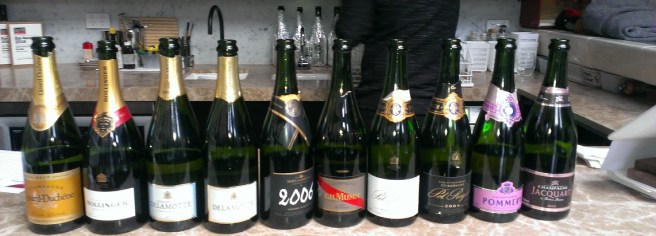
NV Krug Rosé Champagne

Confession time again- due to problems with oxidation, and poor VFM, I ceased purchasing rosé champagnes many years ago. A tasting class late last year rekindled my interest in this complex style.

Krug is fully priced, and this wine is available if you have a lazy $500. But it’s fantastic. Apparently 2006 base vintage plus reserves back to 2000. 59% PN, 33% Chardonnay, 8% P Meunier, partial mlf on 2/3 parcels, 7 g/l residual). PN Fermented on skins, uses small oak casks.
Red fruits- strawberry, raspberry, candied glace fruits, and some lemon too; not merely the overt bread/dough/pastry of most Champagne There is some complexing light vanilla (oak) and the palate is a very fine layered, textured style. It is delicate but there is tension and power to spare, and even some tannin. Beautifully constructed, I cannot really imagine a better example of this rosé style, and no rush to drink this.

2002 Salon Cuvee ‘S’ Les Mesnil Champagne  Blanc de blancs

no malo– disgorged early 2014
Brisk, energy, drive! Acidity will propel this for many more years.
As it warmed, the initial reticence uncoiled, showing ripe apple, some slightly browned sugar, cinnamon stick, crystallized lemon, and light yellow honey. The palate had the immaculate pure citric drive plus minerals, and was just astonishingly fine. Length was amazing.  Revisit in at least 5 years for an even better result. But it costs around $750.

2002 Ayala Blanc de blancs
Honey, citrus, some earthy oyster mushroom age characters; high and clean acidity, lots of minerals, energetic.
From an excellent year, but not a producer I’m familiar with; this was all class, and one to watch for.

2000 Mt Mary Triolet 13%
Vineyard plantings are 75% Sav blanc; 20% Semillon, 5% muscadelle
Mainly old oak, for around 11 months, lees stirring etc. $42.50 on release
Bright clear yellow colour; toast, honey; abundant fresh lemon, and some “juicy fruit” tones.
Grapefruit on palate, fresh, long, delicious – A super Yarra Valley wine that improved over a few hours before fading

2005 Mt Mary Triolet, diam cork
Sauvignon blanc, Semillon and a dash of muscadelle, this Yarra wine has proven cellaring ability.
Lemon colour, and amazingly fresh; passionfruit, gooseberry, tropicals; plus grapefruit and some spiciness from oak. Hard to describe, but has fruit freshness, oak and some honeyed aged complexity. At a lovely stage which should hold for at least another five years. Outstanding. Fruit drive, zippiness and complexity.

2007 Nigl “privat” Riesling 13.5%, screwcap!
From Kremstal in Austria.

Still pale in colour- with a mystery floral bouquet of green apple, nettle, lime. It’s ferociously acidic, yet balanced on the youthful layered palate; there is some grip, and waves of dense zesty refreshment, and nervousness. Complex grass, green and red berry flavours. Unmasked, its identity makes sense, but impossible -blind- to identify this with certainty as Riesling – it’s a high acid yet high alcohol white, quite unlike Australia, Germany or Alsace.  Very highly recommended; prospects are excellent for another 20 years.

2004 Crawford River Riesling , screwcap (Henty, Victoria)

Outstanding. A pull of lime but the undertow of acid pulls us back to Victoria.  Great length, minerals and a compulsion for “more!”. Another 20 years of superb drinking in prospect. Battles with Seppelt Drumborg as Australia’s most consistent outstanding Riesling producer. There are flashes from Tasmania sometimes, from Great Southern sometimes, Canberra sometimes, and the Peter Lehmann Wigan.

2009 Hardy (Eileen Hardy) chardonnay 13%, screwcap
Outstanding. Fruit from Tasmania.
Still a pale lemon colour, it exudes ripe nectarine, lemon peel and a touch of smoke. The palate is rich, alive with stony flinty characters, with a background of classy lightly nutty oak. The fruit flavours are stonefruit – white peach plus some grapefruit. With its abundant natural Tassie acidity, this wine has years of drinking enjoyment ahead.

2004 Seppelt St Peters Shiraz (screwcap)
Outstanding wine. Its a dense dark ruby colour, so fragrant and layered; pepper, dark cherry, blackberry, raspberry.
There is fine-grained tannin on the fleshy, voluptuous palate, and more dark fruits while the finish lingers, and continues. Concentrated without being ridiculous. This Grampians wine is drinking brilliantly, and should maintain this form for another ten years – conservatively. Easy gold medal. Irresistible, and a lesson in balance,


Plus some chardonnays tasted blind in a line-up of 20. Instant gold medal scores to

  • 2013 Oakridge 864 F&D (Yarra Valley)
  • 2014 Vasse Felix Heytesbury (Margaret River)
  • 2014 Penfolds 14a (Adelaide Hills)

They sell for about $60 per bottle, but vividly demonstrate the beauty of modern Australian Chardonnay across 3 different States, and provide wonderful complex drinking now and over at least the next five years.

Seppelt Port siblings

Seppelt Commemoration Port (Oscar Benno Seppelt) 20%

Blended from selected reserves of – Barossa – Para liqueur 1933 to 1980.

Commemorating the 100th anniversary of OBS’s birth in 1873, this is one of the series (there was a large family) and I gather this bottle was released around 1990, as a “premium” release. Internet searches have not been illuminating!

It was unusually sealed with a normal cork (not a stopper) and has thrown a very heavy crust. It’s a recent auction purchase. After bottling, this tawny style will change very little, but certainly needs aeration after its extended time in bottle, and a very careful decant.

In the Seppelt Para house vein, the colour is a brilliant glowing amber with a khaki rim. Myriad flavours; coffee bean, vanilla bean, nuts (more almond than walnut, but both are present).

nv seppelt ob

It seems relatively dry, a marvel of blending old material with fresher wines “selected by the directors”; savoury and delectable on a gloomy winter night. The inherent acidity makes another taste inevitable.

Drink now (but will not collapse); 90 points as a drink, more if history is valued.


Seppelt Commemoration Port (Leo Renato Seppelt) 21.5%

Blended from Para liqueur port vintages 1933 to 1972.

Not unexpectedly, there is little difference in colour, aromatics and flavours. This wine tastes slightly “brighter” with its fruit profile displaying some citrus peel nuances as well as those mentioned above, and perhaps the weightier mouthfeel of the marginally higher alcohol -but we are well into the realm of variation between individual bottles

This wine nudges up to a score of 92 points, with the key word “yum”.


Now we are six (months into 2016)

Six months into 2016 and it’s time to update the cork taint hall of shame – 8.4% so far  this year, and the offending wines are listed.

As usual, these are wines I have opened, from my own cellar, and do not include wines I’ve assessed as too old, so the appalling headline number is understated. The following wines provided zero drinking pleasure.

  • 2000 Grongnet Special club champagne- corked – credited by the importer
  • 2002 Guy Castagnier clos st denis -corked- replaced by importer with 2011 Pierre Amiot Gevrey Chambertin les combottes 1er
  • 1987 Moss Wood special reserve cab sav – corked – replaced by winery with 2013 Moss Wood Cab Sav
  • 2007 Dirler Riesling Kessler heisse wanne – oxidised
  • 1997 Louis Sipp GWT Osterberg -oxidised
  • 1998 Zind-humbrecht Pinot Gris clos Windsbuhl – corked
  • 2007 Dirler Riesling Kessler sgn- corked
  • 2003 Huet Le Mont demi-sec – oxidized

Alsace continues with its dreadful record of corks interfering with enjoyment of wines.

And worryingly, the few replacements I’ve obtained disappointingly do not provide fair compensation for carefully cellared wines from well-regarded vintages. Certainly a replacement is better than nothing, but the replacements were not of similar calibre to the discarded wines.

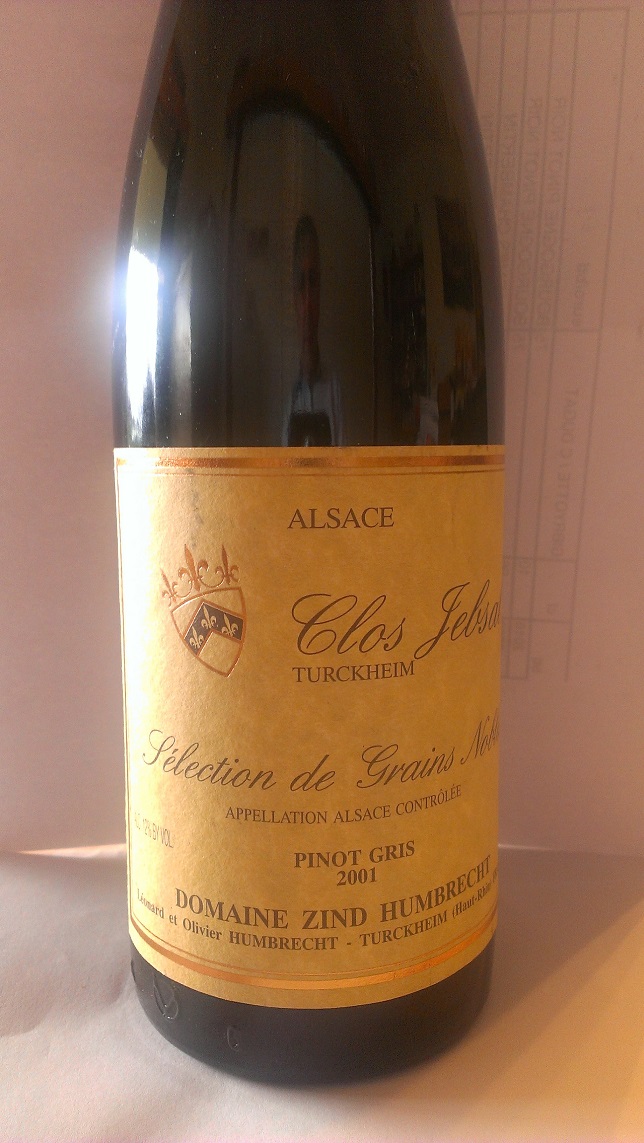
2001 Zind-humbrecht Pinot Gris Clos Jebsal SGN 12%

Is 15 years too old for an Alsace SGN?

Thankfully the cork had not influenced the wine.

According to the Hugel vintage chart, 2001 in Alsace was special for late-harvest Pinot Gris.

For once, the usual informative vintage and wine notes from Zind-humbrecht (from a Coe Vintner’s site) have been truncated, so I’m missing some background. I understand that the site Clos Jebsal is particularly favourable for late-harvest and botrytis styles – and this wine contains 168 g/l of residual sugar.

2001 zh pg sgn

The wine’s colour is amber with some copper tints.

The bouquet exudes freshness, tropical fruits, glace fruits, marmalade, cinnamon stick and vanilla bean. The palate is yellow peach, nectarine and  and mandarine. It’s viscous, textured, balanced, and ripples with vitality. The complexity of the bouquet and palate really sets this wine up as special.

97 points, drink to 2025.

2000 Louis Sipp “couer de trie” Selection de grains nobles Pinot Gris SGN 12%

From auction, this is a 500ml bottle from Alsace – keen researchers may find some notes I made on Starforum back in 2008 “somehow carrying the pineapple, cinnamon, some light butterscotch, baked apple pie with just enough acidity – a nice wine with huge sweetness”.

Pinot gris and residual sugar is a wonderful match.
2000 louis sipp pg sgn
The cork has mercifully behaved, and at 16 years, the wine is now a deep amber colour with copper tints (no drama in a botrytis wine). It’s floral, mostly with ripe apricot, apricot jam and cinnamon spices. This is maintained on the palate, with touches of marmalade, citrus peel, and some baked apple. It’s sensual and voluptuous, the acidity continues to provide support.

While the wine may even have provided greater pleasure a few years ago, it still provides unctuous and luscious drinking- but please consume and enjoy soon.

90 points, drink to 2018.

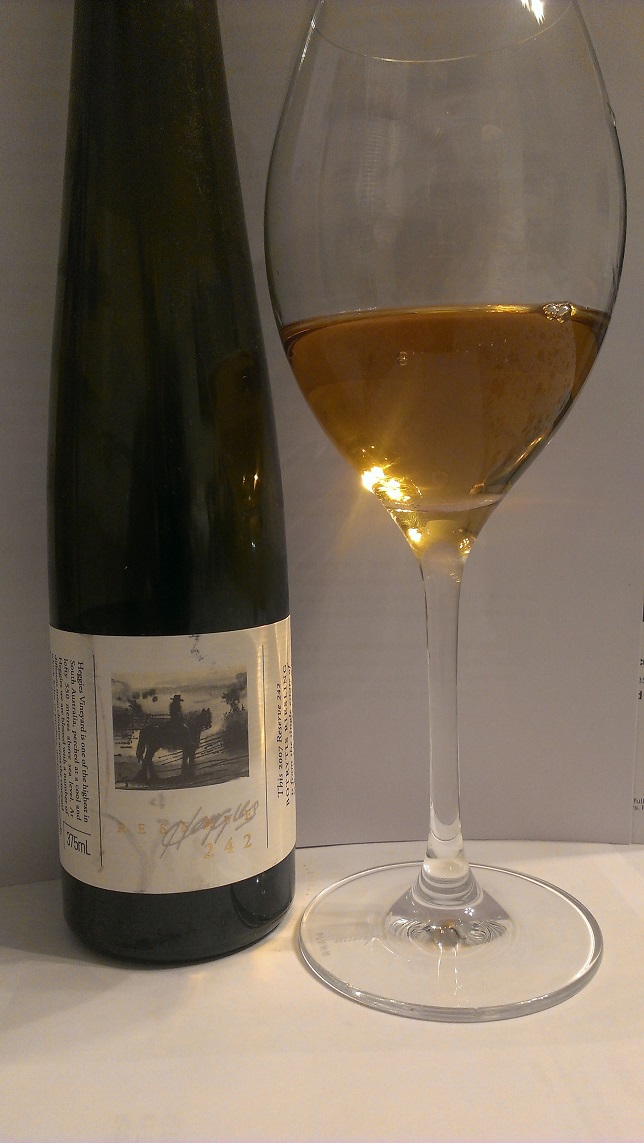
2011 Chamber’s (rosewood) Noble muscadelle, screwcap 11.3%

Chambers of Rutherglen is not the first winery that springs to mind for its sweet white wines; fortifieds yes; VFM red wines, and obscurities (anyone for Gouais) perhaps? Australia has made botrytis-affected wines from many varieties, principally Riesling and Semillon, but there have been some adventures in Sauvignon Blanc, Chenin Blanc, Chardonnay, Viognier and even Marsanne. Some of these were made deliberately, others where circumstances forced the winemaking decisions.

2011 was a pretty dire year for winemaking in Victoria, and much of Australia (although Margaret River fared well, and McLaren Vale reasonably well). There was unseasonal rain, making spraying difficult- tractors got bogged- and plenty of rot. Most red wines from Victoria lacked colour, and density. Matters were not so bleak with white wines, and there are some scintillating Chardonnays made that year in the Yarra Valley.

There have been a few late-picked or botrytised muscadelles from Rutherglen (Pfeiffer’s is known), so its not unique. Muscadelle is the variety used in making Australia’s sensational barrel-aged fortified Topaques (formerly Tokay). The late-picked style is cash-flow friendly too.

From my unreliable memory, Chambers has made this botrytis style before in 1996 and 2000, and perhaps in other years, so they have a track record, although those seasons were much kinder. I paid $15 for this half-bottle a few years ago.

2011 chambers

Its an attractive glowing deep gold colour with a hint of amber. While the bouquet is vibrant ramshackle orange marmalade, tangelo and dark honey, botrytis has performed its magic fruit concentration role on the palate, and its clearer that that flavours fall into the “dark” orange marmalade, and marginally overripe apricot fruit spectrum. The botrytis has overwhelmed any varietal characters – no bad thing. There is some bitterness too, but not enough to dissipate the wine’s pleasures.

There is considerable sweetness, and while the acid is holding this together, I would recommend drinking soon, before the phenolics take over. No embarrassment to drink; the glass seems to empty of its own volition.

Score 89 points, drink to 2019.

Stoney Goose Ridge new release – Lawyers’ Picnic

CEO Hector Lannible stated “we salute the true pioneers and creators, those happy few who have given so much to so many. Lawyers. Our company depends on their endeavours, whether prosecuting those with the temerity to use our trademarks, the inevitable disputes on our numerous cunning contracts, taking on those who defile us in social media, detailing our innovative cutting-edge employment contracts, and establishing and amplifying the complex structures underpinning our taxation minimisation strategies. They fight in numerous jurisdictions at many levels, appealing at the slightest pretext”.

“Their detractors just set up a smokescreen of red herrings – a storm in a teacup, literally. But the circus having writ, moves on”.

“We celebrate the true defenders of our financial institutions against the greed of widows, orphans, and the terminally ill. We applaud their unpopular but critical roles in protecting the rights of pharmaceutical, tobacco, gaming, utility, mining and oil companies, property developers and the multinationals to avoid tax through entirely legitimate use of labyrinthine multiple off-shore entities. And their tireless protection of the rights of individuals, their family trusts, negative gearing and so on. I commend their tireless undertakings to liquidate companies with the painstaking assistance of forensic accountants, and their ability to create phoenix companies for a meagre pittance. Their technical prowess enables our success. Lawyers – long may their baffling efforts continue”.

And it’s a new, bold start – we proudly continue our tradition of a curated back label for our latest creation.”

Lawyers’ Picnic is a limited release wine with a RRP of $19.95.

The informative back label follows

Lawyers’ Picnic- A blend of red grape varieties from premium Australian areas. 13.9% A/v

Mea culpa, mens rea corpus delecti, cogito ergo sum ad hoc pro bono.

Inter alia, force majeure ad nauseum.

Bona fide caveat emptor, compos mentis de facto ex cathedra in flagrante delicto, persona non grata lingua franca; locus dictum prima facie quasi obiter nisi quantum status quo habeas.

Sub judice sui generis de novo ultra vires.

1992 Gehrig Vintage port 18.1%

Deep ruby colour; shiraz, plus brandy spirit from one of the Rutherglen eastern “outliers”;  rustic label, but from a wondrous year in the region. Red liquorice, mingled Christmas cake spices, milk chocolate, bursting with vitality, and fine, chalky tannins.

1992 gehrig vpA careful decant was necessary to remove some  of the heavy deposit, and its a slightly old-fashioned style, where the spirit is a bit prominent and the sweetness is slightly overdone. But we’re not all clairvoyant, and this 24 year old wine provided an overload of drinking pleasures, and another 10 years will not diminish its enjoyments.

Drink to 2025, 91 points

Alsace, again

alsace may 20162001 Domaines Schlumberger Pinot Gris Vendanges Tardive 12.5%

This wine has seen better days. The colour is a dark gold, but legitimate for its variety and age. It displays red apple and brown pear aromatics, plus some hints of bruised apple oxidation.

Its quite sweet (around 100g/l), but there is enough acidity to avoid any cloying; the pear flavours flow on a viscous palate, and the message is – drink up. Ready, and enjoyable but it had the misfortune to be paired with the following wine.

87 points, drink to 2018

2007 Dirler Spiegel Gewurztraminer SGN 12%

I was terrified to open this- from the last 2 wines from this Alsace estate, one was badly oxidised, the other corked – and no response from the producer despite 2 emails. But this wine was pristine.

Light gold in colour, its resoundingly fresh, with aromas of ripe red baked apple, musk, talc, cinnamon.  The balanced palate shows more rose petal, apricot and white peach, some honey and citrus, and is richly textured, fine, clean, and there is no cloying despite the 150-odd g/l of residual sugar.

It’s an outstanding wine, combining varietal character with botrytis richness.

96 points, drink to 2023

Way back when it all began (part 1)

Here’s another ramble along memory lane, about the start of my wine journey

My parents drank wine of course, but until my early twenties, my appreciation was negligible.

Then I started on my search for knowledge, hampered by my impoverished student lifestyle, lack of well-heeled patrons or relatives and unfortunately, zero access to “trade” prices.

In the early 1980’s there were 2 dedicated Australian magazines; Wine and Spirit buying guide, and Winestate. Copies were well circulated. I was on the lookout for affordable wines of quality – now I am more interested in avoiding some wines; reading the scores but the comments have always been more useful.

There were also some wine columns in newspapers – the Age had regular columns by Mark Shield – a writer with a healthy touch of larrikin- while the Weekend Australian had columns by Len Evans, and James Halliday. There were often some “aspirational” wines, and I was often envious of the vertical, or retrospective tastings, and amazing dinners.

The handy annual one-stop buying reference was Robin Bradley’s Benson and Hedges Gold book. Plus there were dusty old books on Australian wine.

Regular, usually Saturday morning tastings, provided enormous education, sometimes with winemakers on-hand and often cut-throat purchase prices. My main haunts (although there were others) included

  • Nicks (Doncaster) and later in Swanston street
  • High Y cellars (Ashburton)
  • Dan Murphy (Prahran, and later Alphington, and later again Ascot Vale)
  • Boccaccio cellars (Kensington)
  • Richmond Hill cellars
  • Sutherland cellars (in Banana alley, an early advocate of WA wines)
  • Templestowe Cellars

An annual treat was tasting the Penfolds range, and  I usually settled on purchase of a few bottles of Kalimna and the 389. Grange was sometimes available for tasting, but beyond my finances.

There were some “big” tastings – a selection included

  • Expovin at the fantastic Exhibition buildings
  • Exhibition of Victorian Winemakers at assorted venues
  • Winery Walkabout at Rutherglen (plus the “ride the Rutherglen red” train)

Many of these are just fragmentary memories now; some events continue, with a swag of regional celebrations. The proliferation of  winery cellar doors has possibly diminished the appeal of these large public events, although numerous regional  celebrations exist.

I remember live wine auctions at Fowles in Port Melbourne, and MW in Brunswick. Auctions are online now of course.

That’s a start, and there will be further instalments, that may reawaken readers’ reminiscences!