2003 Dr Loosen Wehlener Sonnenuhr Riesling Kabinett 8%

This was a strikingly hot year in Europe, which took many producers by surprise, rushing to pick grapes before they became over-ripe and lost acidity, plus dealing with hot grapes, refrigeration issues and the usual vintage problems of not enough fermenters of the correct size.

loosen 2003

The Mosel was not immune to these difficulties. This wine is not quite “entry-level” but it routinely provides excellent typificity and VFM. It’s a light straw colour, and its aromatics of lime-juice, citrus, and Jonathan apple burst from the glass. There are some earthy undertones and pebbly/slatey elements too, while some mango is evident on the palate.  There is enough acidity to make this a very refreshing wine, and no kero, despite clear bottle-aged characters of light toast.

Its another lesson in the longevity of these flavorsome low-alcohol wines, and a tribute to the skills of Ernie Loosen and his team to triumph over the adverse conditions of the vintage.

Drink to 2017 while the acidity is vibrant, and score is 90 points.

Champagne – some personal education

I went to an event recently, with the guidance of Sommeliers Australia, the Champagne Bureau and some previous winners of the Vin de Champagne awards, notably Kate McIntyre MW. After an intro mainly on Champagne terroir, plus tips about not swirling, we began with a bracket of Blancs de Blancs, so we could identify more positively Chardonnay influences. Usefully we began seeking apple characters, melon and a linear acid profile.

No scores, as time was not kind, and I was busy listening and thinking. I expect bottle variation (cork, disgorgement, and storage) may vary results.

Nv Pommery “summertime”. 3 years on lees, 9g/l rs. It’s a party! The doughiest, with bread, lemon and spices. No complaints

2006 Jacquart. Pale, finer style, steel and minerals, waxiness too

2004 Taittinger Comptes. Ultra-fine and all class. Tight, really mouthfilling. Certainly my preferred wine in this small set. It will be super in a few years.

Then we looked at some wines with Pinot Noir and Pinot meunier in the blend; looking for different aromas; acid profile more rounded, and greater texture. Some believe red apple is a pinot meunier pointer.

NV Henriot Brut Souverain; 50/50 Chard/PN; red berries, rose-petal; fluffy. Smart

NV Charles Heidsieck; 1/3 each PN, PM, Chard. Chalk and charcuterie; my preferred wine here but faded slightly as it aired and warmed – perhaps won’t be long-lived

2006 Moet. 42% chard, 39% PN, 19% PM 5g/l rs.  I didn’t like this; too reductive, a fair bit of “animal” and seemed a bit attenuated. Certainly more interesting than the ocean of Moet NV.

Then some rose styles. I’ve resisted purchase in the past as they don’t seem to represent VFM, and I’ve have had some oxidation problems – but I am mightily impressed with results when it works. Very food-friendly- fish, chicken, cheese, light desserts….

NV Lanson Rose– a pale orange colour, strawberries and some cold tea – but straightforward. No malo, so some may find the acidity overdone (not me). It’s value!

NV Bollinger Rose. Salmon colour, fine texture, candied fruits, fresh with some refreshing and added-interest phenolics – maybe better with less dosage.

NV Roederer Rose. My favourite in this bracket and overall on the day. Pale salmon colour, strawberries, finesse, purity, length (no malo). Seductive.

There was brief discussion about whether zero dosage was a fad – there is a general trend towards reducing dosage levels with larger companies performing this gradually so as not to frighten their market. The larger houses have the benefits of  blending options from multiple sites and stocks of reserve wines; the downside is perhaps some blandness in their NV offerings. Growers may be less consistent. There was very brief discussion about mlf and oak treatments – but nothing on seals. Acidity was another factor discussed.

The wines selected were all from larger houses rather than the smaller growers that we are seeing now in Australia, but it was enlightening to see a range of Champagne rather than just one or two. To my great surprise, Australia is the 5th largest Champagne consumer in the world (not per head, but in total), so we are significant.

All up, a quite terrifying overview of the complexities within Champagne, and another budget temptation with the rose styles.
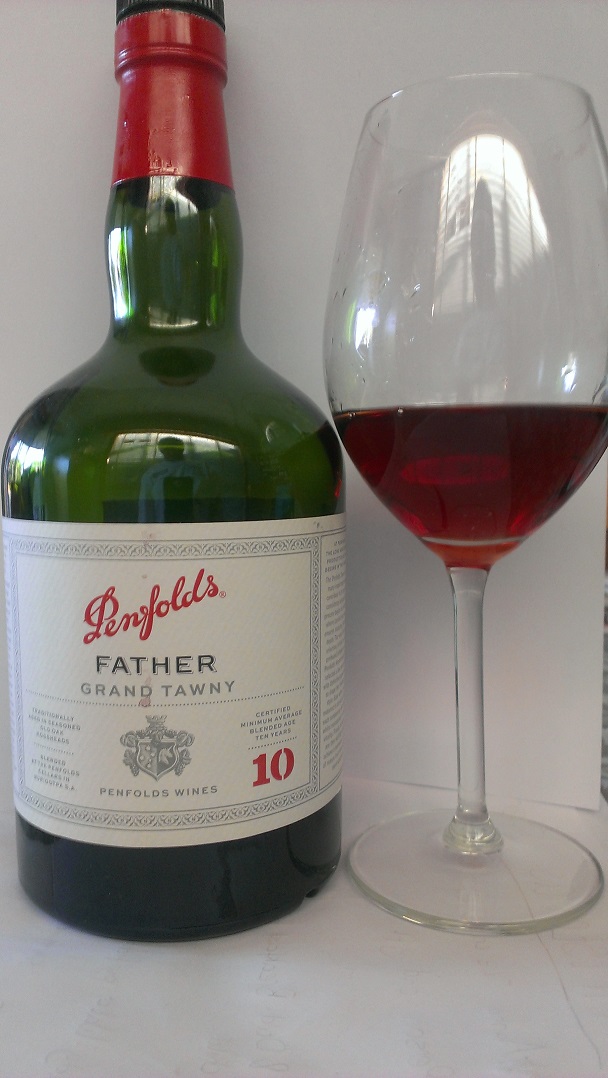
1994 Quinta do Noval Vintage Port 20.5%

Very densely coloured, with tell-tale camphor and light liquorice, but with the Portuguese tannin bite; almonds and bergamot (earl grey). Mouthfilling, fine but slightly furry, spices in a complete package. Long palate finishing slightly warm. Decanting would have settled this wine, but all-around delicious

94 qdv

Drink to 2030; score 92

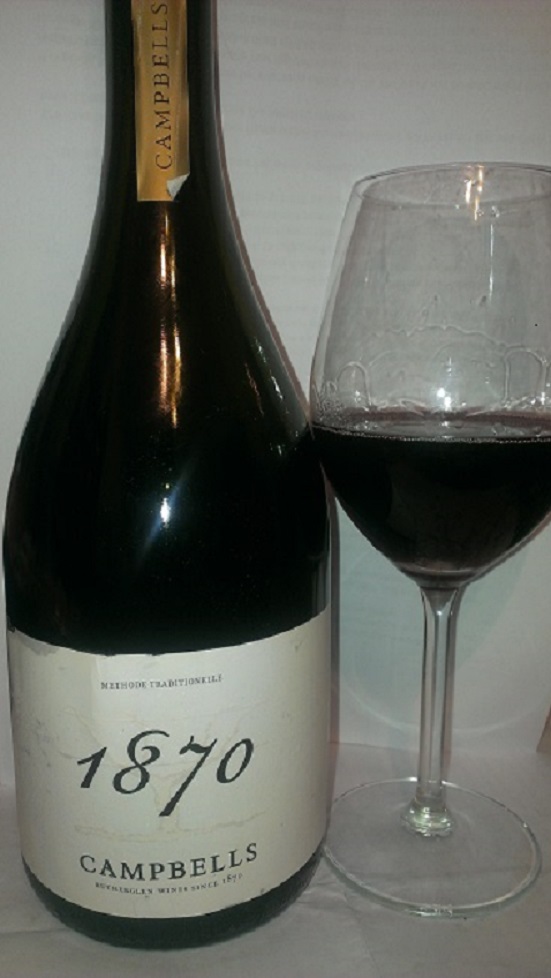
Campbell’s “1870” sparkling shiraz 14%

With a crown seal – hooray.  This was a one-off from Campbells of Rutherglen released a few years back that we paid $55 for- must have been in a good mood. (so its more serious than the Campbells $30 nv sparkling red).

The label claims its blended from vintages going back 40 years – likely Shiraz. Its vigorous in the glass, deeply coloured, lightening on the rim. It boasts an array of savoury, earthy scents – mulberry and perhaps aniseed, and old leather, with a faint touch of mushroom . The palate mirrors this, thankfully drier than most wines made in this style, with clean acidity, and welcome creaminess.  Residual sugar is difficult with sparkling reds- I think around 15 g/l is needed to balance the tannins; more than 25 is unwelcome; guessing that is around 20g/l.

nv campbells sparkling red

Another glass beckons….. yes there are wines with better QPR , but well worth a try.

Drink now- 2020, score 89 (92 with duck!)

1975 Baileys Bundarra Vintage Port

There are wines that are difficult to assess objectively. Wines from Baileys present this issue to me, for a raft of sentimental reasons. In the heartland of Ned Kelly country near Glenrowan in Victoria, Baileys is a winery that I travelled to with my parents, then with my family and children. We often seemed to visit partly to break the journey north, and my memories recall many a sweltering day, when the winery provided temporary relief from the un-airconditioned car. Inside was dark and blessedly cooler. The counter was typically set with a large range of whites, reds and an impressive range of fortified wines including the “founder” range. The general instruction was “start at that end and keep going”.

My visits covered a range of winemakers including Harry Tinson, Steve Goodwin and more recently Paul Dahlenberg, and the usual problem was to limit purchases to either fit the available budget, or avoid taking up much space in the car – generally artfully jam- packed for holidays. Down a bunch of narrow roads with turnoffs easy to miss at the speeds travelled. Afterwards there was the classic all-too-brief drive across the scenic Warby ranges with the possibilities of going to Brown Brothers at Milawa, or trying the range of mustards nearby (and the pie shop).

At various times there seemed to be numerous back vintages of Baileys available at very reasonable prices. But the wine in question was purchased at auction perhaps 10 years ago, with the label, level and cork looking pretty good – after all –its now 40 years old!

75 baileys vp

This wine (made by Harry Tinson) had surprisingly little fine sediment; and key impressions were dark, dark red black colours, initially with some hot spirit showing. seeming much younger than it really was. And a typically sweet, old-fashioned Australian vintage fortified, BUT with air of generosity; milk chocolates, cocoa, chalk,  and a long-lasting fruitcake palate. The spirit settled, the fruit emerged from its long sulk, and others at the table had no problems in returning for further sampling. All Shiraz, and while its fully ready, it’s in no danger of collapse and seems to be on a plateau that will provide quite decadent drinking for at least another 10 years.

Drink now to 2030; score (objectively) 90; sentimentally 93

2004 (AP Birks) Wendouree Shiraz Mataro 13%

I don’t only drink or review  wines with some residual sugar, these are not at all my staple drinking fare; but after my the recent digression about mailing lists, it’s time to look at a red wine supported by information from the mailer; “a blend of Shiraz (76%) and Mataro (24%) from 1893 Central and 1920 Eastern vineyard plantings”.  No dispute about vine age –these are old!

The wines Wendouree releases vary in price – this is the cheapest. Mataro is a synonym for Mourvedre – or Monastrell –  (one of the blending varieties of the Southern Rhone Valley, and other areas in France, especially Bandol), and Spain,  with a reputation for being full coloured, full-flavoured, tannic, alcoholic and straightforward. In Australia, Mataro is often one of the blenders with Grenache and Shiraz. Mataro is one of the varieties that suffered under the vine-pull scheme not so many years back in Australia. So this wine is a fairly traditional blend from Wendouree.

2004 wendouree shiraz mataro

And how do you get the best out of Wendouree wines, which don’t always shine in tastings? It helps to have a good year, like 2004 in the Clare Valley (and like most of South Australia). It helps to decant the wine and let it breathe for a few hours. And it helps to put into proper glassware – and after some experimentation, the Zalto burgundy glass works particularly well, bringing out some of the more fruity flavours. James Halliday describes the wines of Wendouree as the epitome of the “velvet first in the iron glove”, with 30 years of cellaring potential almost guaranteed based on the vine age and the restricted yields. My experience is that Wendouree wines can be quite shy and sulky – I used to think of them as being attuned to heroic Pinots, but now believe I think they are more like Nebbiolo in approach.

The cork has done an outstanding job – just as well, as this wine has a long future.

The colour is a dense crimson/black – encouraging in an 11 year old. Dark sour cherry, dried herbs, cola, plum and some mint; the medium- weight palate echoes this and adds chalks plus “rum and raisin” chocolates, and liquorice. Complex. The wine is still quite – pleasantly – tannic, and the (Seguin Moreau) oak is swamped by the fruit intensity.  The old-vines add what I call “slinkiness”. Show judges may be looking for more oak, and for more highlights, but the wine is complete in its expression. Lip-smacking and delicious.

Drink 2020 to 2030, score 93 points.

2005 Dirler Kessler Pinot Gris 14%

Bright clear gold, this Alsatian wine seems quite advanced with low-key but authentic scents of musk, marzipan and almond meal. It’s dense and rich with chalks, flints. Fruit descriptor would be beurre bosc pears. Perhaps 50 g/l residual sugar, and it’s beginning to dry out, but the heroic 14% alcohol doesn’t seem inappropriate. The acidity is adequate, but not quite enough to warrant further cellaring (although Pinot Gris is a notorious low acid variety).

2005 dirler pg

Grimly, another instance of a Grand Cru site, but somewhat disappointing for a wine labelled at this standard.

Drink now- 2017, score 86

Winery mailing lists, then and now

I have been diligently removing myself from winery mailing lists for a few years, but when I began indulging in wine, it was exciting to receive the ramblings. Here’s some background on a few that continually piqued my interest.

Mount Mary – Mailers started out as little more than a price list with a brief description of the available wines, but Dr John Middleton adventured these into pamphlets packed with philosophy, history, education, musings on taxation, retailing and so on. The print seemed to get smaller and the brochure longer.  A newsletter full of character, pungency and wit. Always interesting – even the parts I could understand and disagree with.

Mount Mary had a waiting list before you could join the mailing list, and the most restricted wine was the Pinot Noir. People rushed to return their orders as fast as possible, with Mt Mary desperate to stop faxes and couriers molesting them. On release and tasting days there were queues, and people purchasing everything they could up to the limits. John was distraught at customers that “flipped” his wines to retailers and auction houses soon after the wines became available.

And for a while there was gewürztraminer.

Once I made an appointment to see John, and was surprised to see him mowing the lawn in a very tattered machine. Another time, he generously donated a bottle of his prized Quintet to some impoverished (but wine-interested) University students. Once I enquired about getting a magnum, and this was cheerfully aranged – after I had supplied an empty magnum-sized bottle.

Pipers Brook – Dr Andrew Pirie’s release newsletters were also vibrant, with part of the novelty being that the wines came from Tasmania. The newsletters highlighted the (painfully) small volumes available, sometimes offering very mixed packs, as volumes of newer varietals came on-stream, and different bottlings from varied special block selections were made.

(AP Birks) Wendouree – Another winery with a waiting list before  customers progressed to the mailing list; and curiously the order forms carry marks indicating the longevity and worthiness of the customer. Customers may get their order quantities adjusted (downwards).

The format of the newsletter has not changed, and reads in essence “the following wines grown made and bottled at the estate are now available”, followed by blend proportions and age of vineyards. Appealing in its apparent simplicity, and for all their renown the wines remain very reasonably priced.

When I toured a few years ago, Tony Brady pointed me toward one of the vineyards and laconically said “watch out for snakes”. If you visit, make sure to view the small, immaculately constructed shelves holding their stock of museum wines.

Baileys of Glenrowan – Readers could easily discern Harry Tinson’s heroic struggle to describe his new wines, and his restiveness to improve their quality each year. The newsletter was modest in tone, but the wines certainly spoke of their place. The area had imposed an enormous stamp on Harry and he reciprocated.

Moss Wood – Newsletters began simply, but blossomed into artworks, describing in great detail various technical tweaks in viticulture and winemaking, plus fabulous tables of vintage ratings and comparisons. Having correctly planted Margaret River’s strength with Cabernet Sauvignon and Chardonnay, Moss Wood persevered with 2 Semillons and Pinot Noir. Now they have multiple sites to choose from, with greater blending and varietal options.


Now, we are in the world of the internet, and emails and websites have largely replaced snail mail.  The newer technology means potential for more photographs, updated reviews, blogs etc. The downside here is greater opportunity for marketers to go ballistic, and for web designers to inflict illogical and obtrusive designs. But I have hoarded some of these old paper newsletters to trigger the voyages along memory lane.

2007 Okonomierat Rebholz Von Buntsandstein (sandstone) Riesling spatlese 7.5 %

From the Pfalz area of Germany – not as highly regarded as the Mosel, but not to be dismissed. A lovely “low-tech” label that suggests its hand-written (artisanal).

2007 rebholz

Gosh this is so easy, indeed dangerous to drink. It’s a light gold colour, with the usual suspects making their welcome appearance on the bouquet – an assortment of varied tropical fruits including mango, pineapple, and other non-tropical fruits including red apple and grapefruit. There is viscosity, mixed spices, an appealing amount of sweetness for a spatlese-style (at least) , and its clearly, and cleanly Riesling.

What an excellent match for a wide range of food- and it worked especially well with tandoori chicken and mushroom risotto.

It is not the most complex wine you will strike and there is no improvement in front of it, but its always righteous to strike a delicious wine at its peak.

Drink to 2018, score 89.

1967 Leo Buring P35 Vintage Port

Served masked, my guess was 1971, but bravo for another 48 year old wine.

Liquorice and some malt, blackberry, musk, and abundant rampant mocha, lush and sweet; powdery tannins and still cleansing acidity.  Clean and integrated spirit. Powdery, rich fruit, some raisin development, dark liquorice and great fruit length. Succulent, in great condition, complex and a treat to drink.

leo b vp

Its quite likely that the 1,75 on the label was the original price – in dollars

McLaren Vale grapes, source of many of the great Aussie VP’s. Leo Burings of course were best regarded for their Rieslings under legendary winemaker John Vickery; but clearly they had talents for other wine styles.

Drink now to 2025 (for best bottles), score 93 points