Winery mailing lists, then and now

I have been diligently removing myself from winery mailing lists for a few years, but when I began indulging in wine, it was exciting to receive the ramblings. Here’s some background on a few that continually piqued my interest.

Mount Mary – Mailers started out as little more than a price list with a brief description of the available wines, but Dr John Middleton adventured these into pamphlets packed with philosophy, history, education, musings on taxation, retailing and so on. The print seemed to get smaller and the brochure longer.  A newsletter full of character, pungency and wit. Always interesting – even the parts I could understand and disagree with.

Mount Mary had a waiting list before you could join the mailing list, and the most restricted wine was the Pinot Noir. People rushed to return their orders as fast as possible, with Mt Mary desperate to stop faxes and couriers molesting them. On release and tasting days there were queues, and people purchasing everything they could up to the limits. John was distraught at customers that “flipped” his wines to retailers and auction houses soon after the wines became available.

And for a while there was gewürztraminer.

Once I made an appointment to see John, and was surprised to see him mowing the lawn in a very tattered machine. Another time, he generously donated a bottle of his prized Quintet to some impoverished (but wine-interested) University students. Once I enquired about getting a magnum, and this was cheerfully aranged – after I had supplied an empty magnum-sized bottle.

Pipers Brook – Dr Andrew Pirie’s release newsletters were also vibrant, with part of the novelty being that the wines came from Tasmania. The newsletters highlighted the (painfully) small volumes available, sometimes offering very mixed packs, as volumes of newer varietals came on-stream, and different bottlings from varied special block selections were made.

(AP Birks) Wendouree – Another winery with a waiting list before  customers progressed to the mailing list; and curiously the order forms carry marks indicating the longevity and worthiness of the customer. Customers may get their order quantities adjusted (downwards).

The format of the newsletter has not changed, and reads in essence “the following wines grown made and bottled at the estate are now available”, followed by blend proportions and age of vineyards. Appealing in its apparent simplicity, and for all their renown the wines remain very reasonably priced.

When I toured a few years ago, Tony Brady pointed me toward one of the vineyards and laconically said “watch out for snakes”. If you visit, make sure to view the small, immaculately constructed shelves holding their stock of museum wines.

Baileys of Glenrowan – Readers could easily discern Harry Tinson’s heroic struggle to describe his new wines, and his restiveness to improve their quality each year. The newsletter was modest in tone, but the wines certainly spoke of their place. The area had imposed an enormous stamp on Harry and he reciprocated.

Moss Wood – Newsletters began simply, but blossomed into artworks, describing in great detail various technical tweaks in viticulture and winemaking, plus fabulous tables of vintage ratings and comparisons. Having correctly planted Margaret River’s strength with Cabernet Sauvignon and Chardonnay, Moss Wood persevered with 2 Semillons and Pinot Noir. Now they have multiple sites to choose from, with greater blending and varietal options.


Now, we are in the world of the internet, and emails and websites have largely replaced snail mail.  The newer technology means potential for more photographs, updated reviews, blogs etc. The downside here is greater opportunity for marketers to go ballistic, and for web designers to inflict illogical and obtrusive designs. But I have hoarded some of these old paper newsletters to trigger the voyages along memory lane.

2007 Okonomierat Rebholz Von Buntsandstein (sandstone) Riesling spatlese 7.5 %

From the Pfalz area of Germany – not as highly regarded as the Mosel, but not to be dismissed. A lovely “low-tech” label that suggests its hand-written (artisanal).

2007 rebholz

Gosh this is so easy, indeed dangerous to drink. It’s a light gold colour, with the usual suspects making their welcome appearance on the bouquet – an assortment of varied tropical fruits including mango, pineapple, and other non-tropical fruits including red apple and grapefruit. There is viscosity, mixed spices, an appealing amount of sweetness for a spatlese-style (at least) , and its clearly, and cleanly Riesling.

What an excellent match for a wide range of food- and it worked especially well with tandoori chicken and mushroom risotto.

It is not the most complex wine you will strike and there is no improvement in front of it, but its always righteous to strike a delicious wine at its peak.

Drink to 2018, score 89.

1967 Leo Buring P35 Vintage Port

Served masked, my guess was 1971, but bravo for another 48 year old wine.

Liquorice and some malt, blackberry, musk, and abundant rampant mocha, lush and sweet; powdery tannins and still cleansing acidity.  Clean and integrated spirit. Powdery, rich fruit, some raisin development, dark liquorice and great fruit length. Succulent, in great condition, complex and a treat to drink.

leo b vp

Its quite likely that the 1,75 on the label was the original price – in dollars

McLaren Vale grapes, source of many of the great Aussie VP’s. Leo Burings of course were best regarded for their Rieslings under legendary winemaker John Vickery; but clearly they had talents for other wine styles.

Drink now to 2025 (for best bottles), score 93 points


Chardonnays at Oakridge (Yarra Valley, Victoria)

Oakridge has just picked up a few trophies for Chardonnay at the recent  Melbourne Wine Show. David Donald very knowledgably walked me through a terrific selection of the Oakridge wines.

Oakridge has the luxury of releasing perhaps 6 different Chardonnays, from several sites, and blocks within these sites. The “864” range sits at about twice the price of the LVS (local vineyard series. All the wines are made from the same clone, no malo, and are low-oaked. This does not mean they are mean or lean.

The 2013 Willowlake Chardonnay showed neat melon-rind aspects, but the 2013 Guerin had more energy, fluffy texture and citrus drive. I was contemplating purchase until I tried the multi—trophy 2013 Barkala ridge; apart from the gunflint araomatics, it had more density, savouriness and a pebbly saline edge, while still clearly Chardonnay. Very fine and an easy buy ($36). My usual Oakridge “go-to” is Lusatia Park, but its not released yet.

Two different 2013 “864” Chardonnays, “Lusatia” block A, and ”F&D drive block” came next. I admired them side-by-side; both with defined minerals, length and citrus, I preferred the more embryonic and less funky Lusatia, but both sit in the vanguard of Australian Chardonnay, and at $75 (or less if careful) are fairly priced.

The track record of the age-worthiness of these wines (I have recently drunk 2006 and 2009 examples), and compelling ongoing  wine show results are encouraging – and well-deserved. If you haven’t experienced Oakridge Chardonnay, “do yourself a favour”.

After this display of Chardonnay brilliance, any wines to follow would truly be a let-down, but the “864 Lusatia Park” Pinot Noir was a flashy floral macerated liqueur cherry style, and the 2014 Shiraz was an exhibition in wild red berry and raspberry; fine chocolates and a tow of fine tannins lurking.

German Riesling bargains

2012 Dr Loosen Bernkastler Lay Riesling Kabinett 8% (Mosel)

Crisp clear bright pale colour, showing voluptuous creamy red apples and slatey characters, this wine is Kabinett-labelled, but a few years ago would have been called Spatlese. Where apart from the Mosel can you get full-flavored, varietal and feather-light textured wines at such low alcohol? Probably >50 g rs, the wine is delicate, with resounding acidity and completely delicious. Astonishingly, its almost entry-level for Dr Loosen. And a well-known Australian online retailer has this wine in stock for a tick under $30 – sensational value- and under screwcap as a bonus.

Drink to 2022 (at any time of day or night), score 92 points

2012 Donnhoff Oberhauser Leistenberg Riesling Kabinett 9.5 % (nahe)

The Nahe is a tiny area not far from the Mosel region, and Donnhoff is one of the well-known stars. This wine was almost as pleasurable as the previous wine. It exhibited more lime cordial and yellow fruit character, and texturally seemed finer, albeit with some slight phenolic grip. Again the acidity propels the wine to effortless length. The online retailer has this wine for just under $40, which also represents good value, especially under screwcap.

Drink to 2025, score 91 points

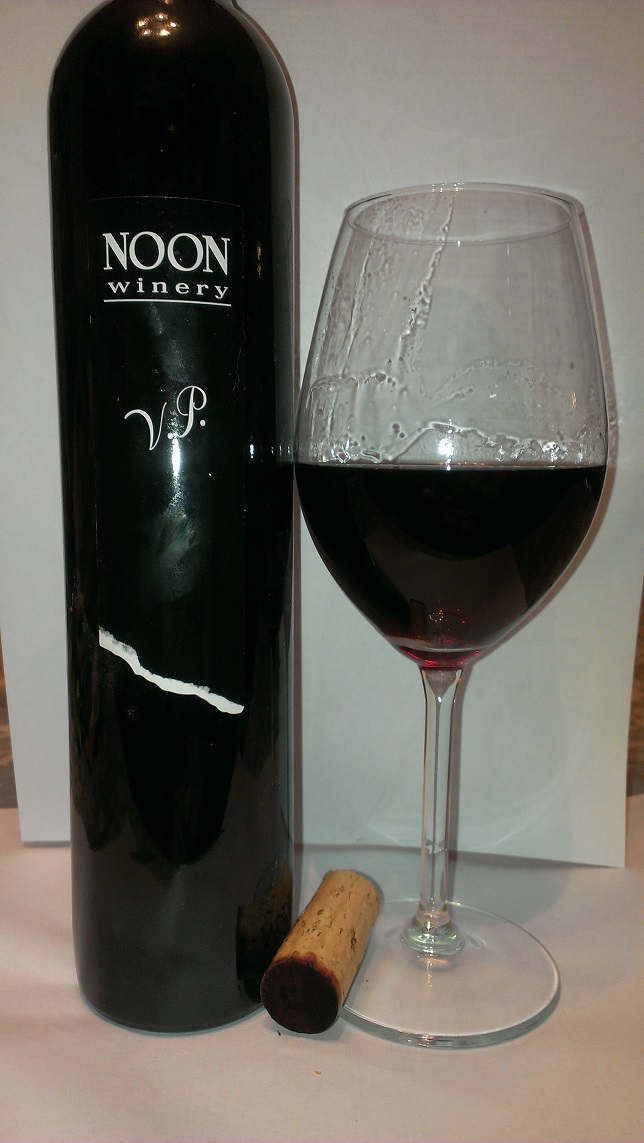
2006 Noon VP (vintage port) 18%

First thing to notice is the bottle – 500ml but a narrow, towering cylinder that is difficult to store; nice label, nice name. Its 100% grenache from McLaren Vale in South Australia. Thankfully its cork has performed its function. It certainly needed decanting, as there was a pile of  sediment.

noon vp

Its not the deepest of colours; a dark ruby seems to fit; its bouquet is full of liquorice, rose petal and eucalypt. There is sweet but balanced spirit, and its eerily reminiscent of some old Reynella VPs – minus the extreme blackberry, and of course they were Shiraz based. It’s a slightly malty milk chocolate style with the sweetness and relative lack of tannins holding it back. Cleverly constructed, and an excellent “welcome back” to Australia.

Drink to 2025, score 87 points

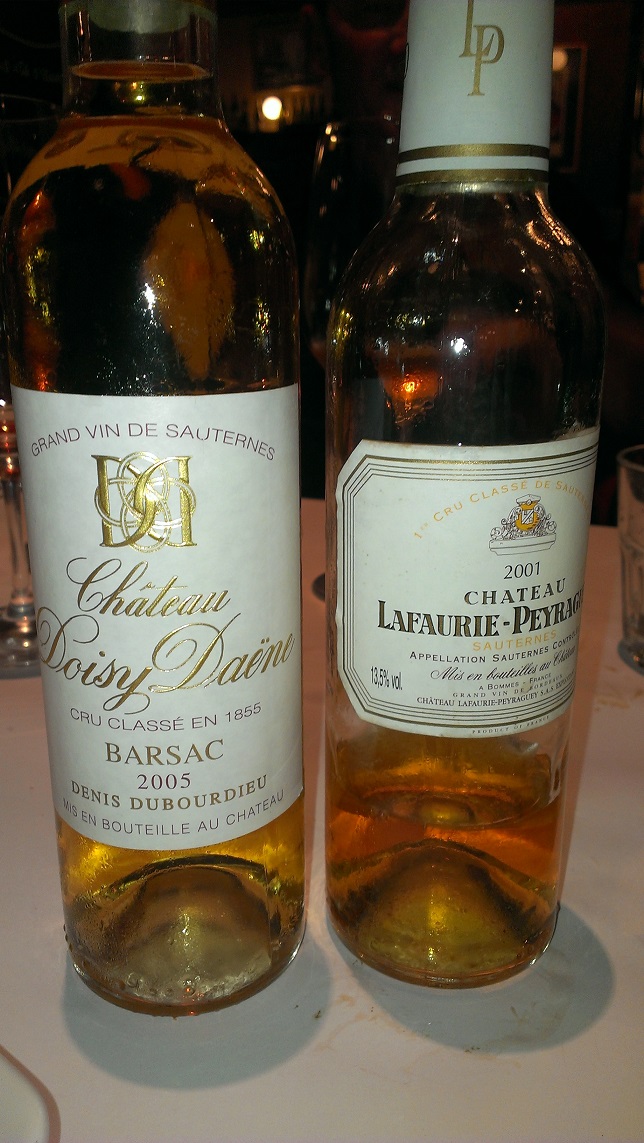
a few Sauternes and Barsac

laf and doisy

Bill Blatch has a marvellous site on this wine style http://bordeauxgold.com/bill-blatch/

2001 Ch lafaurie-peyraguey (sauternes 13.5%)

from half-bottle; 90% Semillon, 5% sav blanc, 5% muscadelle. Quite an advanced dark gold colour; waxy, “skinsy”, smoky oak and nuts over ripe apricots, lemons some bitterness present, and another example from an excellent year for sweet wines.

Drink to 2022; score 91

2005 Ch Doisy-daene (barsac 14%)

From half-bottle; 95% Semillon, 170 g/l rs. Lighter colour, lighter elegant style; barley sugar, prominent acidity, passionfruit and orange blossom. Amazingly, seems not as sweet as the L-P, but  all in balance. More time will be rewarding.

Drink to 2025, score 92+

roumieu

2010 Ch Roumieu

A producer I haven’t tasted before – these two wines were served blind.

Bright light pale straw colour, syrupy sweet, tropical fruit, stonefruits and pineapple, with an overlay of green nettles, almost a celery. Tightly wound with abundant cleansing acidity.

Drink now-2025, score 90

1970 Ch Roumieu

Colour suggests the wine is clearly older, and exudes some petroleum and light toffee characters. Some waxiness on the palate and there is still fruit and acid, but slimmed down. While this wine has seen better days, the contrast is quite enjoyable. Seems about 25 years older.

Unmasked, same company but 40! years older. I’m amazed at this.

Drink now, score 87 (I have not added any points for surprise at its drinkability at such an age)

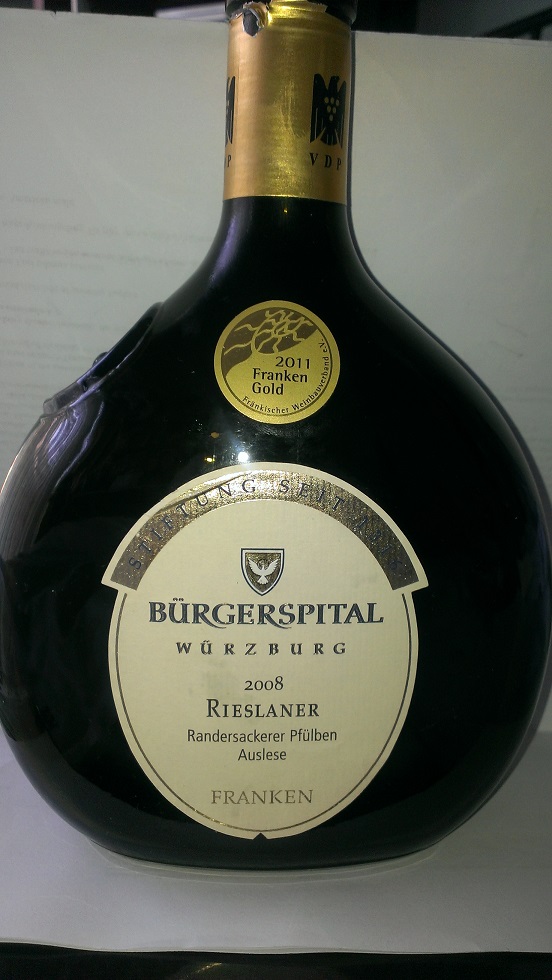
2008 Burgerspital Rieslaner Randersacker pfulben Auslese 9%

A cross between Riesling and Sylvaner, it’s a late-ripening  high acid variety, producing very good results with botrytis.

Another Franken area bocksbeutle, this time under cork.

burger 2008

Clear, bright light gold in colour, it has pungent tropical aromas – mainly mango, with some green fruit overlay – melon-rind. The palate leans more to pineapple and golden delicious apples, with abundant refreshing acidity. The texture is appropriately oily and syrupy.  An excellent dessert wine.

Drink now-2035, 93 points

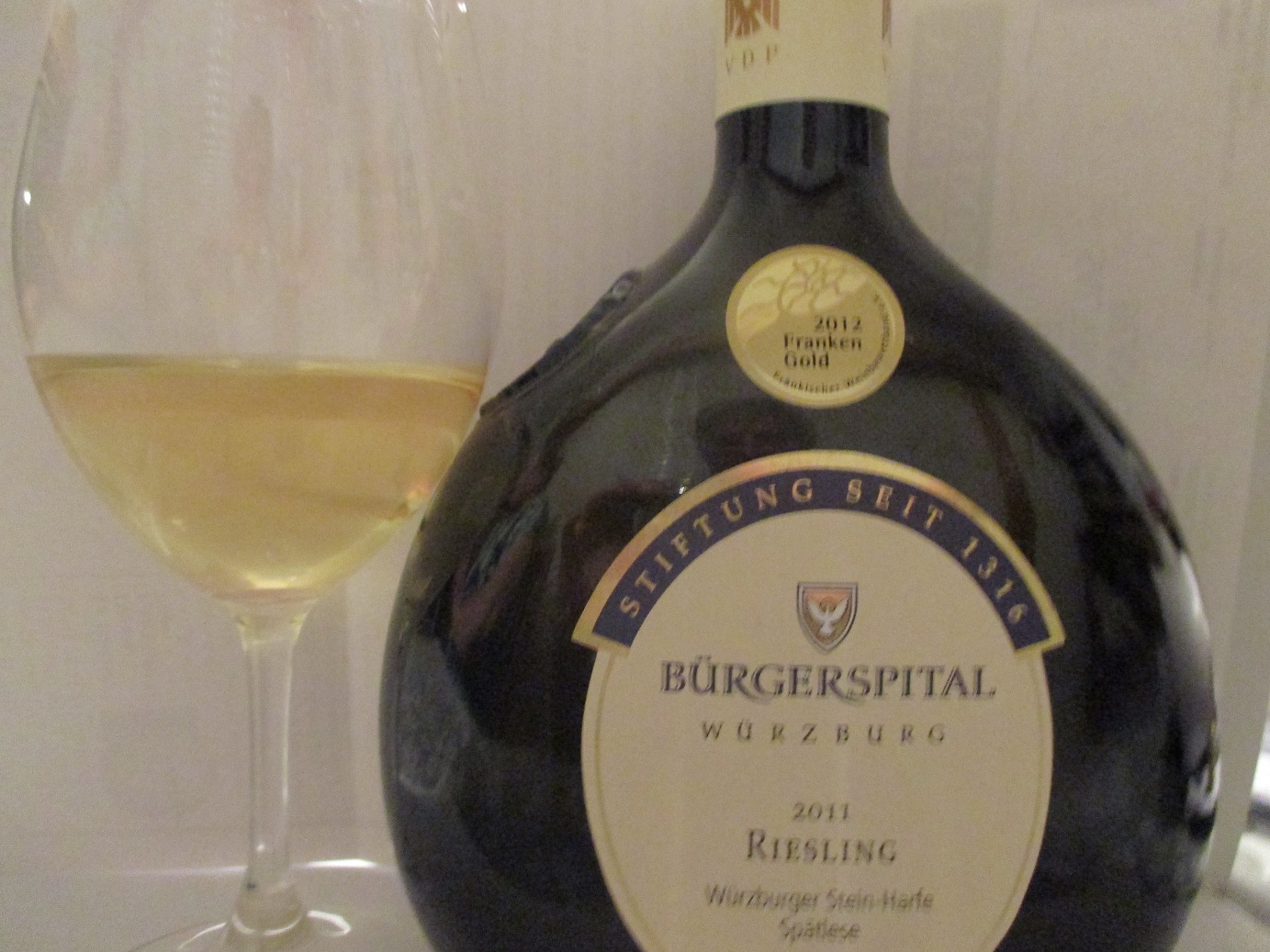
2011 Burgerspital Wurzburger Stein-horfe Riesling spatlese 9%

From the Franken area of Germany, a bocksbeutle with a screwcap.

burgerspitalPale straw in colour, the wine exhibits exuberant aromas of mango, pineapple, lemon and other tropical fruits. The palate shows lemon sherbet, fruit-tingly acidity, plus some chalk and minerals. It’s a pure, driven wine that is crisp and delicious with lingering depth. Lovely balance and the degree of sweetness is just right. Very pleasurable.

Drink to 2025, score 91.

2009 Sainsbury’s late-bottled vintage port 20%

In London with my family after being in Germany and Italy. Not a wine trip, so purchased this from the local supermarket for 9 pounds. Sourced from Symington stocks of Portuguese material. (I don’t think this style is made in Australia).

Late bottled vintage ports are held in oak for a longer period than vintage ports; this softens them somewhat; whether there will be improvement after bottling depends partly on how (or if) they are filtered, and how brawny you like them.  In any case, its safer to consume them early. Stylistically they are more like a vintage port than a tawny, and once opened drink within a few days.sainsbury lbvp

Deep crimson colour, dense and healthy; muscadels, spices, and sweet spirit. There is real plumcake on the palate, marinated red and blue fruits, and a sense of restraint and balance between fruit and spirit. A nice attack of tannins making this very gluggable wine. A bit more stuffing would have made a better wine, but no complaints at the price for this style.

Drink to 2019; score 87 points.