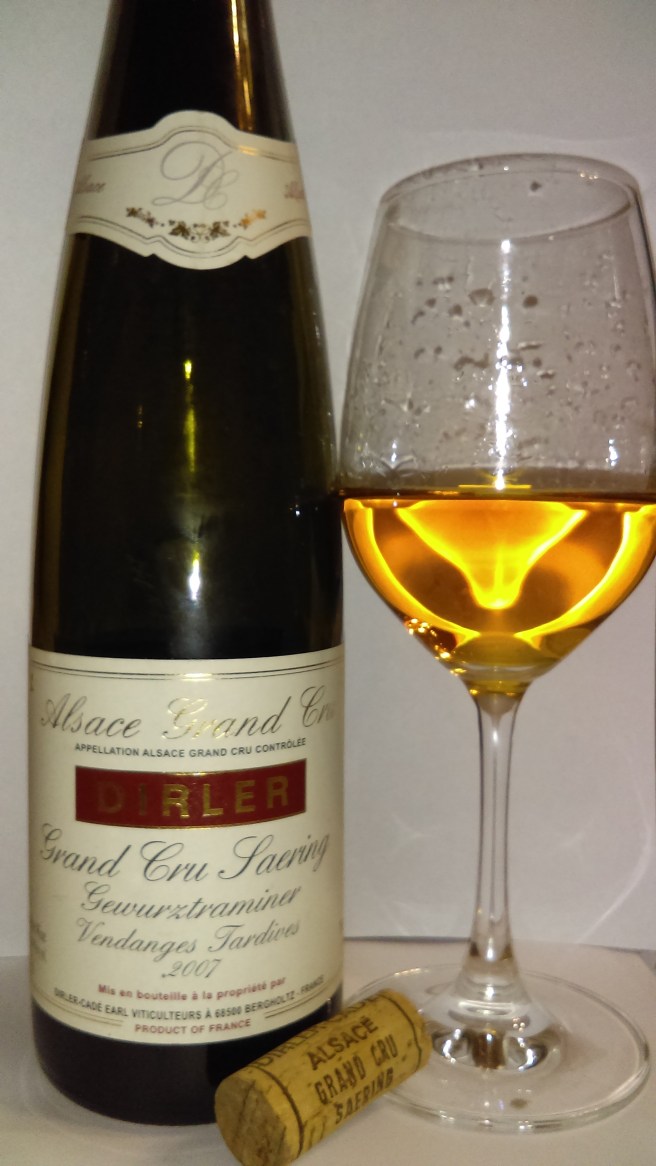
2007 Dirler Gewurtztraminer Saering vendages Tardives 14%

A late-picked wine from a Grand Cru Alsatian site.  It’s too easy to typecast Gewurtztraminer as a beginner’s wine, but it can interest more than neophytes, especially when  the wine is from Alsace.
IMAG0724
The cork was in immaculate condition, and the wine a bright clear medium  gold colour. The excitement begins- intoxicatingly floral- tropical fruits, ripe apricot, mandarine, ripe pear, musk-stick and cinnamon; the palate continues this interest- it’s extensive, with enough acidity to carry the 54 g/l of residual sugar. The wine is beginning to dry, and was likely to have been better a year or two ago (with cork vagaries, a bottle consumed a year ago was not as lively, showing some oxidation).

A faint touch of hardness probably reflects a combination of its age and alcohol level. Absolutely no complaints overall, as the bottle contents vanished rapidly.

Drink now, 91 points


Snippets, again

Maybe not thematic, but these fragments deserve a note; on the cork front, an unusual  run in the past six months yielded only 2 wines affected by taint or obvious oxidation–  a “meagre” 3.7%. Not many industries would accept this level of wastage. The degree of TCA in both wines was amazing- textbook examples.

  • 1993 Craiglee Chardonnay – replaced
  • 1996 Baileys Shiraz – no response from winery

And quick notes follow about wines that impressed

2015 Tolpuddle Chardonnay 12.5%
“Full malo” is a phrase that normally makes me run away, but served masked (of course) this Coal River valley (Tasmania) wine astonished. It’s a modern melon and smoke style- such as Oakridge or Seville Estate- cashewy oak, mineral-drenched fruit and the Tasmanian acidity powers through this utterly delicious wine.
From the Shaw and Smith stable, it’s around $60 a bottle retail – I ordered 3 bottles on the spot. Wonderful, and will hold for quite a while.

2015 Wynns Black Label Cabernet Sauvignon 13.5%
This is the 60th release of this label; a few years ago, I tasted the 1960, 1965, 1966 and 1972; there is no doubting the longevity of the style; its affordability makes it deservedly popular among wine-drinkers (not just unicorn-collectors). This release is ripe, beautifully manicured and balanced; blackcurrant and other dark fruits, chalks; it flows gently, deliciously and juicily along. Lovely, with a huge future. Coonawarra, and unforced.

2012 Giant Steps Applejack Pinot Noir 13.5%
This is a wine that nearly won the notorious Jimmy Watson trophy, but there was insufficient volume. At  5 years old, this  Yarra Valley wine has time on its side. Its amazingly fragrant, with small, succulent, sweet red berry scents, plus seasoned oak. The palate shows much more ripe strawberry, and again the oak is present, somehow making a savoury impact. But where this wine stands out is for its prodigious, long-lasting, ultra-refined finish. Another 5 years at least, and 95 points

2002 Seppelt St Peters Shiraz 14%
Wonderful wine. Cork was not the greatest visual composition, but no travel.
2002 was a cool year in Victoria, and this wine is special. My records indicate I paid $35; some key notes; the colour is deep black/red, and there is no browning even at the rim; the wine is beautifully poised with vibrant, intense fruit, oak very much a background factor. Its ripeness is spot-on; blackberry, mixed spices and mocha, some very faint herbal tannin bitterness, and just powers along. Easy, hedonistic drinking, and will remain so for another 15 years – or more. Instant gold medal score, and another example of Grampians Shiraz seduction.

1995 Guigal Hermitage
From a great year in the Northern Rhone; power+, ripe +, slinky old-vine mouthfeel. Dry herb, chalk, iron filings and spices, powdery tannins, touch of bitterness. At plateau and another 10 years will not tire it. Outstanding, 94 points


And a few rarities from a very special dinner

2002 Bollinger RD disgorged 24/6/2014
Served at a “just right” temperature in appropriate glassware (flutes are NOT proper stemware for Champagne, any kind of tulip-shaped glass is better). It’s a light straw colour; Immediate sense of class. There are scents of pastries, fruit tingles, strawberries dusted gently with icing sugar (the Pinot dominance roughly 60/40 is felt); a touch of oak/chalk/cream, a touch of almond. Then the palate lights up with exuberance, tiny bead, and the flavours just linger on, the wine seems bone dry (4 g/l is very dry even for a prestige champagne). This is just a wonder, so sensual and so compelling- finally it just powered along with more nuances with each refreshing sip. A wine that could accompany many foods, and was not elbowed aside by a truffled croquette. 96 points.

1990 Trimbach Clos st hune Riesling 14%
Approached with some trepidation as a bottle tried in 13/5/2013 unexpectedly threw me in to delivering a perfect score.

Was I delusional? Would another bottle disappoint?This wine from Alsace has a bright clear gold colour; but amazingly, almost pungently floral. Light honey, lemon peel, bottle age, flint ripeness. Palate, silky, fluffy, candied dried fruits, flint, stone, mineral. The magic combination of richness and freshness.

Another 20 years in sight. 98 points.  (Notes were similar)

1990 Jaboulet Hermitage la Chapelle 13.9%
Everyone’s favourite in a bracket of 3 Hermitages including 1990 JL Chave and 1990 Chapoutier Ermitage Le Pavilon, and so easy to love. Very dense colour, with trivial bricking; barnyard, earth, butterscotch, then the palate runs rampant with dark cherry, tar and more earth, some smoky, dried meaty aspects. Oak is entirely vanished, we’re left with a slinky vinous old-vine palate of fine, fine tannins. Memorable and contemplative – mature wines don’t really come better.
Drink to 2040, 98 points

2007 Domaine Stirn Gewurtztraminer vendanges tardives 12%

Gewurtztraminer is destined to remain as a minor grape variety; the wines can often have a pinkish tinge, and provide, easy, usually obvious appeal to people beginning their wine education. But it has more merit than that, especially in its spiritual home of Alsace.

Australia has some Gewurtztraminer planted, but results overall have been disappointing, with only occasional outliers from careful cool-climate producers Pipers Brook (Tasmania), Delatite (Upper Goulbourn), Lillydale (Yarra Valley) and Seppelts Drumborg (Henty, Victoria) providing flashy, memorable excitement.

When I visited the winery, winemaker Fabien Stirn (freshly off the tractor) presented Gewurtztraminer wines from Brand, Mambourg and Sonnenglanz (with his ambition on further sites) and had dry wines from these sites (Riesling too) and (blended) sweeter wines on an extensive tasting list. Plus his English was noticeably superior to my schoolday French. Notably, I failed the “terroir test” at the conclusion of the tasting.

IMAG0653This wine is a lovely golden-coloured example of the late-picked style, displaying the typically charming, exotic grapey aromas of musk, Turkish delight and roses.  The palate is moderately sweet, but definitely is a rich juicy mandarine-flavoured style with the acidity preventing any sensation of cloying. Slightly oily, and faintly chalky, this wine has been caught in its prime, and it’s well suited as an unusual aperitif, or matched to a light dessert, or certain cheeses.

A neat surprise- drink to 2018, 90 points.


2000 Zind Humbrecht Rotenberg Pinot Gris SGN 11.5%

The cork broke, but performed its task; the colour of this wine is dark amber, with some copper tints (and harmless tartrate crystals).

IMAG0006

Pinot Gris is a low-acid variety, but from appropriate sites- and old vines-  is capable of extended improvement with cellaring.  Zind-Humbrecht has wonderful sites in its Alsace home.

There is lots happening- spiced apple and pear, lime marmalade, marzipan and pastry- perhaps a smidge of VA too; the palate is intense and viscous, its length supported by some phenolics. It seems quite alcoholic in weight and mouthfeel (not hotness), but the label shows this perception is erroneous, an artifact of its botrytized concentration (153 g/l of residual sugar).

Details of the vintage, and this wine with notes from Olivier Zind-humbrecht are here.

Drink to 2025, and 91 decadent, easy points.

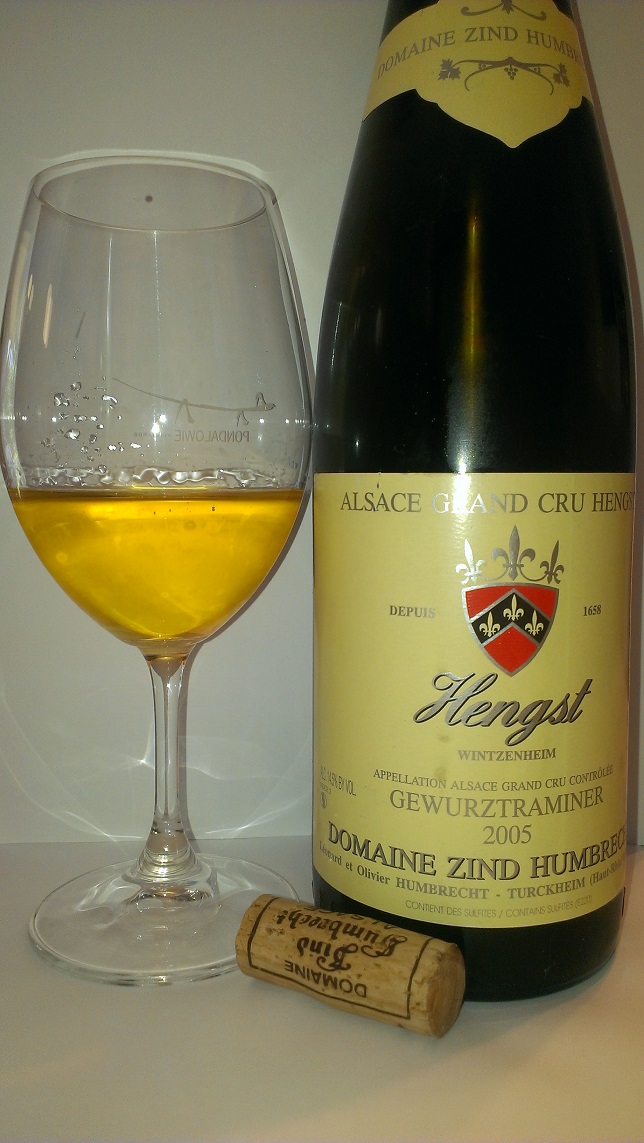
2005 Zind Humbrecht Gewurztraminer Hengst 14.5%

From Alsace, and much, much better than a bottle tasted about 12 months ago (drying out and where the alcohol poked through too). Hengst is one of the too-numerous distinguished sites of Alsace.

Long cork, in excellent condition. Quite a developed gold colour, but the aromatics absolutely leaped out, providing enormous confidence; musk stick, green pineapple rind, dried fruit spices as well.

2005-zh-gwt-hengst

The palate is rich and viscous, faintly oily; the integrated acidity sets off the 40-odd g/l of residual sugar providing a versatile “not-dessert” food match (chicken, tonight). Despite that sweetness, its a savoury style, concentrated,  with tropical flavours of just-ripe pineapple, a dash of lime, and some ginger spice to tickle the interest further.
A terrific wine overall, and an excellent tribute to the skills of Zind Humbrecht, the complexity that cellaring can bring, and the marvels of Gewurztraminer from the right site, in the right hands. Vintage notes can be found here.

If only every cork-sealed bottle could be this pristine!

Drink to 2023, and 94 points.

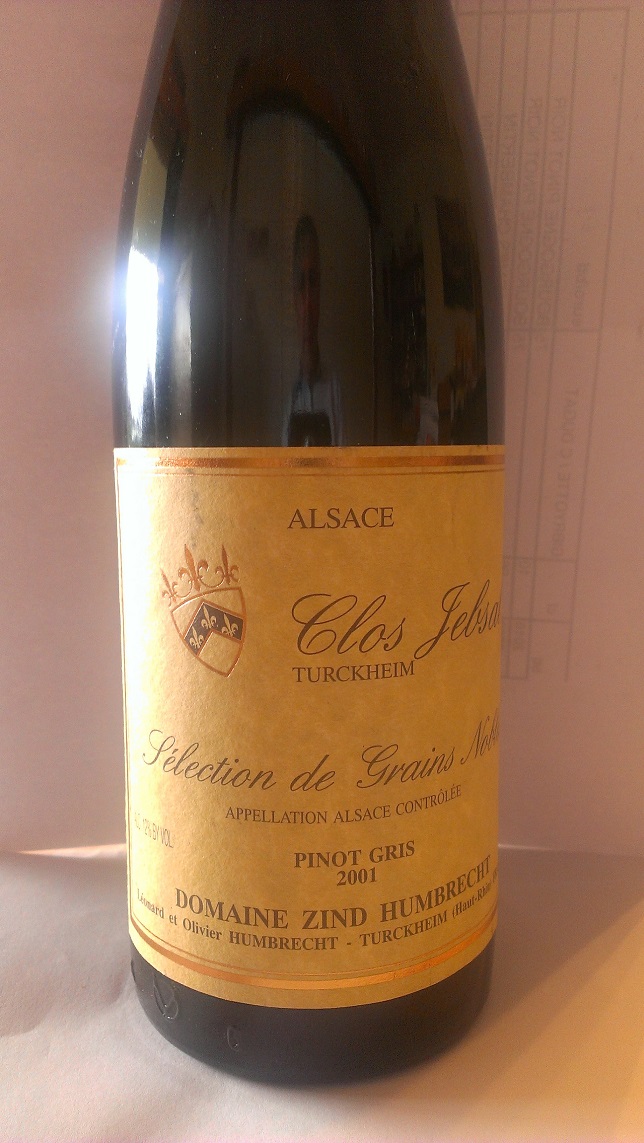
2001 Zind-humbrecht Pinot Gris Clos Jebsal SGN 12%

Is 15 years too old for an Alsace SGN?

Thankfully the cork had not influenced the wine.

According to the Hugel vintage chart, 2001 in Alsace was special for late-harvest Pinot Gris.

For once, the usual informative vintage and wine notes from Zind-humbrecht (from a Coe Vintner’s site) have been truncated, so I’m missing some background. I understand that the site Clos Jebsal is particularly favourable for late-harvest and botrytis styles – and this wine contains 168 g/l of residual sugar.

2001 zh pg sgn

The wine’s colour is amber with some copper tints.

The bouquet exudes freshness, tropical fruits, glace fruits, marmalade, cinnamon stick and vanilla bean. The palate is yellow peach, nectarine and  and mandarine. It’s viscous, textured, balanced, and ripples with vitality. The complexity of the bouquet and palate really sets this wine up as special.

97 points, drink to 2025.

2000 Louis Sipp “couer de trie” Selection de grains nobles Pinot Gris SGN 12%

From auction, this is a 500ml bottle from Alsace – keen researchers may find some notes I made on Starforum back in 2008 “somehow carrying the pineapple, cinnamon, some light butterscotch, baked apple pie with just enough acidity – a nice wine with huge sweetness”.

Pinot gris and residual sugar is a wonderful match.
2000 louis sipp pg sgn
The cork has mercifully behaved, and at 16 years, the wine is now a deep amber colour with copper tints (no drama in a botrytis wine). It’s floral, mostly with ripe apricot, apricot jam and cinnamon spices. This is maintained on the palate, with touches of marmalade, citrus peel, and some baked apple. It’s sensual and voluptuous, the acidity continues to provide support.

While the wine may even have provided greater pleasure a few years ago, it still provides unctuous and luscious drinking- but please consume and enjoy soon.

90 points, drink to 2018.

Alsace, again

alsace may 20162001 Domaines Schlumberger Pinot Gris Vendanges Tardive 12.5%

This wine has seen better days. The colour is a dark gold, but legitimate for its variety and age. It displays red apple and brown pear aromatics, plus some hints of bruised apple oxidation.

Its quite sweet (around 100g/l), but there is enough acidity to avoid any cloying; the pear flavours flow on a viscous palate, and the message is – drink up. Ready, and enjoyable but it had the misfortune to be paired with the following wine.

87 points, drink to 2018

2007 Dirler Spiegel Gewurztraminer SGN 12%

I was terrified to open this- from the last 2 wines from this Alsace estate, one was badly oxidised, the other corked – and no response from the producer despite 2 emails. But this wine was pristine.

Light gold in colour, its resoundingly fresh, with aromas of ripe red baked apple, musk, talc, cinnamon.  The balanced palate shows more rose petal, apricot and white peach, some honey and citrus, and is richly textured, fine, clean, and there is no cloying despite the 150-odd g/l of residual sugar.

It’s an outstanding wine, combining varietal character with botrytis richness.

96 points, drink to 2023

A night of Alsace whites

A group of enthusiasts aimed to explore mostly wines from 2007, except for the bracket of sweet wines at the end.

Alsace is in France near the German border, so its flipped a number of times. A cool Continental climate, and shelter from the Vosges mountains means it’s very dry. The wines can get very ripe, and often some sugar is retained to keep the wines balanced. Frustratingly, this means it’s difficult to tell in advance how dry/sweet any wine will be, and what food matches work.  Many wines are more textural and phenolic than Australians are comfortable with.

There are 51 grand crus sites – too many, and too large. The sweeter wines Vendage Tardive (VT) and Selection de grands Nobles (SGN) carry a significant premium price.

2007 Boxler Sommerberg Pinot Gris 13%

2010 Jean-luc Mader Schlossberg Pinot Gris (sweet) 11.5%

Off to a good start, with both wines gold in colour, the Boxler (approx. 30 g/l rs) viscous, displaying pear juice, limes, ginger and nutmeg spices, marzipan and citrus peel on the palate – drink to 2020, score 93).  The sweeter Mader was not as forthcoming on the bouquet, with dark honey to the fore, but had a finer, longer creamy mouthfilling palate, and was the groups preferred wine (drink to 2022, score 94 points).

alsace 2016 pg and gwt

2005 Zind-Humbrecht Hengst Gewurztraminer 14.5%

2007 Sorg Eichberg Gewurztraminer 13.3%

2007 Dirler Cade Kitterle Gewurztraminer 14%

The three wines all showed their varietal character. ZH rows their own boat, with high alcohols on most wines, this one showing rose, honeysuckle and musk, its length partly contributed by its alcohol, and the palate beginning to dry out (37 g/l rs).  Drink up, 85 points. The Sorg looked more “feminine”, gently textured, but some bitterness detracted (drink to 2018, 88 points). The Dirler (41 g/l rs) was the group’s preference, some apple and tropical fruits on its bouquet, toffee, honey, and an attractive touch of apricot on the palate; altogether lovely (drink to 2020, 91 points)
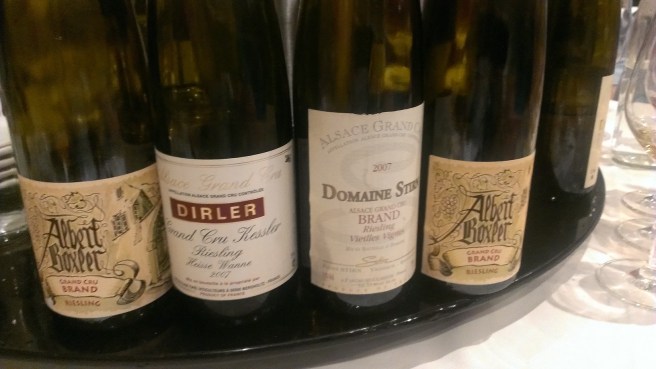
alsace 2016 rieslings

2007 Stirn Brand Riesling 13%

2007 Dirler Cade Kessler “heisse wanne” Riesling 13.5%

2007 Boxler Brand Riesling 13%

2007 Boxler Brand “K” (kirchberg) Riesling 13.7%

The Stirn seemed a bit awkward initially, austerity and some petroleum over-riding its flintiness. But it limbered up, with limes, white flowers and minerals emerging (drink to 2020, score 91 points).  The Dirler was our first casualty – blue cheese, butterscotch and oxidation too noticeable for me. The group favourite Boxler (18 g/l rs) was a delight; dried red apple, cinnamon and other spices, terrific length and lip-smacking texture (drink to 2025, 94 points). The Boxler “twin” was the 4 g/l rs “K”; with a similar slinky supple palate, but the higher alcohol made its presence felt Drink to 2020, 91 points).

Then it was a true gamble with a bracket of deliberately sweet wines, and individual desserts.

alsace 2016 sweeties. jpg

2009 Stirn Muscat VT 12.5%

2007 Dirler Saering Gewurztraminer VT 14%

1998 Zind-humbrecht Clos Windsbuhl Pinot Gris 13.5%

1997 Hugel Sporen Gewurztraminer SGN 13%

1997 Louis Sipp Osterberg Gewurztraminer VT 13%

The Stirn was a restrained style but full of interest; grapey, fruitcake spices, poached pear, and Lemon peel (drink to 2020, 90 points)

Zind-humbrecht (71 g/l rs) was affected by hessiany TCA – a shame as there was plenty going on underneath. The Louis Sipp was badly oxidised.

The Dirler (54 g/l rs) looked slightly bruised-apple-oxidised, and a little hard and burnt; but still provided some drinking enjoyment with stewed apricots, orange blossom and some savouriness on the palate. There will be better bottles.

The Hugel (103 g/l rs) was a classy wine; even though the colour was amber, it had the luminous glow that often brings up the expectation of excitement.  And it delivered – citrus peel, marmalade, dark honey, on an unctuous balanced palate. And will keep for many more years (to 2023, 96 points)

Overall, the wines were ready to drink, (although the Boxlers look age-worthy) with cellaring a bit of a gamble. A very enjoyable evening, despite cork problems making 3 of the 14 bottles undrinkable, and one more slightly affected– a disgrace.
2001 Zind Humbrecht Gewurztraminer Hengst 14.5%

Obsessive readers will recall an earlier post (May 2015) when I tasted the 2002 edition of this wine. Alsace wines are often “manly” and Zind Humbrecht is typically at the extremely powerful end. Hengst is one of the too-numerous Alsace grand cru sites. The colour is a bright brassy gold, but very respectable for a wine that is 15 years old (and the long cork has performed its duty).  Alas, the tall  bottle is ridiculously heavy. The wine however presents with archetype dark honey, musk and rose-petal aromas.

zh 2001

Alsace is situated near the border of France and Germany, meaning its history is littered with changes of nationality. On one of the occasions I visited this scenic area, the couple who owned the B&B spoke to each other in different languages – they understood both, but each preferred to speak in a different one!

Meanwhile, the palate is lush and ripe (guessing 40 g/l sugar), oily, honeyed, with apricot, other ripe stonefruits, camphor and unashamed phenolics.  Gewurztraminer is a wine of distinct intrigue, but usually one glass is quite enough. This bottle passes this hurdle admirably, despite nearing the end of its drinking span – and it probably would have been better a few years ago. The acidity has ensured the sweetness does not cloy, and the wine possesses “drinkability”.

Drink to 2018, score 90.

FYI, the vintage rating chart published by Alsace producer Hugel is here