Fraternal twins – 2007 Reinhold Haart Riesling Auslese

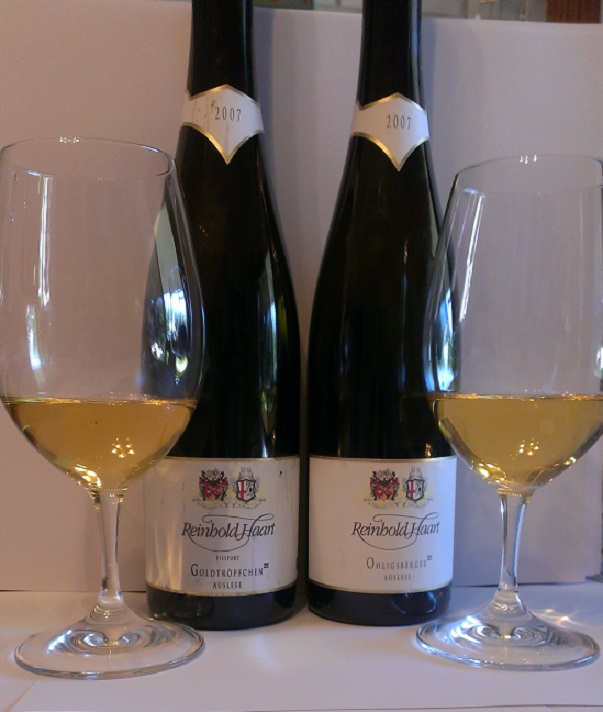
Two Mosel Rieslings were tasted blind; the exercise was “spot the difference”; keeping tasters on full alert. Similarities were present, but the difficult task was in defining where, what (and why).

The wines presented were

  • 2007 Reinhold Haart Piesport Goldtropchen Riesling Auslese 7.8%                           119 g/l, 7.7 acid,                                             94 points,  drink to 2023
  • 2007 Reinhold Haart Wintricher Ohligsberg Riesling Auslese 7.4%                             127 g/l, 8.3 acid,                                             95 points, drink to 2028

The wines had sufficient distinctiveness to warrant separate bottlings; the Goldtropchen displaying smoky, yellow peach, a touch of green plum and red apple, mineral and redcurrant, silky and delicious; Ohligsberg brighter, more linear, finer, slightly sweeter, with similar descriptors plus some yellow-skin apple and slightly greater persistence. The complex interplay between acidity and residual sugar came into play, with the Ohligsberg seeming much sweeter than the analytics indicate. Both had nervy acidic drive to balance the considerable residual sugar.

2007-haart-twins

Piesport has had its reputation tarnished in the past- possibly due to excessive yield and inappropriate sites; Haart is one of the brigade determinedly correcting this legacy.

Two absolutely delicious, balanced, wines at a lovely stage in their development.  The  residual sugar is high for the Auslese category; with Ohligsberg shading the Goldtropchen for complexity and pleasure, but both wines offered delights that will continue into the future.

A fresh fruit platter was an ideal accompaniment.

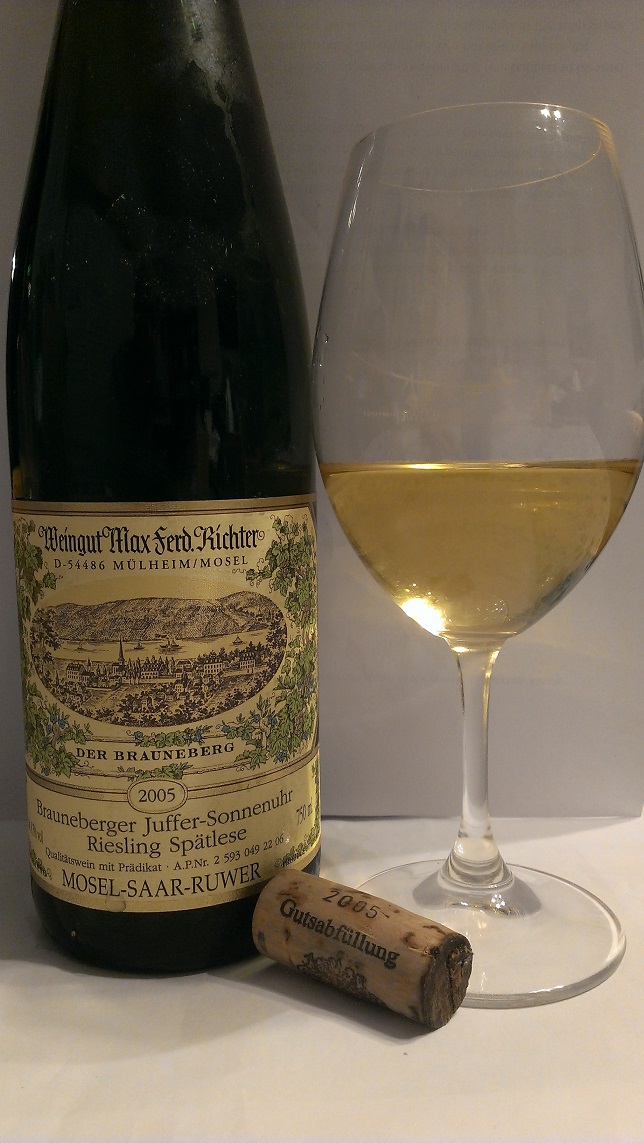
2005 MF Richter Brauneberger Juffer Sonnenuhr Riesling Spatlese 8.5%

From a terrific year in the Mosel, this wine provides extremely attractive drinking, and shows the magic that time can generate. We visited the cellar door (via appointment) in 2007, and were struck by the quality, then the astonishing range of back vintages available. A quick tour of the winery and the small library of museum stock left us breathless.

2005-richter-bjs-spatlese

Golden in colour, this wine possesses varied attractive and complex attributes -there is certainly the TDN (petroleum) character, and a mélange of green (nettle), yellow (peach and further tropicals), plus red (blackcurrant) fruits. The palate also displays these, as well as a dense minerally stony texture. I continue to be surprised at how much flavor can exist in such a light frame. And a key bonus attribute is the wine’s vitality and freshness, with crunchy acidity neatly offsetting the 106 g/l of residual sugar (my speculation was 90 g/l). All -around deliciousness saw the bottle contents diminish rapidly.

This wine is in its prime, expected to thrive till 2026, and 92 points.

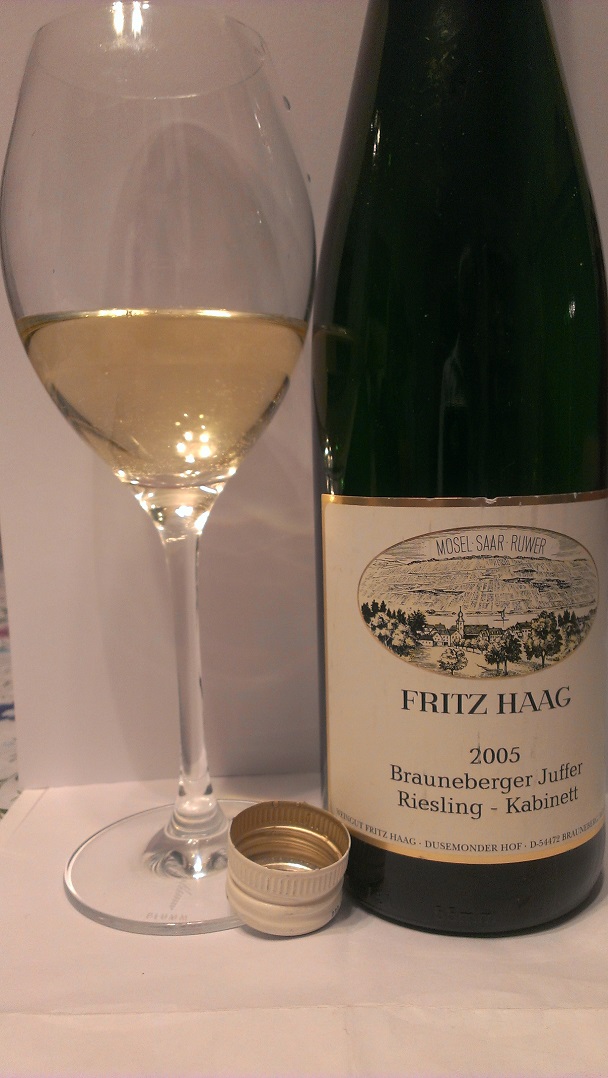
2005 Fritz Haag Brauneberger Juffer Riesling Kabinett 8.5%

Another white wine under screwcap, and age has not harmed this lovely and utterly convincing Riesling Kabinett from a sterling year in the Mosel.

2005-fritz-haag-bj-kabinett

It’s still a pale lemon colour, and there is ripe apple, some tropical guava, and some “fruit tingle” too. The palate is appropriately light for this category of sweetness, and resounds with crunchy, stony limey citrus character (“mineral” is out-of-favour, despite this word being clearcut and descriptive). Delicious, bright, tangy, with terrific length and everything under control. A benchmark from this well-known estate.

Drink to 2025, 91 points

2008 R Haart Goldtropchen Kabinett Riesling 8.5%

An excellent wine from well-regarded winemaker, from a terrific site in the nondescript Piesport village of the Mosel.

Still lemon in colour, its from a year that has always been “user-friendly”, skipping the usual Riesling dull patch that often settles after a few years and last a few more.

2008 haart kab

Red apple and pear, tropical fruits approaching ripe pineapple, and there are more stonefruit characters on the very long palate, and intriguing marzipan notes. Its quite sweet for a Kabinett, but has the acidity to keep it balanced. So delicate, so fresh and so interesting. The contents of the glass magically disappear.

Why wait when it drinks so deliciously?

Drink to 2021, 91 points.

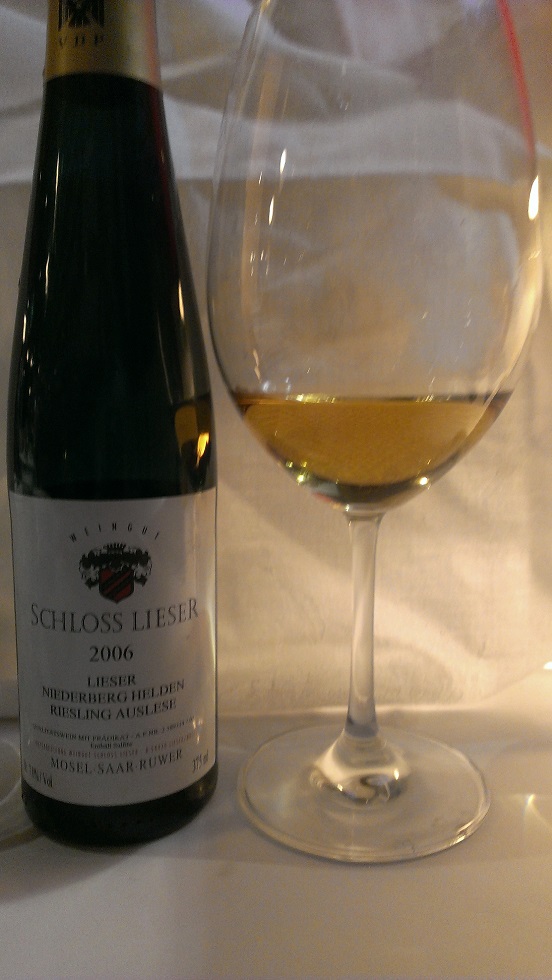
2006 Schloss Lieser Niederberg Helden Riesling auslese long goldkap 7%

Goldkap (or gold capsule) indicates more sweetness, the “long” also shows more; on this bottle the front and back lablels do not display any extra words – at least for this vintage-  so one must look at the capsule colour, and be able to compare with a “standard” Schloss Lieser auslese goldkap. Trust me on this until I find other bottles and display a comparison photograph.

Golden in colour, with dusty botrytis and apricot marmalade notes present. Viscous with oranges, grass and green nettle joust with the very rich melon and stonefruits. 185 g/l residual sugar, yet the trademark Mosel acidity ensures this is a bracingly refreshing and balanced wine with time in reserve. It’s a marvel on how long the flavours dwell in the mouth, teasing to want more pleasure, while the sensory gratification still lingers.

2006 schloss aus lgk

What is an appropriate food – if any- to accompany this wine? Avoid anything creamy – have a fresh fruit platter, or a fruit tart, but leave plenty of time for contemplation and admiration.

Drink to 2028, score 94.

2003 Dr Loosen Wehlener Sonnenuhr Riesling Kabinett 8%

This was a strikingly hot year in Europe, which took many producers by surprise, rushing to pick grapes before they became over-ripe and lost acidity, plus dealing with hot grapes, refrigeration issues and the usual vintage problems of not enough fermenters of the correct size.

loosen 2003

The Mosel was not immune to these difficulties. This wine is not quite “entry-level” but it routinely provides excellent typificity and VFM. It’s a light straw colour, and its aromatics of lime-juice, citrus, and Jonathan apple burst from the glass. There are some earthy undertones and pebbly/slatey elements too, while some mango is evident on the palate.  There is enough acidity to make this a very refreshing wine, and no kero, despite clear bottle-aged characters of light toast.

Its another lesson in the longevity of these flavorsome low-alcohol wines, and a tribute to the skills of Ernie Loosen and his team to triumph over the adverse conditions of the vintage.

Drink to 2017 while the acidity is vibrant, and score is 90 points.

More Mosel musings

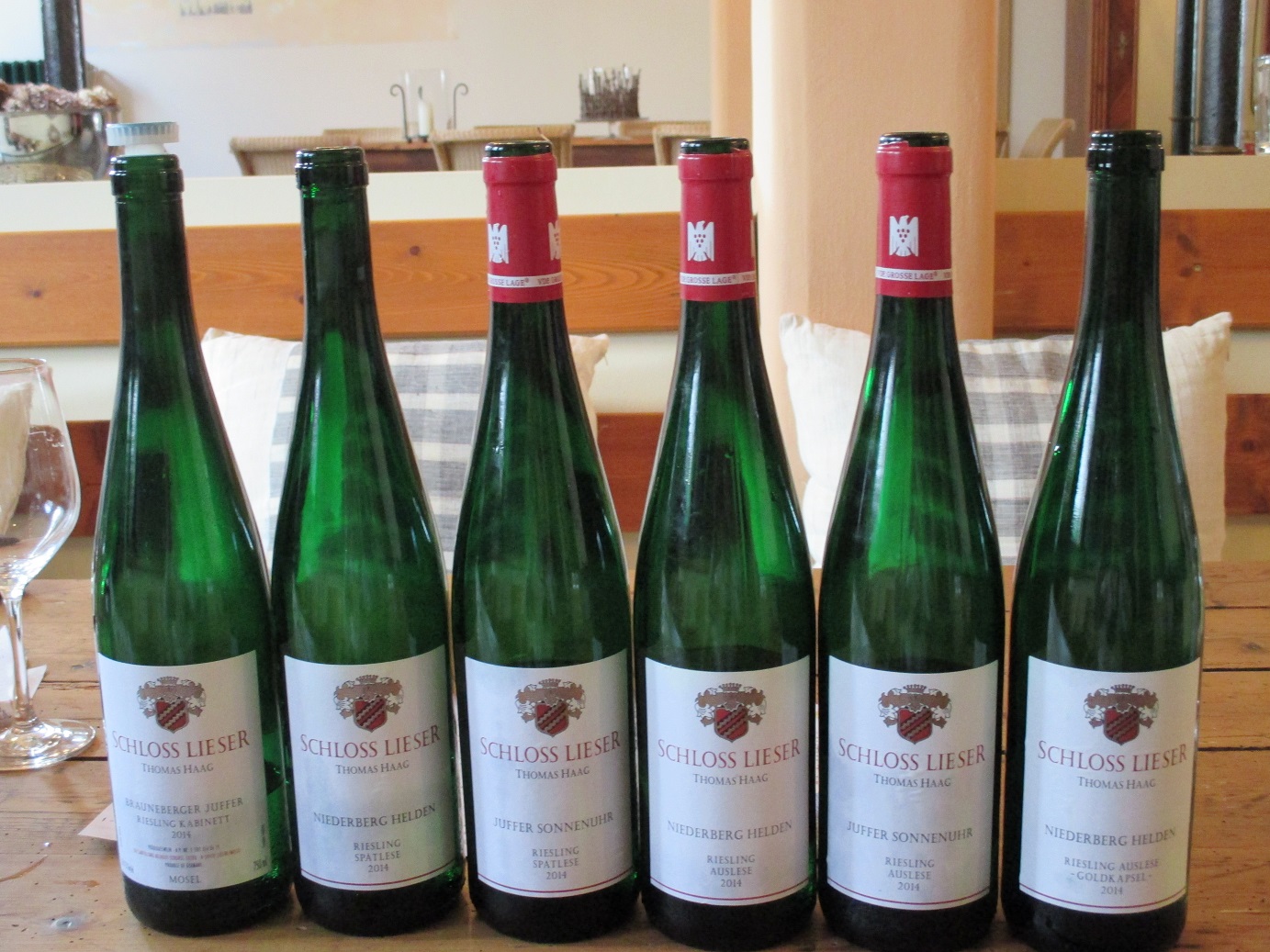
Schloss Lieser is located next to an impressive building undergoing long renovations to become a hotel. Thomas Haag was on holiday prior to the looming 2015 vintage but daughter Anna took us through the 2014 vintage wines that were not yet sold out. Wines are imported into Australia by Neville Yates at Eurocentric, and the winery’s reputation has built enormously since it started a mere 20 years ago. The Rieslings all showed a family trait of clean crunchy acids.

schloss lieser wines

2014 Schloss Lieser trocken was very dry, but with stony minerals underlying (drink to 2018, score 87); 2014 Schloss Lieser feinherb was probably drier than usual, but demonstrated lemon and apple, some green fruits and herbs (drink to 2020, score 88); 2014 Juffer Kabinett 7.5% again showed the magic 7.5% could achieve- poached pears, spices wrapped in a fine lightly textured wine drink to 2025, score 90). 2014 Niedeberg Helden spatlese had tremendous depth of flavour, mingled honey and pears, cinnamon and other baking spices (to 2028, score 90; the sold-out 2014 Juffer Sonnenuhr Spatlese 7% was easy to like, melons and slightly under-ripe cantaloupe sitting with its honeyed texture (to 2030, score 92). 2014 Niederberg Helden Auslese seemed very comfortable now with honeysuckle, pears, spices, concentration and balance (to 2032, score 92) . 2014 Juffer Sonnenuhr Auslese was an even better wine, seemed drier, but with flavours touching on apricot and again with the lovely spices backing it up to 2036, score 93. Finally the 2014 Niederberg Helden Auslese Goldkap had different apple flavours – perhaps the golden delicious, and voluminous brown spices. A compelling wine (to 2035, score 95). Quality through the range.

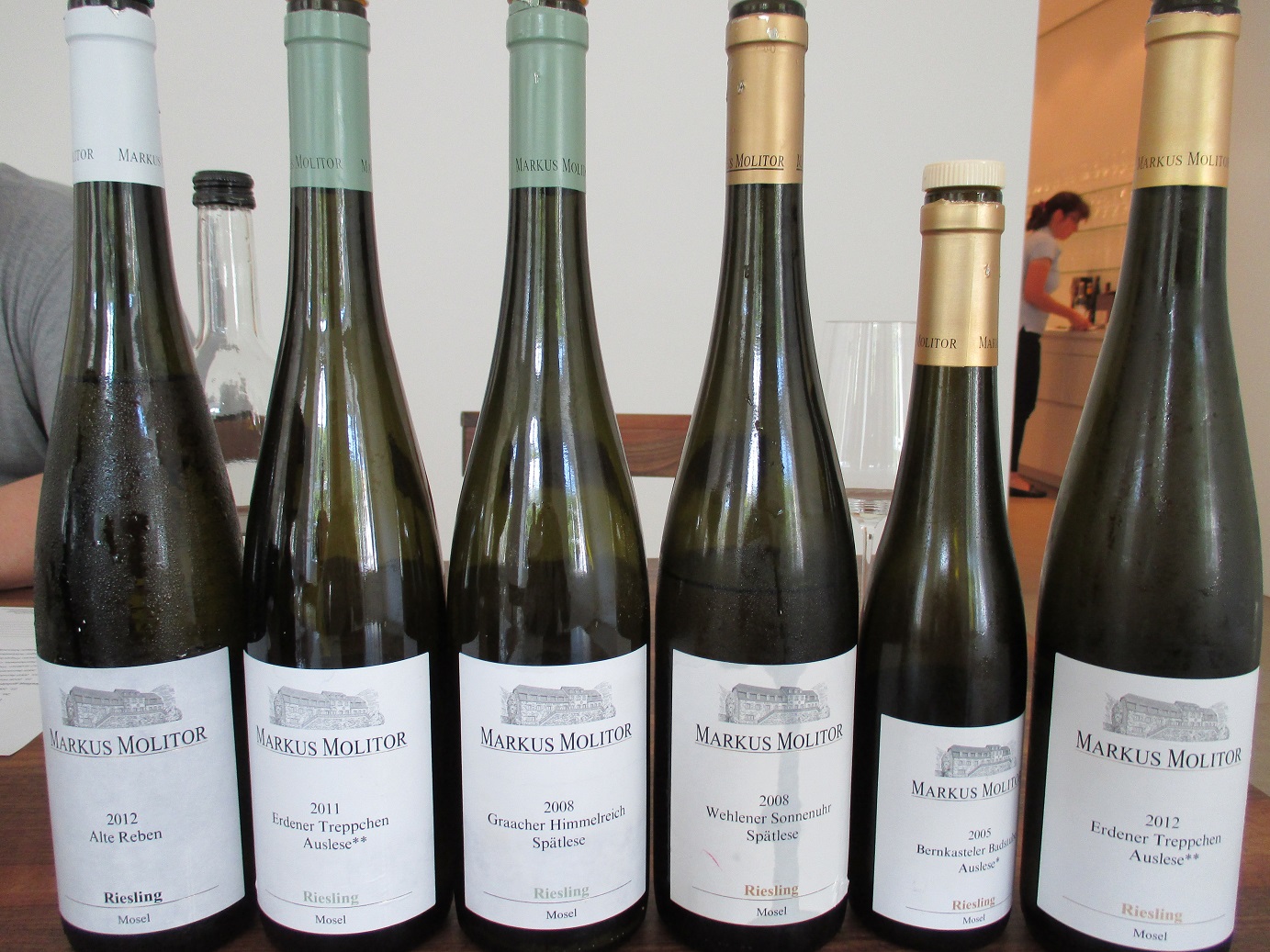
molitor tasting room molitor wines

Markus Molitor is a large family estate (beware- not located at the address on the website). There were about 40 different wines available, but we felt we had disrupted their routine. I didn’t enjoy the 2014 MM Schiefersteil with its odd aromatics (not recommended), the 2012 MM Alte Reben (70-80 y/o vines) had strong mineral overtones, white flowers, and a touch of passionfruit (drink to 2023, score 90). 2008 MM Graacher Himmelreich Spatlese feinherb had persistence, the interplay of its honey and stone fruits memorable (to 2023, score 90; 2011 MM Erdener treppchen Auslese** feinherb had a filigree texture (to 2025, score 91). (In some estates, the use of an asterisk – or several -indicates a bit “extra” in the category). Moving to sweeter wines, I was disappointed with the 2005 MM Bernkastler Badstube Auslese*, its rich and dense honeydew melon aspects cut short by a seeming lack of acid (drink now, score 83). The 2008 Wehlener Sonnenuhr spatlese was very smart; ripe apples and “sultana bran” coming together beautifully (to 2025, score 92). 2012 Erdener Treppchen Auslese** was gorgeous, Apricot, mandarine, honeydew melon again, this was viscous and a nice way to end the tasting cheerfully (to 2030, score 94).

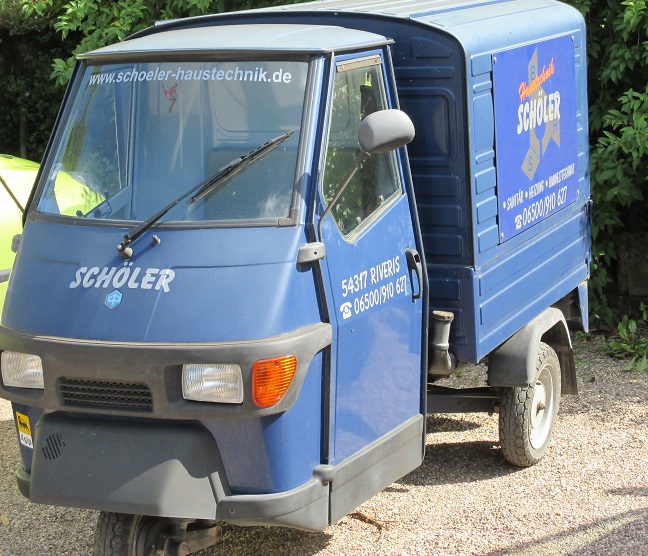
mg tractor

Maximin Grunhauser is in Mertesdorf (not far from Trier) and on the opposite side of the road to what the GPS directed. Is labels can only be described as “traditional”. Our host was not really a salesman, but was quite willing to locate bottles and answer questions. This estate turned out to be another find – great quality across the range.  Wines are imported into Australia (again) by Neville Yates at Eurocentric. Picture is a very cute vehicle!

I was not impressed with the entry-level 2014 MG Riesling trocken (drink now, score 83), but things moved up significantly with the 2014 MG Herrenberg Riesling Alte Reben trocken, with much more finesse, limes and other citrus fruit running through its delicious frame (Drink to 2022, score 88). 2013 MG Herrenberg Riesling Kabinett feinherb, exhibited more peach and apple To 2023, score 90; 2014 MG Abtsberg Kabinett at a mere 7.5% blazed with orange blossom, limes and had the lovely balance of sweetness and freshness (to 2025, score 92);  2012 MG Herrenberg Spatlese was superb; the combination of density, Riesling purity and silkiness won me over (to 2025, score 93); 2011 MG Herrenberg Auslese had the touch of petroleum jelly and honey, a melange of mango, and matched acidity; imagine the best thick cordial you have tasted.(to 2030, score 94). The 2013 MG Abtsberg Auslese 7.5 % was a lesser wine in comparison- still slick and silky (to 2025, score 90). Finally we tried the 2011 MG Abtsberg #87 Auslese – just an extra-ordinary wine; tropical fruits plus other exotic fruits, plus some nettles, and a decadent endless finish. (Drink to 2030, score 95).

Mosel musings

Its not easy to take notes when on holidays, and with limited access to the internet. A few thoughts follow. Photos may be added later.

There are dozens of wineries in Bernkastel, and hundreds in the surrounding areas. Most are small, so the wines are not exported. Insider knowledge is needed to determine makers of decent wines. And the larger wineries may make more than 50 different wines each year, so what is available to taste and for sale can cover multiple vintages, sites, levels of quality; and it is certainly not feasible to try every possible wine, so we relied on the abilities of the hosts to take us through a range of wines. Further, although English was spoken everywhere we went (and my partner Robyn is fluent in German) there are only so many questions that can reasonably be asked, and notes scrawled in a limited time. The logistics to get any purchased wines back to Australia are awkward- I felt guilty buying so little.

The Mosel area is based around the  winding Mosel River, so it is quite a long area, with vines planted mostly on “the good side” of the river. This means the wines swap sides as the river meanders. Slopes can be death-defying, and it’s amazing how the vines can be cared for under such conditions. There are many paths suitable for cycling too.

Many wineries are only available to visit by appointment, and the car GPS was invaluable! Once opened, bottles can be safely refrigerated without degrading for at least one week (not a capability I seem to need).

The Mosel has had a dream run without poor vintages since the late 1980’s. This came to a crashing end in 2013 and 2014, vintages that winemakers described as “difficult” or worse. Buy with caution.

A special mention needs to be made of Rieslinghaus (formerly called Porn) in Bernkastel. There were >20 wines available by the glass, of varying vintages, makers etc. In addition, bottles, magnums etc were available for sale at very fair prices and covering again a range of vintages from makers such as JJ Prum, Schloss Lieser, Willi Haag and many more – plus some “auction” wines. This was an excellent resource – although we were busy revisiting wines purchased on our last trip in 2009. And this time around we wanted to try some different makers to gain a portrait of style (previous visits included MF Richter, Willi Schaefer, JJ Prum, R Haart, Dr Loosen).

A few random dinner wines -with scanty impressions included

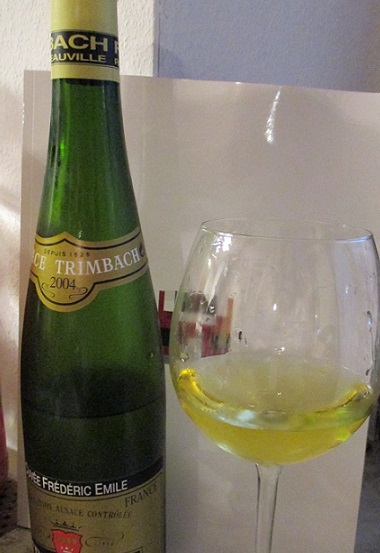
fe riesling

2004 Trimbach Frederick Emile Riesling – We had to start with a dry wine, and one from Alsace; delightful, pale, spicy, stony, dry. Drink now – 2025, score 93

bernkastel dinner wines

2003 JJ Prum Wehlener Sonnenuhr spatlese; this was a very hot vintage, and many wineries struggled; Prum described the wines as “sulky” and that the sites would take time to overcome the vintage vagaries – rich, mouthfilling, lush sweet tropical fruits, ready. Drink to 2020, score 90

2004 JJ Prum Wehlener Sonnenuhr spatlese; very different! Lively acidity and more classical limes, apple and energy. Drink to 2025, score 93

2004 JJ Prum Wehlener Sonnenuhr Kabinett; acidity powers this wine; minerals, lively; Here we are with an older Kabinett that will endure for at least another 5 years, but can’t quibble with drinking it; drink to 2020, score 90

2007 R Haart Kreutzwingert Piesporter feinherb 12.5%; Happy to drink this, although its drying out a bit. Red berries, stonefruit, white peach, and orange bitters.  Drink now, score 87

2008 R Haart Goldtropchen Auslese; 2008 seems to be the vintage that never retreated into its shell; this is a very sweet wine where the bottle mysteriously seemed to empty rapidly. I cannot really see further improvement and am happy to drink with its now – although the wine will hold. Drink to 2023, score 91.

2010 Schloss Lieser juffer sonnenuhr spatlese.  A year of high acidity, but once again the wine had the pleasurable balance of acid, sweetness and texture. Drink to 2025, score 93
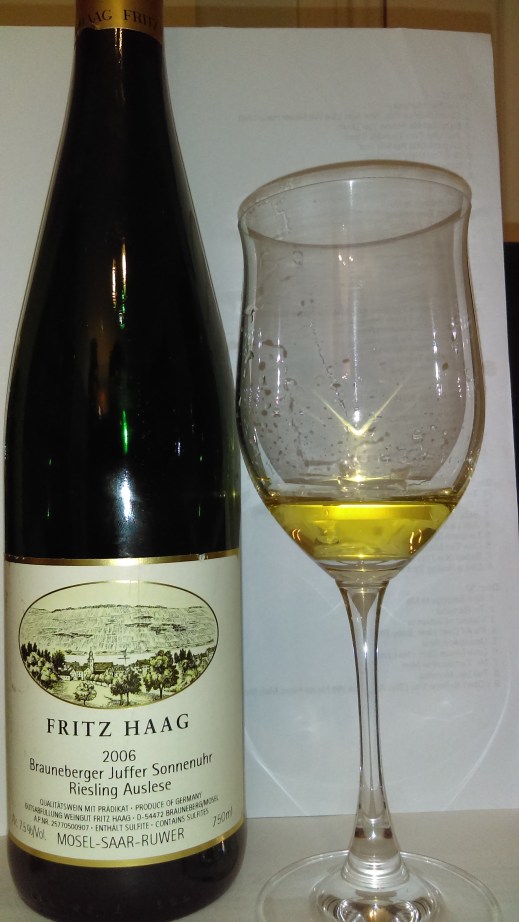
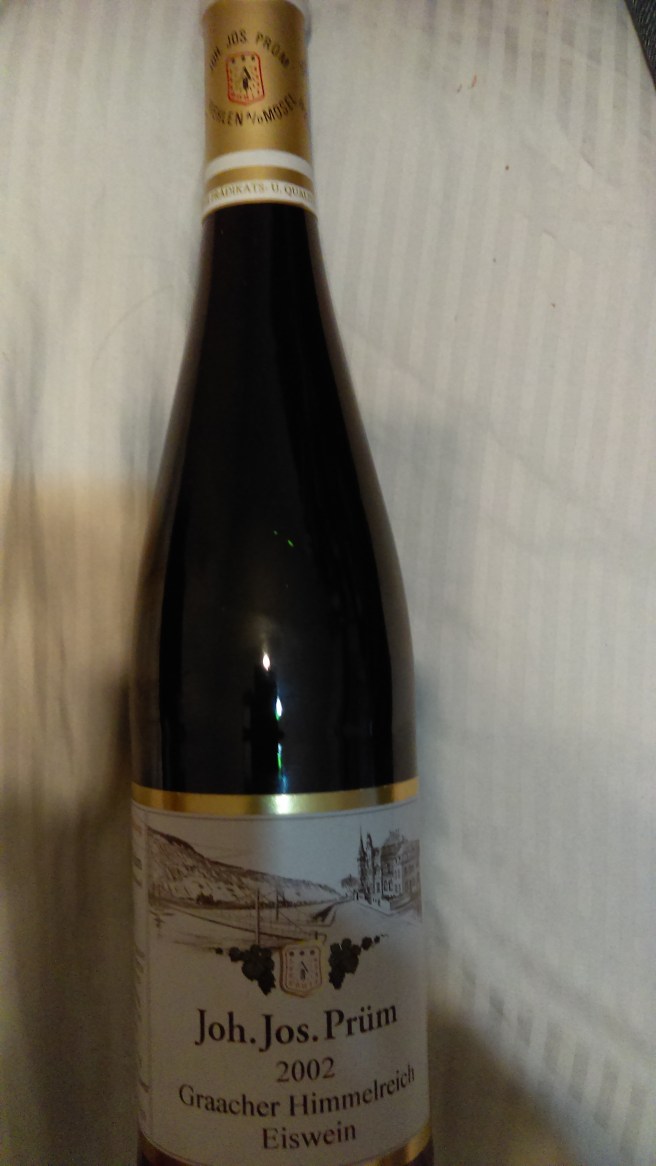
A tasting at Selbach-Oster (Zeltingen, Mosel)

Selbach-Oster is a well-known estate in Germany, but distribution in Australia (via Nelson’s, Sydney-based) is recent, so I hadn’t tried many of their wines. The estate is 22 hectares, and typically produces 35 different wines each year, covering 7 sites, different classifications. Picking can proceed on the same site several times as well as picking different classifications at the same time – all site –dependent. Wine is quickly pressed, settled and gravity fed into old oak, and some into stainless steel tanks.  Ambient yeasts are used, (cultured yeasts used only if necessary). Fermentation is slow, and cool.

We set out to gain some familiarity with the styles made, with the English-speaking Barbara Selbach.

barbara selbach

First we were shown profiles of the soil, showing the slates and degree of decomposition. L-R is Zeltinger Himmelreich (kingdom of heaven), Zeltinger Schlossberg (hill of the castle), Zeltinger Sonnenuhr (sundial).

so rocks

2014 S-O Weissburgunder (Pinot Blanc) 13%

Little is made in Australia, and I’m not terribly familiar with the variety, although I have been surprised at the depth of flavour in some wines from Alsace. S-O makes very little, matured in new 1000l litre oak. Round, mouth-filling flavours of white peach and smokiness (oak-derived?). Brisk to close. Great education on one of the Mosel’s “non-Rieslings”.

Drink now- 2020, score 89

Then we moved to a bracket of Rieslings. All were very pale.

so wines

2012 S-O Riesling Kabinett trocken 11.5%

Scents of cape gooseberry, green apple, stones, minerals, textured

Drink now – 2018, score 90

2012 S-O Riesling Schlossberg Spatlese trocken 13%

More aromatic, spices, melons, viscosity. Lovely drinking style

Drink now – 2019, score 92

2014 S-O Zeltinger Himmelreich Kabinett

Approx 17 gl/ residual sugar. Highly floral, red berries, green plum, gun-smoke, granny smith apple, plus some honey and lemon. Lots happening here!

Drink now- 2020, score 90

2014 S–O Riesling Kabinett 8.5%

Icing sugar. Musk, Ultra-light,  feathery. Where else can you get this delicious drinking style than in the Mosel? A lovely drink all-day wine

Drink now – 2018, score 90

2013 S-O Riesling Zeltinger Sonnenuhr spatlese feinherb “Ur Alte reben” 12.5%

From vines >100 years old! Grapes described by Barbara Selbach as loose bunches of lentil size, and as ‘a treasure”. Immediately seems ripe, with passionfruit, honey, citrus, and serious acidity. A “masculine” wine, and very serious.

Drink now – 2025, score 92

2009 S-O Riesling Wehlener Sonnenuhr Spatlese 8.5%

Ripe, and extremely playful, there are almost tropical arrays of pineapple here and other exotics. This wine just seems so balanced, natural and unforced, with warming, extensive finish. Completely delicious.

Drink now- 2025, score 94

2013 S-O Riesling Zeltinger Sonnenuhr Auslese 8.5%

Light white honey plus ripe nectarines. More depth and concentration than the previous wine, Creamy, rich, fine, balanced, refined. Very extensive finish

Drink 2020-2030, score 93

Conclusions

We had the great good speculative fortune to taste uniformly excellent quality across the board. The wines are balanced and unforced, with the benchmark Mosel acidity and excellent VFM. There is a fanatical degree of care taken to preserve the various parcels but in a low-intervention manner. Barbara Selbach emphasised several times that winery work could not fix any problems that left the vineyard. Keep your eyes peeled especially for their parcels such as Anrecht, Schmitt and Rotlay!

Most of the Rieslings made even in the Mosel are “off-dry”, but Selbach-Oster takes a great deal of pride in their dry wines too, regarding them as more difficult to achieve finesse.

Finally, many of the wines – thankfully – are in screwcap, so no cork issues such as TCA or oxidation.