2005 Joh. Jos. Prum Wehlener Sonnenuhr Riesling Auslese (AP 03 07) 7%

IMAG0812

The wizened cork has nevertheless done its duty, but I hope my remaining bottle will be preserved for at least another 5 years.

The wines of JJ Prum are easily available in Australia; the Wehlener Sonnenuhr is my “go-to” vineyard, and the Auslese level hits my personal “sweet spot” of complexity and affordability. But the JJ Prum wines- like so many Mosel Rieslings – reward cellaring. 2005 was an exceptional vintage in the Mosel.

The colour of this Mosel wine is a bright clear light lemon; there are enticing scents of ripe red apple, dried pear, lemon, smoke, petroleum, stones and a twist of ginger. The palate is rich, clean and overwhelmingly pretty; it’s viscous with natural acidity that is refreshing, and insists that further tasting is mandatory. My guess was around 90 g/l of residual sugar, but beautifully integrated. The palate shows white honey,  red apple, some emerging lime, and of course flint. A wine that is easily approachable, enjoyable and complex.

Drink to at least 2035 , and 95 points for now – with enormous prospects for improvement in the future.

Snippets, again

Maybe not thematic, but these fragments deserve a note; on the cork front, an unusual  run in the past six months yielded only 2 wines affected by taint or obvious oxidation–  a “meagre” 3.7%. Not many industries would accept this level of wastage. The degree of TCA in both wines was amazing- textbook examples.

  • 1993 Craiglee Chardonnay – replaced
  • 1996 Baileys Shiraz – no response from winery

And quick notes follow about wines that impressed

2015 Tolpuddle Chardonnay 12.5%
“Full malo” is a phrase that normally makes me run away, but served masked (of course) this Coal River valley (Tasmania) wine astonished. It’s a modern melon and smoke style- such as Oakridge or Seville Estate- cashewy oak, mineral-drenched fruit and the Tasmanian acidity powers through this utterly delicious wine.
From the Shaw and Smith stable, it’s around $60 a bottle retail – I ordered 3 bottles on the spot. Wonderful, and will hold for quite a while.

2015 Wynns Black Label Cabernet Sauvignon 13.5%
This is the 60th release of this label; a few years ago, I tasted the 1960, 1965, 1966 and 1972; there is no doubting the longevity of the style; its affordability makes it deservedly popular among wine-drinkers (not just unicorn-collectors). This release is ripe, beautifully manicured and balanced; blackcurrant and other dark fruits, chalks; it flows gently, deliciously and juicily along. Lovely, with a huge future. Coonawarra, and unforced.

2012 Giant Steps Applejack Pinot Noir 13.5%
This is a wine that nearly won the notorious Jimmy Watson trophy, but there was insufficient volume. At  5 years old, this  Yarra Valley wine has time on its side. Its amazingly fragrant, with small, succulent, sweet red berry scents, plus seasoned oak. The palate shows much more ripe strawberry, and again the oak is present, somehow making a savoury impact. But where this wine stands out is for its prodigious, long-lasting, ultra-refined finish. Another 5 years at least, and 95 points

2002 Seppelt St Peters Shiraz 14%
Wonderful wine. Cork was not the greatest visual composition, but no travel.
2002 was a cool year in Victoria, and this wine is special. My records indicate I paid $35; some key notes; the colour is deep black/red, and there is no browning even at the rim; the wine is beautifully poised with vibrant, intense fruit, oak very much a background factor. Its ripeness is spot-on; blackberry, mixed spices and mocha, some very faint herbal tannin bitterness, and just powers along. Easy, hedonistic drinking, and will remain so for another 15 years – or more. Instant gold medal score, and another example of Grampians Shiraz seduction.

1995 Guigal Hermitage
From a great year in the Northern Rhone; power+, ripe +, slinky old-vine mouthfeel. Dry herb, chalk, iron filings and spices, powdery tannins, touch of bitterness. At plateau and another 10 years will not tire it. Outstanding, 94 points


And a few rarities from a very special dinner

2002 Bollinger RD disgorged 24/6/2014
Served at a “just right” temperature in appropriate glassware (flutes are NOT proper stemware for Champagne, any kind of tulip-shaped glass is better). It’s a light straw colour; Immediate sense of class. There are scents of pastries, fruit tingles, strawberries dusted gently with icing sugar (the Pinot dominance roughly 60/40 is felt); a touch of oak/chalk/cream, a touch of almond. Then the palate lights up with exuberance, tiny bead, and the flavours just linger on, the wine seems bone dry (4 g/l is very dry even for a prestige champagne). This is just a wonder, so sensual and so compelling- finally it just powered along with more nuances with each refreshing sip. A wine that could accompany many foods, and was not elbowed aside by a truffled croquette. 96 points.

1990 Trimbach Clos st hune Riesling 14%
Approached with some trepidation as a bottle tried in 13/5/2013 unexpectedly threw me in to delivering a perfect score.

Was I delusional? Would another bottle disappoint?This wine from Alsace has a bright clear gold colour; but amazingly, almost pungently floral. Light honey, lemon peel, bottle age, flint ripeness. Palate, silky, fluffy, candied dried fruits, flint, stone, mineral. The magic combination of richness and freshness.

Another 20 years in sight. 98 points.  (Notes were similar)

1990 Jaboulet Hermitage la Chapelle 13.9%
Everyone’s favourite in a bracket of 3 Hermitages including 1990 JL Chave and 1990 Chapoutier Ermitage Le Pavilon, and so easy to love. Very dense colour, with trivial bricking; barnyard, earth, butterscotch, then the palate runs rampant with dark cherry, tar and more earth, some smoky, dried meaty aspects. Oak is entirely vanished, we’re left with a slinky vinous old-vine palate of fine, fine tannins. Memorable and contemplative – mature wines don’t really come better.
Drink to 2040, 98 points

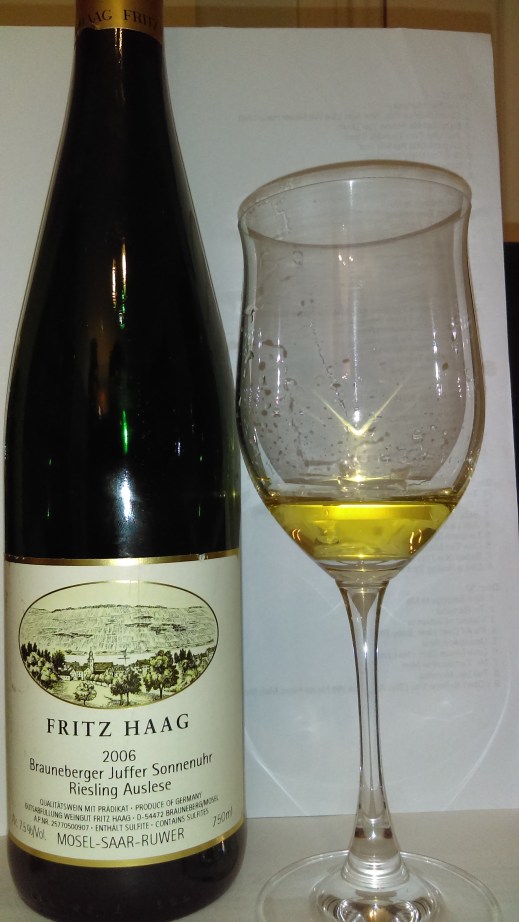
2006 Fritz Haag Brauneberger Juffer Sonnenuhr Riesling Auslese goldcap #9, 7.5%

This is wonderful estate, and a magnificent site (commonly abbreviated to BJS). The goldcap indicates a richer selection -other wineries may employ different colour, or lengths of capsules, or stars to show “extra”.

2006 in the Mosel was a high botrytis vintage, but as usual, better makers achieved better results.

IMAG0687

The wine itself is a bright lemon/gold, and has some – entirely harmless- tartrate crystals. The bouquet sang with tropical fruits – mango and more, plus ripe pear, apricot and citrus, and steeliness.

The palate is bursting with vitality, with more passionfruit and stonefruits – principally apricot and yellow peach. Dense, and mouthfilling, the flavours are very persistent, and the high degree of residual sugar ( perhaps 130g/l) is in harmony with the minerally acidity. Pure, fresh Riesling with a long future.

Alas, my only bottle – drink to 2032, and a well-deserved 93 points

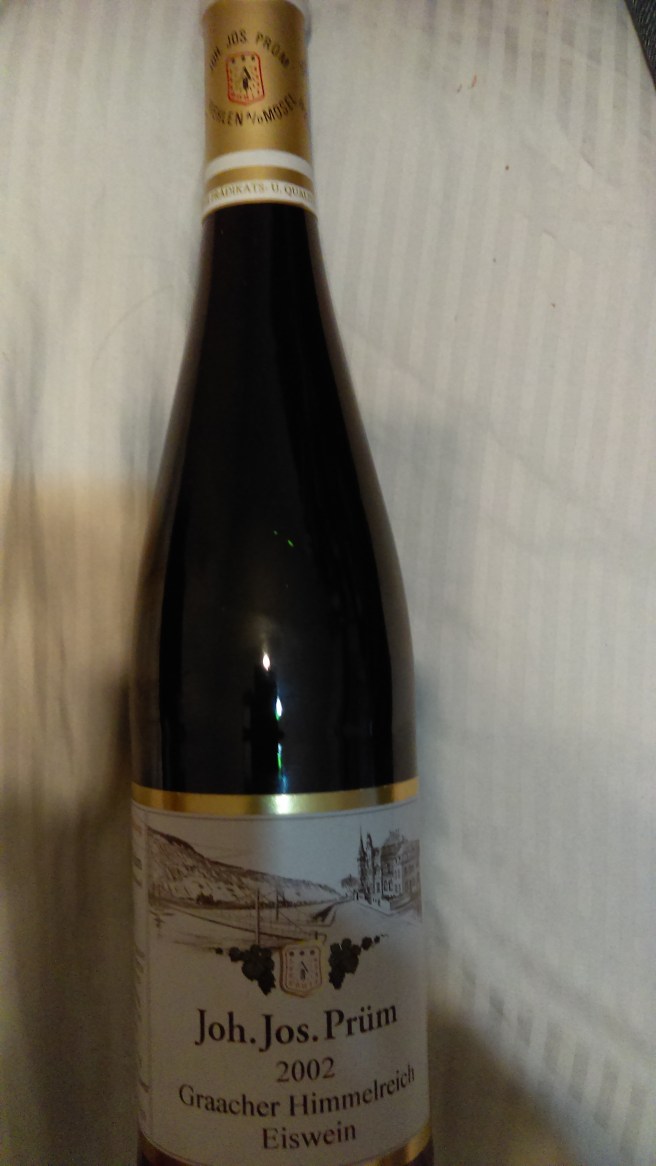
2002 JJ Prum Graacher Himmelreich Riesling Eiswein 7.5%

Weingut Joh Jos Prum is one of the most renowned Mosel estates. Stephan Reinhardt’s comments about drinking JJ Prum “ is to enjoy a springtime of the heart and mind…a combination of lightness, finesse, elegance and (most of all) energy…these are gracious, charming wines”. JJ Prum wines can be a bit sulky at initially; sometimes a bit reductive.  Time, and a decant work wonders. Their longevity is extraordinary.

Eiswein is the legally-defined term that refers to a non-chaptalized wine made from grapes picked with at least 110-128° Oechsle (the minimum level depends on the region and the grape variety) at a temperature below -7°C and which has also passed a sensorial test by the authorities. Eiswein is a sweet to noble-sweet wine, with >130 g/l of residual sugar. Botrytis plays no part in the style – it is just essence of Riesling. Occasionally the harvest can extend into the “next” calendar year, but the wine is labelled as the previous year. Eiswein is uncommon, tantalising and expensive.

IMAG0002

This wine is still a pale lemon colour; the enduring mystery is how such a myriad of flavours is contained in a low-alcohol wine. There are “spinal-tap-esque” exaggerated florals; mixed tropical fruits and candle-wax, lemon essence and lime “run-off”. Then a rush of ripe red apple, and nutmeg spices. So dense, and the pure stony flavours persist for minutes, dwindling to some stonefruits and perhaps light apricot.  Eiswein is indeed rare, and the residual sugar in this wine is not known – 200 g/l? but the acidity carries this with aplomb. Fabulous.

Drink to 2040, and 98 points

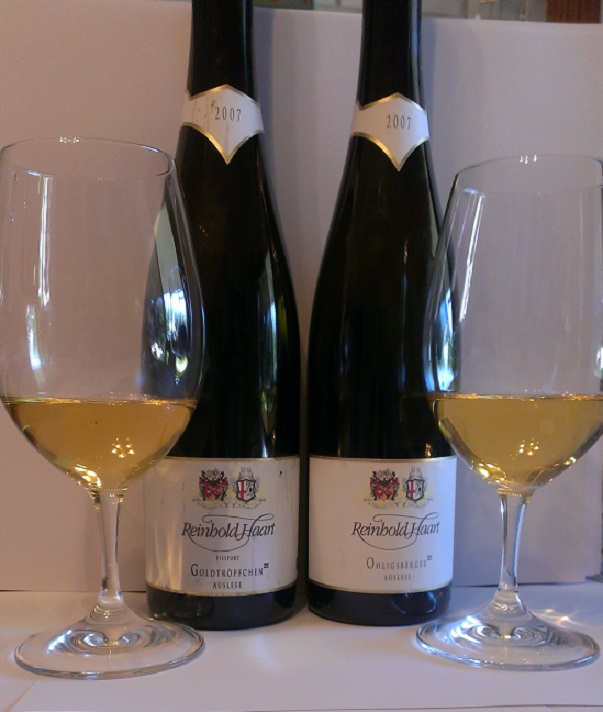
Fraternal twins – 2007 Reinhold Haart Riesling Auslese

Two Mosel Rieslings were tasted blind; the exercise was “spot the difference”; keeping tasters on full alert. Similarities were present, but the difficult task was in defining where, what (and why).

The wines presented were

  • 2007 Reinhold Haart Piesport Goldtropchen Riesling Auslese 7.8%                           119 g/l, 7.7 acid,                                             94 points,  drink to 2023
  • 2007 Reinhold Haart Wintricher Ohligsberg Riesling Auslese 7.4%                             127 g/l, 8.3 acid,                                             95 points, drink to 2028

The wines had sufficient distinctiveness to warrant separate bottlings; the Goldtropchen displaying smoky, yellow peach, a touch of green plum and red apple, mineral and redcurrant, silky and delicious; Ohligsberg brighter, more linear, finer, slightly sweeter, with similar descriptors plus some yellow-skin apple and slightly greater persistence. The complex interplay between acidity and residual sugar came into play, with the Ohligsberg seeming much sweeter than the analytics indicate. Both had nervy acidic drive to balance the considerable residual sugar.

2007-haart-twins

Piesport has had its reputation tarnished in the past- possibly due to excessive yield and inappropriate sites; Haart is one of the brigade determinedly correcting this legacy.

Two absolutely delicious, balanced, wines at a lovely stage in their development.  The  residual sugar is high for the Auslese category; with Ohligsberg shading the Goldtropchen for complexity and pleasure, but both wines offered delights that will continue into the future.

A fresh fruit platter was an ideal accompaniment.

2011 Auburn (lowburn) Riesling 11.5%

2011-auburn-lb-riesling

This is a sibling of the Auburn Bannockburn Riesling tasted recently. Not surprisingly, it’s similar, but not identical.

From a sub-region of Central Otago, in a screwcapped crazy-tall bottle, the wine is pale in colour. It has varietal lime and lemon aromas, with wafts of mineral and tangy saline characters, possibly with some botrytis. The palate is rich and crunchy, carrying its 48 g/l of residual sugar; intense citrus , red apple and stony, talcy flavours linger deliciously. This wine is more complete than the nearby Bannockburn-sourced wine – there is no hardness or reductive distractions; just fruit purity.  Overall, an excellent wine.

Drink to 2022, and 92 points.

2011 Auburn (bannockburn) riesling 10.5%


I seldom see Rieslings from Central Otago (NZ) – apart from Felton Road- and I am not familiar with wines from Auburn. They make Riesling wines from several small plots in the region, and I will open a Lowburn and report on it soon.

2011-auburn-bb

It’s a tall, and absurdly heavy bottle. Under screwcap, this wine is pale, but displays vibrant lime and orange blossom aromas, fainter spice (ginger) notes, and some reductive touches too. The palate shows welcome viscosity, and brisk natural acidity which neatly balances the 45 g/l of residual sugar. There are echoing orange and mandarine flavours, plus mineral notes, but there is also some underlying hardness, which prevents a higher score. This level of integrated sweetness means it suits a surprising variety of dishes; it was consumed with pan-fried salmon, but would also match well with many Asian-oriented meals – or by itself as a surprising aperitif.

It scores 89 points, and will provide drinking pleasure to at least 2020.


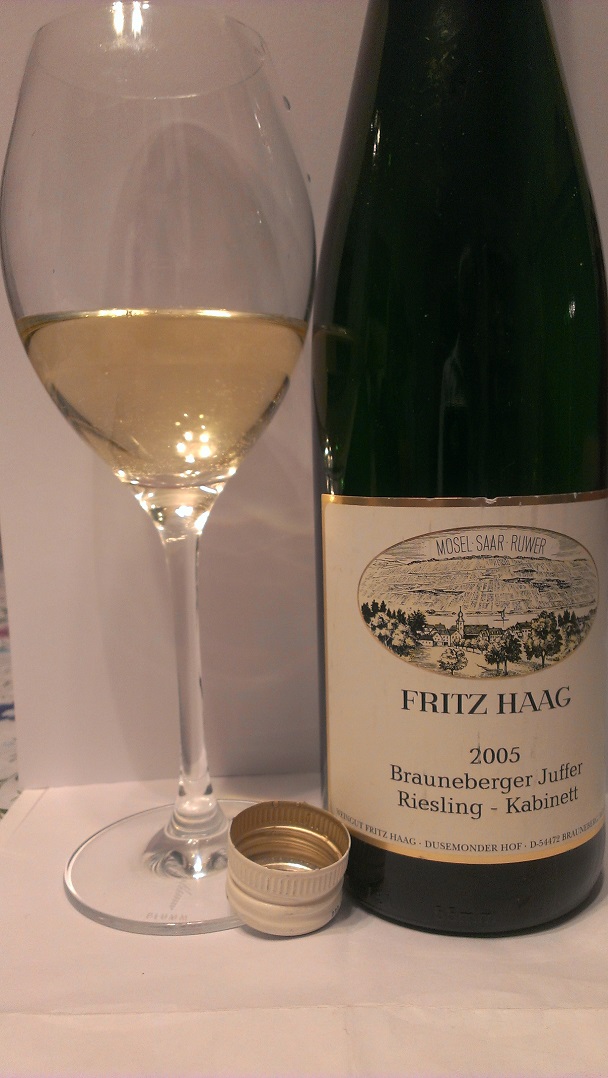
2005 Fritz Haag Brauneberger Juffer Riesling Kabinett 8.5%

Another white wine under screwcap, and age has not harmed this lovely and utterly convincing Riesling Kabinett from a sterling year in the Mosel.

2005-fritz-haag-bj-kabinett

It’s still a pale lemon colour, and there is ripe apple, some tropical guava, and some “fruit tingle” too. The palate is appropriately light for this category of sweetness, and resounds with crunchy, stony limey citrus character (“mineral” is out-of-favour, despite this word being clearcut and descriptive). Delicious, bright, tangy, with terrific length and everything under control. A benchmark from this well-known estate.

Drink to 2025, 91 points

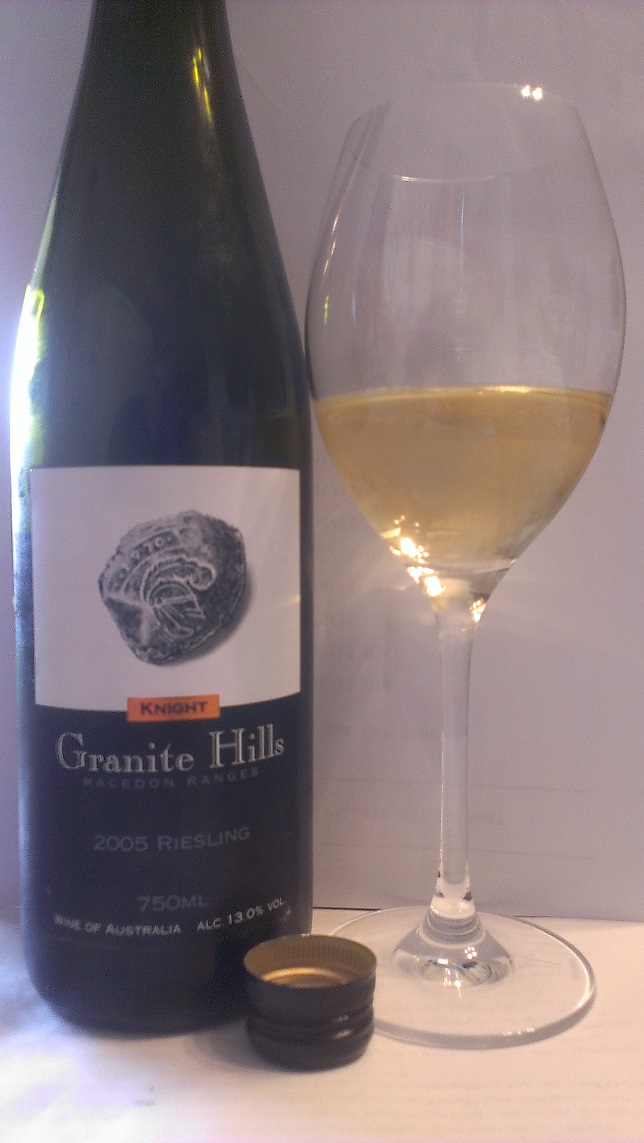
2005 Granite Hills Riesling 13%

Granite Hills produces quality Rieslings from the Macedon ranges area of Victoria, where Chardonnay, Pinot Noir and sparkling wines are much more prevalent.

Llew Knight has been making Riesling (and other varieties) for many years, and the Riesling is a often a standout- I have fond memories of the trophy-winning 1998, and the still available 2014 is excellent. Its one of the very consistent, commendable age-worthy, minerallly Victorian Rieslings, pitched at a lesser tariff than Crawford River or Seppelt Drumborg.

The drive towards Baynton features spectacular granite outcrops littering the hills, amidst dense bushland.

This wine I suspect is not completely dry, but is near-enough, with still powerful fruit.

Update! – winemaker Llew Knight has assured me the wine is completely dry, so it’s just fruit that conveys the impression of slight sweetness.

Under screwcap, time has infused the varietal expression with some faint but attractive toastiness.

2005-granite-hills-riesling

It’s a bright pale lemon colour, and strides out with abundant lemon zest, ripe red apple and a hint of lanolin. Talc, lemon, flint, viscosity and bright, lively refreshing natural acidity are the keynotes of the palate. This is a confident, complex expressive wine drinking wonderfully well. It has huge appeal and will match to a huge variety of food – Asian, poultry, seafood, creamy dishes.

Drink to 2026, and 94 points.

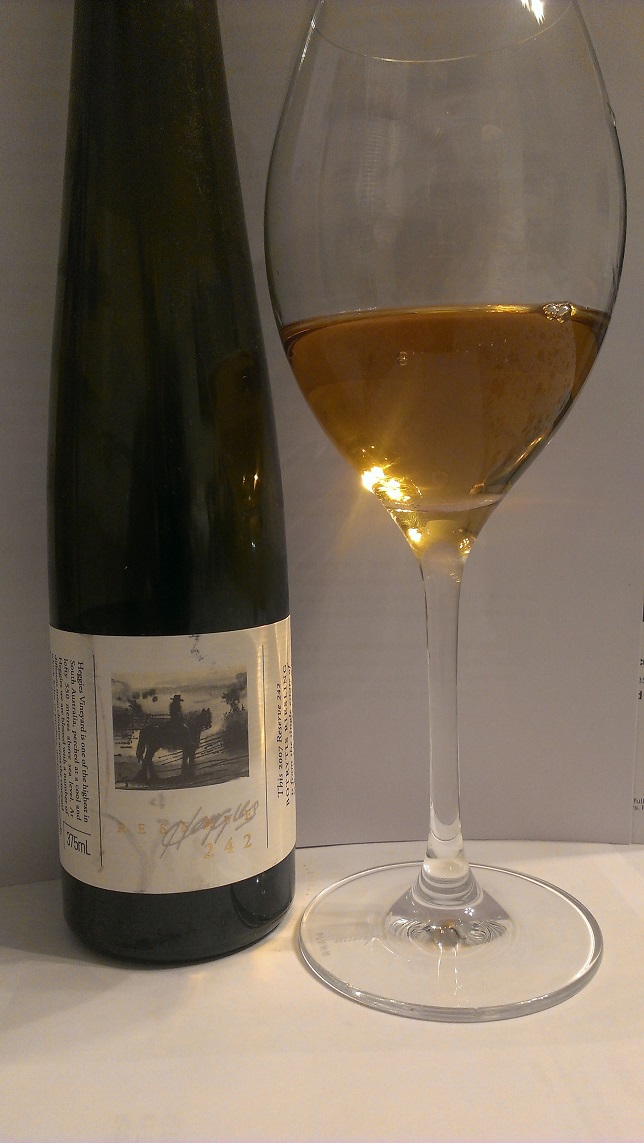
2007 Heggies “242” botrytis Riesling 8.1% (screwcap)

From the Eden Valley in South Australia, this remarkable wine achieved 242 g/l of residual sugar, hence the “242” on the label.

I have not been a fan of the dry Heggies Riesling, usually finding it a bit clumsy, although bottle age usually helps.

This wine is however, something special.

2007 heggies

It has a deep bright gold colour, and powerful aromatics of apricot, passionfruit and lime. The palate is super-lush, and mouth-filling with some lemon-peel candiness, backed by the ripe apricot marmalade flavours, ripe red apple and dried pear. There is some almond-meal semi-nutty character as well (highly unlikely to be from oak).

This wine is intense, lingering, cleansing and delicious, with the monster botrytis not diminishing varietal character. Complex, and damn fine. Botrytis is generally a nuisance in Australia, and this wine is a lovely expression of care in the vineyard, and the winery successfully transiting into bottle. Age has charmed, not harmed.

Drink to 2025, 94 well-deserved points