One terrific recent dinner

2011 jj prum ws spatlese

2011 JJ Prum Wehelener Sonnenuhr Riesling Spatlese 8.5%
Mosel, AP#28

Unmistakably German. Some reduction, but still shimmering with stonefruit, tropical notes, nettles, lime and flint with residual sugar seamlessly folded into a lightweight and delicious frame, that enfolds the palate. Great maker, and a great site, displayed to advantage.

Drink to 2030, 93 points

1994 Seppelt Show Sparkling Shiraz 13.5%
Great Western, Victoria. St Peters vineyard, (late) disgorged in October 2008, 28g/l residual sugar. Crown seal, and all the better! Notes below are not from tasting “blind’.

Mature but respectable colour, plenty of bubbles; mulberry, blackcurrant, dark cherry earthiness, light mushroom, and brimming with vitality. Its hard to believe there are better examples of this indestructible style around. As a bonus, my notes and score were consistent with my 2019 tasting note.

Drink to 2035, 95 points

2004 dow bomfim

2004 Dows Quinta do Bonfim (VP) 20%
Portugal – and technically a “single quinta”.

Usually, but not always from non-declared years (a decision of the producer- with Quinta do Noval an iconoclast now declaring every year).  Some single quintas are absolutely top wines, such as Grahams Stone Terraces. Usually, the single quinta makes up a large proportion of the declared vintages.

Decent colour for its assumed 20ish-year age; with blueberry, redcurrant, red liquorice, plentiful fruit here, and plentiful chalky tannin. The alcohol and spirit suggest Portugal, but the accessibility of the fruit suggests Oz origins (and I wrongly selected this option). In any event, the single quintas represent compelling VFM with monster enjoyment at an earlier age than the declared VPs can deliver. If only these single quinta were easier to find in Australia!

Drink to 2034, and 92 points
better mixed sweets

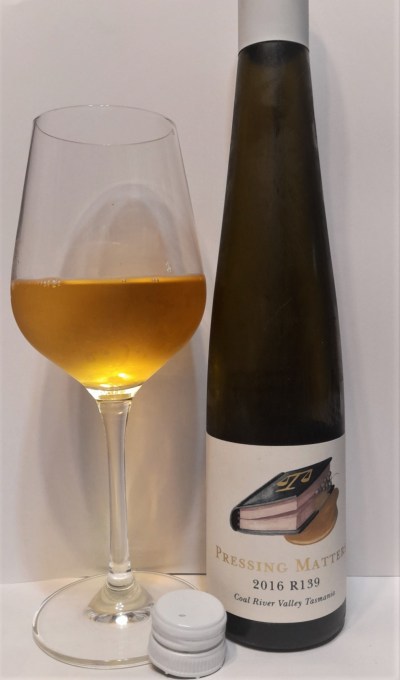
2016 pressong matters r139

2016 Pressing Matters Riesling R139 9.2%
Coal river valley, Tasmania

Pale colour, lime, pear, apple, ginger biscuit. The winery specialises in the unusual combination of Pinot Noir plus assortment of Rieslings at varying sweetness levels (R0, R9, R69 and r139) with many wine show successes and a wine club that offers regular museum releases. This wine is a cracker. With the crisp Tasmanian acidity, it has the magic combination of varietal definition, botrytis and purity. White peach and lime, thrilling acidity and it just lingers gracefully. Special!

Drink to 2030, 94 points

2015 ca' d'gal vv

2015 Ca d’Gal vite Vecchia Moscato d’asti 5%
Piedmont, lightly sparking (frizzante) packed with icing sugar, musk, and grapiness, spices and texture. The muscat character shines.  Around 90g/l residual sugar, and >$100.

Not as stellar as the 2008 tasted about twelve months ago, but its vitality will utterly revive jaded palates, and confound many with its delicious, bracing freshness.

Drink to 2027, 92 points

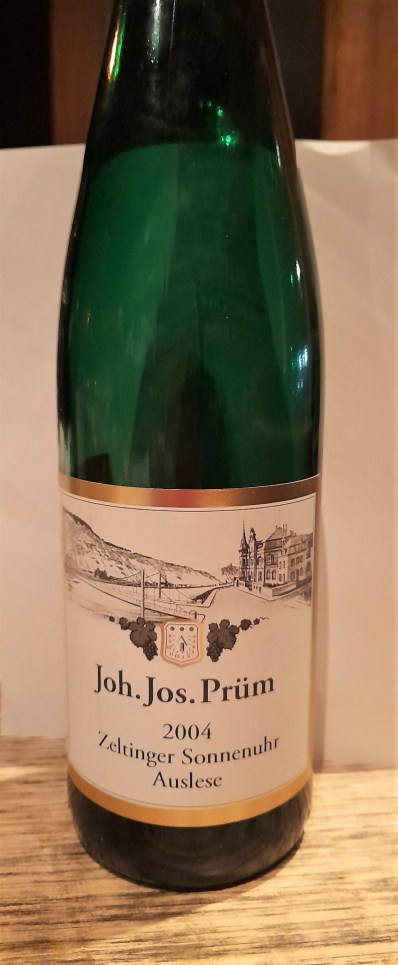
2004 jj prum zs auslese

2004 Joh Jos Prum Zeltinger Sonnenuhr Auslese Riesling 7.5%
Mosel, and a startlingly pale colour for its age. Showing white flowers, herb, apple and pine/nettle. The palate is full of minerals and phenolic grip. More modern vintages are riper and sweeter, but even though this wine was served straight after the Ca’ d’Gal, it didn’t seem to have the level of Auslese sweetness (my guess was Kabinett) A rare, relative disappointment from this producer.

Drink to 2026, 90 points

Drinking JJ Prum (again)

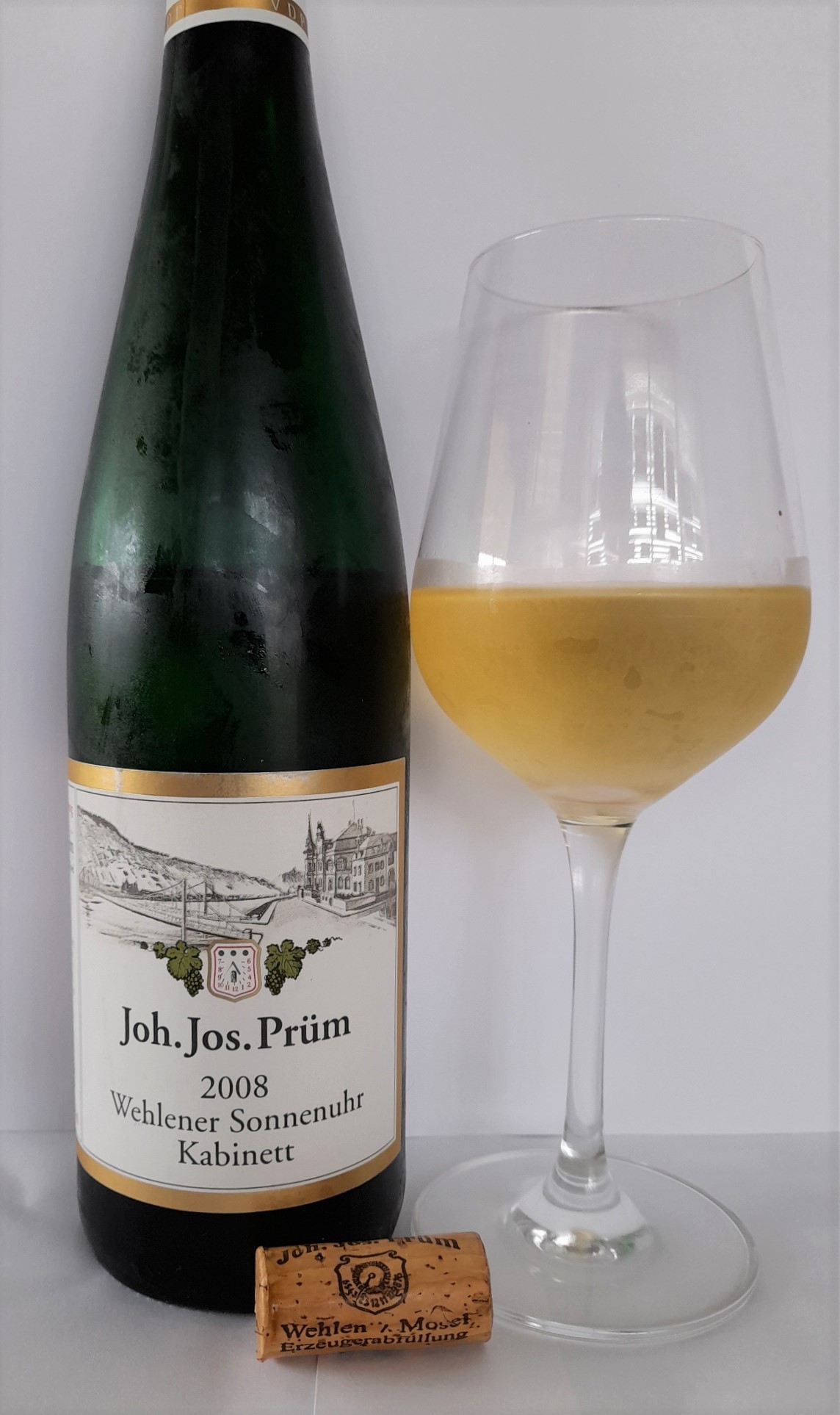
2008 JJ Prum Wehlener Sonnenuhr Riesling Kabinett #17, 8%
Spatlese and Auslese get more attention, but there is nothing like the weightless attractions of the Kabinett style. Still a very pale lemon colour, there is a characteristic reductive note, followed by waves of lemon and white peach. The palate is more lime-driven, light honey with red and green apple, plus pear notes wrapped in electric minerality. It’s another wine that defies willpower to insist on further sampling. Sweet, but a wine of joy.

2008 jj prum ws kabinett

While Mosel Rieslings often look thrilling when young (say for three years), they often proceed through a sulky stage for three to five years, before re-emerging in glory. This wine, like many of its 2008 Mosel brethren has always irresistibly delivered delicious drinking.

Drink to 2030, and 91 points

2007 JJ Prum Wehlener Sonnenuhr Riesling Auslese Goldkap AP #17, 7.5%
This wine was also a pale colour belying its age. Honey, nettles, yellow peach and green plum were all present; a viscous, rich, decadent palate with spice notes and faint nuttiness intermingled., wrapped in appropriate vibrant pebbly acidity. Radiant, luscious, seductive and visceral.

To 2035, 95 points.

Nearly Xmas drinks

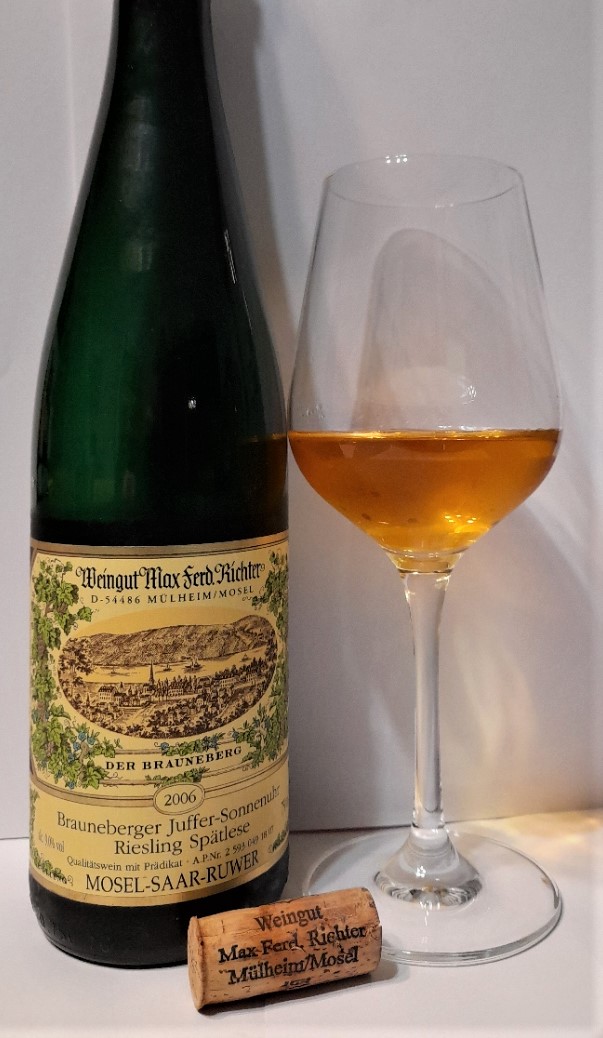
2006 MF Richter Brauneberger Juffer Sonnenuhr Riesling Spatlese AP #18 9%
Mosel, 106 g/l residual sugar.

2006 richter bjs spat

It’s a bright deep gold colour (like its sibling tasted recently), but the scents include honey, red apple, some white stonefruit, citrus peel and spices; it’s ripe and mouthfilling despite the modest alcohol, and some lime joins the picture at the finish.

Its mature but still fresh, and delivers enormous pleasure.

To 2024, 92 points

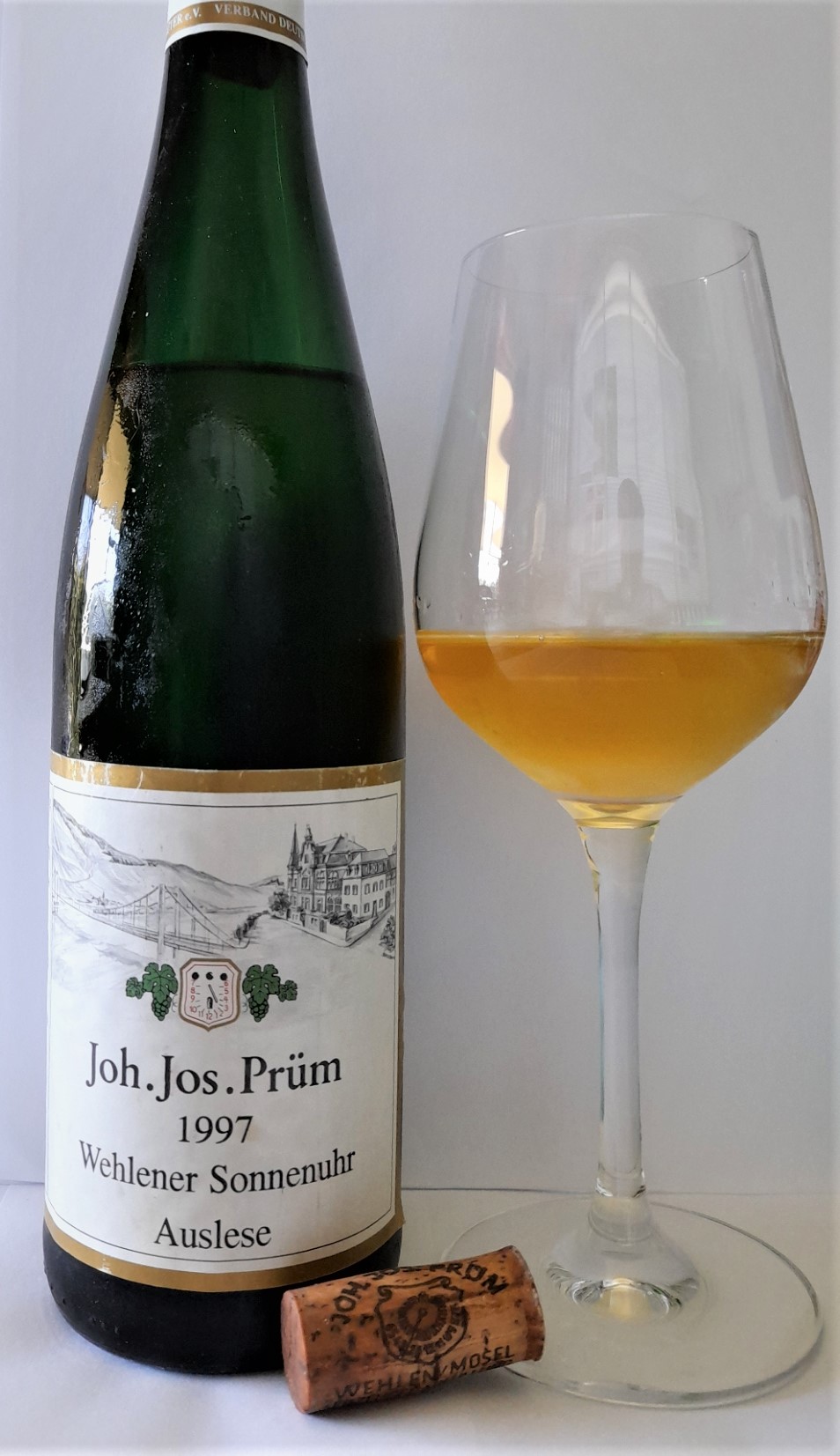
1997 JJ Prum Wehlener Sonnenuhr Riesling Auslese AP #2 99 7.5%
Mosel. Cork has managed its task. There seem to have been a few variations of this (Cellartracker lists Ap 8, AP 9 and Ap 16). Light lemon colour, with vibrant scents of red apple, and ripe nashi pear. Smoke, citrus, lime, apple, trails of petroleum and abundant mineral make up the package. Mosel wines age with grace!

1997 jj prum ws auslese

A tremendous effort for a mature wine (an auction purchase in 2015), with vitality to spare.

To 2030, and a very easy 93+ points.

2004 JJ Prum Wehlener Sonnenuhr Riesling Kabinett AP #19

2004 jj prum ws kabinett2004 jj prum ap

Mosel, 8.5% Light, bright lemon colour, with vibrant scents of red apple,and  ripe nashi pear.

Lime and mineral reign on a viscous palate that just floats along with apple crumble, spices, and texture. Pure, with plenty of acidity too – what a charmer – this is one of the best Kabinetts I have ever tasted. Although JJ Prum wines are renowned for longevity, and Wehlener Sonnenuhr is a marvellous site, this wine displays the magic of bottle maturation for even the humble, and affordable Kabinett classification.

Its tremendous vitality, balance and complexity, means drink to 2030 in comfort, and 94 points.

German wines should contain an approval number. From left to right the numbers indicate region, village, Estate, the lot number (a bottling number), and year tested (usually one year after vintage). The bottling number (the 19 in my photo) is key, and I have tried to list these with wines tasted. See the excellent Mosel Fine Wines guide for a greater explanation and why the AP number is important. Unfortunately, importers and auction houses do not always provide the information.

Cellartracker lists 4 different AP’s for 2004 JJ Prum Wehlener Sonnenuhr Kabinett. From the number of  different wines stored by subscribers, and their scores and comments, it seems I lucked into a superior AP – purchased at a local auction in 2013. I tasted a similar JJ Prum wine back in 2015, but didn’t have the understanding at that time to note the AP number, alas.

Mid-priced imports


midrange imports

We’re recently allowed some small gatherings, but I opened these two wines at home recently; they are not monstrously expensive – (Kabinetts $35-70 depending on brand; the Fonseca LBVP was around $50 recently) – but sweeter German Rieslings and the uber-fashionable dry GGs can easily exceed $100; Vintage Ports from the sensational 2016 and 2017 vintages are, alas, closer to $200.

2008 JJ Prum Bernkastler Badstube Riesling Kabinett 8.5%
Gifted to me a while ago; my go-to Prum is the Wehlener Sonnenuhr, with occasional deviations to Graacher Himmelriech (Bernkastler Lay can be special too). 2008 was an “open” year, but Prum is usually backward, fully priced but usually delivers. Mosel Kabinett is “off-dry” but Prum tends to be sweeter than expected, and can still last many years.  Very pale, there is the tell-tale red apple and petroleum, nettle, earthiness and spice notes. The palate is highly acidic, with some grippiness- nashi pear, citrus, apple. Varietal, distinctly Mosel, but drink up while the fruit remains intact- the acidity is pretty dominant, which won’t be to everyone’s favour.

Drink to 2023,  88 points

2011 Fonseca Late-bottled vintage unfiltered 20%
2011 was a mighty year for Portuguese Vintage Port; late-bottled is an easier, more approachable, (and more affordable category), with a longer time in oak (or tank) to ameliorate some of the tannic stuffing. Confusingly, the LBV wines may be ready on release – or capable of cellaring. Unfiltered is a clue that some ageing is expected – yet there was no discernible sediment here, and the stopper was another surprise.

This wine was bottled in 2016, and is nearly crimson in colour. It displayed fig, blueberry, plum, violet and mixed spices and wild herbs; the palate showed cherry, milk chocolate, spices and sound spirit integration. 108 g/l residual sugar is neatly balanced with the fruit, and alcohol. Fine tannins add further interest. I was hoping for greater concentration, but it’s so easy to reach for another glass – a great test of a wine’s engagement.

Drink to 2025, and 90 points.


2006 Joh Jos Prum Wehlener Sonnenuhr Auslese Riesling Goldkap AP#17 7.5%

The gold capsule indicates “more” than an auslese category; greater ripeness, and complexity. This category from JJ Prum retails for around twice the price of the auslese. The combination of very special site, the experienced team that have mastered this style, the opulent botrytis-laden vintage, and the Goldkap combine to make a remarkable wine.

This is an outstanding Mosel Riesling. Bright gold in colour, it exudes a mesh of floral citrus, light smoke, petroleum jelly (decidedly not kerosene), mango, red apple, and furriness. The palate hums along with acidity and the most seductive and utterly compelling texture and length. Honey, plus citrus, with the affluent residual sugar entirely wrapped up with acidity; it oozes pleasure and decadence.

My brief note from May 2010 is similar “complex, penetrating with plenty of acidity, petroleum jelly, red apple and red fruits, amazing length 19/20)”

No harm to drink now, but anytime to 2035 with comfort. I wavered but it deserves 97 points.

Don’t hesitate if you can find it.

1998 Stanton and Killeen Vintage (port) 18%, plus other impressions

At 21 years of age, this Rutherglen (Victoria) fortified is still very youthful. It has 1 gold and 5 silver medals to its credit and composition is 26% Shiraz, 26% Touriga, 20% Durif, 13% tinta cao, 13% tinta barocca, and 2% Cabernet Sauvignon; a mix of “traditional Australian”, and Portuguese varieties. Remarkably, the wine is still available ($114) – with many other vintages- on the Stanton and Killeen website.

1998 S&K VP

The cork emerged well, and in excellent condition. The colour is outstanding for its age, a very dense dark black crimson,  and there is an exciting range of aromas- dark liqueur cherry, almond-meal, blueberry, mulberry, and spice notes The quality of (brandy) spirit is excellent, and has integrated well. The palate is sweeter than Portuguese versions, but certainly drier than most Australian attempts. The palate is full-bodied but very supple, showing a lingering mix of black and red fruits, red liquorice and fine chalky tannins.  Above all, it is deliciously drinkable.

Drink to 2030, and 93 points.

1986 Stanton and Killeen Vintage Port
Served blind, this wine was bricky in colour, showing sweet mocha notes, dried fruits and citrus peel. The spirit was sweet; the palate was also sweet, soft and mellow, and seemed Australian in style. The milk chocolate and plum flavours suggested Victorian origins, and my conclusion “around 30 years old, Victorian, Shiraz” turned out to be reasonably accurate. (95% Shiraz, 5% durif). The wine is fully mature, and bottle quality may differ!

Drink to 2025, 90 points

2007 JJ Prum Wehlener Sonnenuhr Auslese Riesling AP#22 7.5%
Very pale in colour, this Mosel wine is supremely elegant and needs much more time (still) to reveal more of its charms. It displays smoke, petroleum, crunchy ripe red apple and tropical fruits, particularly just-ripe pineapple. The palate is pebbly, sustained and the acidity really masks the considerable sweetness. This is a mouth-filling, creamy, intense and decadent wine, but it’s not yet resolved, and I recommend a further 5 years aging if you are fortunate to own any.

Drink to 2035, 92 points –  with more in the future.

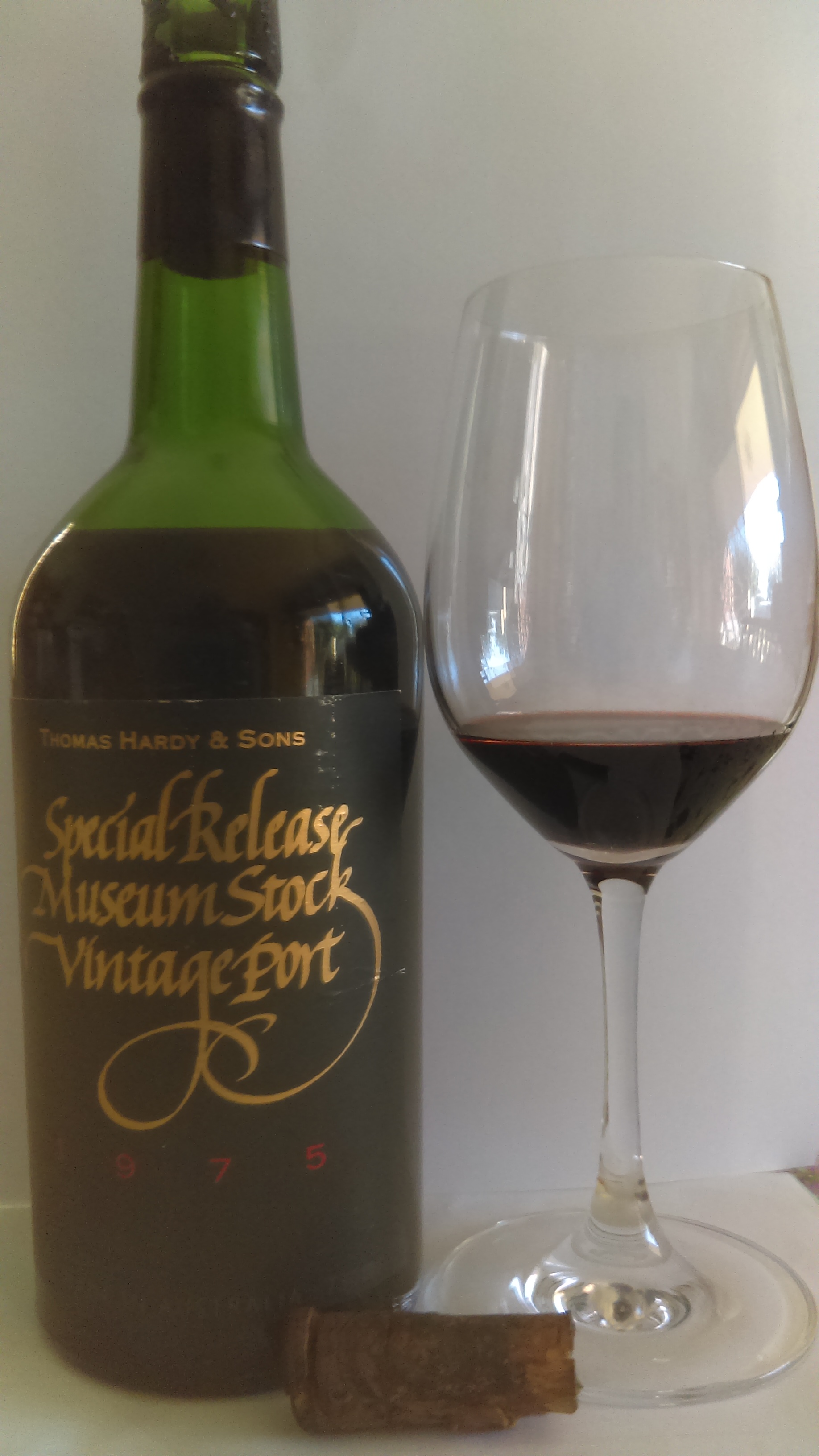
1975 Hardy’s Vintage Port (special release museum stock) 17.5%, and more

With 4 trophies and 20 gold medals up to 1987, this is a special wine. From McLaren Vale, South Australia, the cork has thankfully performed its duty, and the wine seems younger than its 44 years.

1975 hardy's vp

It’s a solid brick red colour (with substantial sediment that makes decanting worthwhile). Fig, rose-hip,  blackberry, espresso and sweet integrated brandy spirit are evident. Drier than the typical traditional Oz style, this wine is immaculately manicured; the satin-fine tannins melded with blackberry and a supremely extended palate fully demonstrates why obsessives bother cellaring this style.

Drink to 2030, 95 points.

2009 (Forstmeister Geltz) Zilliken Saarburger Rausch Riesling Diabas 12%
Destined for a “GG”, a cask stopped at 16 g/l residual sugar. Pale lemon colour with arresting aromas of passionfruit, white flower, red apple, and ripe green herbs. The wine is compelling in its length, texture and interest (nashi pear)  that will suit many cuisines (Asian or something simple such as smoked salmon). This Mosel area wine sits at a “feinherb” level (less than Kabinett) and is completely,  winningly delicious.

Drink to 2025, 93 points

2007 JJ Prum Graacher Himmelreich Riesling Auslese Goldkapsule 7.5%
The gold capsule denotes a bit “extra” for its category (some producers use “stars” such as **).

This Mosel wine instantly showed its style and class. Nettle, herb, and petroleum with white peach notes; the palate has rich tropical notes and brisk lemon but the balance of sugar and acidity makes it feathery; and a total, supple delight.

Drink to 2030, and 92 points.

Mixed drinks, recent short impressions

2003 Joh Jos Prum Wehlener Sonnenuhr Riesling Auslese 8%
Very pale lemon in colour, there is an array of the usual petroleum (not kero), and faint smokiness mixed with tropical fruits of mango, passionfruit, a pull of citrus, flint and warm spices. The palate is sweet, fresh, viscous  and long-lasting. The wine got better as it sat in the glass.

Its not easy to resist the style, one of my favourite Mosel vineyards plus the combination of freshness and bottle-aged complexities. It’s a triumph of old vines and winemaking nous over the heatwave European 2003 vintage.

95 points, and drink to 2030.

2014 Chateau La Tour blanche 14%
Sauternes (83% semillon, 12% sauvignon blanc, 5% Muscadelle; 130 g/l r/s)

A great VFM Sauternes producer, and a wonderful result from an excellent vintage. Light gold in colour, the wine displayed vibrant nettle, stonefruit, pineapple rind and bright lemon icing sugar. The palate showed more barley-sugar, and some vanilla pod to add to the aromatics. Rich, sweet, balanced with much more pleasure to cover over the next ten to fifteen years.

The range of fruit flavours, the complexity and balance makes the wine a delight.

94 points, and drink to 2030 (at least)

2014 Chateau Lafaurie-Peyraguey
Sauternes (93% Semillon, 6% sauvignon blanc, 1% Muscadelle)

Served (masked) at the same occasion as the La Tour Blanche above, this wine looked darker in colour, showed greater – and simpler- tropical fruits, and custard apple. The palate was sweet, fresh and supple, but with greater oak presence, some hardness, and some bitterness. Time may help, but the contrast did not help its cause.

87 points, drink to 2023.

1952 Saltram Pinnacle selection Show Muscat 18.8%
Barossa muscat, stored in small oak, believed to have been bottled sometime in the 1980’s.

Colour (after decanting) was a bright khaki, and the wine showed caramel, toffee, mocha. Some raisin character, and a degree of vanillan oak and rancio.

Served masked as usual, the mix of attributes made it difficult to decide style between muscat and tawny; the lushness pushing for muscat, the rancio pointing to tawny. Revealed as muscat,  the wine itself was excellent, and a nice piece of Barossa history.

90 points, drink now.

2003 Taylor Fladgate Vintage Port
A devastatingly hot year in Europe, but most Port producers declared the vintage. Cork – or storage- struck; the bottle I sampled was strong, powerful in colour, but the flavour impact was tertiary mixed mocha and coffee grounds; and the wine looked plain, young, raw and lacking finesse. A hasty look at remnants from another two bottles opened showed more expected fruit flavours of violets and dark cherry, but time and the amount left conspired against further contemplation

Not rated, but I will have other opportunities!